Fire Alarm Circuit Troubleshooting Basics for Managers
Managers often get pulled into fire alarm issues at the worst time, like right when the projector is warming up. That is why fire alarm circuit troubleshooting basics matter early. When a zone goes quiet, a trouble signal starts popping up, or a panel resets itself like it is trying to dodge responsibility, managers need a calm, step by step approach. Kord Fire Protection technicians explain the same core idea in plain terms: first verify power, then check the circuit behavior, then isolate the device or wiring path. In practice, that means managers should record what the panel shows, confirm the system is in the right mode, and only then begin tracing or testing. With the right method, they can avoid guesswork and reduce downtime.
A steady process matters because fire alarm problems are rarely improved by panic resets, rushed assumptions, or hallway theories that start with “it was probably fine yesterday.” Managers do not need to become panel whisperers overnight, but they do need enough structure to keep the response organized. That means protecting the facts before they get lost, keeping a clean handoff for technicians, and resisting the urge to treat every blinking trouble light like a random act of electrical weather. Good troubleshooting starts with discipline, not drama.
When a panel shows trouble, what managers should do first
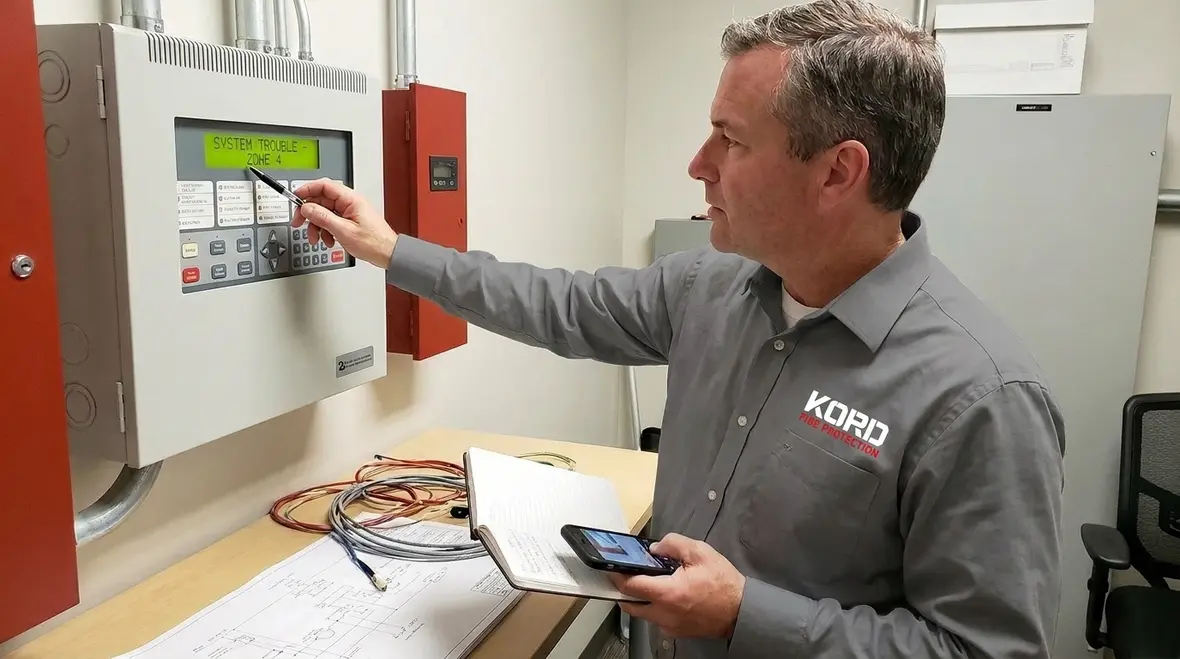
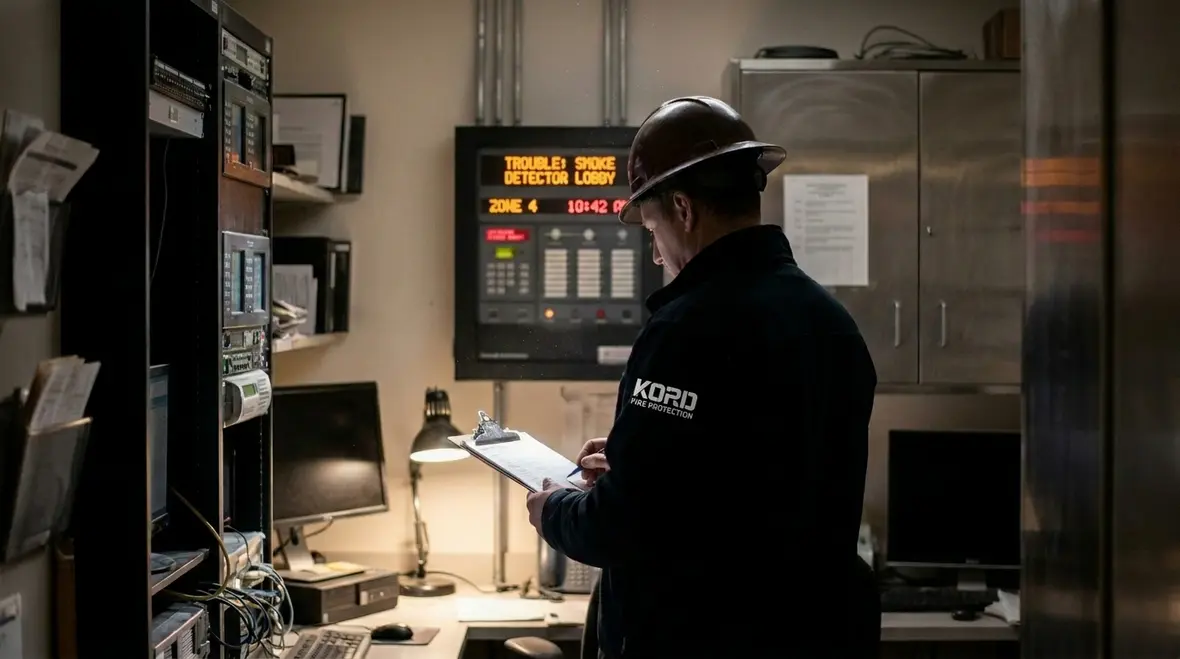
Managers should treat the panel like a supervisor, not a mystery box. First, they should read the display carefully and write down the exact trouble text, the zone number, and the time it started. Then they should confirm whether the system is in alarm, supervisory, or trouble mode. Next, they should check the main power and any backup power status. Many issues look like circuit failures but actually start with a low battery, a disabled loop, or a panel that is not fully reset after a prior event.
After that, managers should use a basic troubleshooting log. That log should include what changed right before the trouble, like new construction, a door held open, a ceiling tile removed, or a vendor work order. Kord Fire Protection technicians often point out that the “most likely cause” is usually the most recent activity. In other words, the fire alarm system is like a workplace gossip network. It remembers what happened. If a device was touched, bumped, or replaced, it matters.
Build the first five minute record before anyone starts guessing
That first record should be simple and boring on purpose. Note the panel text exactly as shown. Record whether the trouble is constant or intermittent. Check if the event appeared after a reset, after a test, or after someone worked above the ceiling. Confirm whether only one area is affected or whether multiple points are acting strange. These details save time later because technicians can compare the symptom pattern against the likely fault type instead of starting from zero with a shrug and a flashlight.
Common fire alarm circuit failures managers can spot before calling out
Several wiring and device issues show up again and again. Managers may not open junction boxes every day, but they can recognize patterns. For example, intermittent troubles often follow a loose terminal, corrosion at a splice, or a wire that shifts due to vibration. Steady trouble on one zone can suggest an open circuit, a failed detector, or a stuck relay module. A sudden set of trouble conditions across multiple zones can suggest a power or panel board issue, not a single device problem.
In addition, managers should watch for signs of trouble during normal operations. If the issue appears during a specific schedule, like after a test, after HVAC shutdown, or after a night cycle, it may link to control power or communication timing. If the alarm silence or reset action triggers the trouble to clear temporarily, that often points to a device that is not stable. Kord Fire Protection technicians recommend that managers never rush to reset and forget. They should document, observe, and then proceed.
This is also where managers can look for the boring physical clues that end up being the real story: water intrusion near a riser room, fresh dust from above-ceiling work, a detector hanging a little crooked, or a newly installed device that “should be compatible” because someone said so with great confidence. Fire alarm issues love ordinary causes. They do not always arrive with sparks, smoke, and a dramatic soundtrack.
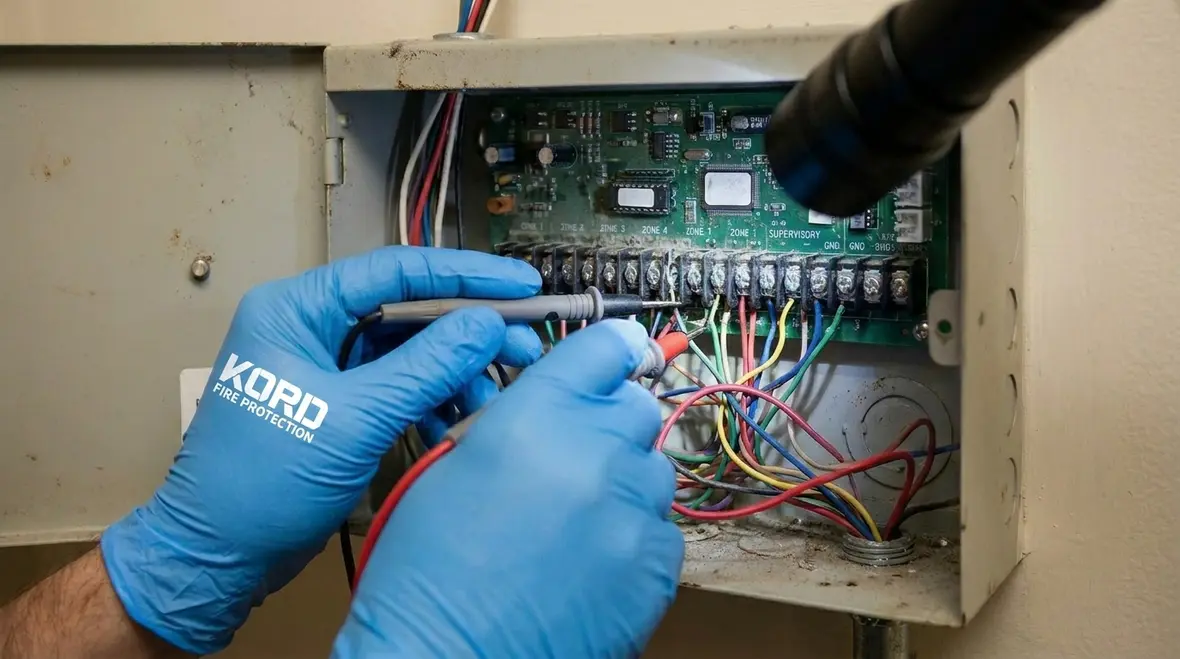
How to isolate open circuits, shorts, and ground faults
Once managers have the panel message and a rough idea of the zone, they can support isolation. Here is how the process usually flows, and Kord Fire Protection technicians often explain it this way for fast decision making.
- Start with a circuit map. Managers should request the zone/device list and any recent as built updates so teams do not chase ghosts.
- Check for open circuit symptoms. Open faults often show as loss of supervision, missing device response, or a trouble state that stays until the line is restored.
- Check for short circuit symptoms. Shorts may cause rapid trouble changes, multiple device issues, or problems that begin right after a device replacement.
- Consider ground faults. Ground faults can behave like mystery guests: they show up intermittently, especially when humidity changes or when construction alters cable routes.
- Isolate by sections. Instead of jumping to the first suspect, technicians split the loop into smaller sections until the fault disappears.
Crucially, managers should avoid “hero testing.” If a test action risks damage to detectors, sounders, or control modules, they should wait for a qualified technician. That is not drama. It is good business sense. In the fire world, patience beats panic, every time.
Why section by section isolation works better than random resets
Section isolation helps teams answer one question at a time. Does the trouble stay with the panel, or does it disappear when a portion of the circuit is separated? Does the problem return when a specific device is restored to the loop? This approach keeps the fault from hiding in a pile of simultaneous changes. It is slower than button mashing, but much faster than making the same bad assumption three times in a row.
Managers can also support this process by making sure access is ready. Locked rooms, blocked ladders, missing keys, and ceiling spaces piled with storage do not fix circuits. They turn a one hour diagnostic visit into a scavenger hunt. A clean path to devices and wiring routes is one of the least glamorous and most useful troubleshooting tools a site can provide.
Using proper records and handoffs so fixes stick
Managers can prevent repeat problems by improving records and handoffs. After each incident, they should make sure the site log includes: what the panel reported, what troubleshooting steps were taken, what readings or observations were made, and what parts were replaced. They should also store any device serial numbers and circuit identifiers. Then they should update internal systems like maintenance trackers, so the next request does not start from scratch.
Transition matters here. After a fix, managers should confirm whether the panel returns to normal and stays there after a test period. Also, they should verify that any new device matches the system configuration. Kord Fire Protection technicians frequently see issues arise when a device with the wrong compatibility is installed, even if it “looks right.” That is like buying a pizza cutter for a car. Same idea, wrong tool.
A better handoff also means everyone uses the same language. If one note says “alarm weird,” another says “zone issue,” and a third says “it beeped for a while then stopped,” the site has created modern art instead of maintenance history. Clear wording turns individual observations into a usable diagnostic timeline. That is how fixes hold instead of boomeranging back next week.
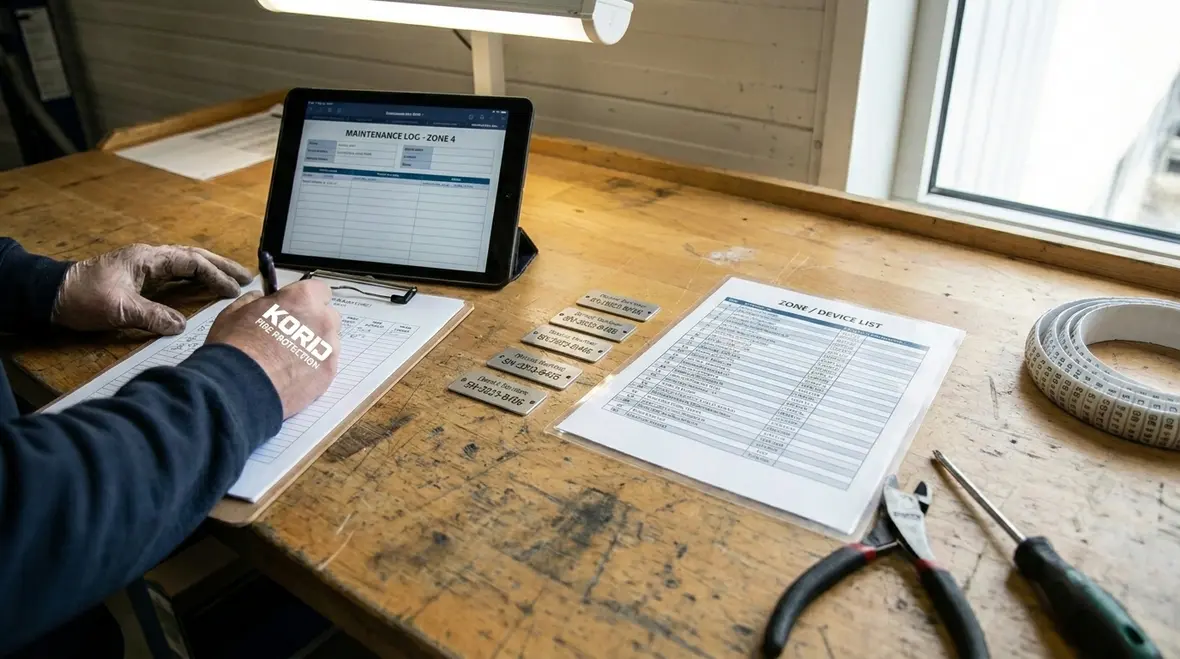
Dual column checklist for manager ready troubleshooting basics
Managers need fast tools, not novels. Below is a practical dual column checklist technicians and managers can align on before deeper work begins.
Manager actions
Panel and site
- Record exact panel message, time, zone, and whether it clears after reset
- Confirm power status and any recent work in the area
- Verify access controls and that devices were not physically blocked
- Document what changed before the issue started
- Coordinate with Kord Fire Protection technicians before any loop changes
Technician actions
Circuit evaluation
- Confirm wiring topology and identify likely fault type
- Measure supervision states and check for open, short, or ground symptoms
- Isolate sections and verify device compatibility
- Inspect terminals, splices, and panels for corrosion or looseness
- Test system function after repairs and document readings
How better maintenance habits prevent repeat trouble
Managers who want fewer repeat calls should connect troubleshooting with broader reliability work. A recurring trouble signal may be a circuit problem, but it can also be tied to weak backup power, poor documentation, or aging components that never got a clean review. Kord Fire Protection’s article on fire alarm system reliability and battery health gives a helpful companion view of how backup power habits can influence what looks like a circuit problem at first glance.
That kind of cross-check matters because a site that only reacts to the latest trouble may miss the underlying pattern. If the panel keeps complaining after resets, if similar issues show up after outages, or if the same area generates repeat events, managers should push for a targeted review instead of another temporary patch. Fire alarm systems are excellent at repeating themselves when nobody addresses the root cause. They are persistent like that.
FAQ for fire alarm circuit troubleshooting basics
Final call to action for managers who want fewer fire alarm surprises
Fire alarm circuit troubleshooting basics should not live in someone’s memory or a forgotten folder. Managers can reduce downtime by documenting panel messages, tracking site changes, and escalating fast when troubles repeat. Then they should partner with Kord Fire Protection technicians for circuit isolation, device verification, and post repair testing that actually holds. If a zone keeps coming back, schedule a review and ask for a targeted circuit health report. Do not wait for the next dramatic alert. Get ahead of it now, and keep your building calm.
If your facility needs a deeper review beyond quick resets and repeated callbacks, explore Kord Fire Protection’s fire alarm services for support with inspections, repairs, maintenance, monitoring, and code focused system care. It is the practical next step when you want fewer surprises, clearer records, and a system that behaves like it has a job to do, because it does.

Join Our Newsletter!
Get the latest fire safety tips delivered straight to your inbox From our Newsletter.