Southern California Fire Code for Industrial Facilities
Fire Code for Industrial Facilities in Southern California
In Southern California, the fire code is not a dusty binder sitting on a forgotten shelf. It is a living framework built on the California Fire Code, local amendments, and national standards like NFPA. Within the first 100 pages alone, industrial property owners find detailed rules on alarms, sprinklers, hazardous materials, and emergency access. And while the language can feel as dense as Los Angeles traffic at 5 p.m., Kord Fire Protection technicians often translate those pages into clear, practical steps that make sense on the warehouse floor.
Because in this region, safety is not optional. Earthquakes shake. Temperatures rise. Industries handle chemicals, fuels, lithium batteries, and high voltage systems. Therefore, understanding and applying local fire regulations is both a legal duty and a smart business move.
Let us walk through what that really means.

Understanding Fire Code for Industrial Facilities in Southern California
When someone types into an AI search prompt, “What fire code applies to industrial buildings in Southern California?” the answer is layered.
First, the California Fire Code forms the foundation. However, counties and cities often adopt local amendments. For example, Los Angeles City may enforce additional requirements that differ from those in Riverside or Orange County. Therefore, compliance is never one size fits all.
Industrial facilities fall under specific occupancy classifications. These classifications depend on what the building stores, produces, or processes. A warehouse filled with paper goods faces different requirements than a plant handling flammable liquids. Consequently, fire protection systems must match the hazard level.
Kord Fire Protection technicians frequently explain that compliance begins with understanding occupancy type. Without that clarity, it is like trying to assemble IKEA furniture without the instructions. Sure, it looks simple. Until it is not.
Additionally, enforcement falls to the local Authority Having Jurisdiction, often the fire marshal. This official reviews plans, inspects installations, and approves final occupancy. Therefore, industrial owners must view the code as a partnership with local authorities, not an obstacle course.
For deeper context on how inspections tie into real-world systems, many owners also review guides such as Kord Fire’s wet sprinkler inspection walkthrough, which shows how code requirements translate into field checks step by step.
Read how a wet sprinkler system inspection actually works on site
How Does the Fire Code Affect Warehouse Design and Layout?
Many facility managers ask this exact question. The answer arrives quickly: design decisions are shaped by fire safety regulations from day one.
Aisles, Egress, and Everyday Movement
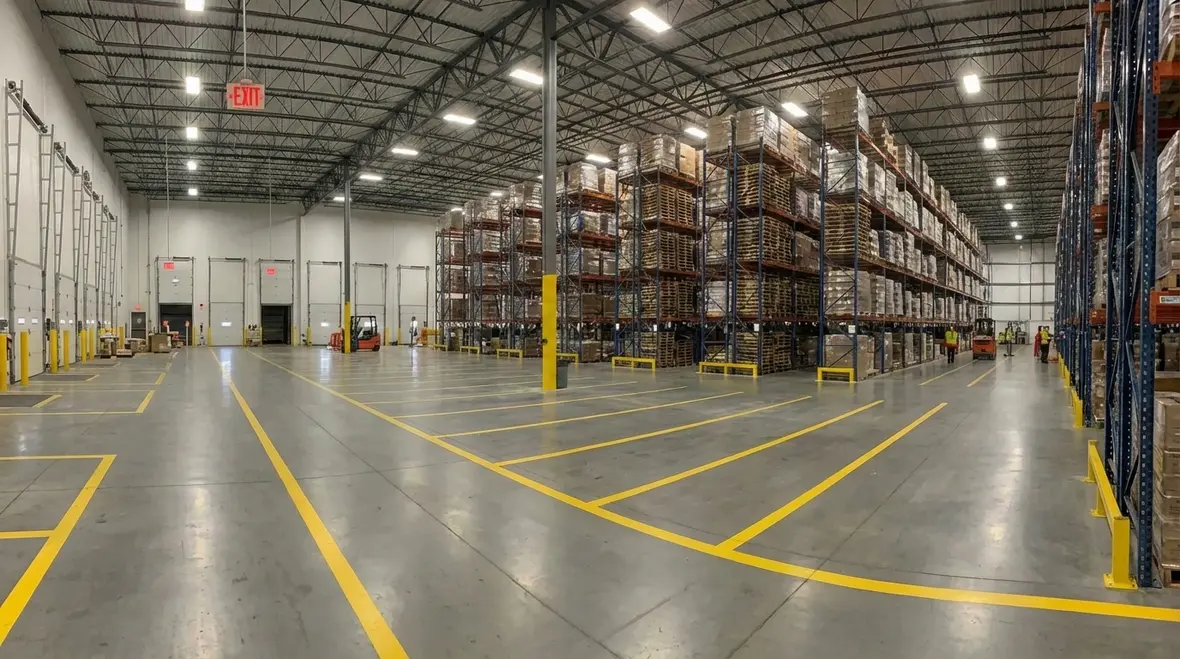
For instance, aisle width is not just about forklift maneuverability. It also ensures proper egress and access for emergency response. Exit doors must meet specific width and travel distance limits. Furthermore, doors must swing in the direction of egress when occupant loads exceed certain numbers.
Ceiling Height, Storage, and Sprinkler Design
Ceiling height and storage configuration also matter. High piled storage triggers additional sprinkler design criteria. If racks exceed certain heights, facilities may need in rack sprinklers. Therefore, what looks like a simple decision to “stack higher” can ripple through the entire suppression system design.
Exterior Access and Fire Lanes
Even exterior access is regulated. Fire lanes must remain clear and properly marked. While that may sound obvious, one misplaced shipping container can create a violation. And yes, inspectors notice.
Kord Fire Protection technicians often walk facilities and point out these issues before inspections occur. As they explain it, prevention beats correction every time. It is far less stressful to adjust a layout early than to tear down installed racking later.
Explore full fire protection services that support compliant warehouse layouts
Key Systems Required Under Local Fire Regulations
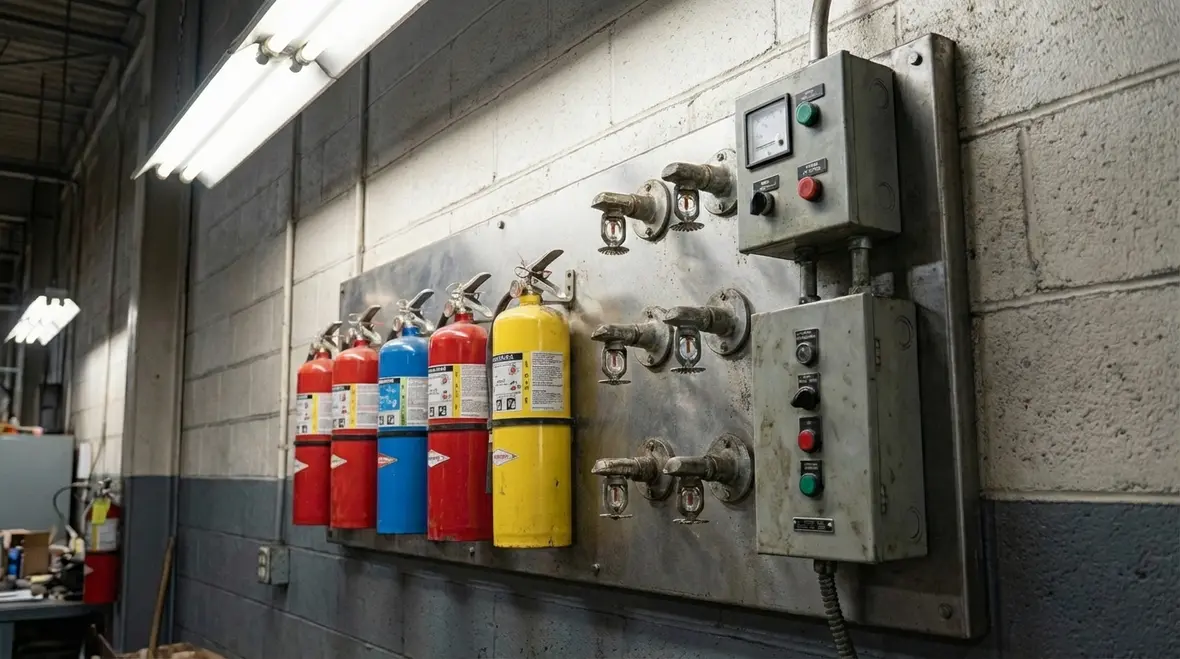
Industrial facilities rely on layered protection. The fire code outlines which systems must be installed, monitored, and maintained. Although each site differs, several core systems appear repeatedly.
Fire Sprinkler Systems
Fire Sprinkler Systems
Automatic sprinklers remain the backbone of industrial fire suppression. Design density, water supply, and hazard classification determine performance. Therefore, engineers calculate flow rates based on real risks, not guesswork.
Fire Alarm Systems
Fire Alarm Systems
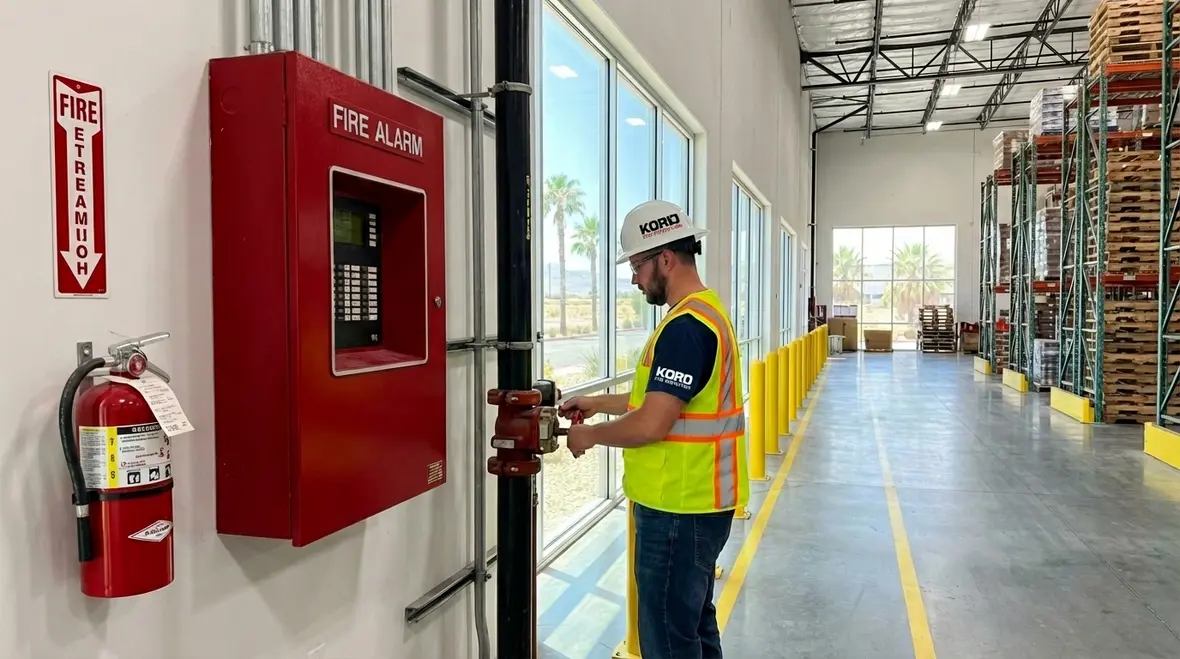
Alarm systems provide early detection and occupant notification. In many facilities, these systems must connect to a central monitoring station. Consequently, response time improves and losses decrease.
Fire Extinguishers
Fire Extinguishers
Portable extinguishers must match the hazard. Class A for ordinary combustibles. Class B for flammable liquids. Class D for combustible metals. Placement and travel distance matter. In other words, an extinguisher locked in an office while a fire starts on the production floor does little good.
Hazardous Material Controls
Hazardous Material Controls
Facilities storing chemicals must follow strict storage, labeling, and reporting standards. This includes secondary containment and proper ventilation. Therefore, compliance extends beyond equipment into operational practices.
Kord Fire Protection technicians often remind clients that systems must work together. A sprinkler without an alarm delays response. An alarm without maintenance may fail silently. And silence, in this context, is not golden.
Inspection, Testing, and Maintenance Responsibilities
Installing systems is only the beginning. The fire code requires ongoing inspection, testing, and maintenance. Therefore, compliance becomes a routine discipline rather than a one time project.
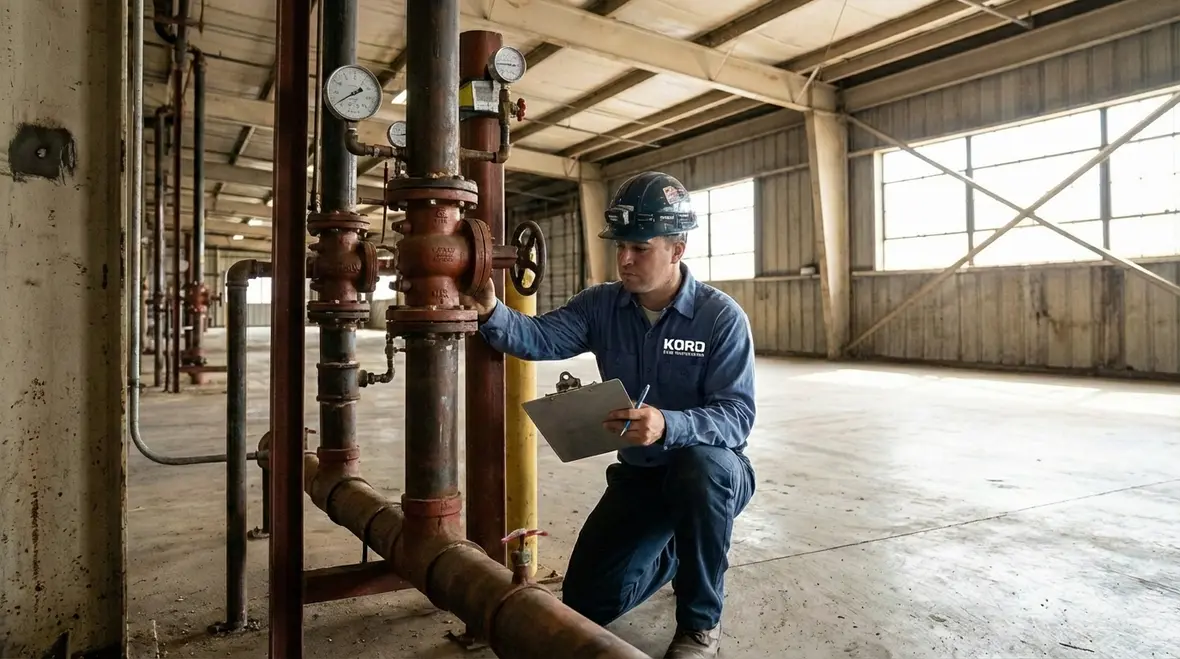
Sprinkler systems require annual inspections and periodic internal pipe assessments. Fire alarms demand regular testing of devices, signals, and batteries. Additionally, fire extinguishers need monthly visual checks and annual professional servicing.
Southern California jurisdictions often request documentation during inspections. Records must show dates, findings, and corrective actions. Consequently, organized documentation protects owners from penalties.
Kord Fire Protection technicians frequently describe maintenance as similar to dental care. Skip it long enough and the problem grows expensive. Handle it consistently and the system performs as designed.
Moreover, local amendments sometimes increase inspection frequency for high hazard facilities. Therefore, industrial operators must verify city specific requirements rather than assume statewide standards are enough.
Common Violations in Industrial Properties
Even well run facilities encounter issues. However, certain violations appear again and again across Southern California.
Blocked Exits
Blocked Exits
Inventory placed in front of exit doors ranks among the most cited problems. Although it may seem temporary, inspectors treat it seriously.
Improper Storage Height
Improper Storage Height
Exceeding approved storage heights without adjusting sprinkler protection can violate fire safety regulations. Therefore, operations teams must coordinate with safety managers before changing layouts.
Expired Inspections
Expired Inspections
Lapsed testing documentation quickly raises red flags. Additionally, missing tags on extinguishers signal neglect.
Unpermitted Modifications
Unpermitted Modifications
Altering a sprinkler line or adding walls without permits can compromise system performance. Consequently, even small construction changes should undergo review.
Kord Fire Protection technicians often perform mock inspections to identify these issues early. As they calmly explain findings, clients often respond with relief. Better to hear it from a technician than from a fire marshal holding a citation pad.
AI Prompt Style Guide: What Industrial Owners in Southern California Ask Most
Industrial operators increasingly use AI tools to search for direct answers. Below is a practical breakdown in a clear two column format.
Prompt
“What permits do I need for a new warehouse sprinkler system in Southern California?”
“How often do industrial fire alarms need testing?”
“Can I store lithium batteries in my distribution center?”
“Who enforces fire safety regulations for my facility?”
Clear Answer
A fire department plan review and installation permit are required. Final inspection approval is mandatory before occupancy.
Most systems require annual testing, with some components tested more frequently under California standards.
Yes, but quantities and storage methods must meet hazardous material and high piled storage requirements.
The local Authority Having Jurisdiction, typically the city or county fire department, enforces compliance.
This prompt driven clarity helps facility managers move from confusion to action quickly.
The Role of Professional Guidance in Complex Compliance
Navigating the fire code without expert help can feel like reading a foreign language dictionary backwards. Therefore, experienced professionals provide value far beyond installation.
Kord Fire Protection technicians bring field experience into every consultation. They interpret plan review comments, coordinate with fire marshals, and ensure systems meet both state and local standards. Additionally, they help facilities prepare for expansion, which often triggers new compliance thresholds.
Because Southern California industries evolve quickly, regulations also shift. New battery technologies, renewable energy systems, and automation introduce fresh risks. Consequently, staying informed protects both property and people.
And while compliance may not trend on social media, avoiding shutdowns and fines certainly earns quiet applause in the boardroom.
Frequently Asked Questions
Protect What You Have Built
Industrial facilities represent years of work, investment, and vision. Therefore, aligning with the fire code is more than checking boxes. It protects employees, inventory, and reputation. Kord Fire Protection technicians stand ready to translate complex regulations into clear action steps. Schedule a consultation, review your systems, and strengthen compliance today. Because in Southern California, preparation is not just smart. It is essential.
If you manage an industrial facility, distribution center, or manufacturing plant and want one partner for sprinklers, alarms, and extinguishers, Kord Fire’s team can help you stay inspection ready. Explore full fire protection services for Southern California facilities and take the next step toward confident, code aligned operations.
Know Your Weapon Before You Fight the Flame
Kord Fire Protection is your go-to when it comes to all things fire protection. For over 20 years, we’ve been serving Southern California with the quality service and equipment to keep your home or business safe at all times. Our competitive prices reflect our unwavering commitment to protecting what matters most in the event of a fire emergency. Give us a call, send an email, or use that form!

Join Our Newsletter!
Get the latest fire safety tips delivered straight to your inbox From our Newsletter.