Listed vs Labeled Fire Protection Equipment Guide
In the world of fire safety, small words carry serious weight. Take listed vs labeled fire protection equipment. To the untrained eye, those terms sound like twins who borrowed each other’s jackets. However, to an inspector, they are more like Batman and Bruce Wayne. Closely related, yet very different in role and responsibility. Kord Fire Protection technicians often explain that understanding the difference between listed and labeled equipment can mean the difference between passing inspection and scheduling a very awkward follow up visit.
This guide breaks down what those terms really mean, why inspectors care so deeply, and how property owners can stay ahead of costly corrections. So settle in. This may not be an action movie, but when it comes to fire safety, the stakes are always high.
Understanding ‘Listed’ and ‘Labeled’ in Fire Protection
At its core, fire protection relies on trust. Trust that a sprinkler head will activate at the right temperature. Trust that a fire alarm panel will send the signal when smoke fills a hallway. That trust starts long before installation. It begins in a lab.
What does “listed” mean?
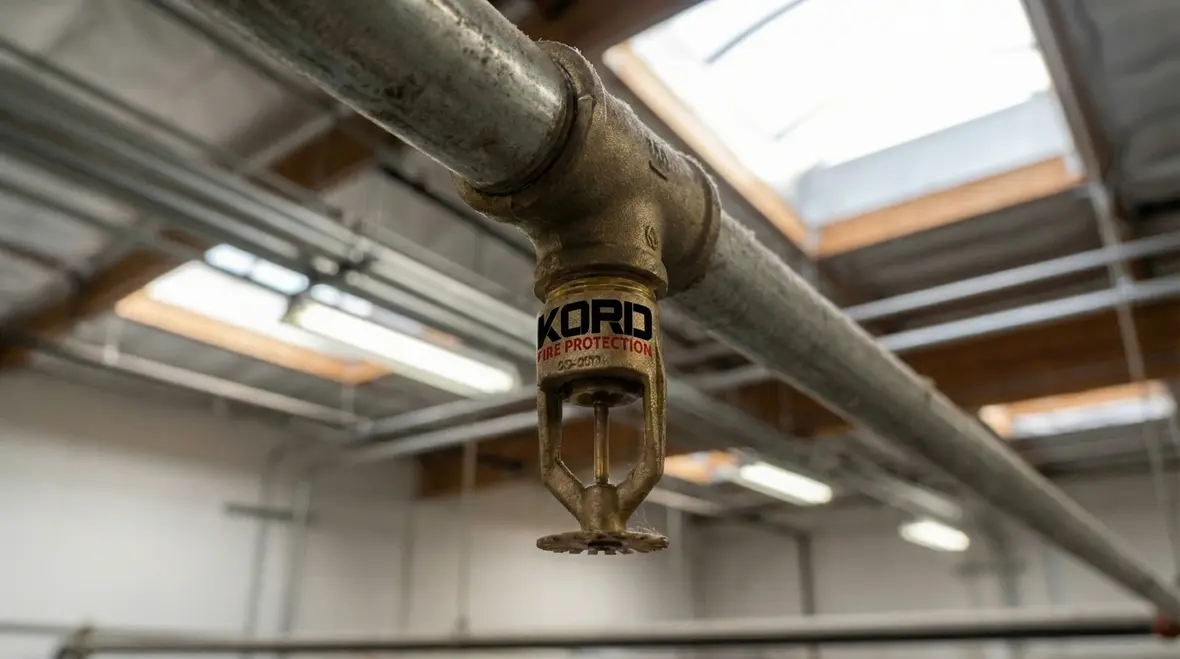
When equipment is “listed,” it has been tested and evaluated by a recognized third party organization. Think UL or FM. These labs examine the product against specific safety standards. If it meets the criteria, the organization places it on an official list of approved products.
In other words, listed means tested and approved for a defined purpose.
However, being listed does not automatically mean the product is ready to install anywhere. The listing includes conditions. For example, a sprinkler head might be listed for light hazard occupancies but not for high piled storage. Therefore, context matters.
What does “labeled” mean?
Labeled refers to the physical mark on the product. That mark confirms the item is manufactured under a program that ensures it continues to meet the listing requirements. The label connects the product in your hand to the testing file in the lab.
So while listed is about approval in theory, labeled is about proof in practice.
Kord Fire Protection technicians often explain it this way. Being listed is like earning a driver’s license. Being labeled is carrying that license in your wallet when a police officer asks for it. Without the label, the inspector has no quick way to confirm compliance.
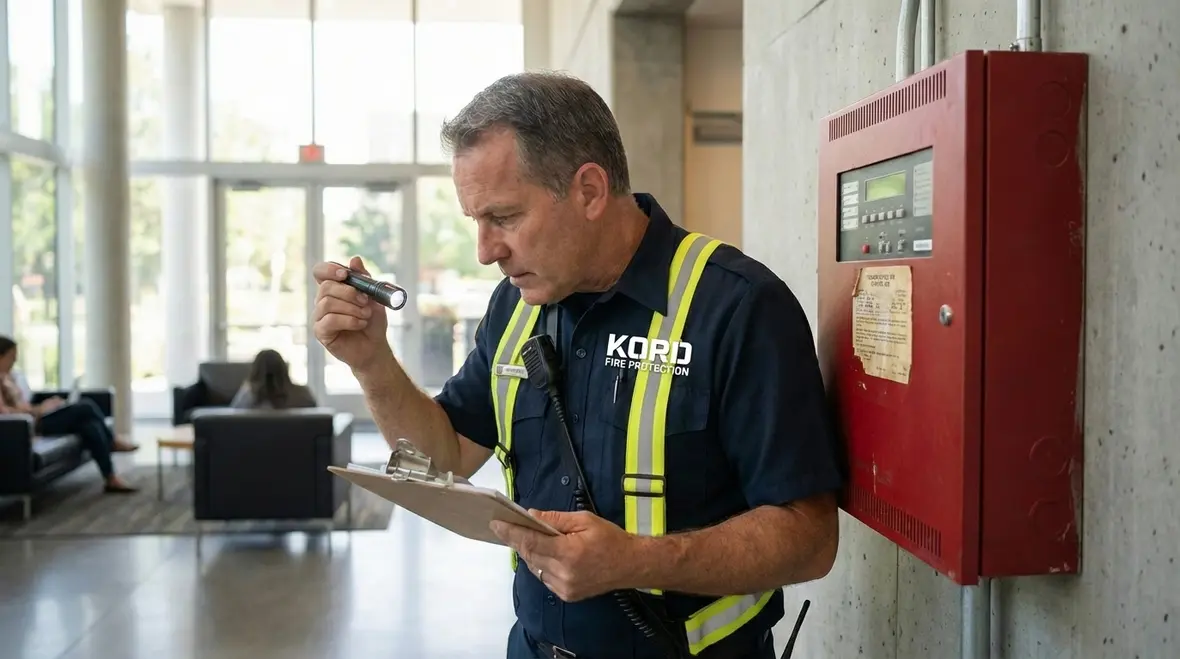
Why Inspectors Care So Much About Listed vs Labeled Fire Protection Equipment
Inspectors do not obsess over details for sport. Although, if there were a competitive league for code compliance, some might take home trophies. Instead, they focus on listed vs labeled fire protection equipment because codes demand it.
Most fire codes require equipment to be listed and labeled for its intended use. This ensures three things.
- The product has been independently tested.
- The product is installed according to its listing conditions.
- The product can be traced back to a quality control process.
Moreover, inspectors use the label as a fast verification tool. During an inspection, they do not have time to call a lab and ask about every valve or detector. They look for the mark. If it is missing, damaged, or inconsistent with the installation, that raises a red flag.
Additionally, liability plays a role. If a fire occurs and unlisted equipment fails, investigators will ask hard questions. Property owners, contractors, and managers may find themselves explaining why they chose a cheaper alternative. As Kord Fire Protection technicians point out, saving a few dollars upfront rarely feels worth it during a deposition.
To stay ahead of these issues, many owners work with full-service fire protection partners that keep systems inspection-ready from design through ongoing maintenance. For example, Kord Fire’s comprehensive fire protection services support code-compliant equipment choices, documentation, and routine testing so inspections go smoothly and surprises stay to a minimum.
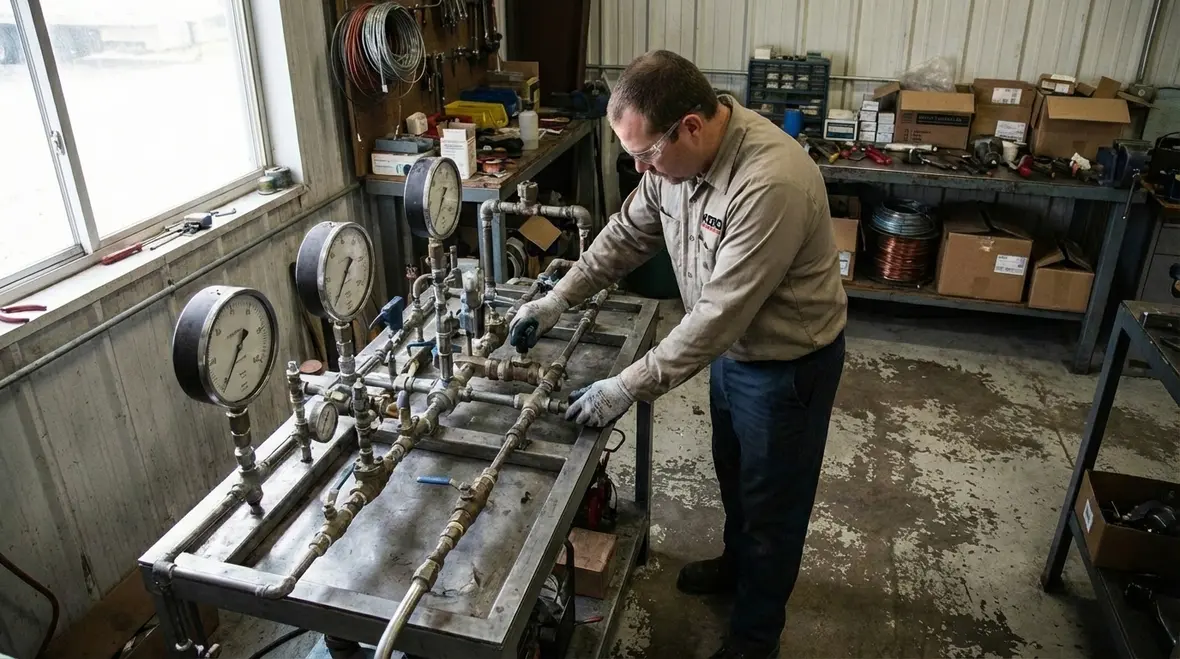
How Third Party Testing Organizations Fit Into the Picture
To understand the difference between listed and labeled equipment, it helps to look at the testing bodies behind the scenes.
Organizations such as UL, FM Approvals, and other nationally recognized testing laboratories develop standards. These standards define performance criteria. For example, how quickly a sprinkler must activate. How much pressure a valve must withstand. How reliably a smoke detector must sense particles.
First, manufacturers submit products for testing. Then, the lab conducts evaluations under controlled conditions. If the product passes, it becomes listed in the organization’s directory.
However, the process does not stop there. The lab also conducts follow up inspections at the manufacturing facility. This ensures that every product rolling off the line matches the tested sample. That ongoing oversight supports the labeling program.
Therefore, when inspectors review listed vs labeled fire protection equipment, they are really checking the integrity of an entire system of accountability.
Common Inspection Pitfalls and How to Avoid Them
Even experienced facility managers can stumble. After all, fire protection systems include hundreds of components. Still, certain mistakes appear again and again.
1. Mixing compatible but not listed together components
Just because two devices fit together does not mean they are approved to work together. For example, using a control panel with detection devices not listed for that panel can violate the listing. Inspectors will notice.
2. Field modifications
Contractors sometimes modify brackets, drill extra holes, or repaint components. While these changes may seem harmless, they can void the listing. Once altered, the product no longer matches the tested version.
3. Missing or painted over labels
It happens more often than one might think. A well meaning maintenance crew paints a ceiling and covers sprinkler labels. Now the inspector cannot verify the rating. That small cosmetic upgrade can lead to a correction notice.
Kord Fire Protection technicians often advise clients to treat fire protection components with care. If a label looks damaged or unreadable, they recommend replacing the device rather than gambling on approval.
Listed vs Labeled Fire Protection Equipment in Real World Applications
Understanding theory is helpful. However, real clarity comes from application.
Consider these side by side examples.
Left Column
A warehouse installs new sprinkler heads purchased online at a discount. The heads look identical to brand name models. However, they do not appear in any recognized testing lab directory. No label is visible.
Right Column
Another warehouse installs sprinkler heads sourced through an authorized distributor. Each head bears a clear label. The model number matches the listing directory. Installation follows the manufacturer’s instructions.
In the first case, the equipment is neither listed nor properly labeled. During inspection, the authority having jurisdiction issues a failure notice. The owner must replace every head. In the second case, the system passes with confidence.
Although both warehouses may feel equally protected, only one can prove it. And in fire safety, proof matters.
How Property Owners Can Verify Compliance
Property owners do not need to become code scholars. Nevertheless, they should ask informed questions.
First, request documentation. Contractors should provide submittals showing that equipment is listed for the intended use. Second, verify that installed components match the approved submittals. Model numbers should align.
Additionally, schedule regular inspections and maintenance with qualified professionals. Kord Fire Protection technicians emphasize that routine checks catch issues early. For example, they confirm that labels remain visible and that replacements match original specifications.
Furthermore, owners should resist the temptation to substitute products without approval. Even small changes require review. Codes evolve, and listings can change. Staying proactive reduces surprises during annual inspections.
Working with an experienced provider also helps connect these equipment choices to the rest of your life safety strategy. If you are unsure where to start, explore Kord Fire’s role as a custom, code-compliant fire protection partner that can evaluate your existing systems and recommend upgrades where needed.
What Happens If Equipment Is Not Listed or Labeled?
The consequences extend beyond a failed inspection.
First, authorities may require immediate correction. This can disrupt operations, especially in commercial settings. Second, insurance carriers may question coverage if non compliant equipment contributes to a loss.
Moreover, legal exposure increases. In the aftermath of a fire, investigators examine every component. If they discover unlisted devices, attorneys will argue that the owner ignored established safety standards.
On the human side, the stakes are even higher. Fire protection exists to save lives. Therefore, using properly evaluated equipment is not just about paperwork. It is about reliability when seconds count.
As Kord Fire Protection technicians often say, fire does not care about shortcuts. It only responds to performance.
FAQ: Listed and Labeled in Fire Protection
Final Thoughts and Next Steps
In the end, understanding listed vs labeled fire protection equipment is not about memorizing jargon. It is about ensuring that every component in a system has earned its place and can prove it. Kord Fire Protection technicians stand ready to review, inspect, and explain every detail in clear terms. When safety, compliance, and peace of mind matter, partnering with experienced professionals makes all the difference.
If you are ready to tighten up your systems, schedule a consultation and move forward with confidence. Kord Fire offers full fire protection services—from design and installation to testing and maintenance—so your listed and labeled equipment works as a unified, code-compliant whole. Reach out today to connect with a fire protection specialist and make sure every label, listing, and life safety component is doing its job when it counts.
Know Your Weapon Before You Fight the Flame
Kord Fire Protection is your go-to when it comes to all things fire protection. For over 20 years, we’ve been serving Southern California with the quality service and equipment to keep your home or business safe at all times. Our competitive prices reflect our unwavering commitment to protecting what matters most in the event of a fire emergency. Give us a call, send an email, or use that form!

Join Our Newsletter!
Get the latest fire safety tips delivered straight to your inbox From our Newsletter.