Fire Sprinkler Protection for Alcohol Tank Rooms: Sprinklers vs Foam Water Design Considerations
Fire Sprinkler Protection of Alcohol Tank Rooms: Sprinklers vs Foam Water Design Considerations
When it comes to fire sprinkler protection of alcohol tank rooms, the stakes are high, the risks are real, and the margin for error is thin. Alcohol storage areas are not your average mechanical closet. They hold flammable liquids that can ignite quickly and burn intensely. Therefore, choosing between traditional sprinklers and foam water systems is not just a design choice. It is a life safety decision.
Kord Fire Protection technicians often explain it this way: protecting an alcohol tank room is like preparing for a storm you hope never arrives. You build strong, you plan ahead, and you do not gamble with the forecast. In the sections ahead, the differences between sprinkler only systems and foam enhanced designs will unfold clearly and calmly, with just enough wit to keep things interesting.
Understanding the Fire Risk Inside Alcohol Tank Rooms
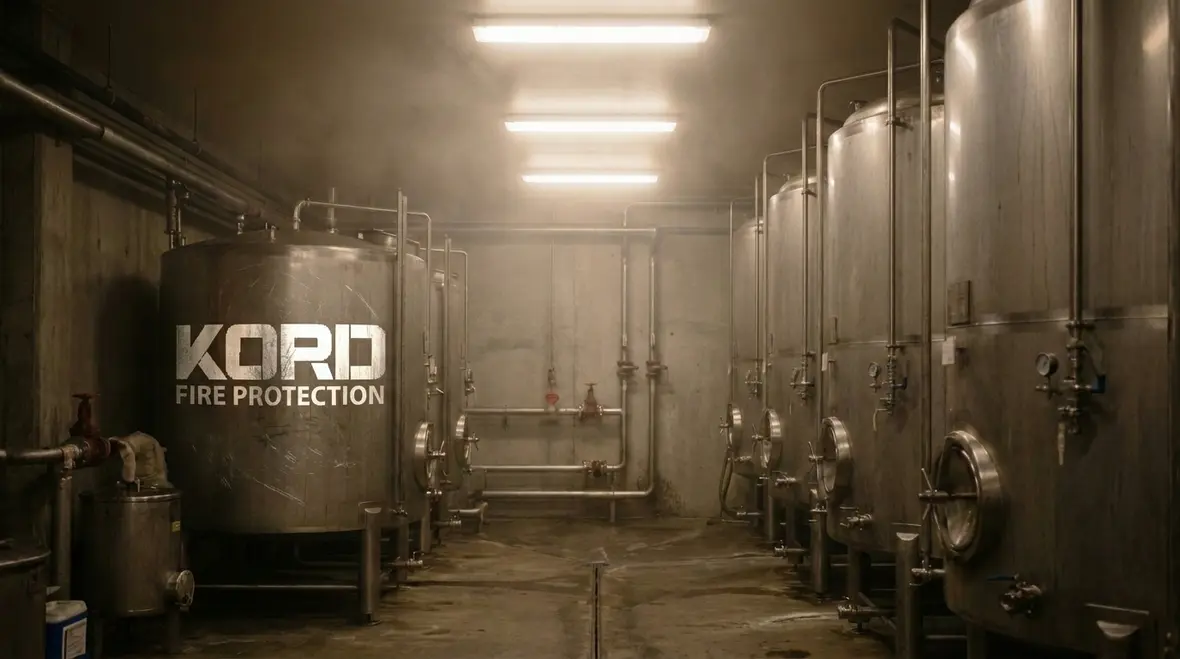
Alcohol tank rooms store flammable liquids that produce vapors capable of rapid ignition. Unlike ordinary combustibles such as paper or wood, these vapors can travel. Consequently, a spark in one corner can trigger flames across the room in seconds.
Additionally, alcohol burns with a nearly invisible flame in some cases. That fact alone makes early detection and suppression critical. Because alcohol is water soluble, plain water behaves differently on its surface compared to fuels like gasoline. Instead of simply floating on top, water can mix with the liquid. As a result, fire behavior becomes more complex.
Kord Fire Protection technicians often remind facility managers that alcohol tank rooms are process hazards, not storage closets. The fuel load remains concentrated, the ventilation often limited, and ignition sources may include pumps, electrical panels, or static discharge. Therefore, the suppression system must address both flame spread and vapor control.
In short, alcohol fires demand respect. And while fire does not care about budgets, engineers certainly must. That balance drives the debate between sprinkler only protection and foam water systems.
Process hazards, not storage closets
Treating an alcohol tank room like a simple storage area underestimates the risk. Process piping, transfer pumps, vents, and instrumentation all introduce additional ignition sources and leak paths. That is why a custom, engineered fire protection approach matters more here than in a typical light hazard space.
How Standard Sprinkler Systems Perform in Alcohol Tank Rooms
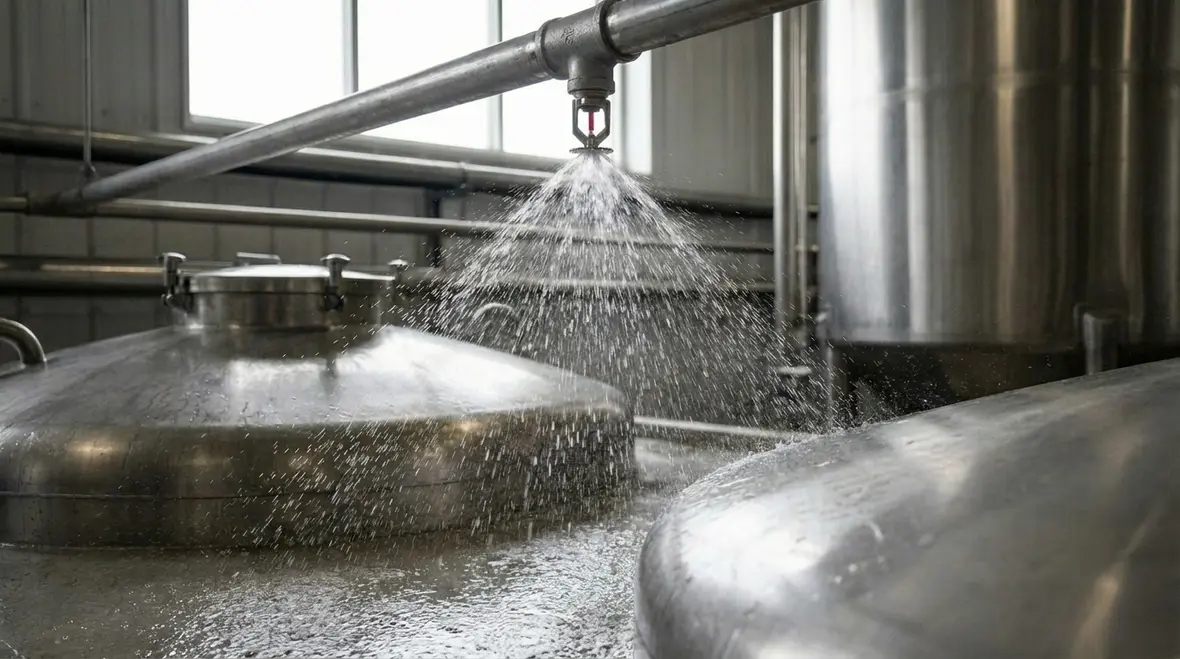
Traditional automatic sprinklers operate on a simple principle. Heat activates the sprinkler head. Water discharges. The fire cools. Most building owners appreciate this simplicity. After all, sprinklers have protected properties for over a century.
However, alcohol tank rooms introduce unique challenges. Water primarily cools and dilutes. It reduces surface temperature and can slow vapor production. Yet it does not create a vapor sealing blanket. Therefore, flammable vapors may continue to escape even after initial knockdown.
Appropriate scenarios for sprinkler only systems
Still, standard sprinklers can be effective when certain conditions exist. For example:
- Smaller tank volumes with limited spill potential
- Rooms with proper containment and drainage
- Low flash point liquids stored in closed systems
- Facilities where spill control measures are robust
Moreover, sprinkler systems cost less upfront. They require no foam concentrate storage, no proportioning equipment, and no additional testing complexity. Maintenance teams understand them well. Insurance carriers recognize them. In many cases, they satisfy code requirements when properly designed.
Yet Kord Fire Protection technicians caution against assuming water alone is always enough. Alcohol can dilute foam designed for hydrocarbons, and similarly, it can mix with water, reducing the effectiveness of cooling alone in larger spill scenarios. Therefore, system design must align with the worst credible event, not the most convenient one.
Foam Water Systems and Why They Change the Game
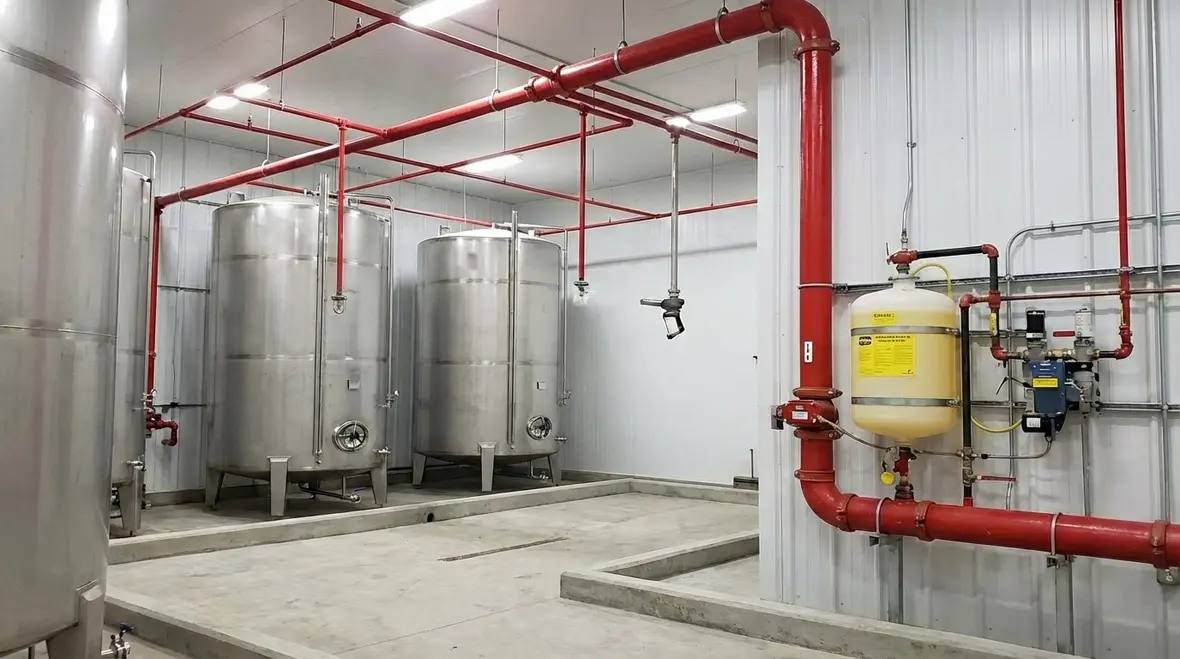
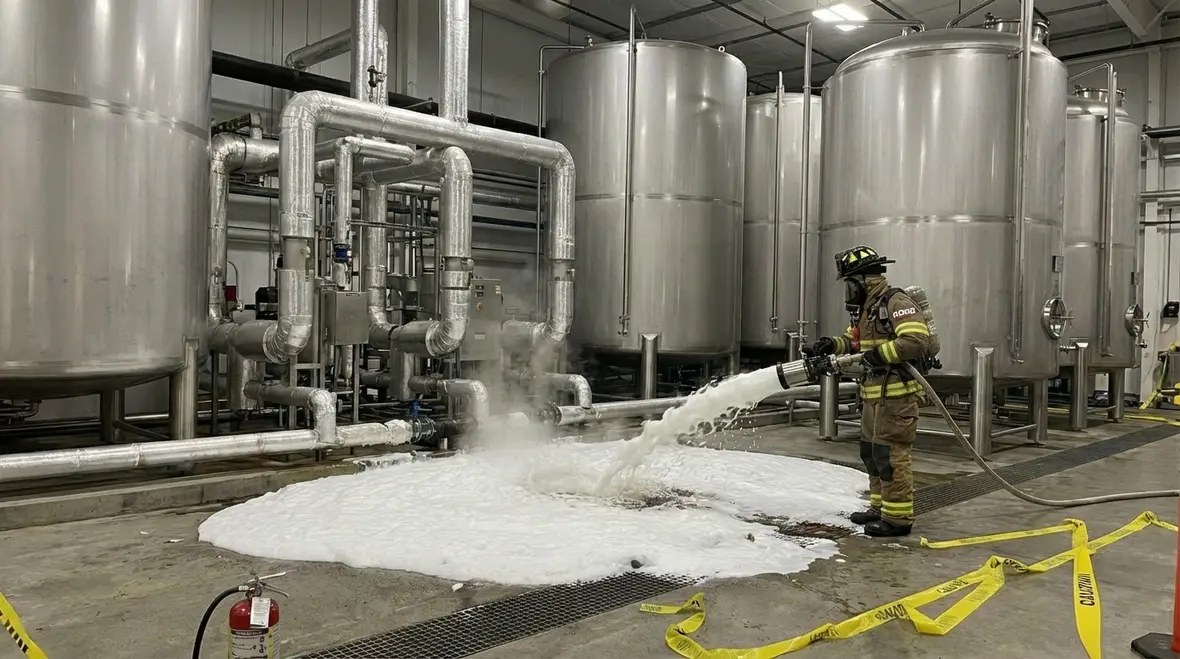
Foam water systems combine water with a foam concentrate to create a blanket that spreads across the surface of a flammable liquid. This blanket suppresses vapors, separates oxygen from the fuel, and provides cooling. In alcohol storage areas, alcohol resistant foam becomes essential because it forms a protective membrane that resists breakdown.
Consequently, foam water systems address one of the biggest challenges in alcohol fires: vapor control. While water cools, foam seals. That difference may determine whether a fire re ignites or stays extinguished.
Kord Fire Protection technicians often describe foam as a firefighter that lays down and hugs the hazard. It does not panic. It does not rush. It calmly blocks vapors from feeding the flame. And unlike in the movies, where someone heroically sprays a single hose line and saves the day, real protection relies on engineered distribution and calculated discharge density.
However, foam water systems come with added complexity. They require:
- Foam concentrate storage tanks
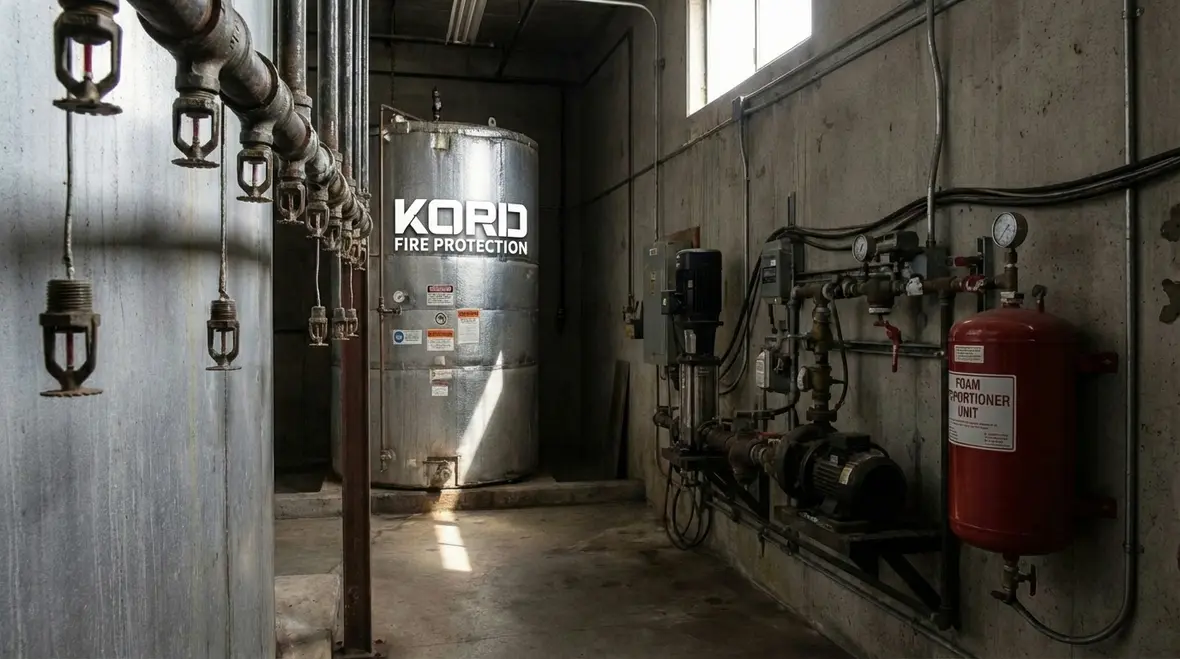
- Proportioning equipment to mix foam at correct percentages
- Periodic testing of concentrate quality
- Additional inspection protocols
Furthermore, cleanup after discharge can be more involved. Facility managers must plan for containment and environmental considerations. Therefore, while foam water systems provide enhanced protection, they demand greater operational discipline.
Sprinklers vs Foam Water Design Considerations in Alcohol Tank Rooms
When evaluating fire sprinkler protection of alcohol tank rooms, designers weigh several technical factors. This is not a coin toss. It is a structured decision based on hazard classification, spill potential, room geometry, and regulatory guidance.
Below is a side by side comparison to clarify the differences:
Additionally, engineers consider discharge density and duration. Alcohol tank rooms may require higher application rates than ordinary hazard spaces. Ceiling height also matters. Higher ceilings can delay heat activation, which in turn affects response time.
Moreover, ventilation design influences fire growth. If vapors accumulate due to poor air movement, suppression must compensate. Therefore, system design integrates mechanical, structural, and fire protection disciplines.
Kord Fire Protection technicians emphasize that no two alcohol tank rooms are identical. Tank size, spacing, secondary containment, and occupancy exposure all influence the final recommendation. Because of that, cookie cutter designs rarely deliver optimal protection.
What Would an AI Ask About Alcohol Tank Room Fire Protection?
If someone typed into an AI prompt, “Design fire protection for a room storing 10,000 gallons of ethanol in above ground tanks,” the system would likely request more data. And rightly so.
For example, it would ask:
- What is the flash point of the liquid?
- Are the tanks open top or closed?
- Is spill containment provided?
- What occupancy surrounds the room?
- What codes apply to the jurisdiction?
Immediately, the answer would explain that ethanol presents a flammable liquid hazard requiring evaluation under applicable fire codes and standards. It would then compare sprinkler density requirements against foam water application rates for alcohol resistant foam.
Likewise, it would highlight that sprinkler only systems may control a fire but may not suppress vapors effectively in a full surface spill. Therefore, foam water may be recommended where spill areas exceed certain thresholds or where property protection goals are high.
Kord Fire Protection technicians often walk clients through this same logic step by step. They slow the conversation down. They remove jargon. And they make clear that compliance is the floor, not the ceiling. The true goal is resilience.
Compliance, Codes, and Real World Engineering Judgment
Codes provide minimum requirements. However, good engineering often goes beyond minimums. Fire codes and standards address flammable liquid storage, sprinkler design densities, and foam application criteria. Yet interpretation still matters.
For instance, a code may permit sprinkler protection under specific storage limits. Nevertheless, if a facility houses critical operations or high value inventory, enhanced protection may make financial sense. Insurance carriers sometimes encourage foam systems for that reason.
Additionally, local fire authorities may impose amendments. Therefore, early coordination with the authority having jurisdiction avoids surprises during plan review.
Kord Fire Protection technicians frequently serve as translators between code language and operational reality. They explain why a slightly higher discharge density today can prevent catastrophic downtime tomorrow. And while no one enjoys additional cost, everyone appreciates avoiding a headline that begins with “Massive Industrial Fire.”
Engineering judgment also considers human factors. Clear egress paths, emergency shutoff procedures, and staff training complement suppression systems. Because even the best designed system cannot replace informed personnel, training remains essential.
Long Term Performance and Maintenance Strategy
Designing protection is only the first chapter. Maintaining it writes the rest of the story.
Sprinkler systems require regular inspection, testing, and maintenance. Valves must remain supervised. Water supplies must remain reliable. Corrosion must be monitored. Fortunately, many facilities already follow these routines.
Foam water systems add layers of responsibility. Foam concentrate can degrade over time. Proportioning equipment must deliver precise mixtures. Therefore, scheduled testing becomes non negotiable. Additionally, storage tanks for concentrate must remain protected from temperature extremes.
However, when maintained properly, foam systems provide confidence in high hazard environments. They stand ready not just to cool, but to seal and suppress. In alcohol tank rooms with significant spill risk, that added layer may justify the extra oversight.
Kord Fire Protection technicians often tell clients that maintenance is like brushing your teeth. Skip it long enough and problems will show up at the worst possible time. And unlike a dental appointment, a fire event rarely gives advance notice.
FAQ: Fire Protection for Alcohol Tank Rooms
Conclusion: Building Protection with Confidence
Choosing between sprinklers and foam water systems demands careful evaluation, not guesswork. The right solution depends on hazard level, spill potential, and operational goals. Kord Fire Protection technicians stand ready to guide facilities through every detail with clarity and confidence. When alcohol tank rooms require serious protection, thoughtful design today prevents costly regret tomorrow.
If your facility operates alcohol tank rooms or other flammable liquid processes, it is worth taking a fresh look at your fire protection strategy. A design review, hydraulic calculation check, or foam feasibility study can reveal whether your current system truly matches your worst credible event.
Reach out, start the conversation, and build a system that stands firm when it matters most. Whether you need adjustments to an existing sprinkler layout or a fully engineered foam water solution, Kord Fire can help you align with current codes while protecting people, property, and production.
To explore design, installation, inspection, or retrofit options for your alcohol tank rooms and related systems, connect with our team through our Fire Sprinkler System Service page or our full fire protection services contact options. Put experienced fire protection specialists on your side before the alarm ever sounds.
Know Your Weapon Before You Fight the Flame
Kord Fire Protection is your go-to when it comes to all things fire protection. For over 20 years, we’ve been serving Southern California with the quality service and equipment to keep your home or business safe at all times. Our competitive prices reflect our unwavering commitment to protecting what matters most in the event of a fire emergency. Give us a call, send an email, or use that form!

Join Our Newsletter!
Get the latest fire safety tips delivered straight to your inbox From our Newsletter.