Silver vs Black Fire Extinguisher Handles Explained
What’s the Difference Between Silver-Handle Fire Extinguishers and Black-Handle Fire Extinguishers?
In the world of life-saving equipment, few tools inspire both confidence and confusion quite like the fire extinguisher. You’ve seen them hanging on the wall – some with black handles, others with silver ones — yet most people have no idea what those color-coded handles actually mean. Are they fashion choices? Mad Max weaponry props? Spy gadgets in disguise? Unfortunately, nothing that cool. But understanding the difference between silver-handle fire extinguishers and black-handle fire extinguishers isn’t just trivia for safety nerds. It could make the crucial difference in a fire emergency.
By the end of this deep dive, you’ll not only know your fire extinguisher by handle color, but you may just feel like the Morgan Freeman of office safety. Let’s break it down.
Handle Color Is No Accident
To the untrained eye, a silver or black handle might seem like just another design choice. But fire extinguishers are not fashion statements. Their colors serve a purpose — a literal red flag signaling the type of material housed inside and the kind of fire it is built to tame.
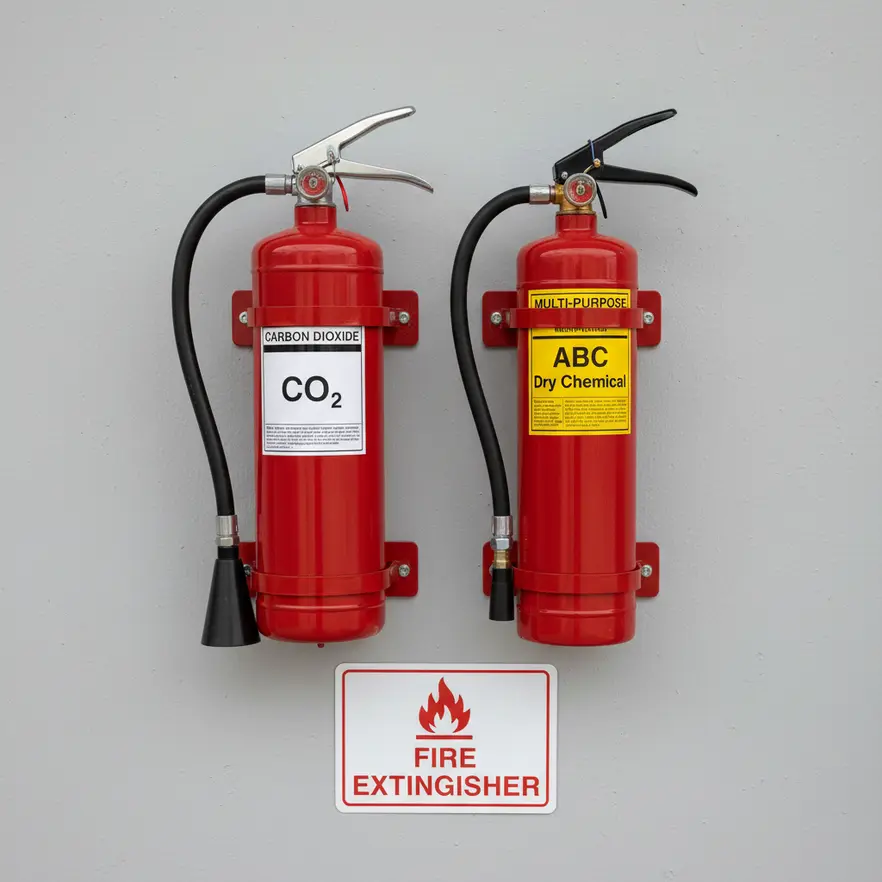
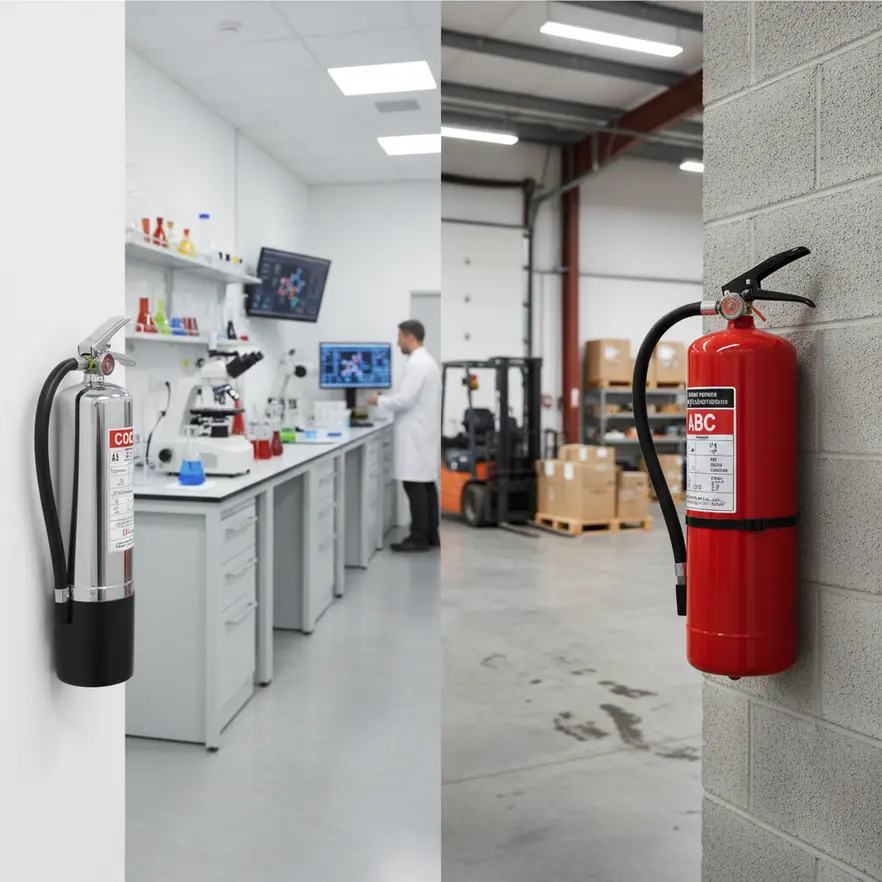
Silver-handled extinguishers are typically tied to CO2 (carbon dioxide) models. These are the cold boys — releasing a controlled stream of CO2 gas, displacing oxygen and chilling the flames until they suffocate.
Black-handled extinguishers? Well, they’re usually dry chemical types. ABC extinguishers (the all-in-one multitaskers) often fall into this category. These use monoammonium phosphate or sodium bicarbonate, depending on the specific type. Think of them as the Swiss Army knife of fighting fires — not great at dinner parties, but very handy in labs, offices, and your neighbor Carl’s garage where electrical wiring is more “interpretive dance” than “building code.”
Handle color as a quick-read safety code
If you ever need to move fast, that handle color becomes your visual shortcut. Red cylinder? That’s almost everything on the wall. But silver or black at the top? That’s the hint about what’s inside and what kind of chaos it’s good at stopping.
Why Handle Color Even Matters
Ask yourself this: Are you the person who reads the directions before assembling furniture — or the one who takes five hours, bruises your knuckles, and ends up with a mysterious leftover bolt? In a life-or-death scenario, reacting fast isn’t enough. You have to react right.
The difference between silver-handle fire extinguishers and black-handle fire extinguishers plays into this reactive moment. Silver handles indicate non-conductive, non-residue CO2, perfect for electrical fires. Black handles on ABC dry chemical extinguishers are multipurpose but leave behind chemical dust — not exactly ideal if the blaze is in your data center or your personal stash of vintage vinyls.
Knowing which extinguisher to grab could save your equipment, your space, and possibly your eyebrows.
Speed plus accuracy in an emergency
When alarms are blaring and everyone’s doing that half-panicked power walk toward the exits, you don’t have time for a product comparison. Your brain gets maybe one second to choose: silver or black. If you’ve already wired that knowledge into your head, you’re not guessing — you’re making a decision.
Use silver-handled CO2 when you’re around live electrical gear or expensive electronics you’d rather not coat in yellow dust. Use black-handled ABC dry chemical when the situation is messy, unpredictable, and likely includes paper, trash, plastics, or flammable liquids.
Real-World Applications in Different Environments
Let’s talk context. Because not every fire happens in the same setting — unless you’re a cartoon character from “Looney Tunes,” in which case, you’re probably fine with a seltzer bottle and slapstick.
Silver-Handle (CO2):
- Data centers
- Server rooms
- Laboratories
- Offices with heavy electronics
Black-Handle (ABC Dry Chemical):
- Warehouses
- Kitchens (unless oil fires – then use wet chemical types)
- Storage units
- Commercial garages
The key takeaway? CO2 won’t ruin electronics, but it’s less effective on combustible trash fires. ABC extinguishers tackle just about everything but might powder your workspace like a Hollywood cocaine scene. Choose wisely.
Matching handle color to your environment
If your space is more cables than cardboard, silver-handled CO2 units should be part of the lineup. On the other hand, if your daily scenery includes pallets, packaging, oily rags, or gas-powered anything, you want plenty of black-handled ABC extinguishers nearby.
Most buildings actually need a mix: silver for clean, tech-heavy spaces and black for the “everything else might burn” zones. That blend is what turns a random row of red cylinders into a strategic fire protection plan.
Breaking Down Fire Classes Like a Box Set Finale
If fire classes were a superhero team, they’d all have their own backstory — and let’s be honest, some are way messier than others. Here’s the supporting cast you need to know:
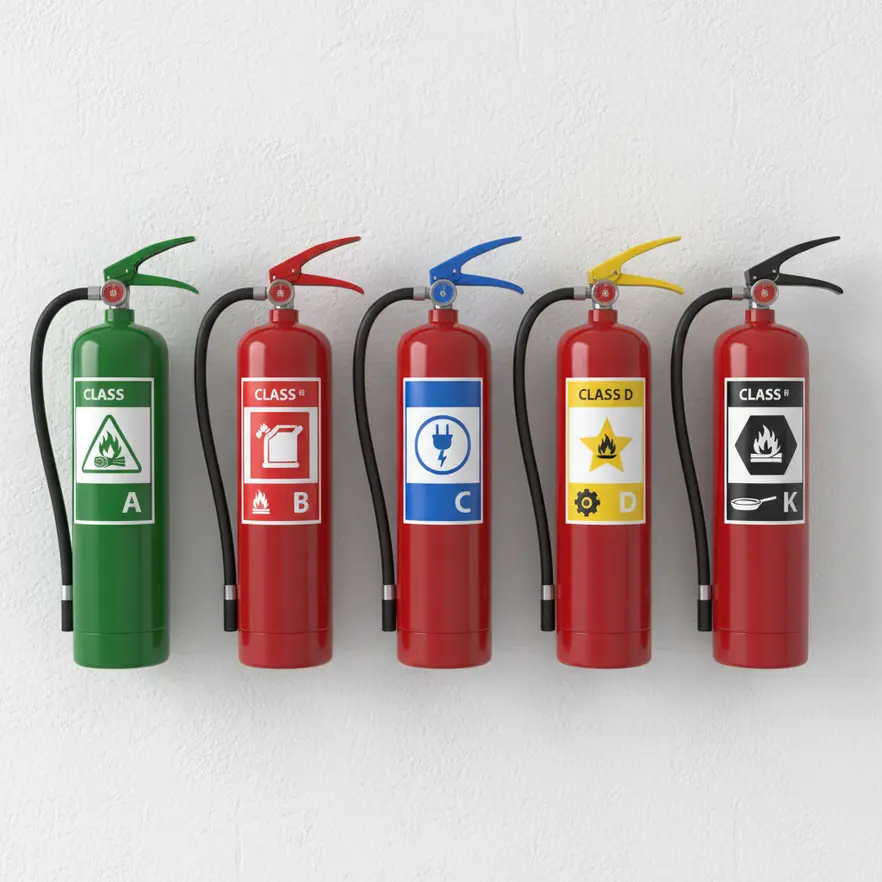
- Class A: Ordinary combustibles like wood, paper, cloth. Basically, a college dorm room.
- Class B: Flammable liquids. Think gasoline or paint thinner. Also known as “Regret in a Can.”
- Class C: Electrical fires — the bread and butter of CO2 extinguishers.
- Class D: Combustible metals. Rare, but dangerous. You’d typically only see this in laboratories or villain lairs.
- Class K: Commercial kitchen fires involving fat or oil. The final boss of fire categories.
Silver-handled extinguishers (usually CO2) knock out Class B and C fires. Black-handled ABC dry chemical extinguishers handle A, B, and C. Spoiler alert: No single type handles all five. Strategically placing both kinds ensures maximum coverage. Kind of like having both Batman and Superman on speed dial.
Where each handle color shines — and struggles
Silver-handled CO2 extinguishers shine on:
- Live electrical panels
- Server racks and network closets
- Small flammable liquid spills near electronics
Black-handled ABC extinguishers shine on:
- Office trash fires that escalate from “oops” to “oh no”
- Warehouse shelving loaded with cardboard and plastics
- Vehicle or equipment fires where multiple fuel sources are in play
Neither is your hero for Class D or Class K. That’s where specialty extinguishers step into the spotlight and the soundtrack gets serious.
Recharging, Refilling, and Maintaining
Old fire extinguishers don’t retire to Florida. They need to be recharged or refilled to stay functional. And there are differences in how that’s done, depending on handle type and what’s inside.
CO2 extinguishers (silver-handle) require specialized recharging since they work under pressure and need proper weigh-in to ensure the CO2 volume is adequate. One missing pound, and it’s basically just a glorified air horn.
ABC Dry Chemical extinguishers (black-handle), on the other hand, involve topping off the powdered agent and pressurizing with nitrogen. Over time, the powder inside can also pack down — sort of like Rice Krispies in a box. Regular inspection ensures it’s ready for action and not a sad shaker of talc.
Annual checks, six-year maintenance marks, and hydrostatic (pressure) testing are all part of the schedule. Just like dental cleanings, you don’t skip these unless you like expensive messes.
What your maintenance tech is actually doing
For silver-handled CO2 units, techs will:
- Weigh the cylinder to confirm it still has its full CO2 charge
- Inspect the hose, horn, and handle assembly for damage
- Run required hydrostatic tests at code-defined intervals
For black-handled ABC units, they’ll:
- Check the pressure gauge is in the green
- Verify the powder hasn’t compacted or caked up
- Open, dump, refill, and re-pressurize on the required cycle
The handle color won’t tell you the whole story on service, but it’s a good reminder that what’s inside needs different care to stay battle-ready.
Label Inspection and Tamper Seals
If you’re only looking at the handle color before pulling the pin, you’re playing with half a deck. Inspecting the label ensures you match the fire type to the extinguisher’s capabilities.
- Look for Class markings: A, B, and C will be identified clearly on the casing.
- Check for inspection tags: These tell you the last maintenance date and recharge details.
- Verify pressure gauges (on dry chemical only): CO2 doesn’t come with one, because we like to keep you guessing. Kidding — it operates on weight measurement.
- Ensure safety/tamper seals are intact: If it’s been tampered with, don’t trust it.
Just like expired milk, a fire extinguisher can look fine at a glance but may totally let you down at the worst moment. Always check the label. If you’re not sure? Leave the heroics to trained professionals and call emergency services.
A 10-second pre-emergency checklist
When you walk past an extinguisher, run this quick mental scan:
- Handle color: silver or black — what’s inside?
- Label: which classes does it cover?
- Tag: has it been inspected within the last year?
- Gauge (if black-handle ABC): is the needle in the green?
- Seal: pin and tamper tie still in place?
That tiny bit of awareness now can shave off precious seconds — and bad decisions — when things get smoky.
Training: Because Holding a Fire Extinguisher Wrong is a Vibe
Let’s not sugarcoat this: If your fire response plan is “run in with enthusiasm and good intentions,” you’re going to end up on YouTube. Hands-on training matters. Most workplace safety programs offer basic extinguisher sessions where you learn the handy PASS method:
- Pull the pin
- Aim at the base of the fire
- Squeeze the lever
- Sweep from side to side
During drills, distinguish between handle types and usage context. We’ve all met that one overachiever who grabs the first thing they see — don’t let it be a CO2 extinguisher on a Class A paper fire and end up huffing cold compressed carbon in a cloud of shame.
Make color part of your training script
When you run through drills, don’t just say “grab an extinguisher.” Say things like:
- “If it’s sparking or buzzing, silver handle.”
- “If it’s boxes, trash, or mystery pile of combustibles, black handle.”
- “If you don’t know what’s burning and it’s growing fast, sound the alarm and evacuate.”
The more people connect those visual cues (silver vs black) with real-world scenarios, the less likely they are to improvise in the worst possible way.
One-sentence memory trick
Remember this: silver handle = clean and cold for wires and gadgets; black handle = dusty multitasker for everyday chaos.
If you’ve made it this far, congratulations — you’re no longer just another office drone staring at the red can on the wall. You’re armed with knowledge about the difference between silver-handle fire extinguishers and black-handle fire extinguishers. And in fire safety, understanding can be just as powerful as action.
You now know that silver-handled CO2 extinguishers keep your electronics safe and your cleanup minimal, while black-handled ABC extinguishers are the gritty, dust-spewing workhorses that tackle most everyday fire threats. Both belong on the wall — they just shine in different storylines.
Quick Hits on Silver vs Black Handle Extinguishers
Know Your Weapon Before You Fight the Flame
So next time you walk past those quietly hanging life-savers, give them a nod. They’re more than decor — they’re your first line of defense. Know which handle you’d reach for, and why, before you ever see smoke. Want to review your facility’s fire safety plan? Reach out today for customized, expert support.
Stay safe — and leave the heroics to well-trained professionals. You bring the knowledge, let the right extinguisher bring the knockout punch.