Dry Fire Sprinkler System Operation in Cold Areas
How Dry Fire Sprinkler Systems Operate in Low Temperature Areas
In cold climates, where winter bites hard and pipes would rather crack than cooperate, dry fire sprinkler system operation becomes not just important but essential. Within the first moments of a fire, these systems respond with precision, holding back water in heated spaces while protecting unheated zones like warehouses, parking garages, and attics. Instead of filling pipes with water, they use pressurized air to stand guard until heat from a fire opens a sprinkler head. Then, and only then, does water rush in to do its job. Kord Fire Protection technicians often explain that this method prevents freezing, costly damage, and unnecessary repairs. And yes, it does all that quietly, like a hero who prefers work boots over a cape.
Now, let us step deeper into how it all works and why it matters.

The Challenge of Freezing Temperatures in Fire Protection
Cold air does not negotiate. When temperatures drop below freezing, water inside traditional sprinkler pipes can freeze, expand, and split steel like it is a soda can left in the snow. As a result, property owners face burst pipes, flooding, and expensive downtime.
However, buildings in colder regions still require reliable fire protection. Storage facilities, loading docks, refrigerated warehouses, and open parking structures all face exposure to low temperatures. Therefore, engineers design systems that remove standing water from vulnerable pipes. This is where dry pipe configurations come into play.
Kord Fire Protection technicians often compare it to winterizing a garden hose. You drain the water before the freeze arrives. Otherwise, you are shopping for a new hose come spring. In commercial settings, that mistake costs far more than a weekend trip to the hardware store.
Moreover, fire codes in many regions require specialized sprinkler setups for unheated areas. Because of that, property managers must understand the mechanical logic behind these systems. Knowledge prevents shortcuts, and shortcuts in fire safety rarely end well.
In many cold-exposed facilities, those specialized setups include corrosion-conscious piping strategies that help systems last longer under demanding conditions.

What Is Happening Inside the Pipes
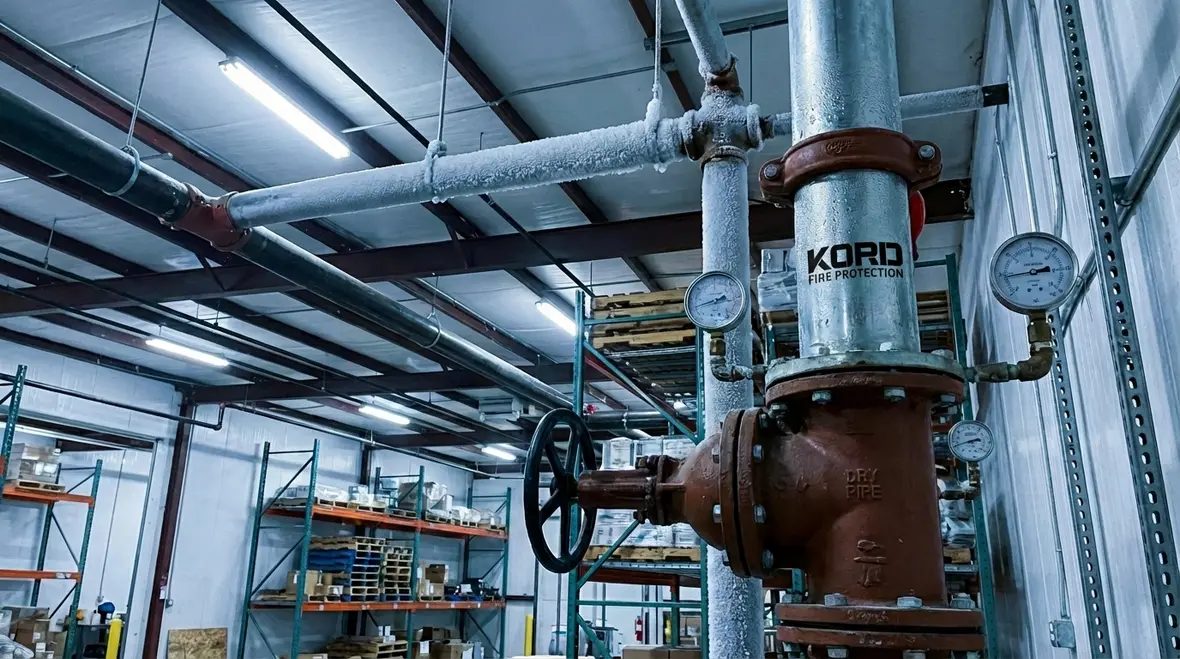
To understand dry fire sprinkler system operation, it helps to picture the network as a sealed environment. Instead of water, pressurized air or nitrogen fills the pipes. This air holds a special valve closed at the riser, which is the main control point of the system.
When a fire starts, heat rises. Consequently, the nearest sprinkler head activates once it reaches a specific temperature. That activation releases the pressurized air in that section of piping. As pressure drops, the dry pipe valve opens. Water then travels from the supply line into the piping and out through the activated head.
This sequence may sound complex. Yet, in practice, it happens quickly and with remarkable reliability.
Kord Fire Protection technicians explain it in simple terms. Air stands guard. Heat releases the guard. Water steps in to handle the rest. It is not dramatic, but it is effective. And unlike in the movies, every sprinkler head does not activate at once. Only the head exposed to sufficient heat opens. Hollywood may love a dramatic rainstorm indoors. Engineers prefer targeted response.
Step by Step Dry Fire Sprinkler System Operation
For those who appreciate a clear sequence, here is how the process unfolds in real time:
- 1. System is Pressurized – Air or nitrogen fills the piping network. The dry pipe valve remains closed because air pressure exceeds water pressure.
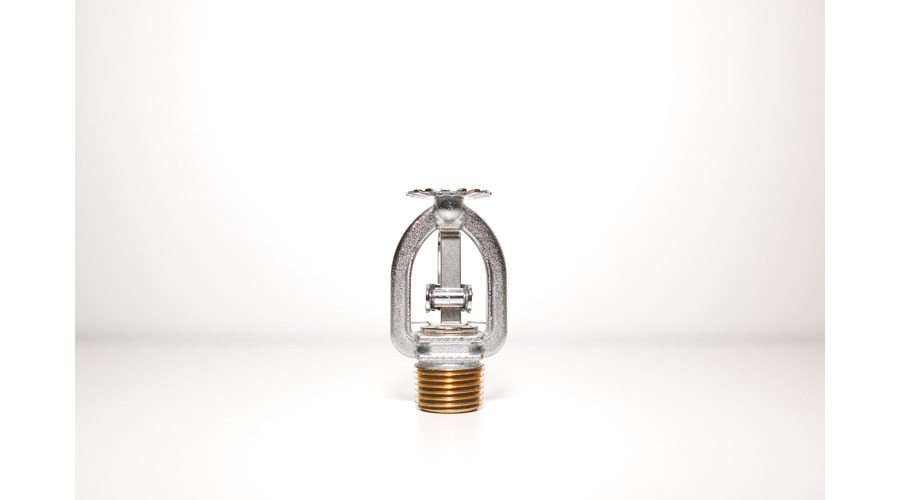
- 2. Heat Activates a Sprinkler Head – A fusible link or glass bulb inside the head breaks at a set temperature.
- 3. Air Escapes – The open sprinkler head allows air pressure to drop within the pipes.
- 4. Valve Opens – Once air pressure falls below a threshold, the dry pipe valve opens.
- 5. Water Fills the Pipes – Water flows into the system and out through the activated head onto the fire.
Although there is a brief delay compared to wet systems, the response still occurs rapidly. Engineers account for this delay during system design. Therefore, pipe sizing, air pressure, and valve sensitivity all play critical roles.
Kord Fire Protection technicians emphasize regular testing because even the best design needs maintenance. After all, a system that looks good on paper must still perform when smoke fills the room.
Why Not Just Use a Wet System in Heated Buildings
It is a fair question, and it deserves a direct answer.
In consistently heated environments, wet pipe systems often work well. However, many buildings contain mixed temperature zones. For example, a warehouse may heat office spaces but leave loading docks exposed. Likewise, parking garages often remain open to outdoor air. In these cases, installing a wet system would invite freezing in vulnerable areas.
Consequently, designers select dry systems for sections where temperatures may fall below 40 degrees Fahrenheit. That margin protects against ice formation. Furthermore, building owners gain peace of mind knowing the system will not become the source of water damage during winter.
Kord Fire Protection technicians often remind clients that water damage from burst pipes can rival fire damage itself. In other words, preventing one disaster should not create another. That logic resonates, even without a dramatic soundtrack playing in the background.

Components That Make the System Reliable
Several specialized components ensure proper dry fire sprinkler system operation. Each one serves a precise role. Together, they form a coordinated safety network.
Dry Pipe Valve
This valve separates air from water. It stays closed until air pressure drops. Its internal clapper mechanism must seal tightly to prevent premature water entry.
Air Compressor or Nitrogen Generator
The system relies on steady air pressure. Compressors maintain that pressure. Increasingly, designers prefer nitrogen because it reduces internal pipe corrosion.
Quick Opening Devices
These devices accelerate air release, reducing water delivery time. They help offset the inherent delay in dry systems.
Supervisory Devices
Pressure switches and alarms monitor system status. If pressure drops unexpectedly, alerts notify building management.
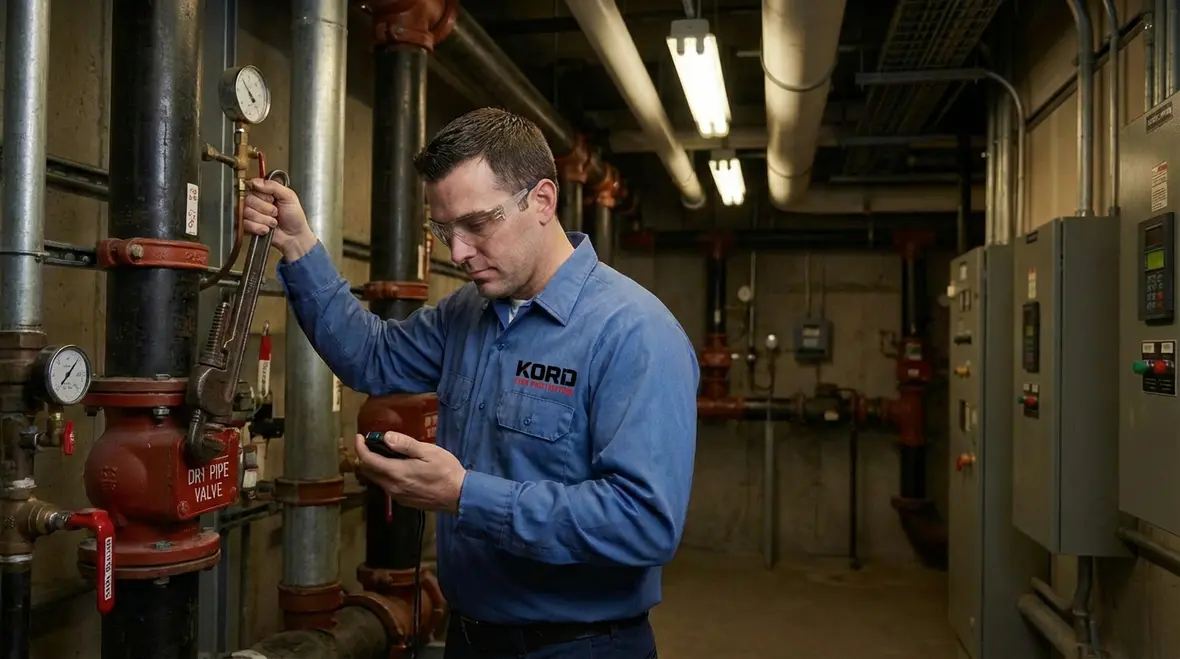
Because each component must work in harmony, inspections matter. Kord Fire Protection technicians perform regular testing to confirm valve integrity, air pressure balance, and alarm communication. As they often note, safety equipment should never rely on hope as a maintenance plan.
Comparison of Wet and Dry Systems in Cold Regions
| Wet Pipe System | Dry Pipe System |
| Pipes filled with water at all times | Pipes filled with pressurized air or nitrogen |
| Immediate water discharge upon activation | Slight delay as water fills pipes |
| Risk of freezing in low temperatures | Designed for freezing environments |
| Simpler design and lower installation cost | More complex components and higher cost |
| Best for heated indoor spaces | Ideal for unheated or partially heated areas |
While dry systems involve more complexity, they provide critical protection where wet systems would fail. Therefore, the decision hinges on climate exposure and building use. Kord Fire Protection technicians evaluate these factors carefully before recommending a solution.
Maintenance and Testing in Low Temperature Environments
Even the most advanced system requires attention. Because dry configurations depend on air pressure, small leaks can create big problems over time. Consequently, routine inspections focus heavily on pressure stability.
Key Items Technicians Check
- Air pressure levels
- Valve operation during trip tests
- Compressor function
- Internal corrosion conditions
- Alarm communication
Additionally, trip testing simulates activation to confirm that water reaches the inspector test connection within required time limits. Although the process temporarily fills the pipes with water, technicians drain the system afterward to restore dry conditions.
Kord Fire Protection technicians explain that skipping inspections invites hidden corrosion and mechanical wear. Over time, moisture trapped inside pipes can lead to rust buildup. Therefore, many facilities now use nitrogen generators to limit oxygen and slow corrosion. It is a quiet upgrade, yet it adds years to system life.
Common Misconceptions About Dry Systems
Many property owners assume dry systems are slower and therefore less effective. While there is a slight delay, proper design keeps water delivery within code limits. Moreover, quick opening devices reduce delay significantly.
Another myth suggests that every sprinkler activates during a fire. As mentioned earlier, only the heads exposed to sufficient heat operate. This targeted approach minimizes water damage while focusing on the fire source.
Some also believe these systems are maintenance free. Unfortunately, that belief tends to surface right before an inspection reveals otherwise. Because compressed air systems can leak, ongoing monitoring is essential.
Kord Fire Protection technicians approach these misconceptions calmly. They educate rather than alarm. After all, informed clients make better safety decisions.
How Dry Fire Sprinkler Systems Operate in Real World Cold Storage Facilities
Cold storage warehouses present unique challenges. Temperatures remain low year round, and condensation can accelerate corrosion. Therefore, designers often combine dry systems with corrosion resistant materials and nitrogen supply.
In these facilities, rapid response proves vital because stored goods may be highly combustible. Packaging materials, pallets, and insulation can fuel fast growth. Consequently, sprinkler spacing and hydraulic calculations demand careful planning.
Kord Fire Protection technicians frequently collaborate with facility managers to ensure airflow patterns do not interfere with sprinkler discharge. In large refrigerated spaces, air circulation fans can influence heat movement. Proper layout accounts for those variables.
Furthermore, technicians verify that drainage systems function properly after testing. Because residual water can freeze quickly, thorough draining prevents ice blockages. Attention to detail separates a reliable system from a risky one.
FAQ About Dry Fire Sprinkler Systems
Conclusion
In cold climates, smart fire protection demands thoughtful engineering and disciplined maintenance. Dry pipe configurations protect vulnerable spaces without inviting freeze damage. However, proper design and routine inspection remain essential. Kord Fire Protection technicians stand ready to evaluate systems, explain options clearly, and ensure reliable performance when it matters most.
If your facility includes unheated warehouses, parking garages, or cold storage areas, consider scheduling a professional review of your dry fire sprinkler system. Explore Kord Fire’s full dry pipe fire sprinkler services and connect with their team today to safeguard facilities against both fire and winter’s unforgiving grip.
Know Your Weapon Before You Fight the Flame
Kord Fire Protection is your go-to when it comes to all things fire protection. For over 20 years, we’ve been serving Southern California with the quality service and equipment to keep your home or business safe at all times. Our competitive prices reflect our unwavering commitment to protecting what matters most in the event of a fire emergency. Give us a call, send an email, or use that form!

Join Our Newsletter!
Get the latest fire safety tips delivered straight to your inbox From our Newsletter.