San Francisco Fire Inspection Checklist for Businesses
In San Francisco, fire safety is not a polite suggestion. It is the law, the expectation, and the quiet agreement between every business owner and the city they serve. San Francisco fire inspections are designed to protect lives, property, and livelihoods. Within the first few minutes of an inspection, small oversights can speak volumes. However, preparation turns that moment from nerve wracking to routine. This guide walks through an annual fire inspection checklist for San Francisco businesses, with insights often shared by Kord Fire Protection technicians as they calmly explain each step. Because when it comes to fire safety, clarity beats panic every time.
Understanding the Purpose Behind San Francisco Fire Inspections
First, it helps to understand why these inspections exist. They are not surprise pop quizzes meant to catch anyone off guard. Instead, they are structured evaluations based on the California Fire Code and local amendments enforced by the San Francisco Fire Department.
Inspectors focus on life safety systems, fire suppression equipment, alarm functionality, egress paths, and hazard control. In other words, they look at everything that stands between a small spark and a headline on the evening news. Consequently, preparation is not about hiding problems. It is about fixing them before they have a chance to grow teeth.
Kord Fire Protection technicians often remind business owners that an annual fire inspection is like a yearly physical. It may feel inconvenient. Yet, it is far better to discover a small issue in a controlled setting than during a real emergency. No one wants their fire alarm system to play the role of a silent extra when it should be the lead actor.
Moreover, compliance helps avoid citations, fines, and possible shutdowns. For restaurants, warehouses, offices, and retail spaces, a failed inspection can disrupt operations and revenue. Therefore, preparation is both a safety measure and a smart business decision. For businesses across the city, partnering with a local expert such as Kord Fire’s San Francisco County fire protection team keeps those inspections aligned with local expectations.
What Should Businesses Prepare Before a Fire Inspection?
Get the paperwork right before the inspector walks in
Business owners often ask what they should have ready before the inspector arrives. The answer is straightforward, although the details matter.
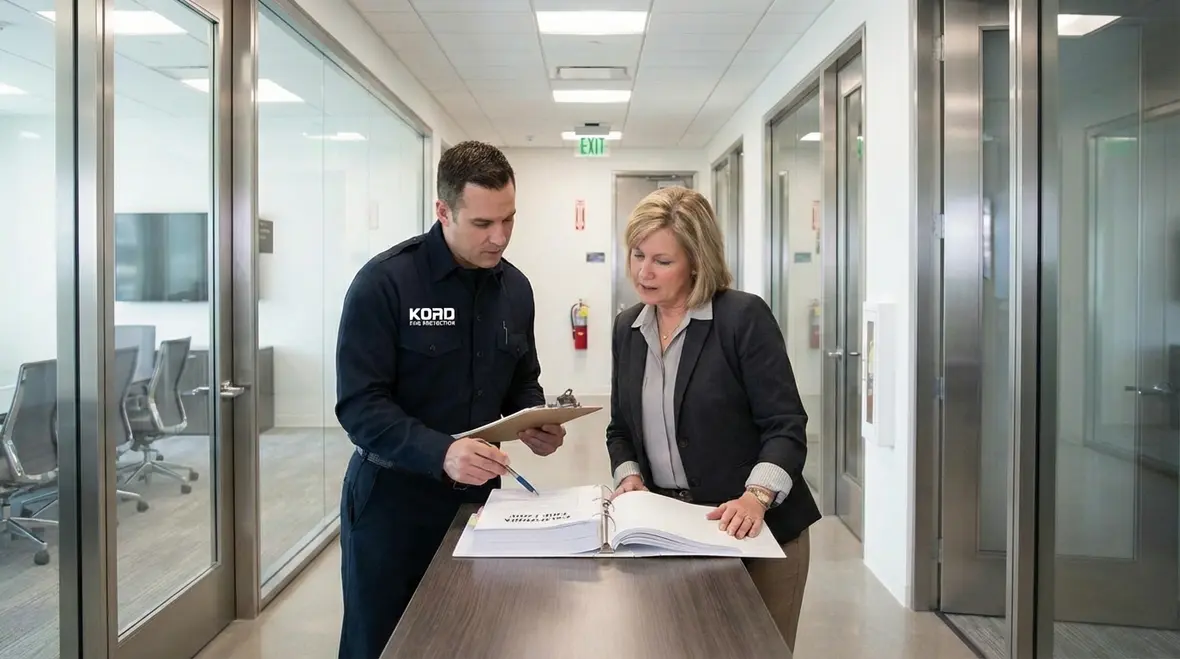
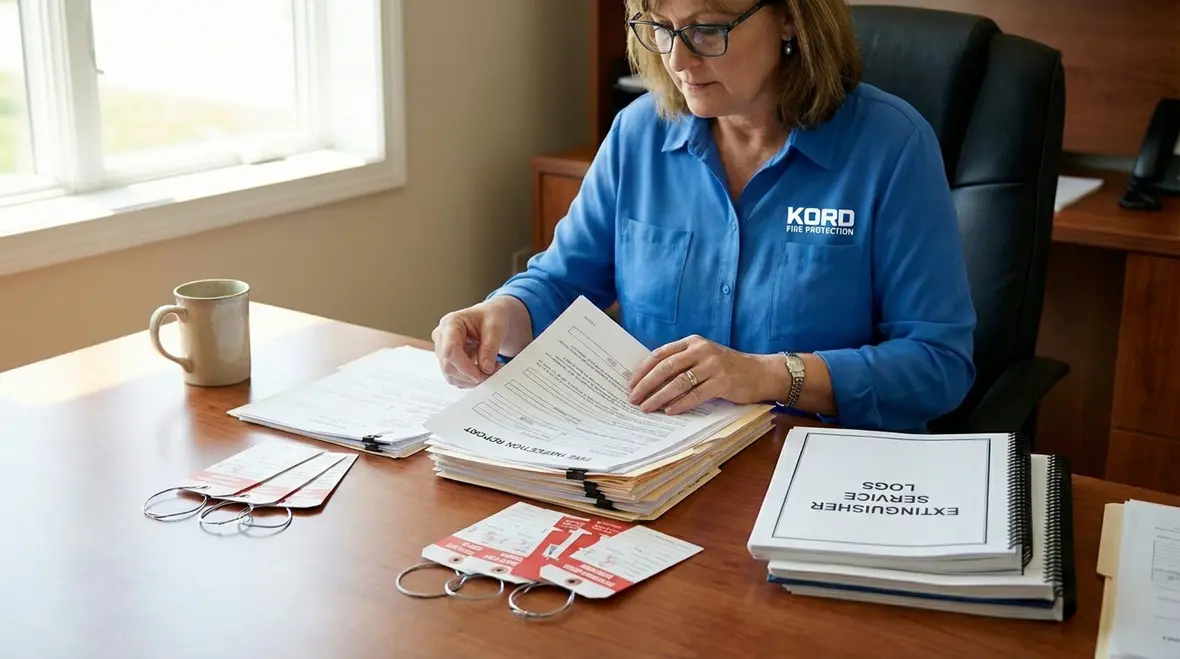
To begin with, documentation must be organized and accessible. Inspectors frequently request records that prove systems have been tested and maintained according to code. Kord Fire Protection technicians emphasize that clean paperwork can make the entire process smoother. After all, searching for inspection tags while the inspector waits is not anyone’s favorite form of cardio.
Key documents to prepare:
- Fire alarm inspection and testing reports
- Sprinkler system inspection records
- Fire extinguisher service tags and logs
- Kitchen hood and suppression system reports if applicable
- Emergency lighting and exit sign testing logs
Make key systems easy to reach and explain
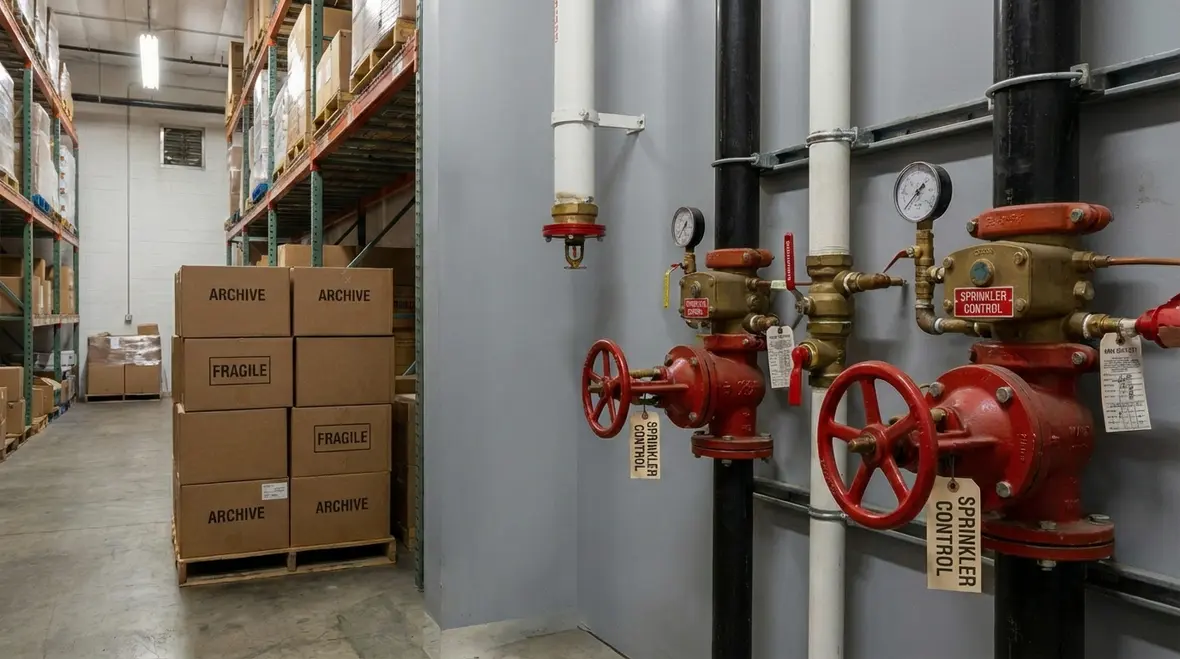
Additionally, ensure that all systems are accessible. Sprinkler risers should not hide behind stacks of boxes. Fire alarm panels should not be blocked by storage. Clear access demonstrates active compliance and respect for safety standards.
Finally, assign a knowledgeable staff member to walk with the inspector. This person should understand the building layout and know where key systems are located. When someone can answer questions confidently, the inspection moves along with steady rhythm.
Fire Alarm Systems and Monitoring Compliance
Treat the fire alarm like your building’s nervous system
Fire alarm systems serve as the early warning network of any building. Therefore, inspectors pay close attention to their condition and functionality. During San Francisco fire inspections, alarm panels, pull stations, notification devices, and monitoring connections all come under review.
First, the control panel must display normal status with no active trouble signals. Even a minor fault should be addressed before inspection day. Kord Fire Protection technicians often explain that a trouble light is like a blinking check engine light. Ignoring it rarely leads to a happy ending.
Next, inspectors may review recent testing records. In most commercial occupancies, fire alarm systems require annual testing by licensed professionals. Consequently, businesses should schedule service well before the inspection date to allow time for any repairs.
Monitoring also matters. Many San Francisco businesses rely on central station monitoring to notify emergency services. Inspectors may confirm that the monitoring agreement is current and functional. Because in a real emergency, speed saves lives.
Furthermore, devices must remain unobstructed. Smoke detectors should not be painted over. Pull stations must be visible and accessible. Even simple oversights can result in corrections or citations.
Sprinkler Systems and Suppression Equipment
Give your sprinklers room to do their job
Automatic sprinkler systems stand ready at all hours. However, they only work as intended when properly maintained. During inspections, the condition of sprinkler heads, control valves, and risers receives careful attention.
Inspectors typically check for:
- Obstructed or damaged sprinkler heads
- Proper clearance below sprinklers
- Accessible and labeled control valves
- Current inspection tags on risers and backflow devices
Storage height is a frequent issue. Businesses sometimes stack inventory too close to sprinkler deflectors. Yet, clearance requirements exist for a reason. Heat must reach the sprinkler head to activate it. Kord Fire Protection technicians often explain this with simple clarity. If boxes sit too high, the system may respond too late. And in a fire, late is not a good look.
Don’t forget kitchens, hoods, and extinguishers
Restaurants and commercial kitchens require additional scrutiny. Hood suppression systems must show current inspection tags and no signs of tampering. Grease buildup in ducts can also raise concerns. Therefore, routine cleaning and documentation are essential.
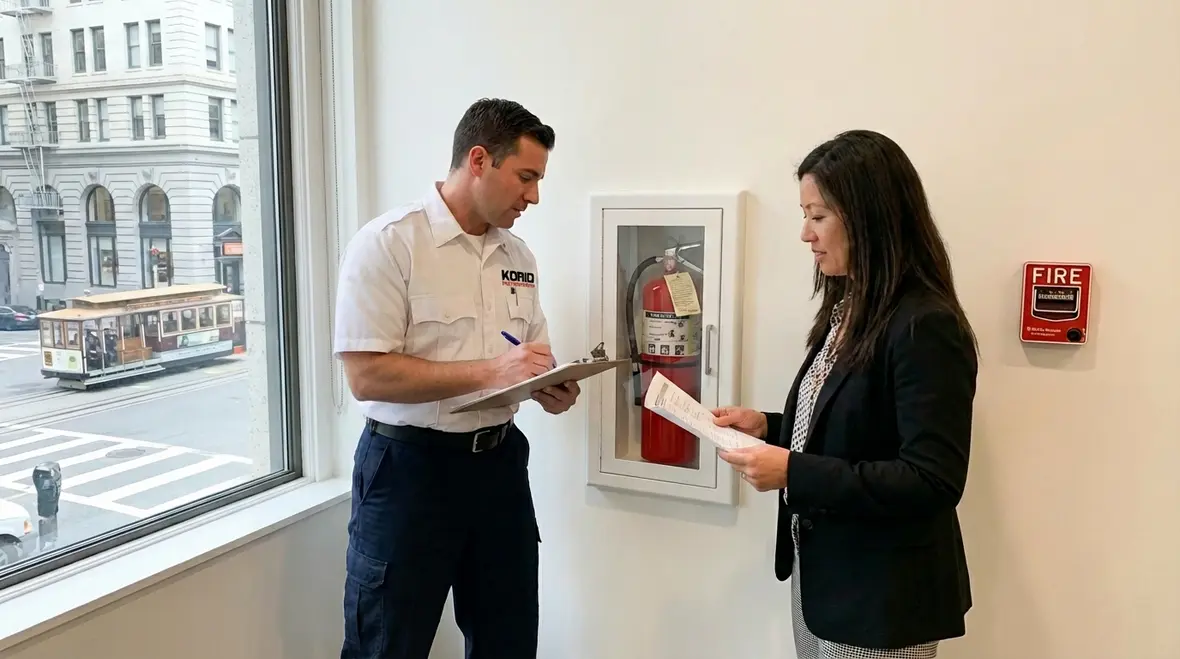
Fire extinguishers deserve equal attention. They must be mounted correctly, fully charged, and inspected monthly by staff. Annual servicing by a licensed provider is also required. During fire department inspections in San Francisco, missing or expired tags can lead to immediate corrections.
Egress, Exit Signs, and Emergency Lighting
Make it obvious how to get out—especially in the dark
While alarms and sprinklers fight the fire, exit pathways protect people. Clear egress is a cornerstone of every inspection.
First, exit doors must open easily from the inside without special knowledge or tools. Panic hardware should function smoothly. Additionally, exit routes must remain free of storage, displays, or temporary furniture. Even a single chair in the wrong place can create a hazard during an evacuation.
Illuminated exit signs must remain visible and operational. Inspectors may test battery backup functionality to ensure lights stay on during a power outage. Emergency lighting units should activate properly when normal power is interrupted.
Kord Fire Protection technicians often remind businesses that egress planning is not just about code compliance. It is about real human behavior. In an emergency, people do not form tidy lines like they are boarding a flight. They move quickly and sometimes unpredictably. Clear, well marked exits reduce chaos and confusion.
Moreover, posted occupancy limits must match the approved load for the space. Overcrowding can lead to serious violations. Therefore, businesses hosting events should remain mindful of capacity restrictions.
Hazardous Materials and Storage Practices
Tame the daily hazards before they pile up
San Francisco businesses that handle flammable or hazardous materials face additional scrutiny. Proper labeling, storage, and quantity limits all play a role in inspection outcomes.
Inspectors examine storage cabinets for flammable liquids, ensuring they meet code requirements. Containers must remain sealed and clearly labeled. Furthermore, incompatible chemicals should never share storage space.
In warehouses and industrial facilities, compressed gas cylinders must be secured upright. Protective caps should be in place when not in use. These details may seem small. Yet, they carry significant safety implications.
Housekeeping also matters. Accumulated debris, excessive packaging waste, or blocked utility rooms can raise red flags. Regular cleaning schedules reduce risk and show active management.
Kord Fire Protection technicians often explain that prevention lives in the daily routine. An annual fire inspection simply confirms that those routines remain strong.
Dual Focus Checklist for San Francisco Fire Inspections
Below is a practical overview that businesses can use as a final review before inspection day.
Administrative Readiness
- Updated inspection reports on file
- Monitoring contracts current
- Staff trained on extinguisher use
- Emergency plans posted and reviewed
- Maintenance logs organized
Physical Site Readiness
- Clear access to fire alarm panels and risers
- Unobstructed sprinkler heads with proper clearance
- Exit doors operational and unlocked during business hours
- Illuminated exit signs functioning
- No storage in electrical or mechanical rooms
This dual approach ensures that paperwork and physical conditions align. Because when both sides are in order, inspections tend to move forward without drama. And in the world of compliance, boring is beautiful.
Common Violations and How to Avoid Them
Turn repeat violations into easy wins
Although every property differs, certain violations appear again and again during San Francisco fire inspections.
Blocked exits rank high on the list. Therefore, businesses should conduct routine walkthroughs to ensure pathways remain clear. Expired fire extinguisher tags also surface frequently. Scheduling annual service ahead of time prevents last minute stress.
Another common issue involves impaired fire alarm or sprinkler systems. Construction projects, even minor ones, can disrupt wiring or piping. Consequently, any renovation should include coordination with fire protection professionals.
Kord Fire Protection technicians often share a simple philosophy. Do not wait for inspection week to think about safety. Instead, build fire protection into daily operations. When safety becomes habit, compliance follows naturally.
Additionally, staff training plays a vital role. Employees should know evacuation routes and basic extinguisher use. While no one expects them to become firefighters, awareness can prevent panic.
Frequently Asked Questions
Stay Ready So the Inspection Feels Routine
Fire safety in San Francisco demands steady attention and informed action. Annual inspections should feel like confirmation, not confrontation. With guidance from experienced professionals like Kord Fire Protection technicians, businesses can approach compliance with calm confidence. Schedule proactive maintenance, train staff, and review systems before the city arrives.
When preparation becomes part of the culture, inspections move smoothly. Many local businesses lean on regional experts such as San Francisco County Fire Protection by Kord Fire to keep inspections, testing, and documentation on track year round.
If your business is ready to turn high stakes inspections into predictable calendar events, now is the time to act. Reach out today for a tailored assessment of your fire alarm, sprinkler, extinguisher, and suppression systems, and get a clear plan before your next city visit is on the books.
Know Your Weapon Before You Fight the Flame
Kord Fire Protection is your go-to when it comes to all things fire protection. For over 20 years, we’ve been serving Southern California with the quality service and equipment to keep your home or business safe at all times. Our competitive prices reflect our unwavering commitment to protecting what matters most in the event of a fire emergency. Give us a call, send an email, or use that form!

Join Our Newsletter!
Get the latest fire safety tips delivered straight to your inbox From our Newsletter.