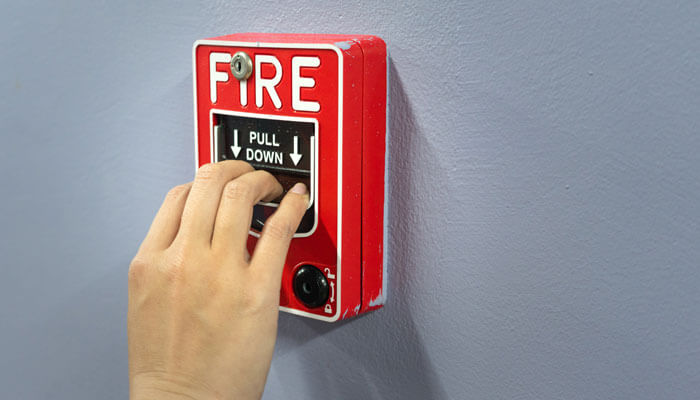
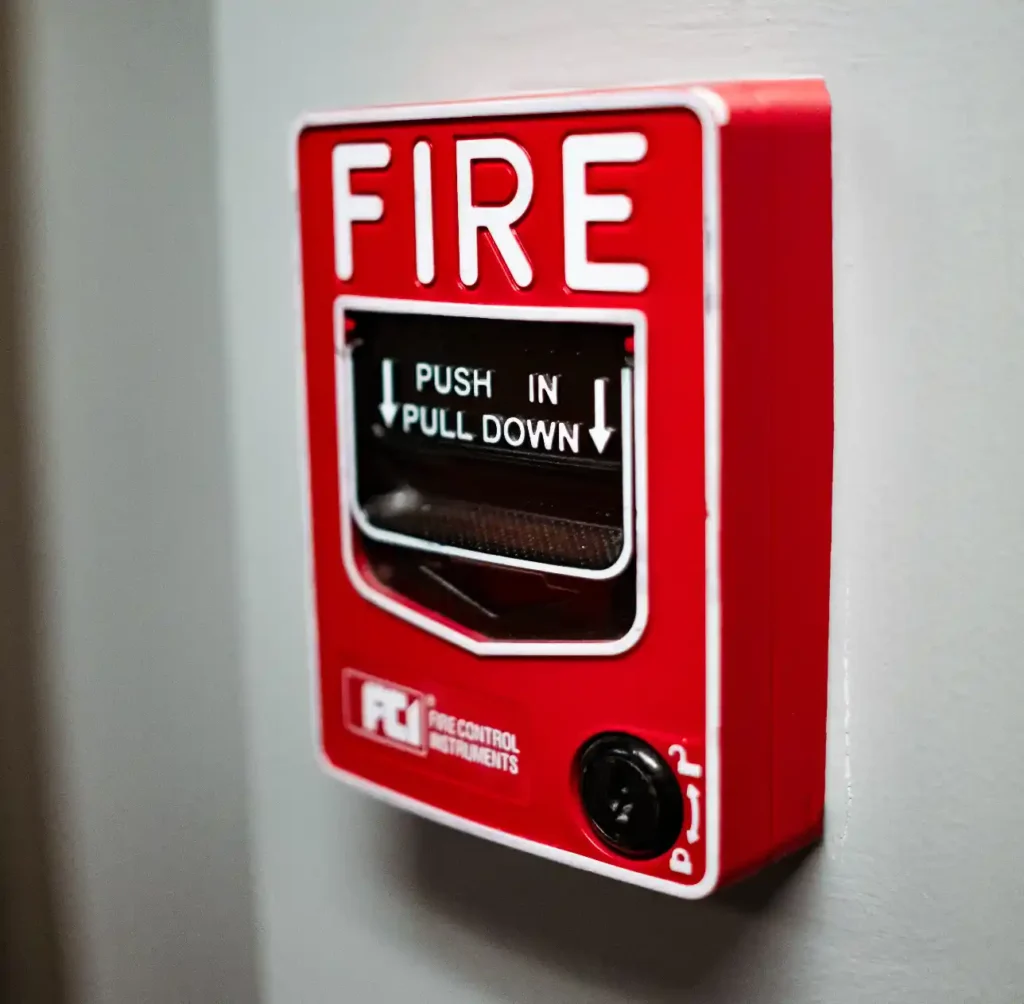
Fire Alarm Battery Maintenance Schedule Guide
Every dependable fire protection plan begins with a clear and disciplined fire alarm battery maintenance schedule. In most commercial buildings, Kord Fire Protection technicians recommend a simple framework. Inspect batteries monthly. Test them under load every quarter. Replace them every three to five years, or sooner if testing shows weakness. Document every step. No guesswork. No crossed fingers. Just a steady rhythm of inspection and care.
That schedule may sound simple. However, behind it lies the quiet truth of life safety systems. When the power fails and the lights blink out like a scene from a suspense movie, those batteries become the unsung heroes. And unlike action stars in Hollywood, they do not get a second take. They either work, or they do not. So today, let us walk through why battery maintenance matters, how it protects people and property, and why professionals treat it with the seriousness of a heart surgeon preparing for surgery.
The Hidden Backbone of Every Fire Alarm System
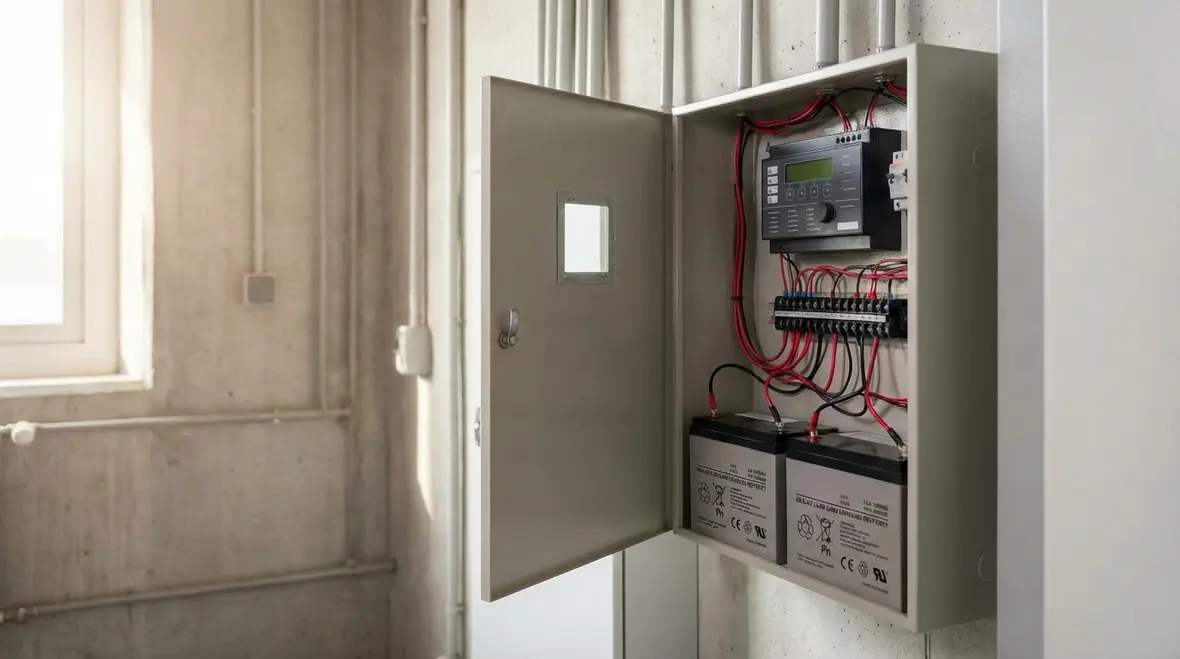
Fire alarm systems rely on primary power from the building. Yet when that power drops, the system must keep running. That is where batteries step in. They provide standby power for control panels, notification devices, and communication systems. In other words, they keep the alarm alive when everything else goes dark.
Without a healthy battery, a fire alarm system becomes a very expensive wall decoration. It may look impressive. It may even have blinking lights. However, in a real emergency, appearance means nothing. Performance means everything.
Kord Fire Protection technicians often explain it this way. The battery is like the oxygen tank for the system. When the main supply stops, the battery feeds the system so it can continue to detect smoke, sound alarms, and send signals to monitoring centers. Therefore, battery care is not optional. It is central to reliability.
Additionally, codes require standby power for a set duration, often twenty four hours in non alarm condition followed by several minutes in full alarm. If batteries cannot meet that demand, the system fails compliance. And inspectors, much like stern school principals, do not hand out gold stars for good intentions.
For a deeper look at how NFPA 72 shapes fire alarm system design, maintenance, and testing, many building owners also review resources like the NFPA 72 Overview guide from Kord Fire Protection, then align their internal battery maintenance steps with that standard-driven perspective.
Why Fire Alarm Battery Maintenance Is Critical for Reliability
Batteries quietly age long before they visibly fail
Reliability does not happen by accident. It results from consistent, documented action. A well managed battery service plan ensures that each component performs as designed under stress.
First, batteries degrade over time. Heat, age, and charging cycles slowly reduce their capacity. Even if a battery looks fine on the outside, it can lose the ability to hold a proper charge. Therefore, visual inspections alone are not enough. Load testing reveals the truth.
Connections, corrosion, and the chain reaction of heat
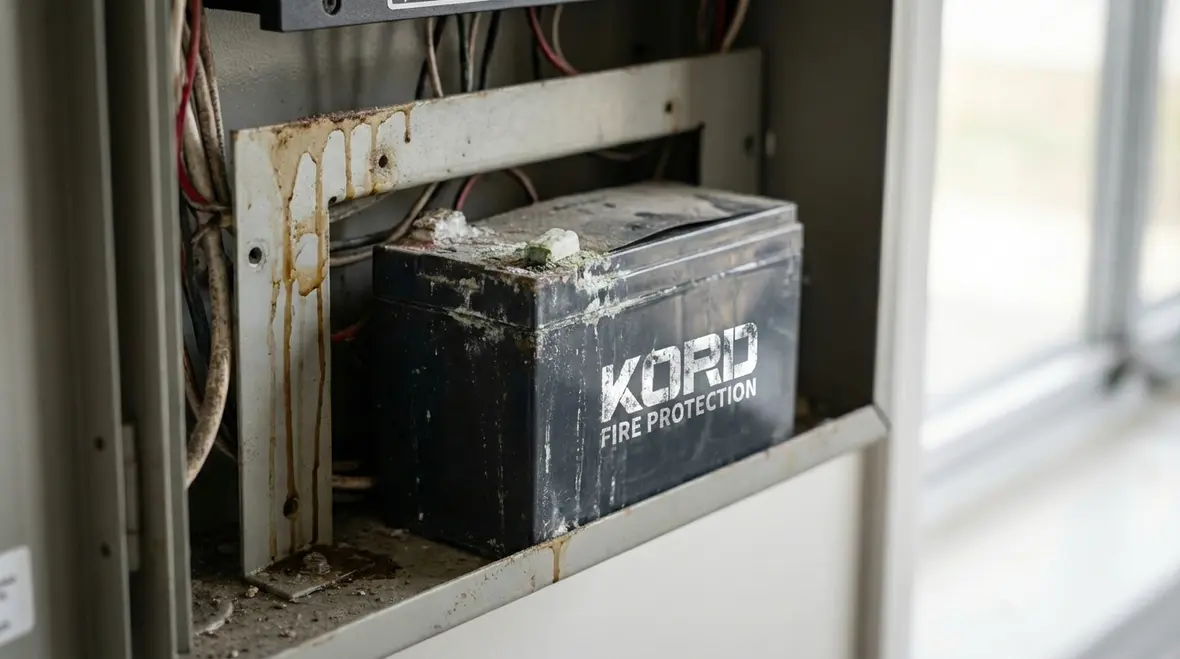
Second, corrosion at terminals can interrupt current flow. A small buildup can create resistance, and resistance creates heat. Heat shortens battery life. It becomes a chain reaction. However, routine inspections catch corrosion early. Cleaning and tightening connections restore efficiency and reduce risk.
Documentation: your shield when questions arise
Third, documentation within a fire alarm battery maintenance schedule provides proof of care. In the event of an incident, records show that the system received proper attention. That documentation protects building owners and managers from liability claims.
Kord Fire Protection technicians often remind clients that reliability is built in layers. The panel must work. The wiring must work. The devices must work. And yes, the batteries must work. Remove one layer, and the entire system weakens. Much like a superhero team, every member matters.
What Happens When Maintenance Gets Ignored
The silent fade of battery capacity
Neglect rarely announces itself with fanfare. Instead, it creeps in quietly.
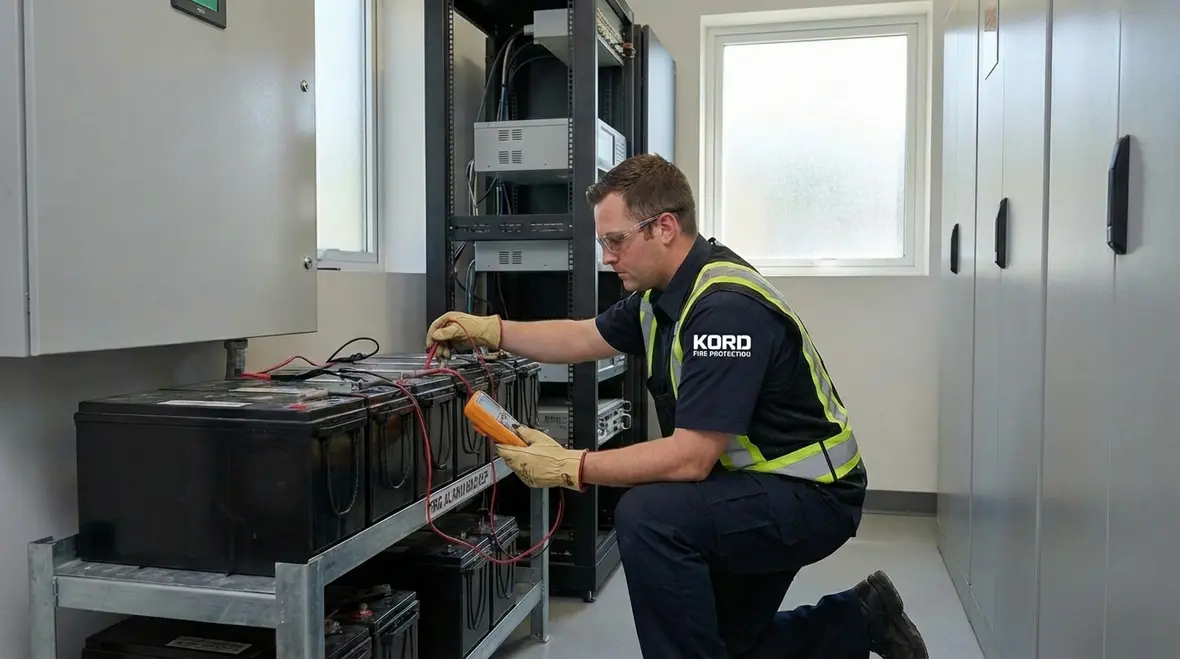
First, batteries begin to lose capacity. The system may still show a normal status. However, during a prolonged outage, the power drains faster than expected. Suddenly, the alarm panel shuts down. No detection. No notification. Just silence.
Damage, leakage, and avoidable repair bills
Second, aging batteries can swell or leak. Acid leaks damage surrounding components. Repair costs climb. What could have been a simple replacement turns into a larger service call.
Trouble signals are not background noise
Third, ignored batteries may trigger trouble signals. Some facility managers silence those signals without resolving the root cause. That is like placing tape over a check engine light and hoping the car will sort itself out. It will not.
Moreover, insurance carriers and fire marshals expect proof of routine testing. If documentation is missing, penalties can follow. In serious cases, operations may face temporary shutdowns until systems meet compliance standards.
In short, skipping maintenance saves a few dollars today but risks thousands tomorrow. And while optimism is a lovely human trait, it is not a safety strategy.
What Should a Proper Battery Service Plan Include
Facility managers often ask what a complete battery plan should cover. The answer is both practical and precise. Kord Fire Protection technicians outline it clearly.
Core Elements of a Professional Plan
Inspection Tasks
Check for corrosion, swelling, leaks, and secure mounting
Verify terminal tightness and clean connections
Confirm charger output and voltage levels
Testing and Documentation
Perform load testing to measure real capacity
Record voltage readings and compare to manufacturer standards
Log installation dates and expected replacement timelines
Right-sizing, codes, and matching the building
Additionally, technicians confirm that battery size matches system requirements. Installing undersized batteries can shorten standby time. On the other hand, oversized units may not charge properly with certain panels. Precision matters.
Equally important, the schedule must align with manufacturer instructions and local codes. Therefore, professionals tailor each plan to the building type, occupancy, and system design. A hospital, for example, demands a higher level of scrutiny than a small storage facility. Context shapes care.
How Often Should Fire Alarm Batteries Be Checked
Translating code expectations into a living schedule
This question comes up often, and the answer deserves clarity.
In general, visual inspections should occur monthly. During these checks, technicians look for physical damage, corrosion, and loose connections. Quarterly, they conduct more detailed evaluations, including voltage readings. Annually, they perform load testing to confirm the battery can support the system under real conditions.
Most sealed lead acid batteries last three to five years. However, heat can shorten that lifespan. Electrical rooms without proper ventilation often age batteries faster. Therefore, environment plays a role in scheduling replacements. Seasonal temperature swings can also accelerate battery drain, which is why many facility teams pair their battery program with broader efforts to handle seasonal temperature effects on fire protection systems.
A structured fire alarm battery maintenance schedule accounts for these variables. It does not rely on memory or sticky notes. Instead, it creates calendar reminders, service logs, and clear replacement targets.
Kord Fire Protection technicians often compare this process to dental cleanings. One visit will not guarantee a lifetime of healthy teeth. However, consistent checkups prevent major problems. And unlike dental drills, battery testing is usually quiet and painless.
The Role of Professional Technicians in Long Term Reliability
More than “just a battery change”
While some facility teams handle basic inspections, professional technicians bring deeper expertise.
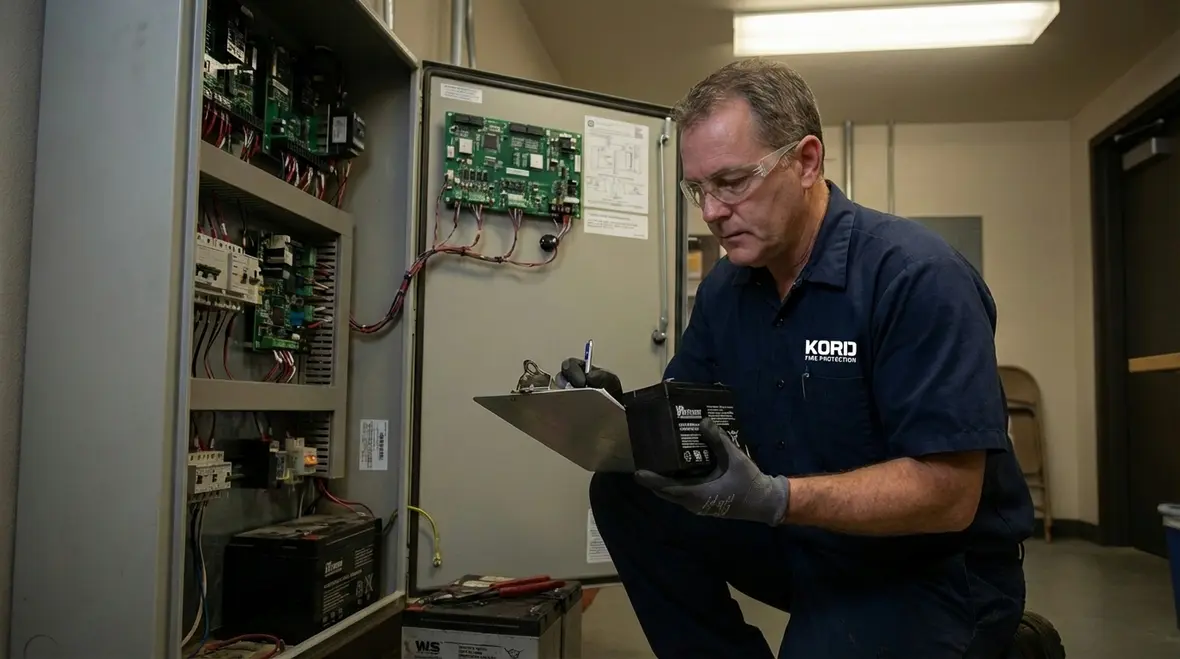
First, they understand system integration. Batteries connect to panels, which connect to devices and monitoring services. Technicians evaluate how each component interacts. If charging circuits show irregular output, they diagnose the cause rather than simply replacing the battery.
Second, they stay current with evolving codes and standards. Fire protection rules change over time. Professionals track those updates and adjust maintenance plans accordingly. Consequently, clients avoid compliance surprises during inspections.
Third, they provide objective assessment. Internal staff may feel pressure to minimize issues. However, an outside technician evaluates the system without bias. Safety decisions should never hinge on convenience.
Kord Fire Protection technicians also take time to educate building managers. They explain test results, replacement timelines, and risk factors in clear language. After all, informed clients make better decisions. And when everyone understands the stakes, maintenance becomes a shared priority rather than a forgotten chore.
Compliance, Insurance, and Peace of Mind
Fire codes require reliable standby power. Insurance carriers expect documented maintenance. Tenants assume that life safety systems will function when needed. Therefore, battery care intersects with legal, financial, and ethical responsibilities.
When documentation reflects a consistent inspection routine, building owners demonstrate due diligence. In contrast, gaps in records raise uncomfortable questions. If an incident occurs, investigators will review maintenance logs. Clear records tell a story of responsibility.
Moreover, reliable batteries reduce nuisance trouble signals. Fewer false alerts mean less disruption for occupants and fewer after hours service calls. Over time, that stability builds trust in the system. People respond faster to alarms when they believe the system works properly.
Peace of mind may not appear on a balance sheet. Yet it carries weight. Knowing that the alarm system stands ready allows managers to focus on daily operations rather than worrying about hidden vulnerabilities.
Building a Culture of Preventive Care
From “fix it when it breaks” to “keep it from breaking”
Maintenance works best when it becomes part of a broader safety culture. Instead of reacting to failures, organizations commit to prevention.
Leadership sets the tone. When executives prioritize life safety budgets, teams follow suit. Scheduled inspections remain protected even during cost cutting cycles. Furthermore, routine reviews of the battery maintenance program ensure it stays aligned with building changes.
Training also plays a role. Staff should know how to recognize trouble signals and report them promptly. While they may not perform load testing, they can serve as extra eyes and ears.
Technology can assist as well. Digital service logs, automated reminders, and remote monitoring improve accountability. However, tools support the process. They do not replace disciplined action.
Ultimately, a thoughtful battery care program reflects respect for human life. It acknowledges that emergencies happen without warning. Therefore, preparation must happen long before smoke appears.
Frequently Asked Questions
Conclusion and Next Steps
Reliable fire protection never rests on hope. It rests on action, discipline, and a consistent plan. A structured battery maintenance program protects systems when power fails and stakes rise. Kord Fire Protection stand ready to inspect, test, and document every detail with care and clarity.
Ready to put a true fire alarm battery maintenance schedule in place? Explore Kord’s dedicated Regulation 4 Testing Services for comprehensive fire alarm and battery systems testing, or call us to request a customized inspection and maintenance plan for your building.

Join Our Newsletter!
Get the latest fire safety tips delivered straight to your inbox From our Newsletter.