Retail Fire Sprinkler Requirements in Burbank and Glendale: What Retail Centers Need to Know
Fire Sprinkler Requirements for Retail Centers in Burbank and Glendale are not just lines buried in a building code manual. They are the quiet guardians of every boutique, grocery store, and shopping plaza that lights up these cities each night. Within the first few moments of a fire, a properly designed sprinkler system can mean the difference between a minor incident and a headline on the evening news. That is why property owners across the region turn to seasoned professionals, including Kord Fire Protection technicians, who explain the rules in plain English and guide businesses toward full compliance with calm authority.
Throughout this article, the focus remains clear. Retail owners need to understand local codes, state mandates, inspection cycles, and system design standards. More importantly, they need to know how these pieces fit together in real life. Because while fire codes may not trend on social media, they do protect everything that does.
Understanding Local Codes and State Mandates

California takes fire safety seriously. In fact, the state building and fire codes rank among the most detailed in the nation. However, Burbank and Glendale each enforce these rules through their own fire departments. Therefore, retail centers must meet both statewide standards and local amendments.
The Fire Sprinkler Requirements for Retail Centers in Burbank and Glendale typically follow the California Fire Code and the California Building Code. These codes require automatic sprinkler systems in most commercial buildings over a certain size. Moreover, they outline water supply demands, pipe sizing, hazard classifications, and monitoring systems.
Retail centers often fall into what professionals call a mercantile occupancy. That classification matters because it determines the required sprinkler density and design area. For example, a small clothing shop may have different system needs than a large home improvement store stacked high with combustible goods. Consequently, system design must match the actual risk inside the space.
Kord Fire Protection technicians often explain that compliance is not about installing random pipes in the ceiling. Instead, it is about engineering a system that responds quickly and effectively. They walk property managers through local interpretations, permit steps, and inspection timelines. And yes, they do it without sounding like a robot reading from a manual.
For retail buildings in Glendale specifically, many owners also look beyond sprinkler rules to broader Glendale Fire Protection Services that keep alarms, extinguishers, and suppression systems aligned with local expectations. Linking these systems together creates a safer, more compliant shopping environment for everyone on site.
How Sprinkler Requirements Shape New Retail Construction
From concept drawings to final inspection
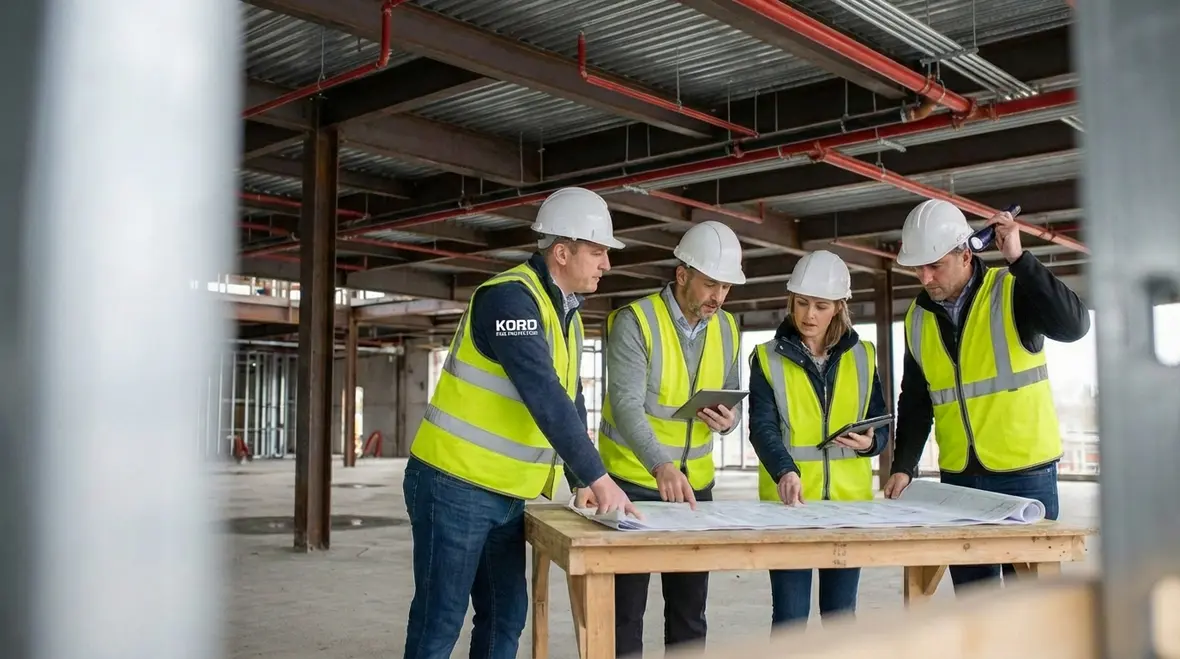
How Do Fire Sprinkler Requirements for Retail Centers in Burbank and Glendale Affect New Construction?
When a developer breaks ground on a new retail plaza, sprinkler planning begins long before the first storefront sign goes up. During the design phase, architects and fire protection engineers coordinate to ensure the layout meets the Fire Sprinkler Requirements for Retail Centers in Burbank and Glendale.
First, they determine the hazard classification. Light hazard areas such as small offices require less water flow than ordinary hazard areas like storage rooms. Next, they calculate water demand. This calculation ensures that the system can deliver enough pressure and volume to control a fire. Additionally, they confirm that the municipal water supply can support that demand or whether a fire pump is needed.
Permits follow. Both Burbank and Glendale require plan review by the local fire department. Reviewers examine hydraulic calculations, pipe layouts, and equipment specifications. If something does not meet code, they send it back for revision. Therefore, accuracy during design saves time and money.
Kord Fire Protection technicians often note that early coordination prevents last minute panic. After all, no developer wants to delay a grand opening because a sprinkler riser was placed in the wrong location. While a ribbon cutting ceremony is exciting, it is far less dramatic than explaining to investors why the doors cannot open.
Design questions smart developers ask early
- Will every tenant space qualify as the same hazard classification, or will anchor tenants require higher density coverage?
- Is the site’s available water supply strong enough, or will a dedicated fire pump and tank be needed from day one?
- How will future tenant improvements, mezzanines, or added stockroom shelving affect sprinkler coverage?
- What are Burbank and Glendale’s specific submittal and inspection timelines, and how do they align with the construction schedule?
Asking these questions early keeps projects on track and prevents last minute redesigns that can ripple through schedules and budgets.
Upgrading Existing Retail Spaces Without Headaches
Remodels, retrofits, and real-world constraints

Not every retail center in Burbank or Glendale is brand new. Many properties have operated for decades. Consequently, owners may face retrofit requirements when they remodel, expand, or change occupancy type.
For instance, if a tenant converts a basic retail space into a specialty store with higher fire loads, the sprinkler system may need modification. Similarly, when a building undergoes a major renovation, current codes often apply to the upgraded areas. This process can trigger updates to meet the latest Fire Sprinkler Requirements for Retail Centers in Burbank and Glendale.
Moreover, older systems sometimes lack modern monitoring. Today, many jurisdictions require connection to a central alarm station. This ensures that if a sprinkler activates after hours, the fire department receives notice immediately. Because while a midnight sale sounds exciting, an unnoticed fire at midnight does not.
Kord Fire Protection technicians regularly assess aging systems. They evaluate pipe condition, check for corrosion, and test valves and alarms. Then, they provide clear guidance on what must change and what can remain. Their approach balances safety with budget reality. In other words, they focus on what truly protects the property rather than selling unnecessary upgrades.
Practical triggers for sprinkler upgrades
- Adding stockroom shelving that reaches higher toward the ceiling
- Introducing new combustible display materials or décor elements
- Converting a former office or low-hazard space into denser retail or storage
- Combining tenant spaces to create a larger, open-plan retail floor
- Relocating walls, ceilings, or soffits that interact with existing sprinkler coverage
Inspection, Testing, and Ongoing Compliance
Living with your system day to day
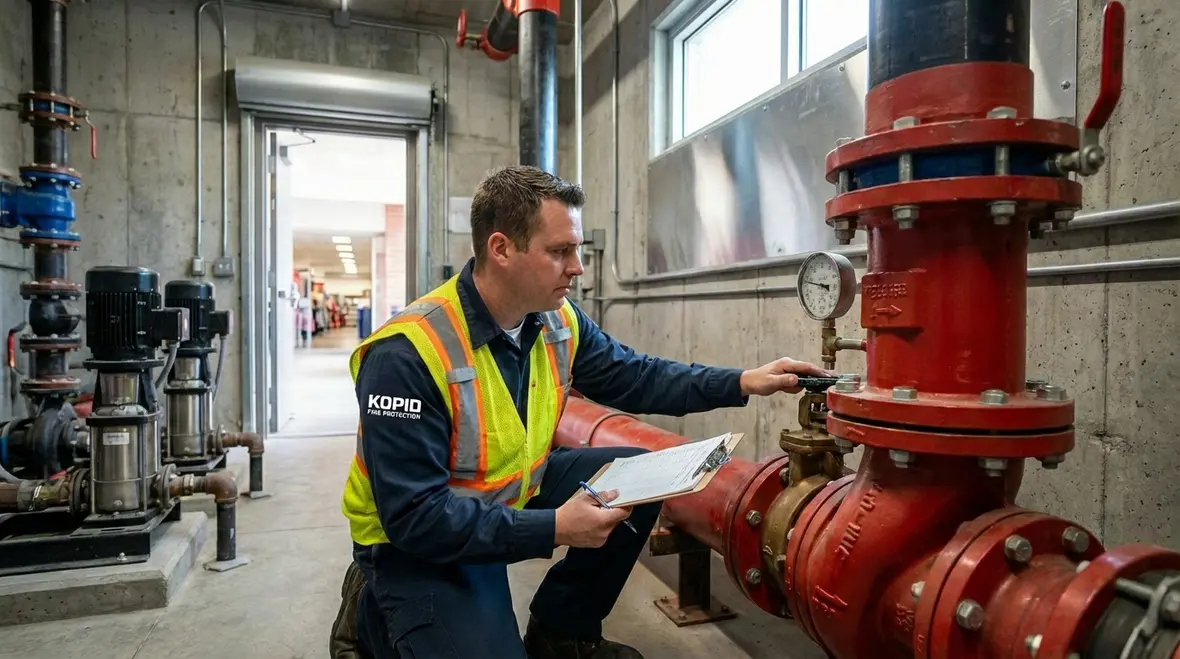
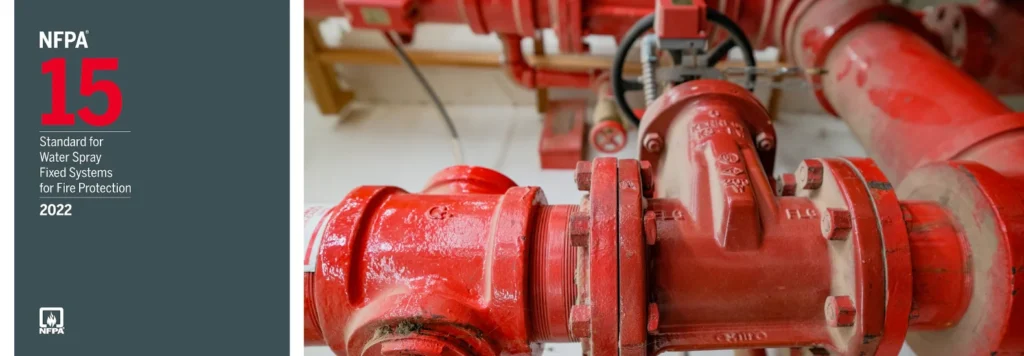
Installing a system is only the beginning. Maintaining it is where real responsibility shows. The Fire Sprinkler Requirements for Retail Centers in Burbank and Glendale include strict inspection and testing schedules. These schedules follow national standards such as NFPA 25, which outlines how often components must be checked.
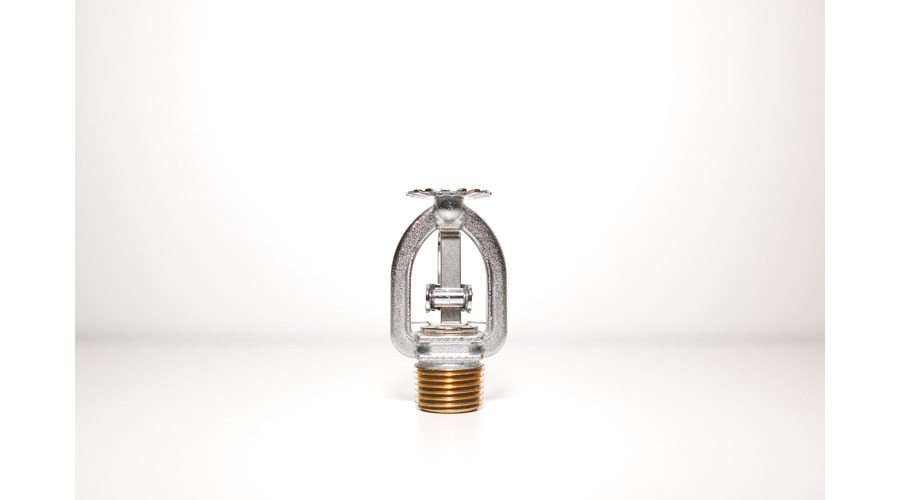
For example, control valves require regular inspection to ensure they remain open and accessible. Water flow devices and alarms need periodic testing. Additionally, sprinkler heads must remain free of paint, dust, or damage. Even a small obstruction can affect performance.
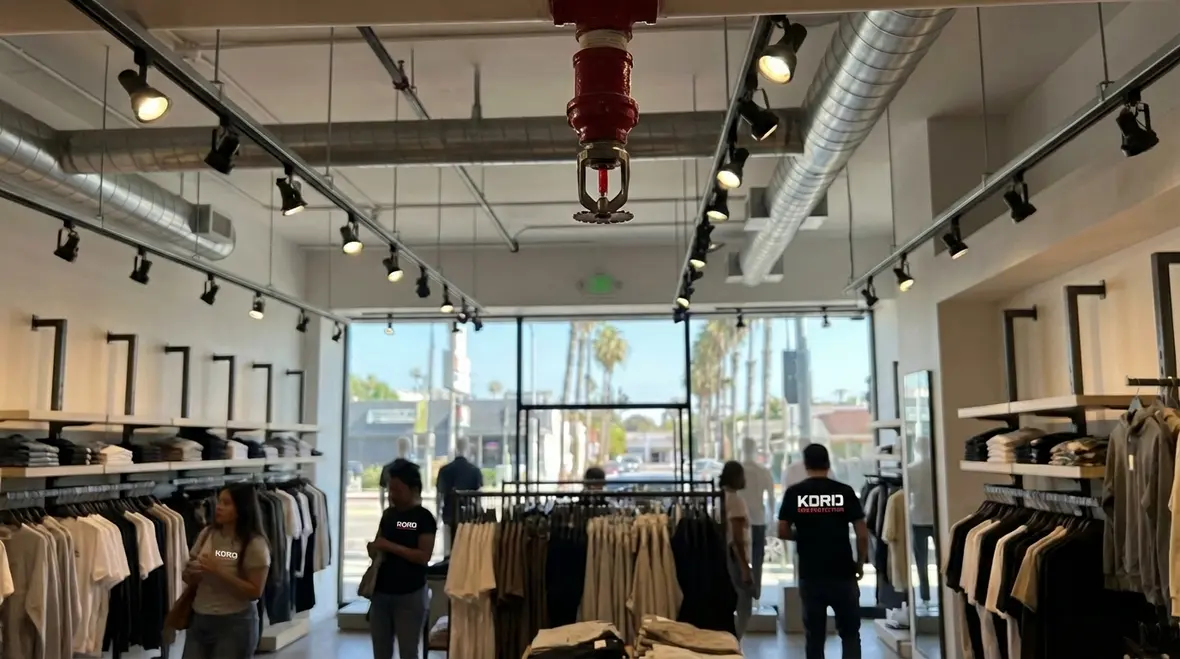
Retail environments present unique challenges. Displays change. Seasonal decorations appear. Storage stacks shift. Therefore, property managers must ensure that merchandise does not block sprinkler discharge patterns. Kord Fire Protection technicians often remind staff that stacking boxes too close to the ceiling is not just a storage decision. It is a fire safety risk.
Furthermore, detailed records matter. Fire inspectors may request documentation of past tests and repairs. Keeping organized reports helps demonstrate compliance with the Fire Sprinkler Requirements for Retail Centers in Burbank and Glendale. As a result, inspections proceed more smoothly and with fewer surprises.
Inspection rhythm smart retail centers follow
- Monthly: In-house visual checks of valves, gauges, and accessible sprinkler heads
- Quarterly: Professional testing of water flow switches, supervisory signals, and alarm interfaces
- Annually: Comprehensive inspection and testing documented for local fire authorities and insurance carriers
- Every few years: Deeper testing such as main drain tests, internal pipe inspections, or component replacements as recommended
Water Supply, Fire Pumps, and Real World Performance
The quiet engine behind every sprinkler head
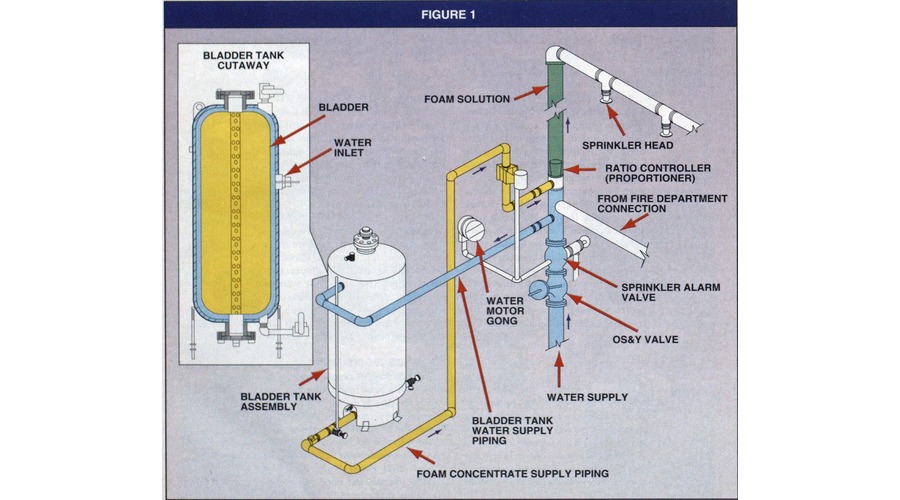
A sprinkler system is only as strong as its water supply. In some retail centers, city pressure meets the required demand. In others, especially larger complexes, a fire pump becomes necessary. This pump boosts pressure so the system can deliver water at the needed rate.
Designers must account for friction loss in pipes, elevation changes, and simultaneous system operation. Additionally, they consider future tenant improvements. Because if a space later increases its hazard level, the system should have enough capacity to adapt.
Kord Fire Protection technicians often describe hydraulic calculations as the quiet math behind visible safety. While customers admire storefront displays, few think about the invisible network above the ceiling tiles. Yet, that network must perform flawlessly within seconds of heat activation.
In Glendale and Burbank, coordination with local water departments plays a role as well. Backflow prevention devices protect the public water supply. However, these devices require testing and maintenance. Therefore, property owners must integrate water supply oversight into their broader compliance plan.
When a fire pump or system upgrade becomes non-negotiable
- Static and residual water pressures from city mains fall below required design criteria
- Expansions push the system beyond its original design area or density
- On-site testing shows significant performance loss due to aging piping or added friction loss
- New code editions or insurance standards introduce higher minimum expectations
Compliance Snapshot for Retail Property Owners
Below is a simplified side by side overview that highlights how responsibilities often divide between system design and ongoing management. Although each project differs, this comparison offers a practical reference.
Design and Installation Focus
- Determine hazard classification based on merchandise and layout
- Complete hydraulic calculations and confirm water supply
- Submit plans for Burbank or Glendale fire department review
- Install approved sprinkler heads, piping, valves, and alarms
- Coordinate final inspection and obtain sign off before occupancy
Ongoing Operation and Maintenance Focus
- Conduct regular inspections in line with national standards
- Test alarms, valves, and water flow devices on schedule
- Keep storage and displays clear of sprinkler discharge areas
- Maintain detailed service and repair records
- Update systems when renovations trigger new code requirements
Together, these two columns form the full picture of compliance with the Fire Sprinkler Requirements for Retail Centers in Burbank and Glendale. One without the other leaves gaps. And in fire protection, gaps are not welcome guests.
Common Challenges Retail Centers Face
Even well managed properties encounter obstacles. For instance, tenant turnover can create confusion about responsibilities. A new tenant may not realize that moving shelving affects sprinkler coverage. Consequently, clear lease language and communication help prevent violations.
Another challenge involves cosmetic upgrades. Retailers love creative ceilings and decorative elements. However, adding obstructions below sprinkler heads can alter spray patterns. Therefore, any design change should be reviewed by a qualified professional before installation.
Additionally, budget concerns sometimes delay maintenance. Yet postponing required testing rarely saves money in the long run. Fines, failed inspections, or damage from an uncontrolled fire cost far more. Kord Fire Protection technicians often explain this with calm logic. Safety investments protect revenue streams, brand reputation, and, most importantly, lives.
Finally, some owners assume that because a system exists, it automatically meets current codes. In reality, codes evolve. Thus, periodic evaluations ensure alignment with the latest Fire Sprinkler Requirements for Retail Centers in Burbank and Glendale. Staying proactive keeps surprises to a minimum.
Why Professional Guidance Makes the Difference
Fire protection is both technical and practical. It demands knowledge of code language and an understanding of how retail spaces operate day to day. That balance defines true expertise.
Kord Fire Protection technicians approach each project with a steady, measured tone. They explain why certain sprinkler types fit specific hazards. They outline how inspection intervals protect both tenants and customers. Moreover, they answer questions without overwhelming clients with jargon. In doing so, they transform complex regulations into clear action steps.
Because at the end of the day, compliance with the Fire Sprinkler Requirements for Retail Centers in Burbank and Glendale is not about passing an inspection alone. It is about creating an environment where families can shop, employees can work, and business owners can focus on growth rather than risk.
For many centers, that starts with partnering with a team that already understands the local landscape. Kord Fire Protection supports retail properties across Los Angeles County, and their dedicated Glendale Fire Protection Services give local retailers a single, trusted source for sprinklers, alarms, extinguishers, and more.
Frequently Asked Questions
Conclusion and Next Steps
Retail success depends on preparation as much as presentation. By understanding and meeting the Fire Sprinkler Requirements for Retail Centers in Burbank and Glendale, property owners protect people, inventory, and long term investment. Kord Fire Protection technicians stand ready to explain each step with clarity and confidence.
If your retail center is due for an inspection, planning a remodel, or preparing for a new tenant build-out, now is the time to review your sprinkler system. Schedule a professional evaluation today and ensure that safety works quietly in the background while business thrives in the spotlight. To coordinate service for your property, explore Kord Fire Protection’s dedicated Glendale Fire Protection Services or request a quote for comprehensive fire protection support across Los Angeles County.
Know Your Weapon Before You Fight the Flame
Kord Fire Protection is your go-to when it comes to all things fire protection. For over 20 years, we’ve been serving Southern California with the quality service and equipment to keep your home or business safe at all times. Our competitive prices reflect our unwavering commitment to protecting what matters most in the event of a fire emergency. Give us a call, send an email, or use that form!

Join Our Newsletter!
Get the latest fire safety tips delivered straight to your inbox From our Newsletter.