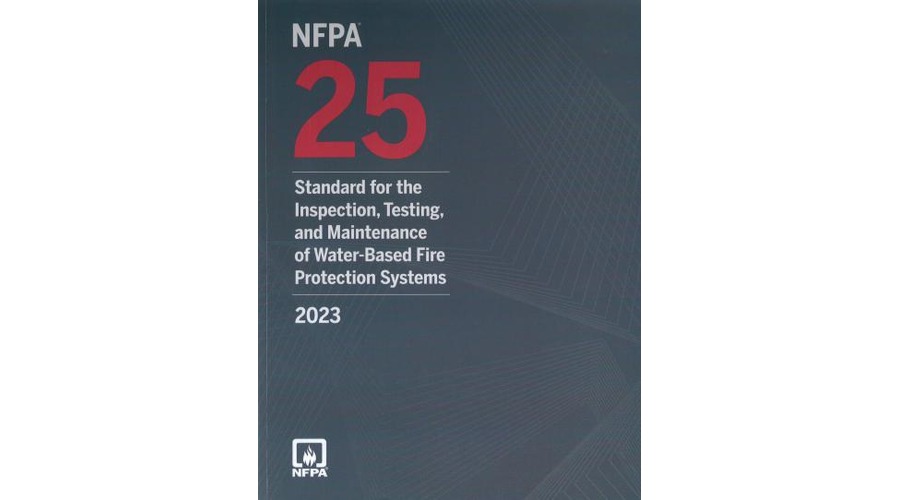
Pasadena Fire Code Guide for Renovations
Pasadena Fire Code Considerations for Renovations
Any renovation in Pasadena begins with design ideas, paint swatches, and big dreams. However, before a single wall comes down, there is one guidebook that quietly shapes every decision: the local fire regulations. A proper pasadena fire code overview outlines how buildings must prevent, detect, and respond to fire risks. It addresses alarms, sprinklers, access routes, materials, and more. In other words, it protects lives, property, and investments.
Throughout the renovation process, Kord Fire Protection technicians often step in to explain how these rules apply in real life. They translate technical language into clear direction. And thankfully, they do it without sounding like a robot reading legal poetry. Because while fire safety is serious business, understanding it should not feel like cramming for a final exam.

Understanding the Framework Behind Renovation Approvals
Before permits are issued, city officials review renovation plans for compliance with local and state fire regulations. Therefore, contractors must align architectural drawings with current standards, not the codes that were in place when the building was first constructed.
Importantly, renovations trigger more scrutiny than many owners expect. Even minor tenant improvements can activate requirements for upgraded fire alarms or sprinkler modifications. If a project changes occupancy type, increases square footage, or alters exit paths, the fire protection systems may need adjustments.
Kord Fire Protection technicians frequently explain that codes evolve because risks evolve. New materials burn differently. Modern layouts create larger open spaces. Additionally, technology has improved detection and suppression methods. As a result, the city expects renovated properties to meet modern safety benchmarks, not yesterday’s standards.
In practical terms, this means early coordination matters. Architects, general contractors, and fire protection professionals should collaborate before construction begins. Otherwise, a missed requirement can stall inspections and delay occupancy. And nobody enjoys watching a brand new space sit empty because one device was placed twelve inches too close to a beam.
For larger commercial projects or complex occupancies, many Pasadena owners partner with a dedicated fire protection team from the start, often leveraging ongoing support from services like Pasadena fire protection services to keep plans aligned with current requirements throughout design and construction.

How Renovations Trigger Fire System Upgrades
Many property owners assume that if their building already has sprinklers and alarms, they are in the clear. However, renovations often require recalculations and physical adjustments.
For example, relocating walls can block sprinkler spray patterns. Changing ceiling heights can affect smoke detection coverage. Even swapping carpet for polished concrete may alter how sound travels, which impacts alarm audibility. Consequently, technicians must evaluate system performance within the new layout.
Under the local fire regulations, the following upgrades commonly surface during renovations:
Sprinkler System Modifications
Relocated heads, updated hydraulic calculations, and sometimes increased water supply demands.
Fire Alarm Reconfiguration
Additional pull stations, strobes, or horn devices to meet spacing and visibility standards.
Monitoring Requirements
Connection to approved central monitoring if occupancy type changes.
Kord Fire Protection technicians often walk project managers through these details step by step. They explain why spacing matters and how coverage calculations work. They also reassure owners that upgrades are not arbitrary hurdles. Instead, they are targeted safeguards based on science and data.
After all, fire does not negotiate. It follows physics. The code simply anticipates that behavior.
What Fire Safety Requirements Apply to Commercial Renovations in Pasadena?
This is the question many owners type into search engines late at night. The short answer: it depends on occupancy, size, and scope of work. The longer answer deserves clarity.
Commercial renovations must address occupant load calculations, exit signage, emergency lighting, fire rated assemblies, and suppression systems. Additionally, accessibility and fire safety often intersect. For example, exit routes must remain clear, well marked, and properly illuminated.
Assembly spaces, restaurants, and retail stores face stricter rules due to higher occupant loads. Meanwhile, office renovations may focus more on alarm audibility and corridor ratings. Therefore, understanding the building’s use is critical.
Kord Fire Protection technicians frequently remind clients that inspectors review both plans and field conditions. A drawing may look compliant on paper. However, if furniture placement blocks a pull station or decorative panels conceal a device, corrections will follow. And corrections usually come with reinspection fees. No one frames those invoices for inspiration.
By consulting fire professionals during design, project teams reduce surprises. That proactive approach protects timelines and budgets while meeting city expectations.
Integrating Fire Protection Into Modern Design
Designers often aim for clean ceilings, open concepts, and dramatic lighting. However, fire protection systems must remain visible and functional. The art lies in blending safety with style.
For instance, recessed sprinklers can maintain aesthetic appeal while preserving coverage. Similarly, low profile notification devices can complement interior themes. Nevertheless, concealment has limits. Devices must remain accessible for inspection and testing.
Below is a simplified comparison of design goals and code priorities during renovations:
| Design Objective | Fire Code Priority |
| Open ceiling concept | Maintain proper sprinkler spacing and obstruction clearance |
| Decorative wall panels | Keep pull stations visible and reachable |
| Ambient lighting design | Ensure emergency lighting meets brightness standards |
| Flexible office layouts | Preserve clear exit paths and travel distance limits |
As Kord Fire Protection technicians often explain, good design does not compete with safety. Instead, it works alongside it. When teams coordinate early, they can position devices strategically rather than reactively. Consequently, the finished space looks intentional rather than patched together.
And let us be honest. A discreet sprinkler head is far more attractive than a red tag on inspection day.
Permits, Inspections, and the Role of Documentation
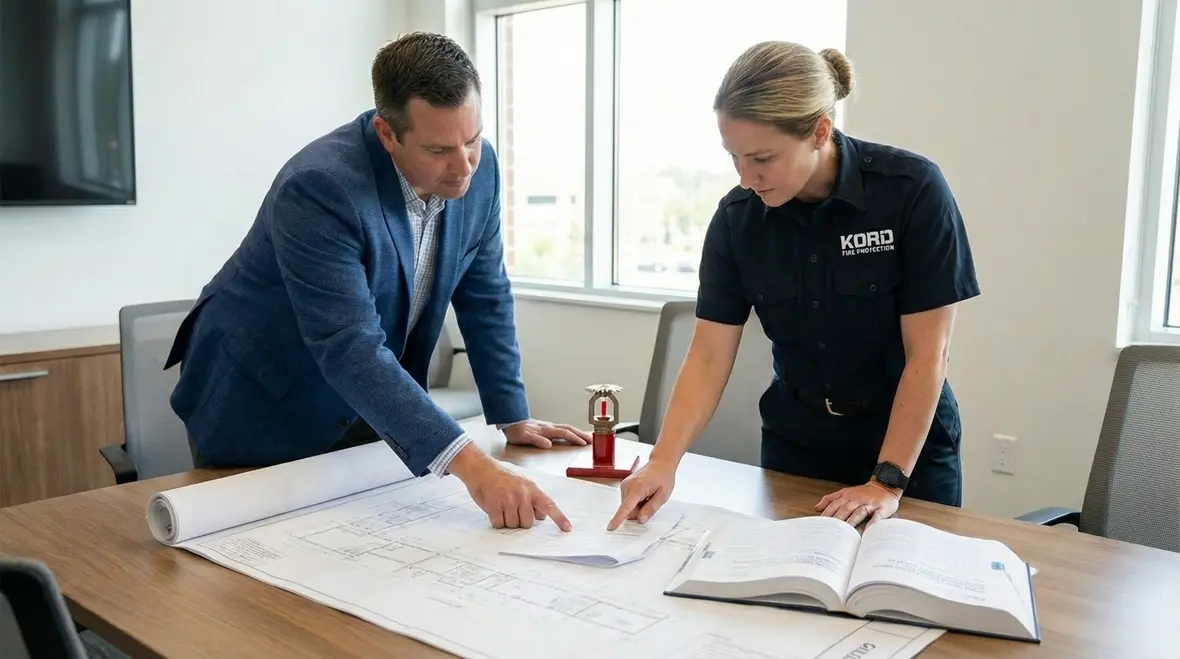
Renovations move through stages: plan check, permit issuance, rough inspection, final inspection. Each stage requires documentation that demonstrates compliance with local standards.
Contractors must submit shop drawings for fire sprinkler and alarm systems. These drawings detail device locations, pipe sizing, voltage calculations, and monitoring connections. Furthermore, calculations must reflect the renovated layout, not outdated floor plans.
During inspections, officials verify installation accuracy. They test alarms for audibility and visibility. They confirm sprinkler coverage and check for obstructions. Additionally, they review documentation such as hydraulic calculations and battery backup capacity.
Kord Fire Protection technicians often prepare clients for these visits. They conduct internal pre inspections to identify issues early. This step reduces the chance of failed inspections and project delays. Because while suspense works in movies, it does not belong in construction schedules.
Proper documentation also protects building owners long term. Insurance providers and future buyers may request proof of compliance. Therefore, organized records serve both legal and financial interests.
Residential Renovations and Fire Safety Upgrades
Homeowners in Pasadena face a slightly different path. Although residential projects may seem simpler, fire safety remains a central concern.
Major additions or significant remodels can trigger requirements for interconnected smoke alarms. In some cases, sprinkler retrofits may apply depending on scope and valuation thresholds. Additionally, garage conversions and accessory dwelling units introduce new occupancy considerations.
Importantly, the same principles apply: altered layouts affect detection and egress. A newly added bedroom must include proper smoke detection. A converted attic must maintain safe exit access. Consequently, planning ahead prevents costly retrofits after drywall installation.
Kord Fire Protection technicians often explain these requirements in plain language. They outline which upgrades are mandatory and which are best practice recommendations. Homeowners appreciate clear answers without technical jargon. After all, most people would rather debate paint colors than study alarm circuit diagrams.
Still, understanding the essentials ensures that renovated homes protect families as effectively as they impress guests.

Common Mistakes That Slow Down Renovation Projects
Even experienced teams sometimes overlook key fire safety details. However, awareness reduces risk.
Late Fire System Involvement
Bringing fire protection specialists into the project after framing often results in rework.
Ignoring Occupancy Changes
Shifting from office to assembly use without adjusting systems can lead to major corrections.
Blocking Access to Equipment
Storage or décor placed in front of panels and risers violates clearance requirements.
Underestimating Inspection Timelines
Scheduling final inspections without buffer time invites stress if corrections arise.
According to Kord Fire Protection technicians, most of these issues stem from simple oversight rather than negligence. Therefore, regular coordination meetings and plan reviews prevent headaches. Proactive communication keeps everyone aligned with city expectations.
In renovation projects, momentum matters. Avoiding preventable setbacks keeps crews productive and budgets intact.
FAQ
Building Safer Spaces with Confidence
Renovations reshape spaces. Yet they also reshape responsibility. By understanding the expectations outlined in a thorough pasadena fire code overview, property owners and contractors position their projects for success. More importantly, they protect occupants and investments.
Kord Fire Protection technicians stand ready to guide each step, from design consultation to final inspection. Therefore, before the first hammer swings, bring fire safety into the conversation. A compliant project moves faster, passes inspections smoother, and opens its doors with confidence.
If your project is in or around Pasadena, partnering with a local expert can simplify every code discussion. Explore specialized Los Angeles County fire protection services for regional projects, or connect directly with Pasadena fire protection services to align your renovation with local expectations from day one.
Know Your Weapon Before You Fight the Flame
Kord Fire Protection is your go-to when it comes to all things fire protection. For over 20 years, we’ve been serving Southern California with the quality service and equipment to keep your home or business safe at all times. Our competitive prices reflect our unwavering commitment to protecting what matters most in the event of a fire emergency. Give us a call, send an email, or use that form!

Join Our Newsletter!
Get the latest fire safety tips delivered straight to your inbox From our Newsletter.