
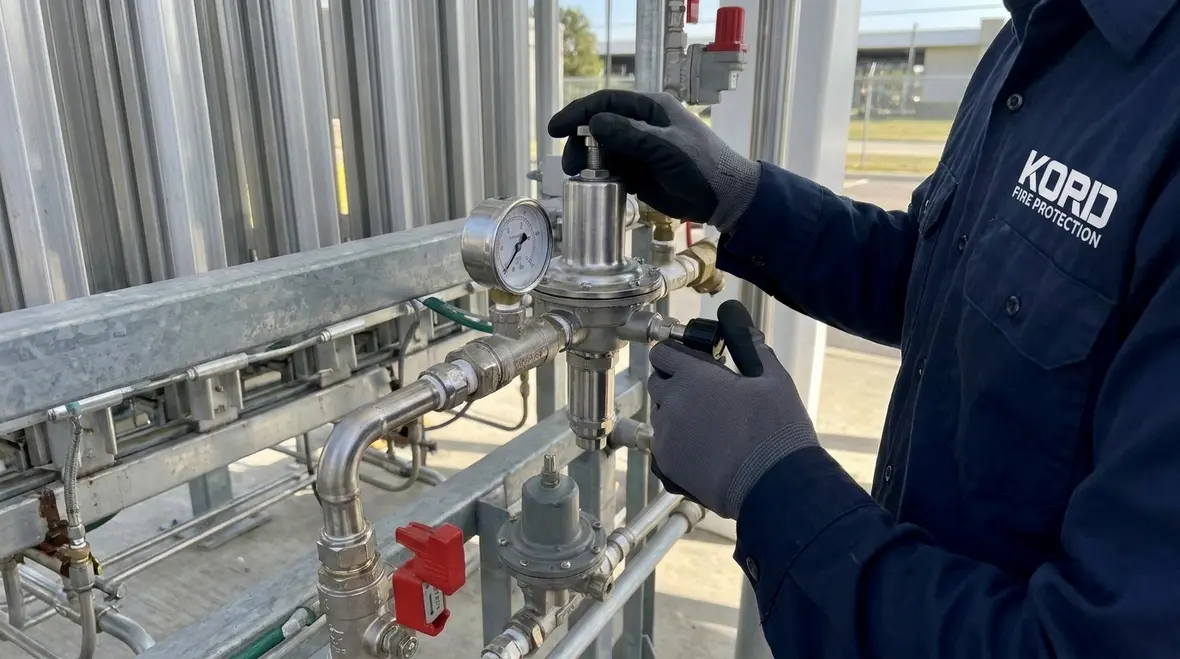
NFPA 52 Section 8.2 Application: Which CNG Equipment Components Are Covered
Quick Answer
NFPA 52 Section 8.2 addresses how covered CNG equipment components must be applied, installed, and maintained to support safe operation. The scope includes systems and parts that affect gas containment, pressure regulation, control, ventilation, detection, and emergency shutoff performance.
For a broader look at inspection, testing, and maintenance programs that help facilities stay inspection-ready, see inspection testing and maintenance fire protection guidance.
What NFPA 52 Section 8.2 Aims to Control in CNG Systems
In day to day commercial operations, the risk often concentrates in the interfaces between components, not just the components themselves. NFPA 52 Section 8.2 supports that practical reality by defining which CNG equipment components application elements are covered, especially where installation and operational behavior influence leak likelihood, ignition control, and emergency response effectiveness.
When facilities plan new compressed natural gas installations or modify existing systems, they need a clear line of sight from the written code requirement to the actual hardware on site. The NFPA 52 CNG equipment components application approach helps owners and contractors focus on the components that most directly affect containment, pressure stability, gas flow control, and safe shut down.
Which CNG Equipment Components Typically Fall Under Section 8.2?
Section 8.2 does not treat the station as a generic “gas package.” Instead, it targets equipment components that influence performance during normal operation, anticipated abnormal conditions, and emergency scenarios. In practice, these are commonly the components tied to pressure regulation, gas routing, system controls, and safety functions.
Facilities typically need to evaluate the following component categories to confirm the NFPA 52 CNG equipment components application scope:
- Gas containment and piping including approved tubing, piping segments, fittings, and connections where leakage risk exists.
- Pressure regulating and pressure relief functions including regulator assemblies and relief pathways that maintain safe pressures.
- Shutoff and isolation devices including valves that control flow and support emergency isolation.
- Metering and dispensing interfaces where the transition from stored gas to delivered service occurs.
- Control and monitoring systems that govern safe operating states, alarm conditions, and interlocks.
- Gas detection, ventilation, and related safety controls that address accumulation control and early warning.
Commercial facilities should confirm that every component tied to these categories is included in the project scope, equipment list, and inspection plan. Gaps often arise when owners assume “the station works as a system,” yet the documentation and commissioning do not map each safety function to a specific component.
How Section 8.2 Impacts Installation, Commissioning, and Operational Readiness
The practical compliance outcome of NFPA 52 Section 8.2 comes from how the equipment components are applied in the field. Code coverage usually translates into strict expectations for installation quality, correct orientation and placement, and verification that safety functions operate as intended.
Installation details that commonly drive non compliance
- Incorrect connection methods or unverified leak tested joints during assembly and reassembly after maintenance.
- Improper regulator or valve setup that causes unstable pressure behavior or delayed response to abnormal conditions.
- Control system mismatch where sensors, setpoints, and interlocks do not correspond to the installed hardware configuration.
- Ventilation or detection placement errors that reduce effectiveness, especially in enclosed or semi enclosed areas.
Commissioning and verification expectations
For the NFPA 52 CNG equipment components application, commissioning should validate both static and functional behavior. That means leak verification where required, sensor function checks, interlock sequence testing, and confirmation that emergency isolation actions achieve the intended safe condition without creating secondary hazards.
Commercial operators benefit from documenting each verification step in a maintainable format so inspection teams can quickly confirm closure of prior deficiencies and track repeat issues over time.
Inspection and Maintenance: Where Covered Components Fail in the Real World
Even when equipment selection meets design intent, ongoing performance depends on maintenance quality. In commercial, industrial, and retail settings, failure patterns typically show up in the same categories year after year.
Common failure points tied to covered CNG components
- Seal degradation and connection issues from vibration, temperature cycling, or poor reassembly procedures after service.
- Regulator drift or contamination causing pressure excursions, unstable output, or failure to respond correctly.
- Valve stiction or delayed travel that prevents emergency isolation from achieving full closure within expected timelines.
- Sensor aging or calibration drift that delays alarm response or causes nuisance alarms that operators start to ignore.
- Ventilation effectiveness loss due to obstructed grilles, fan faults, or duct damage in vehicle areas.
What inspections must confirm
Inspections should verify physical condition, evidence of leakage, integrity of protective measures, and functional readiness. For many facilities, the most productive approach is to align inspection tasks directly to the safety function of each covered component, rather than using a generic station checklist.
Kord Fire Protection supports commercial compliance programs with practical testing, documentation support, and field ready readiness strategies. This helps reduce the gap between what inspections require and what facility teams can reliably execute between full maintenance cycles.
For related guidance on code referenced readiness practices, review Kord Fire Protection resources and service capabilities.
Commercial Compliance Challenges Specific to Retail and Industrial Sites
The NFPA 52 CNG equipment components application becomes more complex when the station sits inside operating realities like vehicle traffic, limited work windows, shared utilities, and strict uptime requirements. These factors create compliance challenges that do not appear in a plan review.
Operational pressure that increases risk
- Work performed around live service increases the likelihood of rushed verification steps after maintenance.
- Multiple trades during outages can introduce mix ups in sensor wiring, interlock wiring, or valve rebuild documentation.
- Environmental exposure in outdoor retail settings accelerates corrosion, gasket wear, and contamination.
How to manage the risk of “paper compliance”
A strong compliance program treats documentation as a living artifact. Facility teams should maintain equipment run history, calibration records, leak testing records, and exception tracking for recurring issues. Kord Fire Protection can help keep that chain intact through disciplined service processes and support for inspection readiness.
Facilities looking for broader suppression support can also review fire suppression system inspections, testing, installations, and maintenance to build a more coordinated compliance program.
NFPA 52 Section 8.2 in Project Planning: A Practical Checklist Approach
To apply the NFPA 52 CNG equipment components application correctly during a project, facility owners should require a component mapping exercise. This converts the code scope into a practical list that engineering, contractors, commissioning agents, and ongoing maintenance teams can all use.
The following checklist supports that workflow:
- Develop a component inventory that matches installed hardware to the safety function category it supports.
- Confirm installation prerequisites for each covered component type including location, access for inspection, and protection from damage.
- Document commissioning verification including functional tests for shutoff and control interlocks tied to detection and ventilation.
- Define maintenance triggers such as calibration intervals, visual inspection triggers, and service intervals based on operating conditions.
- Create an inspection alignment plan that maps recurring inspection items to the component inventory.
This method reduces the risk that a covered component category gets overlooked during procurement, installation, or later modifications. It also strengthens audit readiness for authorities having jurisdiction and internal safety reviews.
Frequently Asked Questions
Conclusion and Call to Action
NFPA 52 Section 8.2 requires more than an installed equipment list. Facilities should apply a component mapped approach that connects each covered CNG equipment components application category to installation quality, functional verification, and maintainable inspection routines. If you want to reduce inspection surprises and strengthen readiness across commercial, industrial, and retail operations, Kord Fire Protection can help with testing, documentation support, and ongoing compliance service planning.

Join Our Newsletter!
Get the latest fire safety tips delivered straight to your inbox From our Newsletter.


