
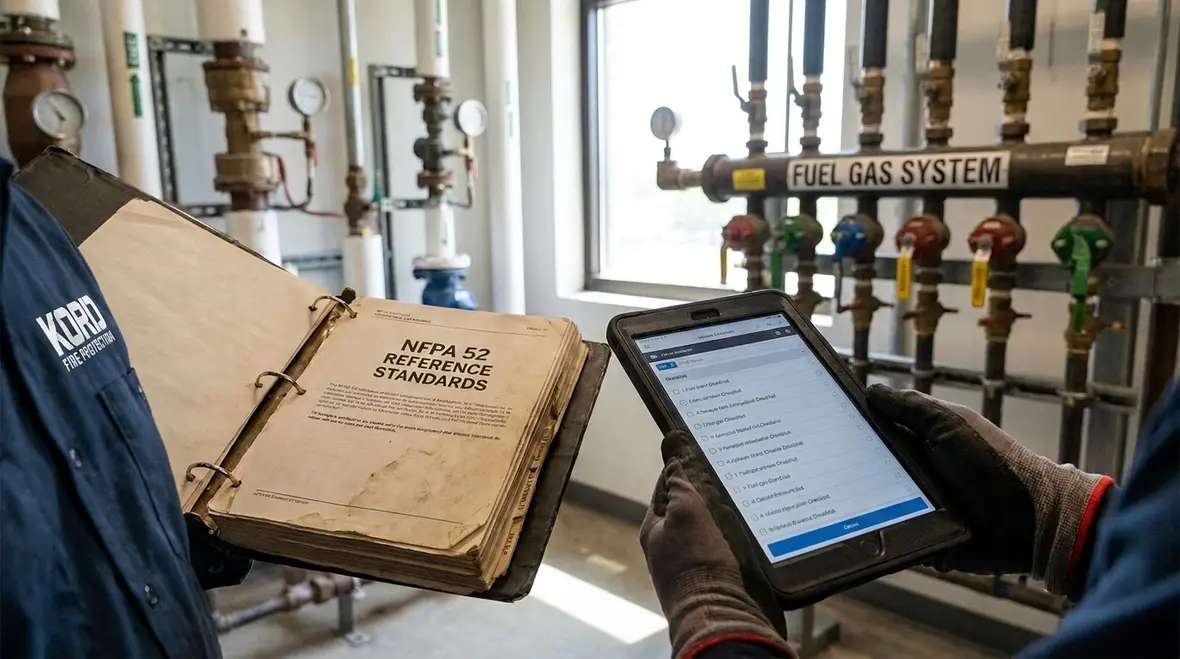
NFPA 52 Section 2.1 General: How Referenced Publication Editions Apply
Quick Answer: NFPA 52 Section 2.1 explains how to determine which edition of referenced standards applies when NFPA 52 cites other documents. The rules generally follow the edition listed in the reference, and where no date is specified, the latest applicable edition at the time of the regulatory cycle governs.
For facilities building stronger inspection and maintenance workflows, full fire protection services can help connect documentation, service scheduling, and compliance readiness before edition confusion turns into a very expensive scavenger hunt.
What NFPA 52 Section 2.1 is trying to prevent
Naming an edition inside technical requirements sounds simple until a facility must demonstrate compliance during plan review, installation inspections, and periodic impairment management. NFPA 52 Section 2.1 exists to eliminate ambiguity by defining how referenced publications are applied. For commercial owners, this directly impacts documentation packages, commissioning checklists, and maintenance procedures for fuel gas systems and related equipment.
For facilities managing multiple contractors and ongoing renovations, the practical risk is not just “wrong text,” but mismatched acceptance criteria. NFPA 52 referenced publications edition rules can create situations where an installed component passes one set of test criteria but fails another due to edition drift. That gap frequently appears during third party inspections, insurance underwriting, or authority having jurisdiction (AHJ) review.
How the referenced publication edition rule typically applies
NFPA 52 Section 2.1 establishes a consistent approach for interpreting references. In practice, the facility must treat each cited document as part of the compliance basis, not as general background information. When the NFPA 52 text cites a publication, the edition rules determine the exact edition that governs the applicable requirement.
- If an edition is specifically identified: follow the edition stated in the NFPA 52 reference. Do not substitute a newer edition unless NFPA 52 permits that substitution under its referenced publication rule set.
- If an edition is not clearly specified: apply the governing rule set described in Section 2.1 for undated references. That often points to the edition in effect at the relevant compliance date tied to the project, permit cycle, or regulatory adoption.
- If multiple referenced documents conflict: the project must resolve the conflict using the edition determination method in NFPA 52 Section 2.1 and the AHJ’s enforcement position.
Operationally, these rules influence what your technicians check during routine inspection and what records your team must retain during maintenance and corrective action. This becomes a recurring concern for commercial, industrial, and retail facilities where systems operate year round and service is performed across staggered service schedules.
Why edition drift becomes a real-world compliance problem
Edition drift occurs when referenced standards evolve but facility documentation remains tied to an older interpretation. The result is a mismatch between how equipment was installed, tested, and maintained versus what inspectors expect at the time of compliance review.
Common failure points during inspections
- Testing method mismatches: later editions can revise acceptance criteria, test setup requirements, or documentation formats. Field staff may still use earlier forms or checklists.
- Maintenance interval changes: referenced maintenance requirements may be updated, affecting inspection frequency and component replacement triggers.
- Documentation gaps: recordkeeping sometimes stops at “work performed,” not “work performed to the referenced edition.” AHJs frequently look for the edition basis.
- Component equivalency disputes: newer editions sometimes refine terminology for materials, assemblies, or performance ratings.
What AHJs usually look for in commercial facilities
For gas related life safety and prevention provisions, AHJs typically expect the facility to prove that it follows the current enforcement edition pathway. That often includes a clear statement of:
- Which edition of each referenced publication applies.
- How the facility adopted those requirements in installation, inspection, and maintenance procedures.
- How the facility validates ongoing compliance during routine service.
To support this, many facilities build an “edition control” matrix and attach it to inspection and maintenance documentation.
How to apply the edition rules during installation, inspection, and maintenance
NFPA 52 referenced publications edition rules should drive your lifecycle compliance process. A disciplined approach reduces rework, improves audit readiness, and limits service interruption.
Step 1: Build a referenced publication edition matrix
Create a single, controlled document that lists:
- Each referenced publication cited under NFPA 52.
- The edition identified or derived using NFPA 52 Section 2.1.
- The date the facility’s adoption policy locks the edition for that project or that regulatory cycle.
- The responsible department and service vendor for each section of work.
Step 2: Tie the matrix to field procedures and checklists
Edition control must reach the field. Technician checklists should reference the edition basis and match the exact acceptance criteria used during the original installation or last major service. This matters for recurring compliance events such as inspections, functional testing, and scheduled maintenance.
Step 3: Maintain evidence quality, not just evidence volume
For ongoing compliance, technicians should capture information that confirms adherence to the required edition. That includes:
- Test results formatted in the expected documentation structure.
- Photos or readings tied to the inspection points specified by the referenced edition.
- Corrective action documentation that shows what changed and why the change aligns with the edition basis.
Step 4: Train maintenance teams on “edition awareness”
Maintenance teams often inherit procedures without understanding why they exist. Training should explain that NFPA 52 referenced publications edition rules affect what “acceptable” means. When technicians understand edition impacts, they can flag when an inspection step appears to follow an outdated criterion before the equipment fails an inspection.
How commercial fire safety partners support edition compliance
Commercial facilities typically handle overlapping compliance obligations across multiple standards, vendors, and building departments. Kord Fire Protection supports clients by strengthening the documentation and execution chain that NFPA 52 Section 2.1 depends on. That includes service planning aligned with cited requirements, maintaining proof of inspection and test performance, and supporting consistent maintenance execution across retail and industrial environments.
For more background on maintaining compliance programs that stand up to scrutiny, see NFPA 25 4.10 4.11 water based fire protection maintenance safety.
When edition rules are managed proactively, facilities reduce avoidable rework and preserve system availability while staying aligned with AHJ expectations.
Frequently Asked Questions
Take action now to eliminate edition ambiguity
To keep inspections smooth and avoid edition related rework, facilities should implement referenced publication edition control for NFPA 52 documentation, then align field procedures and maintenance records to that controlled basis. Kord Fire Protection can help commercial owners maintain compliant inspection and maintenance programs with the documentation quality inspectors expect. Contact Kord Fire Protection to review your current referenced standards approach and strengthen your ongoing compliance workflow.

Join Our Newsletter!
Get the latest fire safety tips delivered straight to your inbox From our Newsletter.


