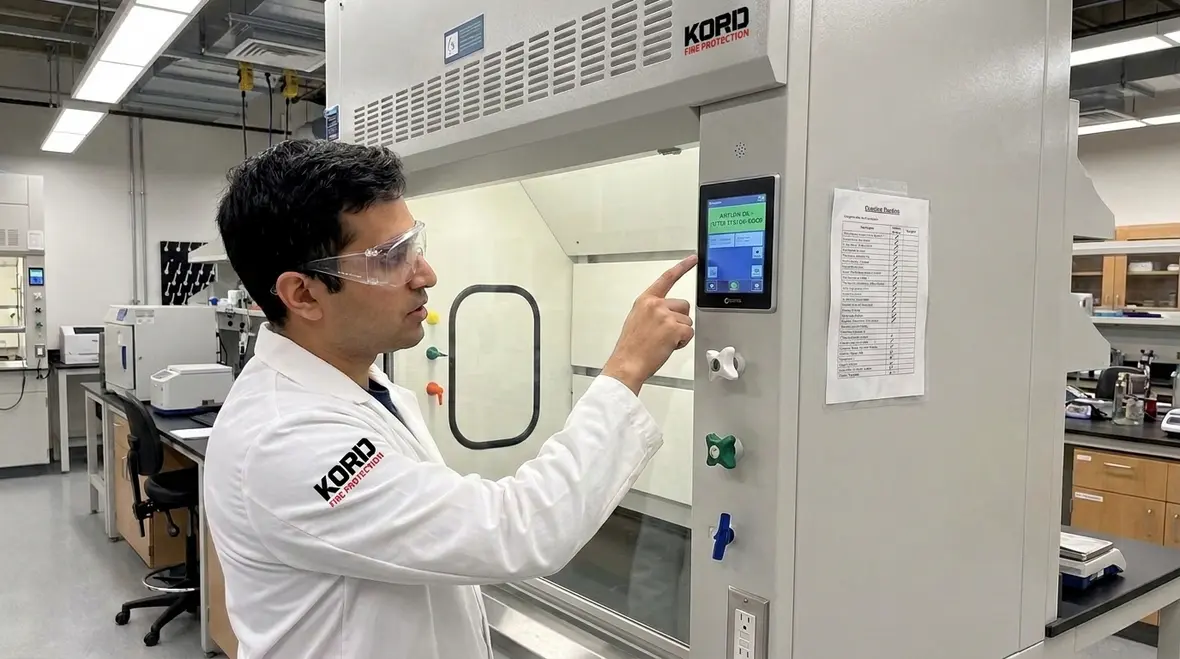
NFPA 45 Section 7.16: Procedures for Using Ductless Fume Hoods
Quick Answer
NFPA 45 Section 7.16 requires controlled, documented procedures for ductless fume hood use, including correct placement, pre use checks, filter loading awareness, operation limits, and maintenance coordination. Facilities must ensure the hood system performs as intended and staff follow safe operating practices.
If your team is building a broader compliance workflow around inspection scheduling, documentation, and maintenance discipline, Kord Fire’s fire protection services in Southern California page is a practical place to start.
NFPA 45 ductless fume hood use procedures: what Section 7.16 expects
NFPA 45 Section 7.16 addresses how ductless fume hoods are used in a way that supports hazard control, predictable capture performance, and ongoing reliability. For commercial, industrial, and retail laboratory or maintenance spaces, the core compliance challenge is consistency: staff must operate the hood within its designed limitations while the facility maintains the filtration and related components required for safe performance.
In practice, NFPA 45 ductless fume hood use procedures focus on operational control, inspection readiness, and maintenance planning rather than one time installation. That means facilities should treat ductless systems like engineered safety equipment, not disposable ventilation accessories.
How ductless hoods differ from ducted systems (and why procedures matter)
Ducted systems manage airflow through exhaust pathways. Ductless fume hoods manage exposure risk through filtration media and internal airflow patterns. This design change shifts responsibility to the facility’s ability to verify that the filtration stage remains capable, the hood airflow remains stable, and the user follows operating steps that prevent filter overloading.
- Using the hood for chemicals and concentrations beyond the hood’s intended application.
- Operating with incorrect sash or access configurations that reduce capture.
- Delaying filter replacement because performance was assumed rather than verified.
- Allowing poor room airflow control that counteracts the hood’s capture behavior.
Section 7.16 procedures help close these gaps by requiring a disciplined operational approach tied to maintenance and inspection readiness.
What “procedures” usually include under Section 7.16
NFPA 45 Section 7.16 centers on the practical steps used day to day. While specific language should be confirmed against the current edition applicable to your facility, the procedural framework typically includes the following operational controls.
1) Pre use checks before work begins
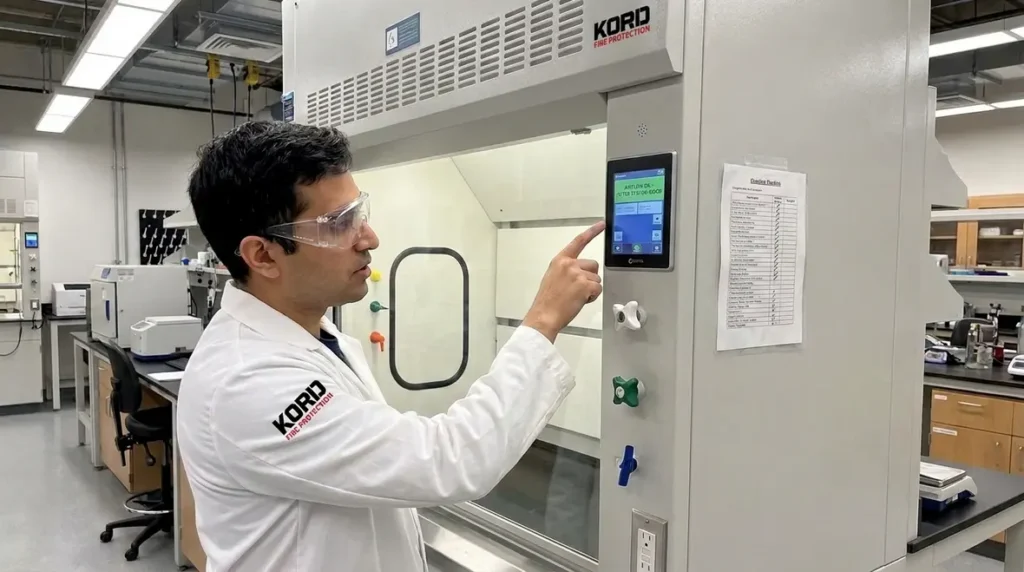
Before any use, qualified staff should verify that the hood is ready to operate. Facilities commonly implement checklists that address:
- Unit status indicators and fan operation.
- Physical condition of the hood and airflow pathway.
- Signs of abnormal noise, vibration, or airflow reduction.
- That the unit is positioned and unobstructed per manufacturer requirements.
From a fire safety and life safety standpoint, this step reduces the risk that an operator begins work while the enclosure is not performing as intended.
2) Correct chemical use within equipment limits
Ductless hoods rely on filtration media and engineered capture. Operators should use the hood for the chemicals and exposure conditions supported by the hood’s filter design and loading assumptions. If a facility uses mixed chemistries, the procedures should direct staff to confirm compatibility before initiating work.
Commercial settings often have turnover staffing. That makes standardized “start of work” confirmation critical, especially when different departments share similar equipment areas.
3) Operating discipline during work
NFPA 45 driven procedures typically include controlled behavior during the operation window, such as maintaining proper work enclosure configuration and avoiding actions that disrupt internal airflow. Procedures should also address:
- Keeping the work opening configured as designed.
- Reducing unnecessary movement that can interfere with capture.
- Stopping work if the unit indicates trouble or abnormal operation.
4) Shutdown, completion, and post use expectations
Operators should follow facility steps for shutdown and secured work completion. In many programs, the procedure also requires that any issues are documented immediately so maintenance can evaluate whether filter loading or airflow performance could be affected.
Inspection and maintenance coordination: where compliance breaks down
Section 7.16 is not only an operator procedure requirement. It also drives the facility to plan inspections and maintenance so that ductless systems remain capable between service events. For commercial facilities, the most frequent operational failure points relate to maintenance timing, documentation, and filter management.
Filter management and loading awareness
Filter media can lose effectiveness due to chemical loading, humidity impacts, or cumulative exposure. Facilities often assume a filter change interval exists as a fixed calendar schedule. In reality, many programs require a combination of:
- Scheduled replacement based on manufacturer guidance
- Tracking usage patterns and chemical exposure conditions
- Documented triggers for earlier replacement based on observed performance criteria
When filters are overdue, airflow and capture performance can fail to protect occupants, and the hood may become unreliable from a safety perspective.
Performance verification and “ready for use” documentation
Facilities should ensure that there is a repeatable verification workflow for hood readiness. This frequently includes inspection of operational indicators and, where required by the equipment program, measurement or checks of airflow performance.
Practical compliance often requires:
- Clear responsibilities for who verifies readiness and who records it
- Service history tied to unit identification
- Immediate escalation when indicators suggest reduced performance
Kord Fire Protection support for ongoing compliance
Kord Fire Protection helps commercial facilities maintain the documentation, service scheduling, and inspection discipline that ductless hood programs require. When the facility treats NFPA 45 compliance as an ongoing service function, it reduces the risk of missed filter changes, incomplete readiness checks, and inconsistent staff practices. For assistance with inspection planning and maintenance coordination, facilities can explore additional resources at Kord Fire Protection.
Facility implementation checklist: building staff compliant habits
A strong NFPA 45 program converts Section 7.16 expectations into everyday behavior. The most successful commercial installations use simple controls that can survive staff turnover and busy daily operations.
Operational controls to standardize
- Written procedure: A short, posted or accessible workflow that matches facility equipment and chemical use scope.
- Training: Initial and periodic training for all operators, including what to do when the hood indicates trouble.
- Use restrictions: A clear “do not use for” list when certain chemicals or conditions fall outside filter capabilities.
- Signage: Operator-facing prompts to support correct configuration and safe work start.
- Issue escalation: A defined path for reporting airflow or performance concerns immediately.
Maintenance controls to lock in
- Service schedule: A plan based on manufacturer guidance and facility exposure conditions.
- Records: Filter replacement and inspection logs tied to the specific unit.
- Quality review: Periodic internal audits to ensure records match actual usage.
This structure supports consistent NFPA 45 ductless fume hood use procedures across departments and shifts.
Common commercial risks and how to prevent them
Even well installed ductless hoods can drift out of compliance if facilities do not control key risk pathways. The following issues appear frequently in industrial, healthcare-adjacent, and retail back of house environments where small chemical processes occur.
Risk 1: Filters replaced based on assumptions
Assuming filters last “about a year” often leads to unsafe under replacement. Align replacement practices to manufacturer requirements and update intervals based on actual operating conditions. Keep records that show why a filter was changed when it was changed.
Risk 2: Poor room conditions affecting capture behavior
Drafts from HVAC supply vents, door openings, or nearby fans can interfere with hood airflow patterns. Procedures should include awareness of environmental factors and escalation rules if room conditions change.
Risk 3: Operators using the hood beyond intended chemistry
Different chemicals can demand different filtration media or can overload media more quickly. Facilities should restrict hood use to approved materials and train staff to confirm compatibility before starting work.
Risk 4: Missing “stop use” triggers
When a hood signals reduced performance, the facility should have a clear stop use procedure. That reduces the likelihood that a unit continues operating while protection is degraded.
Frequently Asked Questions
Conclusion and call to action
NFPA 45 Section 7.16 is practical: it expects facilities to run ductless fume hood operations with consistent procedures, verified readiness, and coordinated maintenance. To reduce operational drift and strengthen compliance, commercial owners should implement written workflows, train all users, and maintain documented inspection and filter management. Contact Kord Fire Protection to review your ductless hood program, confirm maintenance and recordkeeping practices, and support ongoing testing and compliance readiness.
For related reading, facilities working through hood performance and code interpretation can also review NFPA 45 Section 7.8: Chemical Fume Hood Design Requirements and Kord Fire’s fire protection services guide.

Join Our Newsletter!
Get the latest fire safety tips delivered straight to your inbox From our Newsletter.