
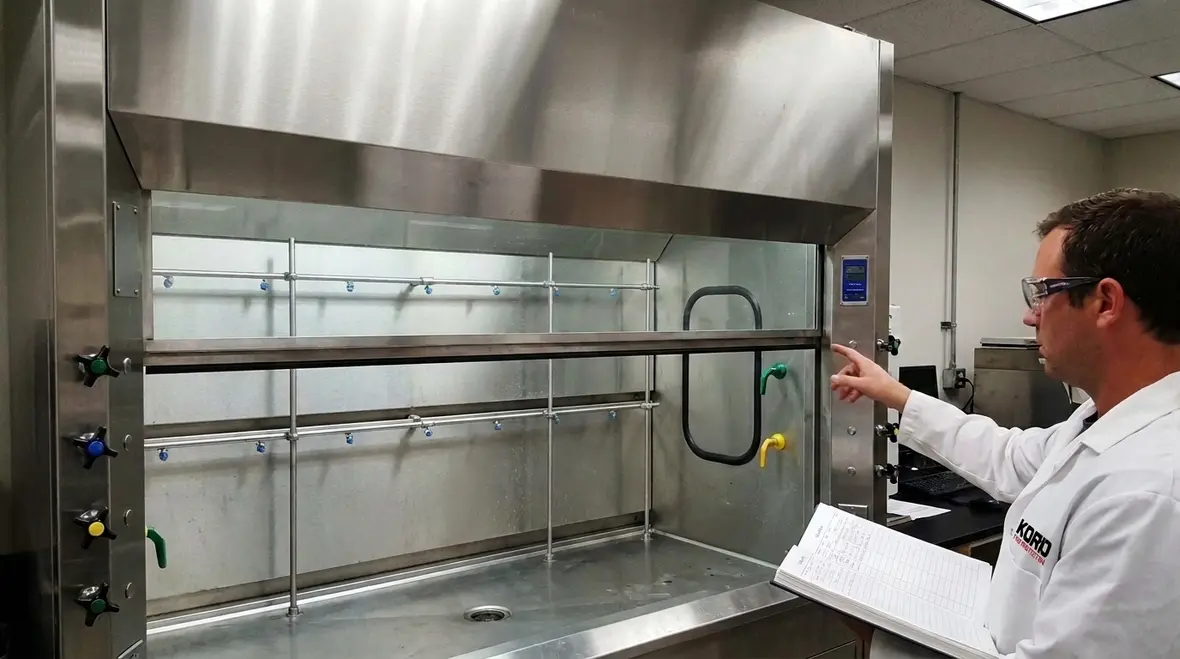
NFPA 45 Section 7.12: Perchloric Acid Hood Requirements
Quick Answer
NFPA 45 Section 7.12 sets strict requirements for perchloric acid fume hoods to prevent hazardous perchlorate buildup, ensure safe exhaust and ducting, and maintain appropriate materials and installation practices. Compliance depends on correct hood configuration, corrosion resistance, and an effective maintenance and inspection program.
What does NFPA 45 Section 7.12 cover for perchloric acid hoods?
NFPA 45 Section 7.12 addresses the design, installation, operation, and maintenance of perchloric acid fume hood systems. The intent is to control the unique fire and chemical hazards associated with perchloric acid vapors and the particulate residues they can leave behind in exhaust systems. This includes preventing the accumulation of perchlorate salts and managing corrosion and ignition risk over time.
In practice, facilities seeking NFPA 45 perchloric acid fume hood requirements often discover that compliance is not just about selecting a specific hood type. It is about verifying the entire exhaust pathway, the materials and coatings used, the clean out strategy, the wash down or water management approach, and the inspection and maintenance controls that ensure buildup does not develop unnoticed.
For facilities building out a stronger long-term safety program, it can also help to review how commercial building fire safety with Kord Fire Protection technicians connects inspections, testing, and documentation into one practical compliance process.
1) Hood and duct design: how perchlorate buildup is controlled
Perchloric acid systems present an unusually high concern for residues that can collect inside hood plenums, ductwork, elbows, and other stagnant areas. NFPA 45 Section 7.12 requirements focus on controlling those residues so they do not build up to a hazardous condition.
Key design elements facilities must verify
- Hood configuration that supports safe capture and directs vapors to the exhaust without creating conditions that promote residue settling.
- Appropriate materials for the hood interior and wetted portions, selected to resist corrosion from perchloric acid and cleaning water.
- Exhaust duct construction that minimizes corrosion and supports safe cleaning, including verified compatibility of duct surfaces.
- Elbows and transitions designed or arranged to reduce dead zones where residue accumulates.
- Clear identification of the system serving perchloric acid processes, so maintenance teams and inspectors understand what must be inspected and cleaned.
For commercial labs and industrial production environments, common compliance failures include duct routes that were value engineered during construction, inaccessible segments that never receive cleaning, and mixed materials that degrade under chemical exposure. These issues can become safety risks long after initial commissioning.
2) Exhaust and wash down operation: the practical compliance step
NFPA 45 Section 7.12 emphasizes safe exhaust system management for perchloric acid service. Many hood systems rely on a controlled wash down method to reduce the accumulation of residues inside the exhaust pathway.
Operational controls that make or break compliance
- Wash down system capability that reaches intended components, including duct sections and locations prone to settling.
- Water management and drainage so the wash process does not create additional hazards through backflow, pooling, or contaminated discharge.
- Interlocks and operating procedures that align wash down cycles with real usage, not just periodic manual activation.
- Documentation that clearly defines who runs the wash down, when it occurs, and how performance is verified.
From a field perspective, the most frequent issues include wash nozzles that become misaligned, blocked lines, incorrect water pressure, and drainage arrangements that accumulate residue. Even a compliant hood can fall out of compliance when the wash down pathway stops performing as designed.
Facilities can also strengthen their approach by reviewing related fire and life safety guidance for commercial workspaces, such as the planning and risk controls described by Kord Fire Protection, which supports ongoing compliance through inspections, testing, and maintenance coordination.
3) Materials, corrosion resistance, and installation quality
Perchloric acid service demands corrosion resistant construction and careful installation. NFPA 45 Section 7.12 requirements connect system safety to how the hood and exhaust are physically built and maintained.
Where installation defects typically appear
- Improper joining methods that allow crevice corrosion and residue retention.
- Non compatible coatings used on parts of the exhaust pathway not intended for perchloric acid exposure.
- Gaps or poor sealing that can release vapors and introduce residue into spaces that are harder to clean.
- Insufficient access panels that prevent safe inspection of the hood plenum, duct runs, and transition components.
Commercial facilities and retail support labs sometimes inherit legacy duct routes during tenant improvements. A key compliance challenge involves validating that the full exhaust configuration used for perchloric acid service meets the same standard as the hood itself.
4) Inspection, cleaning, and maintenance: the recurring compliance program
NFPA 45 Section 7.12 requirements should be treated as an operational program, not a one time installation checklist. The safety goal depends on preventing hazardous residue buildup through scheduled inspection and thorough cleaning.
What a robust maintenance program includes
- Inspection of residue accumulation at locations where build up occurs first, such as elbows and low points.
- Verification of wash down performance, including confirmation that cleaning water reaches intended surfaces.
- Corrective actions for damaged components, degraded coatings, leaks, or blocked lines.
- Recordkeeping that supports audit readiness and internal due diligence.
In many facilities, the compliance gap appears when maintenance is treated as a reactive activity. Kord Fire Protection supports commercial operators by aligning safety inspections with real hood performance, helping facilities identify failure points early and maintain documented compliance.
5) Common failure points during audits and how to prevent them
During compliance reviews, inspectors typically focus on whether the system effectively prevents residue accumulation and whether the facility can demonstrate that the required maintenance practices occur consistently.
Common failure points tied to perchloric systems
- Inaccessible duct segments where residue accumulates but cannot be inspected or cleaned.
- Wash down system deterioration, such as clogged nozzles, weak flow, or leaking components.
- Improper discharge handling of wash water or contaminated residues.
- Missing training and ownership so the process team does not understand wash cycle requirements.
- Inconsistent operational practices where the wash down occurs too late, not at all, or only after visible buildup.
Preventive success usually comes from combining engineering verification with a practical maintenance cadence. Commercial operators benefit from assigning clear responsibilities between laboratory users, facilities maintenance, and the safety compliance function.
Frequently Asked Questions
Conclusion and call to action
NFPA 45 Section 7.12 compliance for perchloric acid fume hood systems depends on more than equipment selection. Facilities must verify exhaust pathway design, confirm corrosion resistant installation, and maintain an inspection and wash down program that prevents perchlorate buildup. Kord Fire Protection can help commercial teams build and sustain that program through targeted inspections, maintenance oversight, and documentation support. Schedule a compliance review to identify gaps and reduce risk before they become audit findings.

Join Our Newsletter!
Get the latest fire safety tips delivered straight to your inbox From our Newsletter.



