
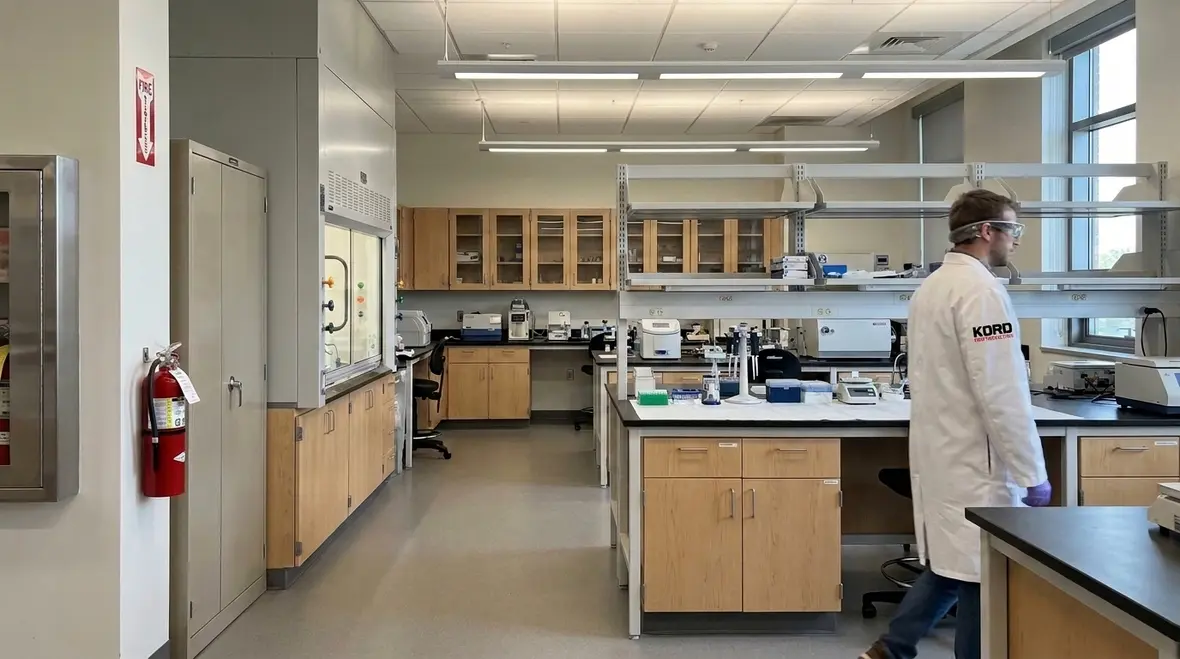
NFPA 45 Section 5.4: Furniture, Casework, and Equipment in Lab Units
Quick Answer
NFPA 45 Section 5.4 sets fire performance expectations for laboratory furniture, casework, and associated equipment. Compliance focuses on how built-in and portable items handle ignition sources, support fire growth, and are maintained. Facilities should align installation, housekeeping, and inspections with these requirements.
For facilities reviewing broader protection strategy, Kord Fire Protection’s fire suppression services page is a useful starting point for connecting inspections, testing, maintenance, and corrective work across lab environments.
What NFPA 45 Section 5.4 requires for lab furniture and casework
NFPA 45 laboratory furniture casework requirements address how furniture, casework, and lab equipment influence fire behavior in laboratory units. While the section focuses on furniture and installed or associated items, the intent aligns with the broader NFPA 45 philosophy: reduce ignition risk, limit fire spread pathways, and support reliable compartmentation and fire protection systems. In commercial laboratory settings, this means the facility must control not only materials and construction, but also installation practices, clearance management, and maintenance over the life of the space.
Because violations often do not show up at purchase time, compliance failures typically emerge during relocation, renovation, plug in modifications, and maintenance cycles. Kord Fire Protection supports organizations by translating NFPA 45 expectations into inspectable, repeatable field standards for ongoing compliance.
How Section 5.4 applies in real lab units
NFPA 45 Section 5.4 governs furniture, casework, and equipment within laboratory units. In practice, it covers items such as fixed and mobile laboratory benches, built in cabinets, drawers, work tables, storage enclosures, and the associated equipment integrated into or positioned adjacent to those systems. It also impacts how these items interface with electrical components, ventilation systems, and fire protection features.
Common compliance scenarios commercial facilities face
- Renovations and fit outs where new casework is installed without evaluating fire spread impacts, clearance zones, and access to fire protection equipment.
- Material substitutions during procurement that change surface finishes or internal configurations without a safety review.
- Equipment retrofits added to benches or cabinets, such as additional power strips, controls, or instrumentation, which introduce ignition and cable management issues.
- Maintenance and replacements using mismatched parts that alter door seals, cable routing, or fire stopping at penetrations.
These issues matter because furniture and casework can unintentionally create hidden fuel loads, restrict access to shutoffs, and obstruct inspection and response when they are installed or altered without fire safety in mind.
What inspectors expect to see during field verification
Even when casework appears compliant at installation, ongoing verification focuses on conditions that develop after turnover: surface deterioration, obstructed pathways, poor cable routing, and accumulation of combustibles. NFPA 45 laboratory furniture casework requirements are typically verified through a combination of visual inspection, functional observation, and documentation review tied to the laboratory unit’s fire safety plan.
Operational checks that often determine pass or fail
- Access and egress impacts: casework placement must not compromise required clearances, exit pathways, or the ability to access emergency equipment and shutoffs.
- Obstructions to fire protection: fire detection, alarms, sprinklers, extinguishers, and emergency devices must remain accessible and unobstructed.
- Electrical interface management: power cords, raceways, and equipment connections must be managed to reduce exposure to ignition sources and to prevent unsafe routing through or behind combustible storage.
- Surface and cavity condition: damaged finishes, delaminating laminates, and compromised internal compartments can increase fire risk and hinder cleanup.
- Penetrations and closures: holes for utilities through cabinetry or adjacent enclosures must maintain any required closure and sealing continuity where applicable.
For facilities with frequent lab changes, the most effective compliance strategy treats furniture and casework like a life safety system. Kord Fire Protection helps organizations set up inspection routines aligned with how commercial laboratories actually operate, including shift based checks and documented maintenance triggers.
Where furniture and casework create fire growth pathways
NFPA 45 Section 5.4 considerations become critical when furniture and casework serve as indirect contributors to fire growth. Fire performance problems often originate from mechanisms that appear minor individually but become significant collectively.
High risk failure points to control
- Hidden combustibles: storage within cabinets and under benches can trap paper, packaging, or lab supplies that are not visible during routine oversight.
- Cable and power strip clutter: overloaded strips, damaged cords, and unmanaged wiring can create ignition points near combustible surfaces and chemical storage areas.
- Door and drawer issues: doors that do not latch, drawers left partially open, and missing gaskets can expose internal contents and spread heat and smoke.
- Improper ventilation or exhaust routing: modifications that redirect airflow can affect how heat and vapors migrate within the lab unit.
- Heat source adjacency: equipment placement that crowds heat generating devices against casework increases risk, especially if surfaces are compromised.
Commercial, industrial, and retail facilities with lab spaces often adopt different housekeeping habits across tenants or departments. Consistent enforcement is essential because furniture and casework frequently span multiple workflows, from instrument staging to sample storage.
How to maintain compliance after installation
NFPA 45 compliance does not end at commissioning. The most common breakdown occurs during the operational lifecycle: cabinet modifications, equipment additions, replacement of parts, and periodic cleaning. A defensible program for NFPA 45 laboratory furniture casework requirements includes maintenance controls that reduce drift from original safety intent.
Recommended maintenance controls
- Documented change management: require review of any modifications involving utilities, penetrations, or changes to storage configuration.
- Scheduled inspections: include furniture and casework checks in routine fire safety rounds, not only during annual life safety walk throughs.
- Housekeeping verification: treat under bench areas and cabinet interiors as inspection zones, not janitorial exceptions.
- Repairs with like for like components: replacement of hinges, latches, and seals should preserve intended performance and integrity.
- Tenant coordination: labs in multi tenant commercial facilities often need shared standards for cable management, storage practices, and access to emergency equipment.
Kord Fire Protection can help facilities align these controls with practical inspection routes and provide ongoing support for commercial compliance documentation, testing, and maintenance. This reduces last minute repair cycles and helps prevent recurring findings.
Build your compliance program with the right fire protection partner
Effective NFPA 45 governance depends on the ability to assess field conditions accurately and respond with timely corrective actions. Many facilities struggle because casework issues are often owned by operations or facilities, while fire protection items are owned by a separate team. Kord Fire Protection bridges that gap by supporting commercial laboratories with inspection readiness, maintenance planning, and ongoing compliance support.
Facilities looking for a more lab specific reference point can also review Clean Agent Fire Suppression for Labs by Kord Fire Protection, which naturally complements this topic with guidance on protection strategy, inspection schedules, and documentation readiness.
Frequently Asked Questions
Take action now to reduce risk and prevent repeat findings
Facilities should audit furniture, casework, and lab equipment interfaces against NFPA 45 expectations, then convert results into a repeatable inspection and maintenance routine. Kord Fire Protection can support your compliance lifecycle with practical field verification, documentation readiness, and corrective action planning. Contact Kord Fire Protection to schedule an assessment tailored to your lab unit layout, operational workflow, and ongoing maintenance schedule.

Join Our Newsletter!
Get the latest fire safety tips delivered straight to your inbox From our Newsletter.



