
NFPA 45 Section 11.3 Laboratory Apparatus Requirements: Compliance Guidance for Commercial Facilities
Quick Answer
NFPA 45 Section 11.3 sets enforceable expectations for the safe installation, operation, and condition of laboratory apparatus used with hazardous materials. Compliance depends on correct equipment selection, protection against ignition sources, maintenance of safe operating features, and documented inspection practices.
For broader inspection readiness and ongoing fire protection support, many facilities also pair laboratory compliance work with code-compliant fire protection services from Kord Fire Protection.
What NFPA 45 Section 11.3 requires for laboratory apparatus
NFPA 45 laboratory apparatus requirements focus on how laboratory equipment is handled as part of an overall fire and explosion prevention strategy. In commercial, industrial, and retail settings that operate laboratories or support chemical handling, Section 11.3 typically becomes a practical standard for managers who must control ignition sources, prevent hazardous releases, and verify that apparatus safety functions remain effective over time.
Because NFPA 45 is hazard oriented, the compliance approach ties directly to the apparatus in use, the materials processed, the ventilation and containment conditions, and the way equipment is maintained. NFPA 45 Section 11.3 should not be treated as a one time checklist item. It requires ongoing verification that apparatus continues to perform safely under real operating conditions.
Which lab apparatus is covered, and where compliance failures usually start
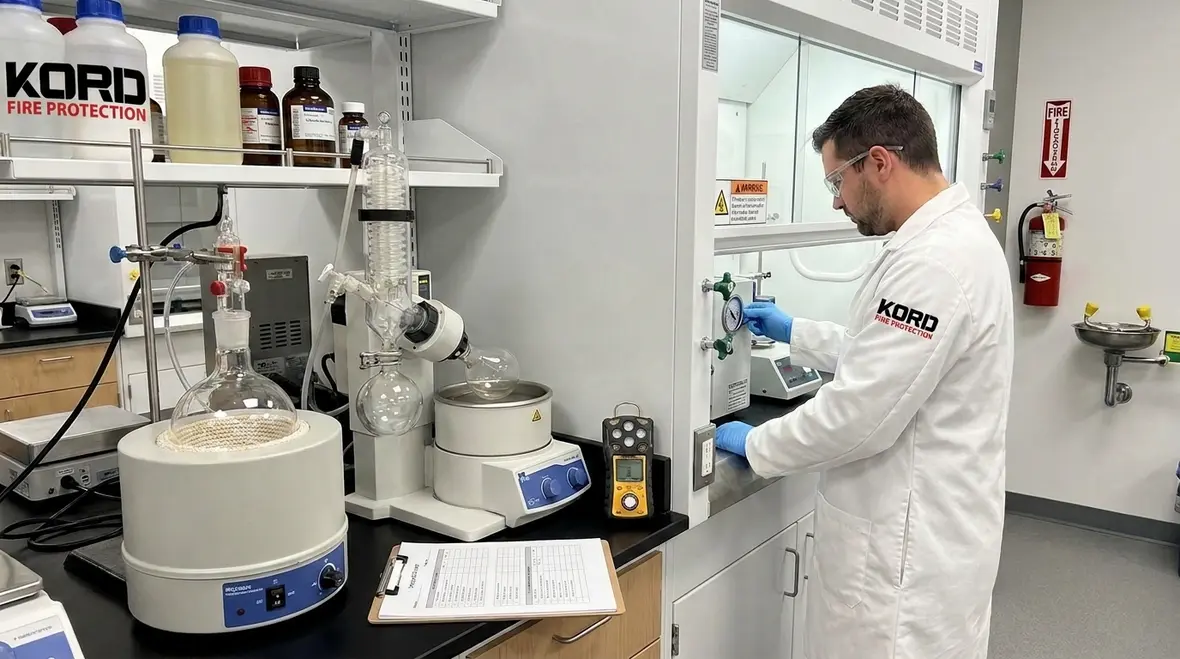
Laboratory apparatus includes more than the visible instruments on a bench. It also includes connected systems and components that influence ignition control and safe containment, such as:
- Heating, hot plate, mantle, and warming devices
- Distillation, reflux, and evaporation assemblies
- Vacuum systems and pump configurations used with flammable or combustible atmospheres
- Gas handling and manifold equipment tied to flammable gas sources
- Fume hood and local exhaust ducting that supports safe operation for vapors and aerosols
- Apparatus interfaces involving electrical connections, wiring, and protective covers
Common compliance failures in commercial facilities typically begin with one of these issues:
- Apparatus is installed correctly at commissioning but drifts over time due to changes in chemicals, operating temperatures, or ventilation set points.
- Safety features are removed or bypassed for convenience, such as interlocks, guards, or protective barriers.
- Improper electrical integration creates ignition risk, including damaged cords, unsealed junctions, or equipment used outside its intended rating.
- Maintenance records are incomplete, so the facility cannot demonstrate that apparatus remains in safe operating condition.
How to apply NFPA 45 laboratory apparatus requirements in day to day operations
Facilities typically meet Section 11.3 expectations by operationalizing apparatus control. That means translating code intent into practical procedures that supervisors can enforce, technicians can follow, and auditors can verify.
1) Verify suitability of apparatus for the hazard conditions
Apparatus selection must align with the flammable, combustible, reactive, or otherwise hazardous materials being used. This includes considering:
- Expected vapor concentrations and the effectiveness of exhaust capture
- Operating temperatures relative to ignition risk
- Potential for static discharge and how the apparatus addresses it
- Compatibility between apparatus materials and chemicals in use
2) Control ignition sources tied to the apparatus
Commercial sites often have a mix of older equipment, portable devices, and shared instrumentation. Section 11.3 expectations are usually satisfied when ignition source controls are maintained at the apparatus level, not just at the room level. This includes keeping guards in place, ensuring correct grounding, and preventing overheating or abnormal operation.
3) Maintain containment and exhaust performance that apparatus depends on
If the apparatus depends on local exhaust or fume hood performance, apparatus safety cannot be separated from that building system. A practical compliance program verifies that exhaust continues to perform as intended, including proper hood sash position practices, duct condition, and airflow verification where required by the facility’s safety program.
4) Establish inspection and maintenance intervals for apparatus components
NFPA 45 laboratory apparatus requirements are difficult to defend during an incident if the facility cannot show that equipment was inspected and maintained. A robust program ties inspection tasks to the apparatus that poses the highest hazard, with records that show:
- Date of inspection and inspection scope
- Defect findings, corrective actions, and follow up verification
- Parts replacement history where safety related components are involved
- Any operational limitations placed on equipment that requires further corrective work
Inspection checkpoints that align with Section 11.3 expectations
Commercial and industrial operators benefit from a consistent inspection format. The goal is to verify that apparatus remains safe under actual use. Consider focusing inspections on these checkpoints:
Mechanical and physical condition
- Condition of tubing, seals, gaskets, and connections for leaks
- Integrity of protective guards and barriers around hot surfaces or moving parts
- Stability and secure mounting of apparatus to prevent tip over or misalignment
Electrical safety and ignition control
- Damage, wear, and strain relief condition on cords and connectors
- Proper labeling and suitability for the equipment’s operating environment
- Verification that covers and electrical enclosures remain closed
Operational controls and interlocks
- Confirm that programmed safety interlocks function as designed
- Verify set points for alarms and shutdown devices match current operating procedures
- Ensure changes in process chemistry do not invalidate the assumptions used during commissioning
Documentation and traceability
- Maintain a list of apparatus in service and the hazard basis for its use
- Keep maintenance logs and inspection results readily accessible
- Document equipment out of service status and re approval criteria after repairs
Commercial compliance support: why Kord Fire Protection helps
Many organizations manage laboratory safety through multiple systems, spreadsheets, and informal practices. Section 11.3 laboratory apparatus requirements demand a unified approach that combines apparatus condition, operating procedures, and verification records. Kord Fire Protection supports commercial facilities with compliance planning, inspection readiness, and maintenance alignment so teams can demonstrate that laboratory apparatus remains safe over time.
If your facility also needs to address broader fire prevention obligations in a compliant and auditable way, review additional guidance through this resource: Kord Fire Protection.
For related laboratory compliance reading, see NFPA 45 Section 6.6: Flame-Resistant Clothing Requirements for Labs and NFPA 45 Section 1.5 Equivalency: Alternative Compliance for Laboratories.
Frequently Asked Questions
Next step: schedule a compliance readiness review
To strengthen NFPA 45 laboratory apparatus requirements compliance, schedule a targeted laboratory apparatus and safety program readiness review. Kord Fire Protection can help identify high risk equipment, validate inspection and maintenance documentation, and align operational procedures with real apparatus hazards. Act now to reduce audit exposure and improve safety performance before the next inspection cycle. Contact Kord Fire Protection today.

Join Our Newsletter!
Get the latest fire safety tips delivered straight to your inbox From our Newsletter.



