
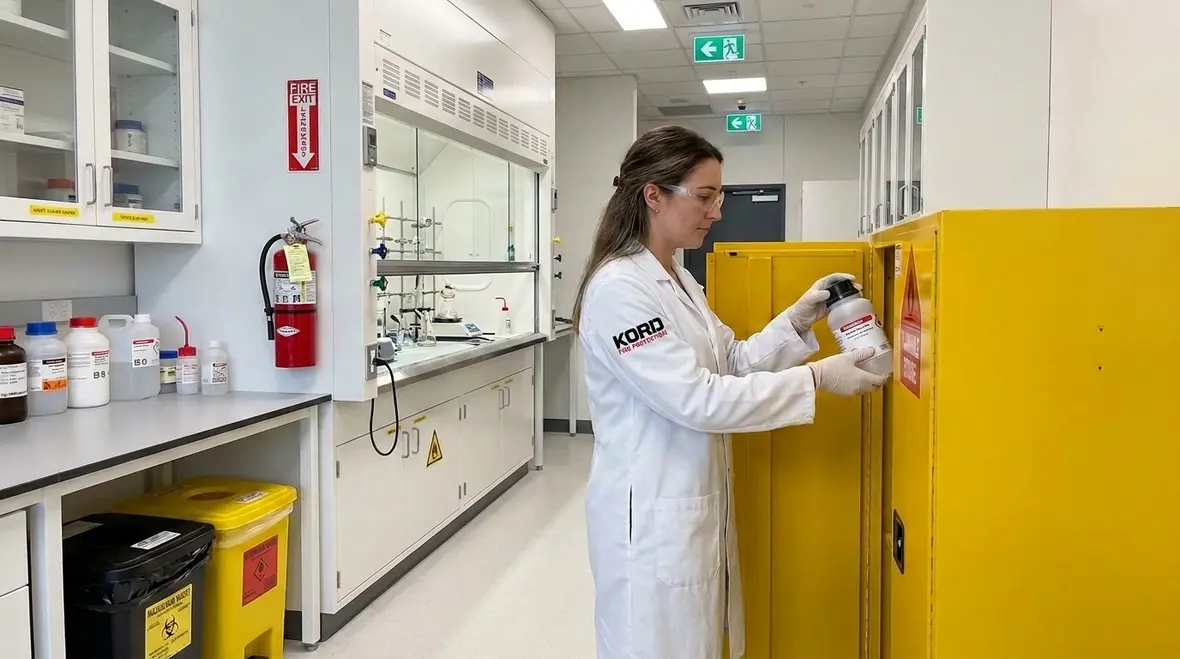
NFPA 45 Section 11.2: Laboratory Operations Requirements
Quick Answer
NFPA 45 Section 11.2 sets the operational expectations for laboratories handling hazardous materials and related processes. It focuses on how work is performed day to day, including housekeeping, safe storage practices, controls for ignition hazards, and the disciplined handling of chemicals and waste to sustain fire safety performance.
Facilities looking at laboratory risk in the broader context of sensitive space protection can also review clean agent fire suppression for labs for a practical look at how suppression strategy supports uptime and equipment protection.
What does NFPA 45 Section 11.2 cover during daily lab work?
NFPA 45 laboratory operations requirements describe how a laboratory’s fire and life safety controls must function during normal operations, not just during installation or commissioning. In practice, compliance depends on procedure, training, equipment readiness, and consistent housekeeping. NFPA 45 Section 11.2 matters because many laboratory fires start as “routine” deviations: an ignition source introduced into an improper area, hazardous waste accumulation, blocked egress or ventilation pathways, or incomplete segregation of reactive or incompatible materials.
For commercial, industrial, and retail facilities that host laboratories, the operational challenge often becomes cross-department coordination. Safety teams, facilities maintenance, EHS managers, and lab supervisors must align on checks, documentation, and response plans. Kord Fire Protection supports facilities by integrating inspection, testing, and maintenance practices into daily operations so safeguards do not degrade over time.
Operational controls: the difference between “installed” and “operational” safety
NFPA 45 Section 11.2 expectations drive a key compliance outcome: fire protection features must remain functional and aligned with the hazards present. A lab may have compliant devices, but if operations undermine them, the facility still fails an intent-based evaluation. Typical operational controls include:
- Maintaining safe work practices for ignition sources, hot work, and equipment operation within defined procedures.
- Ensuring ventilation and exhaust systems operate as required for chemical handling activities that could produce flammable vapors.
- Controlling combustible loading through disciplined housekeeping, spill control readiness, and storage rules.
- Managing hazardous materials and waste so incompatible substances do not accumulate or react improperly.
- Verifying readiness of emergency response capabilities, including alarms, extinguishing equipment, and response access.
Facilities often miss operational failures that inspection teams later cite as “system deficiencies,” even when the equipment exists. A common example is when a laboratory’s process changes, but operational checks remain tied to outdated hazard inventories. Another frequent issue is when staff treat the fire protection equipment as a last resort rather than a routine readiness element.
Housekeeping and combustible control: preventing the slow escalation
Laboratory operations frequently generate residue, packaging, paper, wipes, solvents, and contaminated materials that can increase fire load if unmanaged. Under NFPA 45 Section 11.2, housekeeping functions as an engineering control because it limits fuel availability and reduces the likelihood that small ignition events grow into full-scale incidents.
Common operational failure points
- Waste containers left overfilled or used beyond their rated purpose.
- Improper segregation of waste, especially where incompatible chemicals may coexist in the same receptacle.
- Combustible materials stored near ignition sources such as hot plates, electrical panels, or charging stations.
- Blocked pathways and access routes that delay alarm response, evacuation, or fire suppression.
- Inadequate spill response readiness, leading to residue buildup and uncontrolled vapor release.
Practical trade guidance for commercial facilities focuses on procedures that staff can execute consistently. That includes container labeling, clear staging areas, defined pickup schedules, and supervisory walkdowns. Kord Fire Protection helps clients connect these day to day practices with documented inspection and maintenance, ensuring that supporting detection, suppression, and notification systems remain reliable when staff execute their procedures.
Storage and handling practices: keeping ignition and compatibility risks under control
NFPA 45 laboratory operations requirements require safe handling behaviors that reflect both flammability and reactivity concerns. When operations drift from the approved storage plan, the facility increases exposure to rapid fire growth and dangerous chemical events.
Operational expectations that inspectors commonly verify
- Chemical storage aligns with compatibility needs, with clear separation from incompatible materials.
- Containers remain closed when not in immediate use to reduce vapor release.
- Flammable liquid controls limit quantities and follow approved locations and containers.
- Transfer and dispensing practices reduce ignition exposure, including grounding and process controls where applicable.
- Waste handling prevents mixing and maintains traceable, labeled receptacles until removal.
In commercial and industrial settings, a frequent root cause is “process change without operational update.” For example, a product substitution introduces a different class of chemical with different ignition and storage behavior, but internal procedures and training remain tied to the prior material. A robust compliance program keeps hazard communication and storage rules current through change control and periodic training refreshers.
Ventilation, ignition sources, and hot work: managing the operational triggers
Laboratory activities can create ignition scenarios through electrical equipment, static discharge, hot surfaces, open flames, and hot work. NFPA 45 Section 11.2 emphasizes operational discipline so these ignition sources do not coincide with flammable vapor concentrations or chemical waste conditions.
How labs typically align operations with fire prevention intent
- Hot work permits with defined fire watch and clearance steps when operations require it.
- Verification of local exhaust ventilation performance for relevant processes before work begins.
- Electrical equipment management, including maintaining cords, enclosures, and connections to reduce arcing risks.
- Control of ignition-prone activities, including ensuring equipment is rated and used within the approved conditions.
From a maintenance standpoint, ventilation and electrical risks often rise from deferred repair. Filters load up, dampers stick, or exhaust airflow drifts, and staff proceed because the process “usually works.” Kord Fire Protection supports facilities by coordinating maintenance and inspection schedules that keep supporting systems within expected performance so operational controls remain effective.
Inspections, documentation, and maintenance: sustaining NFPA 45 laboratory operations requirements
Compliance with NFPA 45 laboratory operations requirements depends on evidence that operational safeguards continue to function. Many enforcement and insurance evaluations look beyond whether procedures exist and focus on whether staff can consistently execute them and whether supporting systems remain maintained.
What a strong operational compliance program includes
- Documented procedures for chemical handling, waste management, housekeeping, and emergency response.
- Training and competency records that reflect current operations and materials.
- Routine walkthrough checks by supervisors, including corrective action tracking.
- Inspection and maintenance documentation for detection, alarms, and suppression systems that support the laboratory environment.
- Change control for new chemicals, equipment, or process modifications that alter fire risk.
For facilities managing multiple lab suites, the operational risk compounds because procedures can vary between departments. A unified inspection and maintenance framework reduces variability. Kord Fire Protection helps facilities maintain the documentation trail and maintenance integrity that operational inspections depend on.
To strengthen your overall readiness, consider reviewing related guidance on system reliability and sensitive-space suppression performance through Kord Fire Protection resources, such as clean agent suppression system and room integrity testing. Using an integrated approach improves the likelihood that day to day operations remain aligned with code intent.
Frequently Asked Questions
Next step: validate operational readiness with a professional review
If the laboratory operations are changing faster than maintenance and inspection schedules, compliance risk rises. Kord Fire Protection can help facilities align operational practices with the intent of NFPA 45 Section 11.2 through practical testing, inspection support, and maintenance planning. Contact Kord Fire Protection to assess your current operational readiness and build a sustainable compliance path for your lab spaces.

Join Our Newsletter!
Get the latest fire safety tips delivered straight to your inbox From our Newsletter.



