NFPA 4 Section 6.3 Fire Testing Schedule Australia
Quick Answer
NFPA 4 Section 6.3 outlines the periodic integrated systems testing schedule for fire protection, ensuring coordination and reliability. In Australia, industrial, retail and commercial facilities can rely on Kord Fire Protection to implement, document and verify tests, reducing risk and downtime while keeping compliance straightforward.
The NFPA 4 periodic integrated fire testing schedule anchors how modern facilities test life safety systems. Across Australia there are many sites where coordination among fire alarms, suppression equipment, detection networks and control panels matters as much as the equipment itself. This article explains how Section 6.3 shapes a practical testing cadence and why a trusted partner such as Kord Fire Protection can turn a complex requirement into a smooth and repeatable program. The aim is simple, steady protection with minimal disruption, much like a calm voice guiding a stormy day.
For facilities building a broader compliance strategy, full fire protection services can help connect inspections, alarms, sprinklers, pumps, and documentation into one coordinated program.
Overview of NFPA 4 Section 6.3
NFPA 4 6.3 establishes a framework for regular checks that verify that integrated systems respond together rather than in isolation. The approach emphasizes planning, execution and documentation. Tests are designed to confirm not only individual components but also the way they interact during an incident. By following this framework, facilities managers can spot gaps early and keep teams prepared for real emergencies. It is an approach that rewards consistency and discipline over last minute fixes.
Why integrated testing changes the game
A panel can behave perfectly on its own and still leave a site exposed if connected systems fail to respond in sequence. That is why integrated testing matters. It checks the choreography, not just the dancers. A detector signal, alarm response, suppression action and control interface all need to play their part without improvising at the worst possible moment.
Periodic integrated testing schedule explained
The periodic integrated testing schedule blends routine inspections with functional tests and live simulations. Cadence typically spans multiple months and includes pre tests, execution tests and post tests. Each cycle records outcomes, captures data and updates action plans. In practice this means technicians coordinate with site teams to minimize downtime while confirming that alarms, suppression systems and interfacing devices operate in concert. When done well, the schedule becomes a predictable routine rather than a looming deadline.
A simple rhythm for testing cycles
- Pre tests to confirm scope, access and expected sequences
- Execution tests to validate real time system coordination
- Post tests to document results, close gaps and refine future cycles
Why the schedule matters for Australian facilities
Australian sites span manufacturing warehouses, shopping centers and corporate campuses. For these environments, a disciplined testing schedule reduces disruption and protects people and assets. Compliance milestones are clearer when a team follows a standard cadence and maintains ready access to test records. In addition, consistent testing supports performance benchmarks and insurance requirements. In short, the schedule is not a burden it is a proven path to dependable safety.
For a deeper look at coordinated maintenance and testing strategy, see implementing NFPA 4 for fire safety, which complements the schedule focused approach discussed here.
Kord Fire Protection as a partner in testing programs
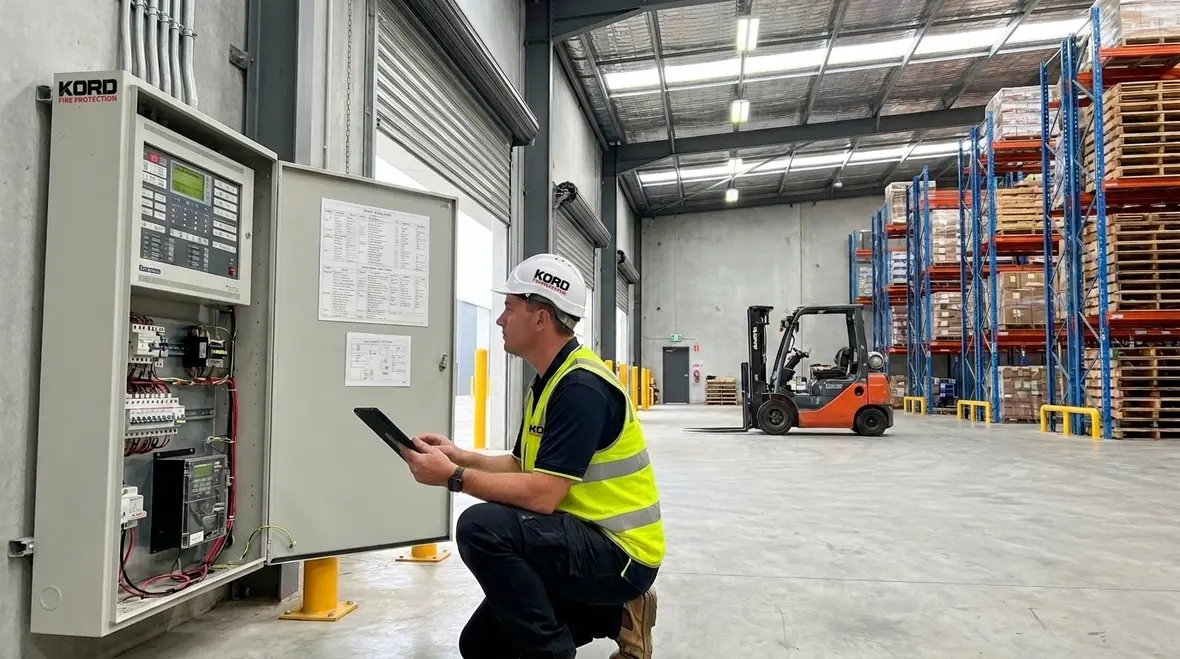
Kord Fire Protection brings depth in planning, execution and reporting. The company aligns with the NFPA 4 periodic integrated fire testing schedule to deliver a turnkey program. Expect coordinated scheduling across trades, comprehensive test scripts, and clear proof of performance. With a calm, methodical approach, Kord converts complex requirements into actionable steps. The result is enhanced safety, transparent documentation and fewer surprises during audits.
What a reliable testing partner improves
- Scheduling across site operations and technical trades
- Consistent test scripts and acceptance criteria
- Clear reporting that does not read like it was assembled during a power outage
- Stronger readiness for audits, insurers and internal reviews
Implementing the schedule in practice
Begin with a site assessment that maps all systems including alarms, detection, suppression and control interfaces. Create a master calendar that assigns responsibilities, test types and expected outcomes. Develop concise checklists for each test and ensure teams understand acceptance criteria. After each cycle the team reviews results, closes gaps and updates maintenance plans. This practical rhythm keeps safety goals in sight and budgets under control.
Planning steps
- Map all connected life safety systems
- Assign responsibilities clearly
- Define expected responses and pass criteria
Review steps
- Record outcomes and exceptions
- Close gaps before they linger
- Update maintenance plans for the next cycle
Documentation and reporting essentials
Maintenance records, test certificates and system diagrams form the backbone of accountability. The NFPA 4 periodic integrated fire testing schedule emphasizes traceability so stakeholders can verify performance quickly. Consistent reporting supports compliance audits and simplifies renewal processes. When partners provide ready made templates for test reports and an accessible data repository the effort becomes predictable rather than overwhelming.
Two column view of testing outcomes
Column A Safety outcomes
The schedule ensures that all safety critical interfaces act together during a simulated event. Regular checks verify that detectors feed correct signals to control panels and that alarms trigger appropriate responses across zones. This alignment reduces delays and increases reliability when it matters most.
Column B Operational outcomes
Beyond safety, the cadence supports business continuity by minimizing downtime and facilitating faster return to service after tests. Clear documentation aids maintenance planning and demonstrates to insurers and authorities that the site remains a low risk operation. In this light, the testing program becomes an asset rather than a cost center.
FAQ
Conclusion
Kord Fire Protection invites Australian facility managers to embrace a proactive testing approach under the NFPA 4 periodic integrated fire testing schedule. By pairing a disciplined plan with skilled technicians, sites gain reliable safety and predictable operations. Reach out to Kord today for a no obligation review and a tailored plan that makes compliance simple and cost predictable.

Join Our Newsletter!
Get the latest fire safety tips delivered straight to your inbox From our Newsletter.