
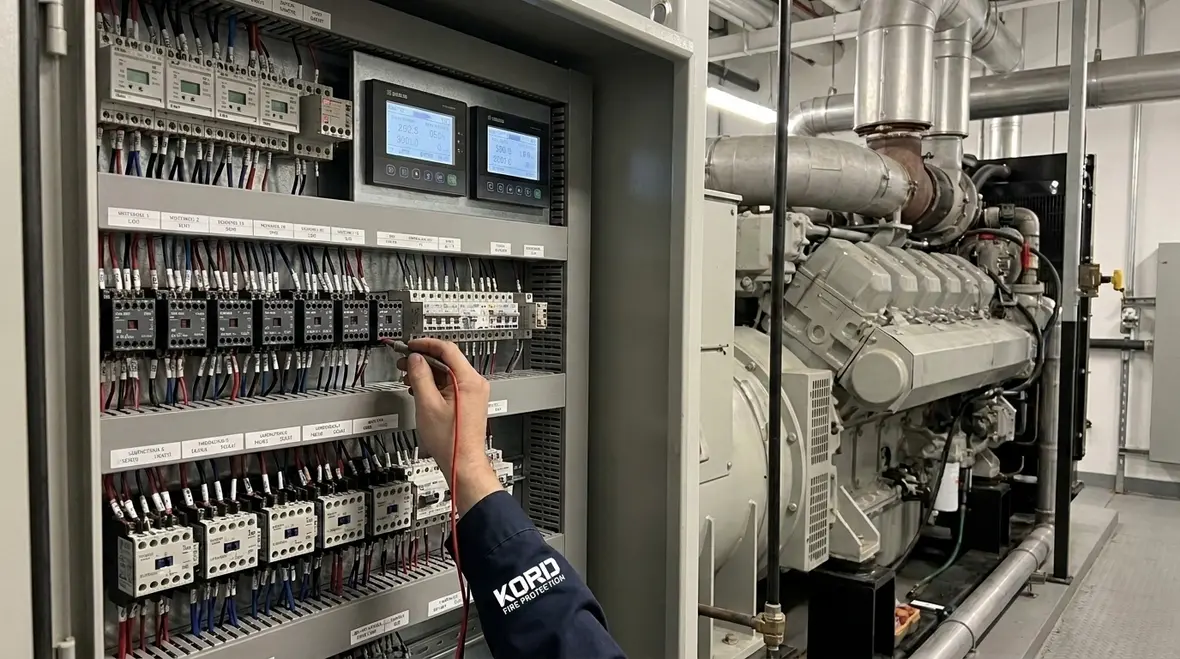
NFPA 37 Section 9.1: Control and Instrumentation Requirements for All Engines
Quick Answer
NFPA 37 Section 9.1 establishes the control and instrumentation features required for all engines to operate reliably, safely, and in accordance with an approved system design. It addresses device functions, alarm and shutdown needs, and maintenance-ready installation practices that support inspection, testing, and continued compliance.
Facilities working through engine readiness and inspection planning can also benefit from a broader look at proactive maintenance for fire pump system reliability, especially where controls, testing discipline, and documentation all need to stay in sync.
What NFPA 37 Section 9.1 actually requires for engine controls
NFPA 37 Section 9.1 governs how engine systems receive control signals and how instrumentation provides the feedback needed for safe operation. For facilities, the practical outcome is straightforward: the control and instrumentation must match the hazard and operating intent, and the installed equipment must be capable of demonstrating performance during inspection and testing.
For many commercial sites, the compliance question often becomes: what do the NFPA 37 engine control instrumentation general requirements mean in day to day operations, preventive maintenance, and field verification? The answer lies in understanding the intent behind Section 9.1: control means and protective feedback must be installed, identified, and maintained so the engine can start, run, and safely transition to shutdown or alarm under abnormal conditions.
Who this applies to and where compliance breaks down
NFPA 37 Section 9.1 applies broadly to engines within the scope of the standard and focuses on instrumentation and controls used for engine starting, operation, monitoring, and protective functions. In a commercial environment, that includes systems found across industrial, retail, and specialty facilities such as:
- Backup power and life safety related engine systems
- Process or industrial engines tied to critical operations
- Facilities with automated transfer and engine start sequences
Common compliance failures tend to cluster around three themes:
- Inadequate functional verification after changes in wiring, PLC logic, or field sensors.
- Instrumentation mismatch where installed sensors do not provide the intended measurement or alarm logic.
- Maintenance drift from clogged filters, degraded wiring, incorrect calibration, or labels that no longer match current design.
These issues often do not show up until testing, when facilities discover that alarms do not annunciate correctly, shutdown does not actuate as required, or instrumentation outputs fall outside acceptable tolerance.
Engine control and instrumentation: the operational mechanics
Section 9.1 focuses on the engineering concept that engine controls and instrumentation must support safe and reliable behavior. In practice, that means the system uses engineered control points and monitored parameters to accomplish defined outcomes such as controlled starting, stable running, abnormal condition alarm, and protective shutdown or safety interlock operation.
Controls that must work as designed
Engine controls typically include start and stop command means, automatic or manual initiation logic, and protective control pathways. When controls fail, the failure may present as:
- Delayed start due to permissive logic not clearing
- Uncommanded shutdown due to nuisance trips
- Lost control signal integrity from wiring degradation or loose terminations
Instrumentation that provides the feedback the system needs
Instrumentation provides the measured inputs that inform control decisions. The intent is that instrumentation communicates reliable signals suitable for protective actions and annunciation. For facilities, typical pain points include:
- Sensors installed in locations that do not represent the intended operating condition
- Scaling or signal conditioning problems between sensor outputs and the control system
- Calibration drift leading to setpoints that are no longer correct
Facility teams can reduce these risks by aligning installed instrumentation with the design basis and by ensuring every sensor and alarm path can be demonstrated during commissioning and periodic testing.
How inspections and tests typically confirm Section 9.1 compliance
NFPA 37 Section 9.1 compliance is not only about equipment presence. It is about demonstrated function and maintained readiness. Inspection and test activity typically verifies that control and instrumentation perform the required protective roles and that the system configuration matches the approved design.
Field verification expectations in commercial facilities
In commercial and industrial settings, the most effective compliance programs treat Section 9.1 like a verification framework. That includes:
- Documented setpoints and acceptable tolerances for relevant monitored parameters
- Clear labeling for alarms, shutdown functions, and manual versus automatic control modes
- Repeatable test procedures that validate control pathways and alarm responses without bypassing protective intent
- Configuration control for PLC logic changes, wiring revisions, and instrumentation swaps
Maintenance readiness that prevents “surprise failures”
Instrumentation often degrades gradually. Wiring insulation ages, connectors loosen, and sensors accumulate deposits or mechanical wear. That is why maintenance tasks must include inspection of signal integrity and physical installation condition. When facilities skip these checks, testing can uncover problems late in the cycle, especially around renewal inspections, outage windows, or seasonal reliability periods.
As a commercial service partner, Kord Fire Protection supports facilities with structured compliance maintenance planning, test readiness review, and practical field verification workflows aligned to the way inspectors evaluate real systems.
Where facilities struggle: wiring, logic, and documentation
Even when the correct engine and instrumentation hardware exists, compliance can still fail if the system does not behave as intended. The most common implementation challenges include:
- Signal pathway confusion: sensor output goes to one device, but the alarm or shutdown logic expects a different channel.
- Setpoint drift: calibration changes or control system updates alter thresholds without revalidation.
- Sequence logic gaps: permissive interlocks do not clear because of stale feedback contacts or incorrect input states.
- Label and as built mismatch: the field labels reflect the original design, but the wiring or PLC logic changed after a retrofit.
These issues often appear after renovations, vendor replacements, or controller swaps. To keep NFPA 37 engine control instrumentation general requirements aligned with the current field configuration, facilities should implement a change management routine that includes updating drawings, verifying alarm and shutdown responses, and recording calibration status.
Maintain continuous compliance with a practical verification partner
Commercial facilities need more than one time testing. They need an ongoing program that connects design intent to field reality, then keeps the system stable through maintenance and change control. Kord Fire Protection helps facilities manage the operational risks that show up during inspection and functional testing of engine control and instrumentation systems.
If your organization requires support structuring inspection readiness, test procedures, and documentation control for engine and protective systems, use this resource as a starting point: fire protection services in Southern California.
For best results, coordinate early so that instrumentation verification, calibration checks, and control logic validation align with your facility schedule and downtime constraints.
Frequently Asked Questions
Next step: verify your engine controls and instrumentation before inspection
Facilities should not wait for inspection to discover drift, mismatched logic, or degraded instrumentation performance. Engage Kord Fire Protection to review engine control and instrumentation readiness, validate alarm and protective functionality, and build a maintenance and test schedule that supports continuous compliance with NFPA 37 Section 9.1. Contact Kord Fire Protection today to schedule a compliance-focused assessment.

Join Our Newsletter!
Get the latest fire safety tips delivered straight to your inbox From our Newsletter.



