
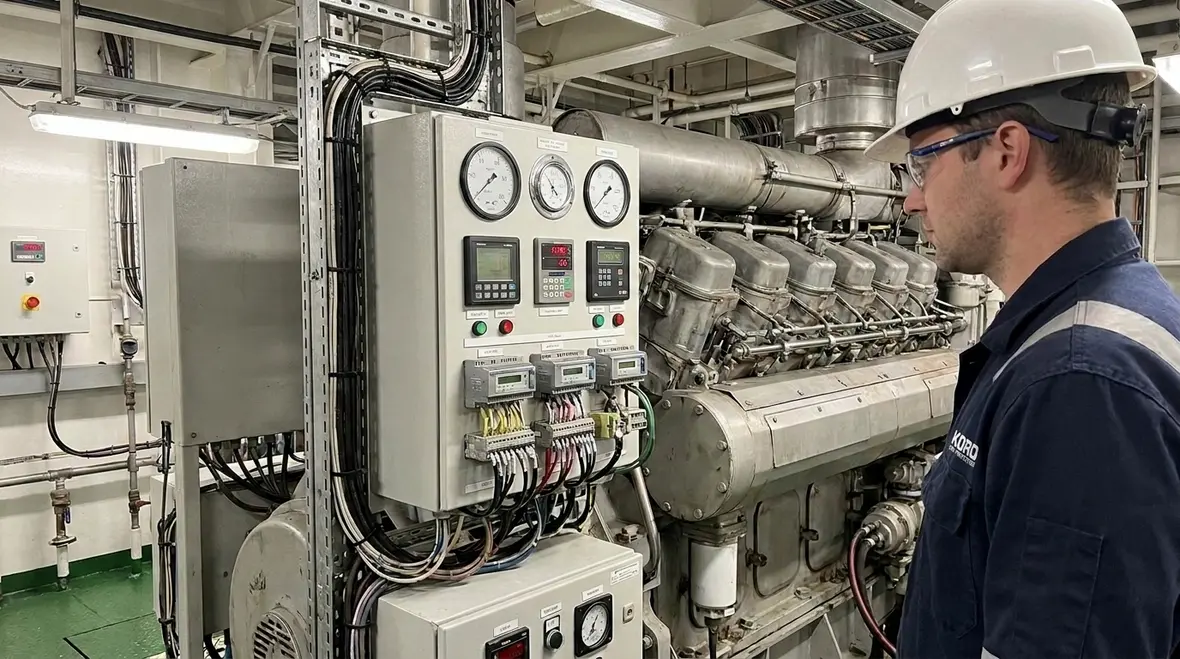
NFPA 37 Section 9.2: Controls and Instrumentation for Reciprocating Engines
Quick Answer
NFPA 37 Section 9.2 sets performance and reliability expectations for the controls and instrumentation used to monitor, protect, and safely operate reciprocating engines. Compliance focuses on correct sensing, annunciation, interlocks, and maintenance readiness to prevent unsafe operating conditions.
For facilities already coordinating broader fire protection work, fire pump testing requirements often fit naturally into the same compliance planning rhythm, especially when documentation, readiness, and inspection outcomes all need to stay aligned.
What NFPA 37 Section 9.2 requires for reciprocating engine safety controls
NFPA 37 reciprocating engine control instrumentation requirements address the practical reality that engines fail in ways that can quickly escalate into fire and explosion hazards. Section 9.2 drives facilities toward engineered monitoring, protective control logic, and dependable instrumentation so operators can detect abnormal conditions and automatic systems can take protective action.
In commercial, industrial, and retail environments, the biggest compliance failures typically come from mismatched setpoints, instrumentation drift, bypassed interlocks, poor calibration practices, and documentation gaps. Those weaknesses can defeat the safety intent of the standard even when equipment appears installed.
Which controls and instruments are covered in Section 9.2
Section 9.2 concentrates on the controls and instrumentation used to achieve safe operation of reciprocating engines. While the exact scope depends on engine type and system design, typical elements in NFPA 37 reciprocating engine control instrumentation requirements include:
- Monitoring instrumentation such as pressure and temperature sensing needed to verify safe operating ranges.
- Control functions that manage startup, shutdown, load changes, and protective sequencing.
- Protective action controls including shutdown logic, alarm initiation, and interlocks that respond to abnormal conditions.
- Alarm and annunciation to ensure operators receive timely, unambiguous indications.
- Status and feedback to confirm commanded positions and operating modes.
From an inspection standpoint, authorities having jurisdiction (AHJs) and third-party reviewers usually look for functional alignment: the sensor must measure what the control expects, the alarm must correspond to the hazard, and the interlock must actually trip the protective action under defined conditions.
How compliance is verified in the field: what inspectors expect to see
1) Functionality that matches the design basis
Many systems pass an initial installation review but fail in ongoing operation because field changes occur over time. Inspectors generally expect documentation and evidence that controls and instrumentation perform to the design intent. This includes:
- Written control logic description, including trip points and alarm setpoints.
- Proof that trip and shutdown sequences cannot be inadvertently overridden.
- Confirmation that alarm routing is correct for the occupied environment.
2) Calibration and test readiness
Instrumentation drift is one of the most common failure points for reciprocating engine protection. Temperature and pressure sensors, transducers, and related wiring can degrade through vibration, heat cycling, contamination, or loose terminations. Inspectors often verify that calibration intervals and maintenance records exist and that instruments are tested at defined frequencies.
3) Wiring integrity, power, and signal reliability
Controls and instrumentation depend on reliable power supply, stable signals, and correct fail-safe behavior. Field evidence typically includes:
- Conductor routing and protection from physical damage.
- Verification of proper grounding and shielding practices where applicable.
- Assessment of terminal integrity, corrosion control, and workmanship.
In commercial facilities, these issues often emerge after renovations, tenant improvements, or generator panel modifications.
Common operational and maintenance failure points that break compliance
Facilities frequently encounter recurring problems that undermine the protective intent of NFPA 37 Section 9.2. Addressing these early reduces downtime and improves audit outcomes.
Loose or misconfigured sensors
Improper sensor mounting or installation position can lead to false readings. Even when the equipment is the correct model, measurement accuracy can suffer if probes are not installed per manufacturer requirements or if thermal coupling is inadequate.
Setpoint drift and unapproved tuning
Operators and service contractors may adjust control parameters for operational convenience. If trip points or alarm thresholds deviate from the approved basis, protective actions may occur too early, too late, or not at all.
Bypassed interlocks during maintenance
Bypasses are sometimes necessary during troubleshooting, but they can remain in place unintentionally. NFPA 37-related reviews typically expect a process that prevents unsafe operation, including documented return-to-service verification.
Alarm fatigue and unclear annunciation
When alarms are too frequent or not clearly labeled, operators delay response. Compliance requires not only alarm existence but also alarm practicality, including proper identification and human readable messaging.
Recommended compliance program for commercial facilities
A defensible compliance program aligns engineering expectations with routine operations, maintenance, and documentation discipline. Kord Fire Protection commonly supports clients through structured, repeatable processes that reduce audit risk.
1) Establish control and instrumentation records
- Maintain an up-to-date “as-built” control narrative, one-line diagrams, and point lists.
- Track alarm setpoints, trip logic, sensor ranges, and calibration certificates.
- Document any changes with approved engineering review and re-testing results.
2) Implement calibration and functional testing
Calibration alone may not confirm protective performance. Testing should include functional verification of alarm annunciation and shutdown sequences in accordance with the facility’s inspection plan and manufacturer recommendations. This approach helps confirm that the system responds as intended under abnormal conditions.
3) Plan for vibration and heat cycling impacts
Reciprocating engines operate in environments that can accelerate component wear. A practical program includes inspection of sensor integrity, verification of connections, and attention to wire routing protection.
4) Prepare for AHJ reviews
Many compliance delays occur because requested evidence is fragmented. Kord Fire Protection helps consolidate documentation, test results, and corrective actions into audit-ready packages.
For related fire and life safety support that often pairs with engine protection strategies, see Kord Fire Protection’s resources at Kord Fire Protection.
Frequently Asked Questions
Conclusion and next steps
NFPA 37 Section 9.2 focuses on more than installed instrumentation. It requires reliable sensing, correct annunciation, and verified protective control performance that remains stable through maintenance and over time. Kord Fire Protection can help commercial facilities build an audit-ready compliance program, perform functional testing, and close documentation gaps before an inspection creates operational disruption. Request a compliance assessment to confirm your reciprocating engine controls and instrumentation meet expectations.

Join Our Newsletter!
Get the latest fire safety tips delivered straight to your inbox From our Newsletter.



