
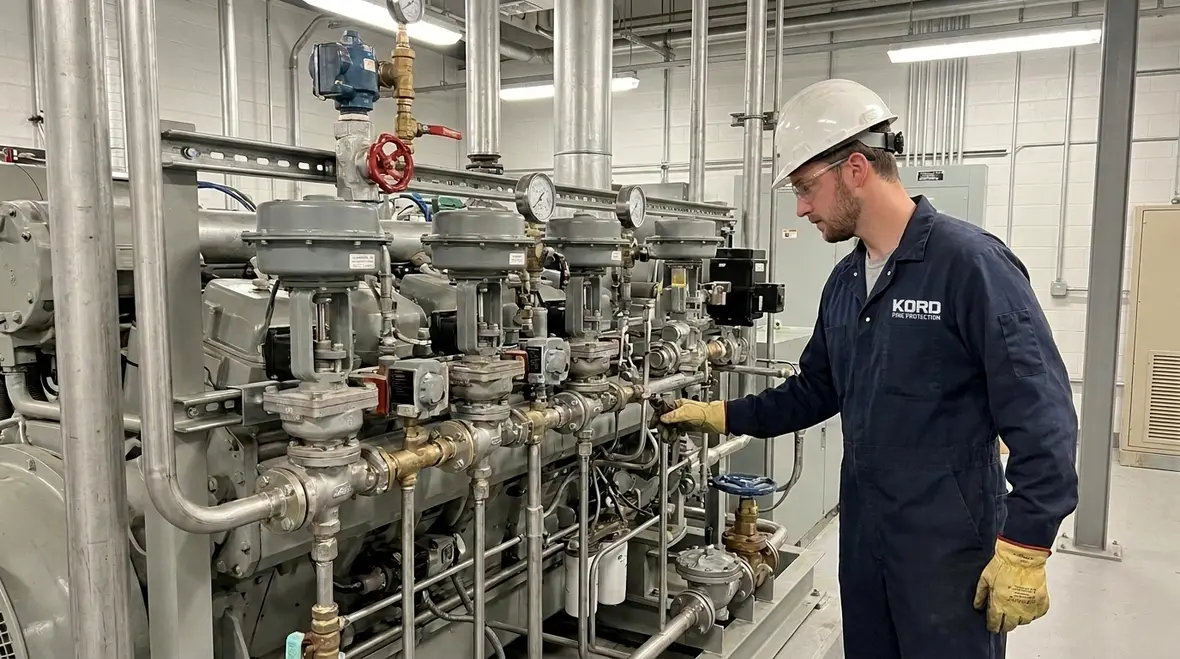
NFPA 37 Section 6.5: Liquid Fuel Flow Control Requirements
Quick Answer
NFPA 37 Section 6.5 sets performance and design expectations for controlling liquid fuel flow to engines. The goal focuses on preventing unsafe flow conditions during normal operation, abnormal situations, and shutdown. Facilities must verify hardware function, secure setpoints, and maintain controls to sustain safe operation.
For broader fire protection support that fits naturally with inspection, testing, and maintenance planning, review fire protection services in Southern California from Kord Fire Protection.
What NFPA 37 Section 6.5 Covers for Liquid Fuel Flow Control
NFPA 37 Section 6.5 addresses how facilities manage liquid fuel delivery to engines to reduce the risk of uncontrolled flow, improper shutdown behavior, or conditions that can lead to hazardous releases. For compliance teams, the key takeaway is that “flow control” is not limited to a valve selection. NFPA 37 liquid fuel flow control requirements engines are assessed as an integrated system that includes the valve or controller, the required fail safe behavior, the instrumentation logic where applicable, and the maintenance practices that ensure the equipment performs as designed over time.
From a practical standpoint, commercial sites typically face failure points that do not show up during a one-time installation check. Leaks around control components, loose electrical connections on actuators or solenoids, clogged strainers, sensor drift, and incorrect setpoints can all degrade safety function. NFPA 37 compliance therefore depends on ongoing verification that the installed configuration still matches the safety intent.
How Liquid Fuel Flow Control Systems Are Typically Designed
Most facilities implement liquid fuel flow control using a combination of mechanical and control elements. Common components include manual isolation valves for servicing, automatic control valves or regulators for normal operation, and shutdown capable actuators that move to a safe position when commanded or when safety conditions occur. Where the design includes instrumentation, the safety concept typically relies on signals that detect abnormal fuel demand, pressure, or operating state and then transition the fuel flow to an acceptable safe condition.
To meet NFPA 37 expectations, the system must reliably prevent unsafe flow patterns across operating modes such as start, steady run, and stop. Compliance reviewers often look beyond the component list and evaluate whether the arrangement provides the intended function during abnormal events such as loss of control power, blocked discharge, or malfunction of control logic.
Key design verification items during plan review or commissioning
- Fail safe position of the flow control valve or actuator, including behavior on loss of power or loss of signal.
- Pressure and flow capacity of regulators and valves to avoid overshoot or instability at transition points.
- Control logic integrity so that shutdown commands actually remove or restrict fuel flow rather than just inhibiting engine start.
- Physical installation protections such as guarding for exposed valve linkages and proper routing of lines.
- Documented setpoints and adjustment procedures that restrict unauthorized changes.
Operational Requirements: Ensuring Safe Fuel Flow During Start, Run, and Shutdown
Facilities must ensure liquid fuel flow control behaves predictably when the engine changes states. NFPA 37 liquid fuel flow control requirements engines are enforced through the practical realities of engine operations: start sequencing, load changes, and orderly shutdown. A control system can pass an acceptance test and still fail in the field if the sequencing logic or valve response timing does not account for actual installed conditions.
Common commercial operational scenarios that trigger compliance issues
- Delayed shutdown due to valve sticking, air in the line, or actuator malfunction that allows fuel to continue flowing after a stop command.
- Overshoot at start when control valves open too quickly or regulators are misadjusted, causing brief uncontrolled flow peaks.
- Clogged strainers and contamination buildup that shifts regulator performance and can produce unstable flow.
- Incorrect valve orientation or line configuration during maintenance, especially when multiple similar valves exist on a skid.
For commercial, industrial, and retail facilities, the practical compliance challenge centers on maintaining the engineered sequence under real maintenance conditions. Shops frequently rely on service personnel who may not treat fuel flow controls as a safety critical component. NFPA 37 compliance work should therefore include training, clear labeling, and documented lockout and adjustment controls.
Inspection, Testing, and Maintenance: What to Verify Over Time
NFPA 37 liquid fuel flow control requirements engines cannot be met by inspection alone. The equipment must remain functional after months and years of vibration, thermal cycling, and fuel quality variation. Effective maintenance programs treat flow control components as a safety system with scheduled verification, not as routine hardware.
Practical inspection and testing activities facilities should plan for
- Valve response checks during functional testing to confirm correct movement and safe positioning within expected timing.
- Leak detection around fittings, control valve bodies, and actuator interfaces, including checks after maintenance events.
- Regulator performance verification through pressure and flow observation at defined operating conditions.
- Strainer and filter inspections to prevent contamination induced instability or delayed closure.
- Electrical and control verification for solenoids, actuators, limit switches, sensors, and interlocks.
- Calibration and setpoint control to ensure the control system remains aligned with the approved configuration.
Maintenance failure points that repeatedly show up in the field
- Seal degradation in valve stems and fittings, leading to slow fuel seepage that becomes a larger issue under pressure.
- Actuator air or power supply problems that reduce available force and create partial movement.
- Unauthorized adjustments to regulators or control limits that undermine the engineered safety response.
- Interlock bypassing during troubleshooting that is not restored to normal operation.
Kord Fire Protection supports commercial facility teams with practical compliance services that align testing and maintenance with safety intent. That includes helping track asset condition trends, coordinating functional checks, and documenting results for audit readiness. When facilities treat NFPA 37 requirements as an ongoing program, they reduce downtime risk and strengthen defensibility during inspections.
For related code scope context, see NFPA 37 Section 1.3 on which engines and installations are covered, which helps frame where these requirements apply across commercial facilities.
Compliance Challenges in Commercial Facilities (and How to Address Them)
Commercial, industrial, and retail facilities often struggle with consistent application of NFPA 37 liquid fuel flow control requirements engines due to staffing turnover, maintenance contractor variability, and multi asset environments such as generator rooms, fuel skids, and process engine applications. Compliance becomes difficult when documentation is incomplete or when test procedures exist but are not executed with the right sequence and acceptance criteria.
Where teams commonly get stuck
- Unclear ownership of fuel control equipment maintenance between facilities staff and vendor contractors.
- Missing baseline test results from commissioning, which prevents trend comparisons.
- Non standardized repair practices that change valve components without verifying compatibility with the safety design.
- Inconsistent recordkeeping for setpoint adjustments, calibration activities, and valve rebuilds.
How to build a defensible compliance process
- Establish a single compliance owner for fuel flow control assets and document responsibilities.
- Use standardized test procedures with acceptance criteria aligned to the safety function.
- Require post maintenance verification for any activity that could affect flow control behavior.
- Maintain an equipment register with valve identifiers, actuator models, setpoints, and inspection dates.
For broader guidance on commercial fire protection readiness and how compliance programs are supported, facilities can reference Kord Fire Protection services to align inspection, testing, and maintenance planning with operational constraints.
Frequently Asked Questions
Conclusion and Call to Action
NFPA 37 Section 6.5 liquid fuel flow control requirements for engines demand more than equipment installation. Facilities must validate fail safe behavior, control sequencing, and long term reliability through disciplined inspection, testing, and maintenance. Kord Fire Protection helps commercial teams build an audit ready program with practical field-focused verification. Schedule a compliance review and testing plan now so your fuel flow control system stays aligned with NFPA 37 expectations throughout the year.

Join Our Newsletter!
Get the latest fire safety tips delivered straight to your inbox From our Newsletter.



