
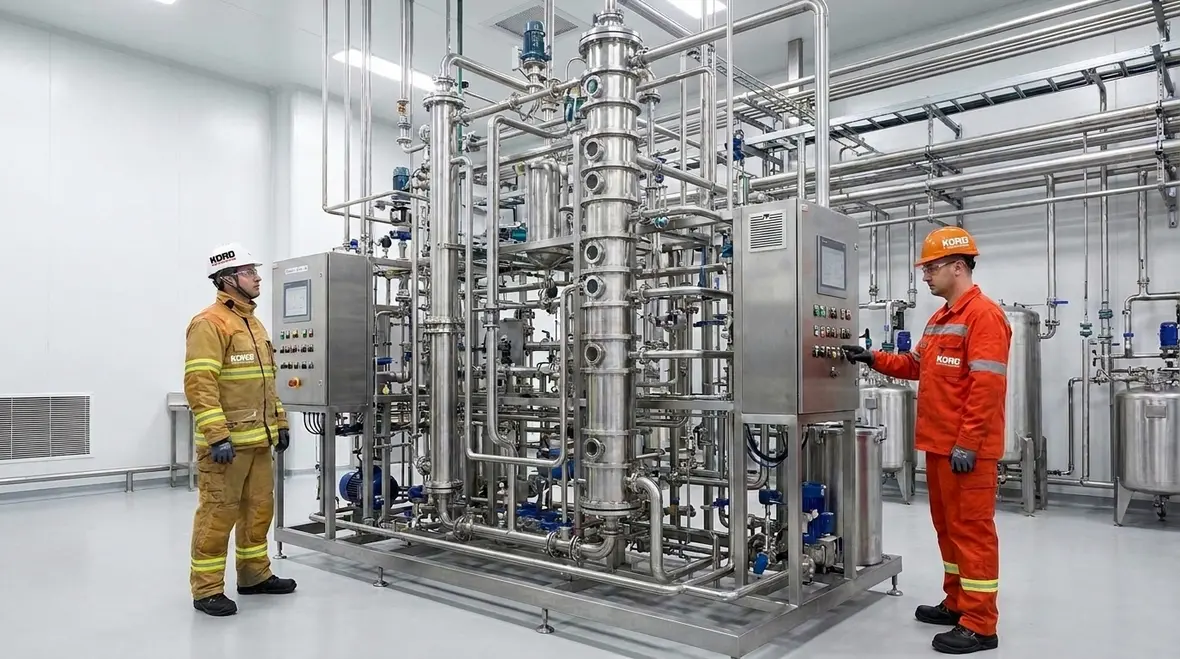
NFPA 36 Section 7.3: Design and Construction of the Extraction Process
Quick Answer: NFPA 36 Section 7.3 sets the fire safety expectations for how extraction systems are engineered and built, including ventilation, electrical classification, construction materials, ignition control, and safeguards. Sound NFPA 36 extraction process design construction reduces ignition risk and supports inspection-ready performance.
For facilities managing broader protection issues alongside extraction system compliance, Kord Fire Protection also provides commercial fire suppression services that fit naturally into inspection, testing, and long-term maintenance planning.
What NFPA 36 Section 7.3 is trying to prevent
NFPA 36 Section 7.3 focuses on controlling the ignition and escalation pathways that can occur during extraction operations. Extraction processes commonly involve flammable or combustible vapors, combustible residues, and rapid release of energy if vapors reach an ignition source. The section addresses hazards at the engineering level: the extraction system’s physical design, the containment and movement of vapors, the handling of fuels and byproducts, and the prevention of ignition through coordinated facility, equipment, and protection features.
For commercial, industrial, and retail facilities that process materials under NFPA 36, compliance challenges often appear at the interfaces: mechanical systems that run continuously but are modified over time, maintenance practices that change how seals and controls behave, and contractors who treat “installed once” as “finished forever.” Fire prevention depends on design intent staying true through maintenance and inspection readiness.
NFPA 36 extraction process design construction: core elements that drive compliance
Strong NFPA 36 extraction process design construction starts with hazard recognition and then translates that recognition into built-in protection. Inspectors typically look for consistency between the hazard assumptions used during design and what exists in the field. Key engineering and construction drivers include the following.
1) Vapor containment, transfer, and pressure management
Extraction equipment must control the generation and migration of vapors. Section 7.3 expectations commonly manifest as engineered containment of process fluids, controlled transfer routes, and proper venting strategies. Where vapors can escape, they need engineered control paths into ventilation or safe exhaust arrangements rather than into occupiable or ignition-prone zones.
Practical failure points include degraded gaskets and seals, incorrect hose routing, flexible connections installed where rigid piping was required, and vent terminations that end up near air intakes or doors due to later building changes. These issues can turn a previously controlled hazard into an ignition-ready cloud.
2) Ventilation and exhaust performance that stays reliable
Extraction systems generally require ventilation designed to keep hazardous atmospheres from accumulating. The construction details matter because performance can degrade silently. Duct routing, duct sizing, access for cleaning, and the placement of exhaust interfaces influence whether the system maintains safe vapor concentrations.
During maintenance, the most common compliance problem is “partial restoration,” such as reusing damaged dampers, reinstalling duct sections without proper sealing, or neglecting duct cleaning schedules that address residues and condensed vapors. NFPA 36 compliance depends on maintaining designed airflow and vent effectiveness over the asset lifecycle.
3) Electrical equipment and ignition control integration
Ignition control includes more than choosing the right device once. Section 7.3 aligns electrical construction expectations with hazardous area realities created by extraction operations. That includes:
- Using appropriate wiring methods, sealing practices, and component selection for the required classified environments
- Ensuring that enclosures and penetrations maintain integrity
- Preventing ignition sources from entering extraction zones through poorly sealed cable routes or modified panels
Field issues often include “like for like” replacement that is not truly like for like, missing conduit sealing, and control panel modifications performed without reevaluating hazardous area boundaries.
4) Construction materials, joints, and residue management
Construction and material selection affects ignition potential, corrosion, and the ability to remove combustible residue. In extraction systems, residues can form deposits in ductwork, on heat exchange surfaces, around joints, and in low flow areas where condensed vapors settle. Section 7.3 drives the expectation that the system can be safely operated and maintained without turning residues into a hidden fuel source.
Common failure points include insufficient drainage design, inaccessible duct sections that never get cleaned, and using incompatible materials for gaskets and linings. Facilities often discover these conditions only during inspection preparation, at which point remediation becomes disruptive and costly.
5) Safeguards, shutoff logic, and operational interlocks
Extraction process safety relies on safeguards and interlocks that control ignition and limit hazardous conditions. Construction should support the correct placement, durability, and testing accessibility of these features. Interlocks that fail closed or remain bypassed create a direct path to unsafe operation.
Inspection readiness often depends on documented logic and verification practices. Where facilities cannot demonstrate how interlocks and protective devices are verified after maintenance, compliance risk increases.
How commercial facilities commonly get tripped up during construction and upgrades
Even when a design exists on paper, installation and later changes can defeat the original safety intent. The most frequent commercial problems tied to extraction operations include the following.
Scope gaps between design documents and field reality
Equipment platforms, cable trays, duct supports, and access doors change during construction. When those changes alter clearances, duct interfaces, or sealing details, they can affect ventilation performance and ignition control. Section 7.3 emphasizes that the extraction process must be built to support hazard control, not merely to meet mechanical completion.
Change management failures after commissioning
Facilities often modify extraction lines for throughput improvements, reroute exhausts, add filtration, or upgrade controls. When those modifications occur without a formal fire safety review, the system can become nonconforming. Vapors may be redirected, exhaust may be throttled, or ignition sources may be introduced through new electrical components.
Maintenance practices that degrade protection
Inspections frequently reveal maintenance-driven failures such as worn seals, improperly restored hatches, incorrect torque on closures, and missing or incorrect grommets around penetrations. These items matter because they directly influence vapor containment and ignition control integrity.
For commercial operations that need recurring testing and documentation support, Kord Fire Protection helps maintain compliance through inspection support, testing coordination, and maintenance guidance aligned with applicable standards. For related guidance on commercial readiness, see Kord Fire Protection’s resources on commercial building fire safety.
Inspection readiness: what evaluators typically verify under Section 7.3
Inspection outcomes often hinge on demonstrable alignment between the extraction process design and the installed condition. Evaluators typically focus on observable and verifiable criteria that reflect fire safety intent. Key areas include:
- Ventilation and exhaust arrangements that match the design intent, including duct integrity and termination placement
- Evidence that ignition control features remain intact, including enclosure integrity and penetrations
- Construction features that support safe operation and cleaning, including access and maintainable arrangements
- Safeguard functionality, including interlock status and whether protective features can be tested
In many facilities, the critical gap is not a missing component but the lack of a repeatable verification method. Without scheduled functional checks and maintenance documentation, deterioration can remain unnoticed until a compliance event.
Maintenance and ongoing assurance for extraction equipment
NFPA 36 compliance is not a one-time construction milestone. Extraction process safety depends on the continued integrity of containment, ventilation, ignition prevention measures, and safeguarded operation. To support NFPA 36 extraction process design construction throughout the lifecycle, commercial facilities should implement:
- Scheduled inspection of seals and joints: focus on gaskets, closures, duct connections, and penetration sealing for vapor control and ignition resistance
- Ventilation performance verification: confirm that airflow and exhaust effectiveness remain aligned with the intended design
- Electrical and control integrity checks: verify enclosures, cable routing, and interlock behavior after service events
- Residue control and cleaning access audits: confirm that cleaning methods and access points remain effective after modifications
Kord Fire Protection supports ongoing commercial compliance by aligning inspection practices with how extraction systems actually operate in the field. This approach helps reduce downtime during recurring checks and supports audit-ready documentation for commercial, industrial, and retail sites.
Frequently Asked Questions
Next step
If the extraction process equipment is under NFPA 36 jurisdiction, facilities should validate that the installed configuration matches the intended NFPA 36 extraction process design construction and that maintenance keeps protective features reliable. Contact Kord Fire Protection to plan compliance-focused inspection support and ongoing assurance for commercial operations.

Join Our Newsletter!
Get the latest fire safety tips delivered straight to your inbox From our Newsletter.



