NFPA 36 Section 4.6: Solvent Transfer Equipment Requirements
Quick Answer: NFPA 36 Section 4.6 sets safety controls for how facilities handle and move flammable and combustible solvents. It focuses on equipment selection, bonding and grounding, transfer hose and connection integrity, and procedures that reduce ignition and spill risks. Compliance requires documented maintenance and inspections.
For broader fire prevention planning that supports solvent hazard management, facilities often review Kord Fire Protection’s building fire safety emergency planning guidance to make sure transfer operations align with site wide emergency and control measures.
What Section 4.6 actually governs in the solvent transfer process
NFPA 36 solvent transfer equipment requirements address the physical components used to move solvents between containers, tanks, or process equipment. In practice, this means the rules apply not only to pumps and hoses, but also to how transfer is executed: connection methods, bonding and grounding practices, protective measures for ignition sources, and safeguards that prevent leaks and spills. The intent is straightforward: eliminate common ignition pathways and manage flammable liquid hazards during routine and off normal transfer operations.
Because solvent transfer failures often occur during start up, hose handling, valve misalignment, or degraded fittings, Section 4.6 requirements must be implemented as a system. A facility that relies on “operator habit” alone typically fails audit and inspection expectations. Commercial facilities generally also need to show how they maintain equipment readiness over time.
Core compliance targets under NFPA 36 solvent transfer equipment requirements
Most compliance gaps tied to NFPA 36 solvent transfer equipment requirements cluster around three themes: ignition control, leak control, and reliability through inspection and maintenance. Section 4.6 drives facilities toward transfer systems that remain safe under normal operations and during likely upset conditions.
1) Ignition control during transfer
Transfer equipment must support measures that reduce ignition risk, especially where electrostatic discharge and mechanical failure can create sparks or hot surfaces. Practical examples include ensuring hoses and connectors are compatible with flammable liquid service, preventing improper materials that can increase static, and using bonding and grounding practices that match the equipment configuration.
Commercial sites frequently stumble when equipment gets replaced. A maintenance team may install “equivalent” fittings that do not maintain continuity or electrical bonding paths. Over time, corrosion and wear can also interrupt conductivity at couplings, quick connects, and adapter sets.
2) Leak and spill control at connection points
NFPA 36 focuses on preventing uncontrolled release during transfer. Connection points carry the highest risk because they experience repeated torque, vibration, and human handling. Facilities should treat hoses, couplings, valves, and caps as safety critical components, not consumables.
Common failure points include cracked hose linings, hardened gaskets, loose clamps, mismatched thread forms, and damaged quick connect mechanisms. Even if the transfer system is designed properly, a compromised coupling can defeat the protective intent of the equipment.
3) Transfer system integrity through maintenance readiness
Section 4.6 expectations align with the broader fire protection philosophy: the equipment must remain reliable between inspections. That requires a documented maintenance plan that includes cleaning, functional checks, and condition assessment criteria. Commercial facilities should align solvent transfer procedures with their inspection records, including how they address defects found during routine checks.
Equipment types and design features that affect compliance
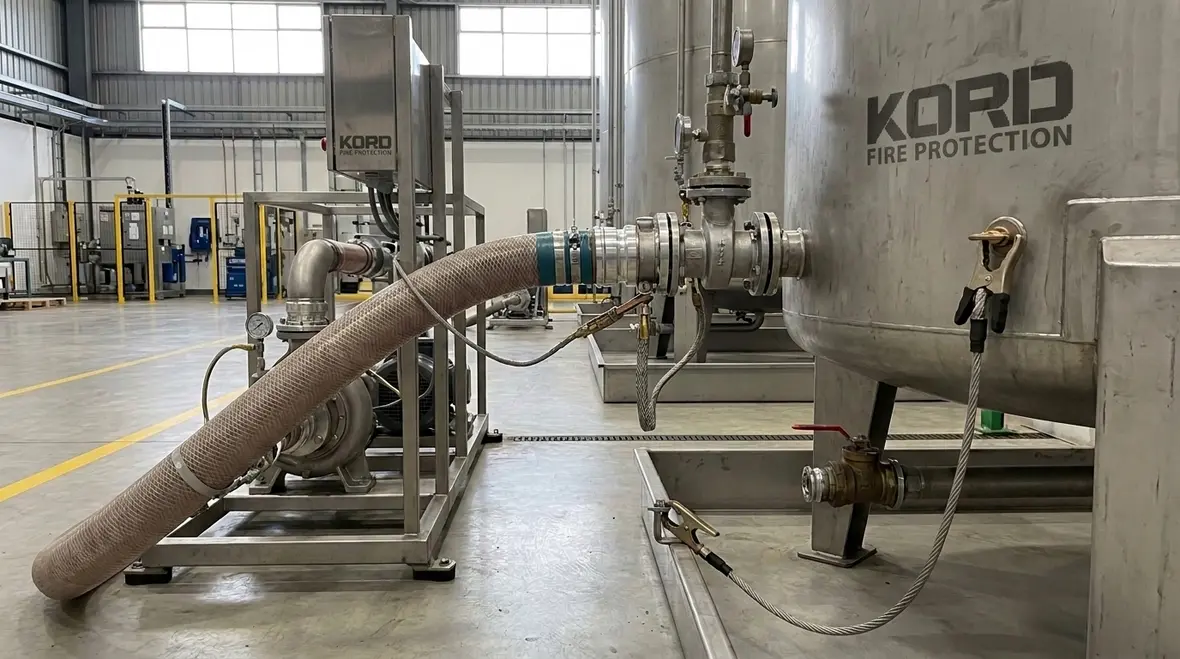
Solvent transfer equipment generally includes pumps, hoses, piping, valves, meters, fittings, and connection accessories. NFPA 36 solvent transfer equipment requirements typically require that these components work together safely. The main compliance question becomes: does the transfer train maintain integrity and ignition control from the source to the receiving container?
Hoses, couplings, and transfer connections
Hoses used for flammable solvent transfer should maintain safe electrical and mechanical properties for the specific service conditions. Couplings and connectors must securely engage and remain leak resistant under the expected transfer pressure and handling conditions. Facilities should also define a clear “go no go” standard for damaged hoses and fittings, including crack detection, soft spots, stiffening, and thread or seat degradation.
Operationally, many sites allow ad hoc swapping of connectors to “get the job done.” That practice often violates compliance intent because it introduces uncertain bonding continuity and mismatch risks. A controlled parts list and compatibility matrix helps prevent drift from the approved configuration.
Pumps and mechanical transfer components
Pumps must be selected and used to control hazards associated with solvent service. Beyond correct selection, the pump’s condition affects risk. Worn seals, degraded bearings, and malfunctioning shutoff controls can create leaks and contribute to unsafe conditions at the pump skid or base area.
Commercial facilities should implement seal integrity monitoring where feasible, and they should ensure that electrical components supporting pumps meet the facility’s hazardous location classification expectations.
Valves, meters, and accessories
Valves and meters control flow and shutoff performance during transfer. Faulty valves can cause overflows or failed isolation during emergencies. Leaking valves may also create localized vapor generation, increasing the importance of rapid detection and corrective action.
Inspection, testing, and documentation: how facilities prove readiness
NFPA 36 solvent transfer equipment requirements are not satisfied by purchasing compliant equipment alone. The facility must demonstrate ongoing readiness using inspection and documentation practices that auditors can verify. This often becomes a challenge in multi shift operations where transfer equipment sits unused for long periods.
Inspection cadence and what to look for
A strong inspection program typically includes:
- Hose and coupling condition checks for physical damage, wear, and secure engagement quality.
- Verification of bonding and grounding continuity where the equipment configuration requires it.
- Assessment of valve function, including isolation capability and leak prevention at seats and stem areas.
- Confirmation that no “improvised” adapters or non approved connectors are present at transfer points.
Maintenance actions that prevent repeat failures
When defects are found, the corrective action must address root cause. For example, repeated gasket failures may indicate improper torque procedure, incompatible chemical compatibility, or a valve seat issue. Corrective actions should include component replacement with compatible, service rated parts and updating the transfer procedure if handling steps contribute to wear.
To support ongoing compliance, Kord Fire Protection helps commercial operators maintain solvent transfer safety through inspection support, testing coordination, and documentation assistance aligned with facility expectations and risk. This approach supports both day to day operational safety and audit readiness.
Recommended internal reference: For broader fire prevention planning that supports solvent hazard management, facilities often review Kord Fire Protection’s resources on fire prevention planning to ensure transfer operations align with site wide emergency and control measures.
Common real world compliance issues and how to avoid them
Even well managed facilities encounter recurring problems with solvent transfer equipment. These issues often bypass high visibility checks because they appear “minor” until an inspection or incident occurs.
Improper connector substitutions during maintenance
Switching to convenience fittings can break bonding paths and create leak risk. A controlled procurement process with documented compatibility requirements helps prevent this issue.
Degraded hoses stored incorrectly
Hoses stored on reels, near heat sources, or where they can be crushed lose safe performance characteristics. Facilities should store hoses and nozzles in a designated area that protects them from abrasion and environmental exposure.
Missing or inconsistent bonding and grounding practices
Bonding and grounding effectiveness can fail when clamps are worn, connection points corrode, or operators do not follow the procedure in the same sequence every time. Training should focus on correct setup, verification steps, and what to do when a connection cannot be established.
Weak defect closure workflows
Some sites record defects but allow continued use “until the next scheduled downtime.” That practice extends risk and undermines compliance evidence. A defect triage process tied to safety criticality reduces exposure and creates clearer audit documentation.
Frequently Asked Questions
Call to action
Facilities that manage solvents need more than equipment procurement. They need a verifiable program that aligns with NFPA 36 solvent transfer equipment requirements, including inspection readiness, bonding and grounding controls, and documented maintenance. Kord Fire Protection can support your commercial compliance efforts with practical, audit ready service planning. Contact Kord Fire Protection to review your solvent transfer safety program and close gaps before they become findings.

Join Our Newsletter!
Get the latest fire safety tips delivered straight to your inbox From our Newsletter.