NFPA 36 Section 4.13: Repairs in Restricted Areas After Shutdown and Purging
Quick Answer
NFPA 36 Section 4.13 governs how facilities perform maintenance and repairs in restricted areas only after proper shutdown and purging. The rule focuses on verified isolation, control of ignition sources, and evidence that hazardous conditions have been eliminated before work begins.
For teams tightening records and recurring verification, a useful related resource is fire safety system documentation for compliance, which fits naturally with the shutdown, purge, and repair controls discussed here. ([kordfire.com](https://kordfire.com/fire-safety-system-documentation-for-compliance/?utm_source=openai))
What does NFPA 36 Section 4.13 require before anyone repairs restricted areas?
NFPA 36 repairs shut down purged restricted areas by requiring operators to establish a safe state before opening up, servicing, or reintroducing work into areas classified as restricted. In practical terms, Section 4.13 treats these areas as hazardous environments until the facility demonstrates that the system has been shut down correctly and purged of flammable or combustible atmospheres.
For commercial, industrial, and retail operations that rely on fuel gas, dust prone processes, or other NFPA 36 governed equipment, the compliance challenge often lies in documenting the “safe state” with procedures that match actual operating conditions. A strong program ties written procedures, equipment operation controls, and inspection records together so the maintenance crew can work without guessing.
When does a repair qualify under Section 4.13?
Section 4.13 applies when maintenance, inspection, or repair work must occur in restricted areas after shutdown and purging. The key concept is controlled reentry. Facilities should not treat shutdown as equivalent to purging, and they should not treat purging as complete without verification that the atmosphere or condition is safe for hot work, confined access, and other ignition capable tasks.
Common scenarios that trigger 4.13
- Servicing valves, regulators, piping sections, or instrumentation that could release hazardous vapors or disturb sealed boundaries.
- Cleaning or replacing components in equipment rooms where combustible residues can remain.
- Opening enclosures, access panels, housings, ducts, or sample points located within restricted zones.
- Troubleshooting control systems where electrical or mechanical work could create ignition sources.
Facilities should also evaluate whether the work itself changes the hazard profile. For example, removing a component may disrupt a barrier that previously prevented release, or it may create a pathway for air entry into a previously controlled space.
Shutdown and purging: operational steps that support compliance
Section 4.13 depends on two linked phases: shutdown and purging. A defensible compliance program ensures the facility follows a repeatable sequence, maintains system integrity during the transition, and verifies safe conditions before repairs begin.
Shutdown controls and isolation
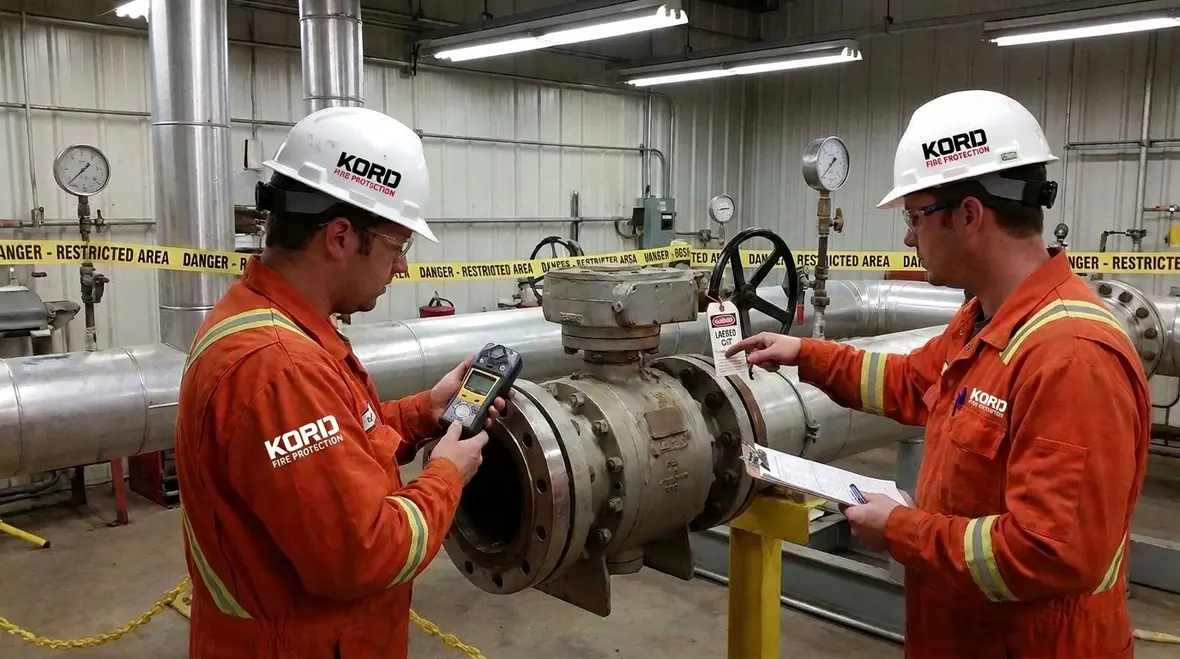
Before purging, the facility typically performs controlled shutdown and isolation steps to stop the process and prevent continued generation or release. Effective isolation commonly includes:
- Lockout and tagout for energy sources and controls that could restart the system.
- Valve positioning and bleed controls to stop flow pathways that could defeat the purging objective.
- Electrical and mechanical safeguards that prevent unintended actuation.
Purging objectives and verification
Purging must remove the hazardous atmosphere or condition. In the field, the failure point is often not the absence of a written purge procedure, but the lack of confirmation during the job.
- Facilities should confirm purge parameters are met for the system configuration actually being worked on.
- Verification should include sampling or monitoring methods appropriate to the hazard and equipment type.
- Procedures should address purge time, purge rate, flow path, and any bypass conditions.
Because restricted area hazards can be location specific, verification should align with the potential release points and the areas where personnel will access.
How facilities document “safe to repair” conditions in restricted areas
Documentation matters because inspections, audit trails, and incident investigations frequently focus on whether the facility could prove the restricted area remained in a safe state during work.
Operational evidence typically expected
- Purge completion evidence, including the monitoring method, readings, and who reviewed the results.
- Shutdown verification, including valve positions, LOTO status, and the equipment line that was isolated.
- Work authorization, including a permit to work framework and task specific controls.
- Boundary controls, such as access restrictions and coordination between operations and contractors.
Facilities often overlook the human factors component. A crew may have correct readings but no clear requirement to maintain them while work proceeds. If the process conditions can drift, the procedure should specify checks and stop criteria.
Common compliance failure points
- Using a generic purge checklist that does not match the piping topology or equipment configuration.
- Failing to address dead legs, trapped sections, or alternate flow paths that prevent effective purging.
- Allowing concurrent operations that reintroduce hazards, such as opening lines upstream or starting an adjacent process.
- Skipping verification before hot work, electrical troubleshooting, or actions that could energize a hazardous mixture.
Work controls after purging: preventing reentry hazards mid-repair
Even when purging succeeds initially, repairs can introduce conditions that negate the safe state. Section 4.13 focused compliance requires controls that protect against recontamination, reaccumulation, and ignition sources during the repair window.
Access and ignition controls
Facilities should implement ignition control strategies that match the work scope. This often includes hot work controls, spark resistant practices where required, and managing portable tools so they do not create ignition risk. In many maintenance programs, the strongest approach is to treat each task as a new hazard assessment, not a one time clearance.
Air management and contamination prevention
Restricted areas can regain hazardous conditions if seals fail, lines open, or air pathways change. Procedures should cover:
- How personnel maintain boundaries, including when panels remain open.
- How the facility responds to alarms, unexpected readings, or changes in process behavior.
- When to repeat purging or reinstate verification before continuing.
For facilities with recurring maintenance needs, Kord Fire Protection typically supports compliance by aligning inspection criteria, testing expectations, and maintenance schedules so restricted area controls remain effective between shutdown events. This reduces the likelihood of last minute procedural gaps that drive nonconformances.
How Kord Fire Protection helps with ongoing restricted area compliance
Commercial facilities often manage multiple life safety and fire protection systems alongside process safety hazards. Kord Fire Protection positions compliance as an operational program rather than a one time event. By supporting inspection readiness, testing, and maintenance documentation, Kord helps owners and operators keep procedures consistent with how equipment performs in real conditions.
To strengthen your overall compliance posture, review related guidance on fire protection performance and inspection discipline through this fire protection compliance auditing guide. It pairs well with broader service lifecycle planning in full lifecycle of fire protection servicing. ([kordfire.com](https://kordfire.com/fire-protection-compliance-auditing-guide-by-kord/?utm_source=openai))
Pairing Section 4.13 shutdown and purging controls with reliable inspection and maintenance practices reduces the chance of missed requirements during audits, turnovers, and repair windows.
Frequently Asked Questions
Conclusion and call to action
Section 4.13 compliance depends on more than shutting down equipment. Facilities must purge to eliminate hazards, verify the safe state, control access, and prevent recontamination during repairs. If your organization manages restricted areas frequently or has contractor driven work, partner with Kord Fire Protection to strengthen inspection readiness, maintenance discipline, and documentation quality before the next shutdown window.

Join Our Newsletter!
Get the latest fire safety tips delivered straight to your inbox From our Newsletter.