NFPA 36 Section 4.12: Repairs in Restricted Areas While Operating or Not Purged
Quick Answer: NFPA 36 Section 4.12 controls how facilities perform repairs in restricted areas when equipment remains in service or when the area is not purged. It requires risk-managed conditions, appropriate controls, and verifiable safeguards to prevent ignition of flammable atmospheres.
For facilities building a stronger maintenance and documentation program around this kind of work, Kord Fire Protection’s ITM fire protection inspection testing maintenance guide fits naturally into the conversation and helps connect repair controls with broader inspection readiness.
What does NFPA 36 Section 4.12 require for restricted area repairs?
NFPA 36 sets the fire safety framework for the storage, handling, and use of flammable and combustible liquids and related process areas. When a facility must complete work in a restricted area while the system stays operating or when the space cannot be purged, NFPA 36 repairs restricted areas operating not purged must follow stringent controls focused on eliminating ignition sources and controlling vapor hazards. Section 4.12 is written for real-world maintenance: leaks, failed components, electrical faults, valve replacements, instrument issues, and temporary repairs that cannot wait for a full shutdown.
In practice, compliance depends on the facility’s ability to demonstrate controlled conditions using a documented process, competent inspection, and continuous monitoring. This is where maintenance planning, hot work controls, electrical safety, and vapor risk management align.
When repairs occur “while operating” or “not purged,” what changes?
Repairs in restricted areas while equipment is operating or the area is not purged typically change the hazard profile in three ways:
- Ignition control becomes the primary barrier. Even small arcs, static discharge, overheated surfaces, or improper tools can ignite vapor air mixtures.
- Vapor concentration conditions become dynamic. Leaks and process upsets can change flammable atmosphere levels quickly.
- Verification replaces assumptions. The facility must show that controls and monitoring remain effective during the entire work window.
Facilities often struggle because standard maintenance permits and hot work permits assume a shutdown or a verified purge. Section 4.12 requires a more robust approach when that assumption is not possible.
Core compliance controls for NFPA 36 repairs in restricted areas
Successful compliance usually rests on four pillars: documented authorization, ignition source management, atmospheric verification, and safeguards to maintain system integrity.
1) Work authorization and risk assessment
Before work starts, the facility should implement a permit process that explicitly addresses Section 4.12 conditions. The procedure should identify:
- Exact location and hazard classification of the restricted area
- Nature of repair and potential ignition sources (tools, electrical work, friction, impact, cutting, heating)
- System operating state (pressure, flow, temperature) and expected vapor release pathways
- Control measures, monitoring methods, stop-work criteria, and communications plan
This authorization step should not be generic. Commercial, industrial, and retail facilities must align maintenance permits with the actual equipment configuration and the specific repair task.
2) Manage ignition sources at the task level
When the area is not purged or the system remains operating, the controls must focus on preventing ignition at the point of repair. Common failure points include:
- Using non approved equipment. Portable tools, extension cords, and lighting must match the hazardous area requirements and the site electrical standards.
- Uncontrolled electrical work. Energized work, improper grounding, and loose connections increase arc and spark potential.
- Hot surfaces and friction heat. Grinding, drilling, and scraping can raise surface temperatures or generate sparks.
- Static discharge. Handling components near vapors can create charge accumulation if grounding and bonding procedures fail.
Facilities should specify approved methods for the repair scope, not just “hot work allowed.” For example, if any task introduces cutting or grinding, controls must be structured as ignition source controls with validated safeguards, not as a simple permit check.
3) Atmospheric monitoring and verification during the work
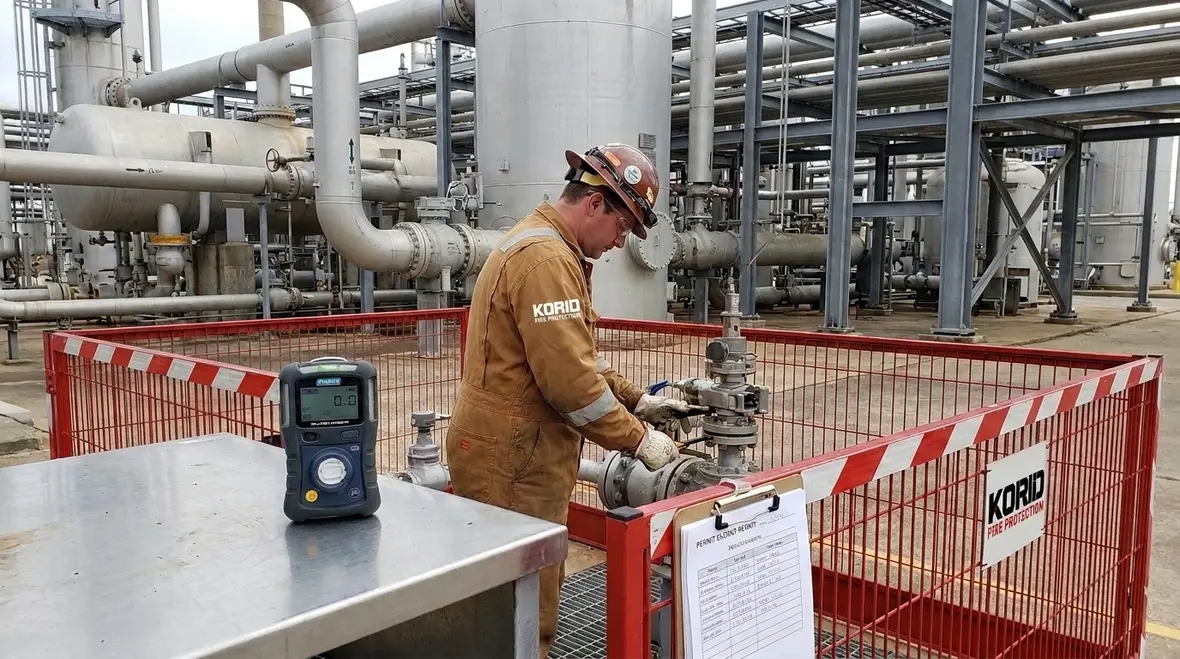
Section 4.12 conditions require continuous confidence that a flammable atmosphere does not exist within the controlled work envelope. That usually means:
- Using calibrated gas detection appropriate to the fuel or chemical involved
- Defining placement of detectors to reflect vapor release patterns
- Establishing a response plan if readings trend toward unacceptable levels
- Verifying instruments are within calibration due dates and configured correctly
Operational monitoring becomes a common audit gap. Some facilities test conditions at the start and then drift for hours without confirming ongoing concentration control. NFPA 36 repairs restricted areas operating not purged should be managed using continuous or appropriately frequent verification tied to the risk assessment.
4) Maintain integrity of barriers and process containment
Repairs often affect containment, seals, gaskets, piping joints, pumps, and vapor control systems. Compliance depends on ensuring:
- Valves, isolation devices, and seals minimize vapor migration to the work zone
- Any temporary plugs, caps, or bypass hoses are rated for the product and conditions
- Vapor collection, ventilation, or other compensating systems function as designed during the task
- Elastomers and materials used are chemically compatible and installed correctly
This pillar often overlaps with mechanical reliability. A well planned repair reduces the duration of exposure and the chance of repeated attempts that extend risk time.
Inspection and readiness: what commercial facilities must prove
Auditors and insurers typically look for evidence that controls were real, maintained, and effective. For facilities operating under a compliance program, the typical documentation package includes:
- Completed risk assessment for the specific repair task and location
- Permit documentation with clear start and stop criteria
- Gas detector calibration records and verification logs
- Equipment inspection records for tools, cords, and electrical devices used
- Training records for personnel involved in restricted area repair activities
- Post work inspection results and closure notes
Common operational challenges include inadequate calibration management, incomplete hazard identification, and failure to verify hazardous area compatibility for temporary electrical equipment. These gaps are preventable with a structured, facility specific process.
How Kord Fire Protection supports ongoing compliance for Section 4.12
Commercial and industrial facilities need repeatable programs to manage restricted area repair risk without interrupting operations unnecessarily. Kord Fire Protection helps organizations strengthen compliance through practical testing, inspection readiness, and maintenance support tailored to day-to-day operations.
To support your broader fire protection and life safety program, review Kord Fire Protection’s fire protection services overview to understand how qualified teams help manage inspection schedules, documentation, and proactive risk reduction. For facilities working through maintenance cycles, this kind of support helps reduce surprises during audits and shortens the time required to return to service safely.
Frequently Asked Questions
Conclusion and call to action
NFPA 36 Section 4.12 addresses the high consequence gap between “standard maintenance” and “maintenance with flammable vapor risk while operating or not purged.” Facilities should standardize permits, verify ignition source controls, and document continuous atmospheric monitoring tied to defined stop criteria. Contact Kord Fire Protection to strengthen inspection readiness and maintenance program alignment so restricted area repairs stay compliant, controlled, and audit ready.

Join Our Newsletter!
Get the latest fire safety tips delivered straight to your inbox From our Newsletter.