
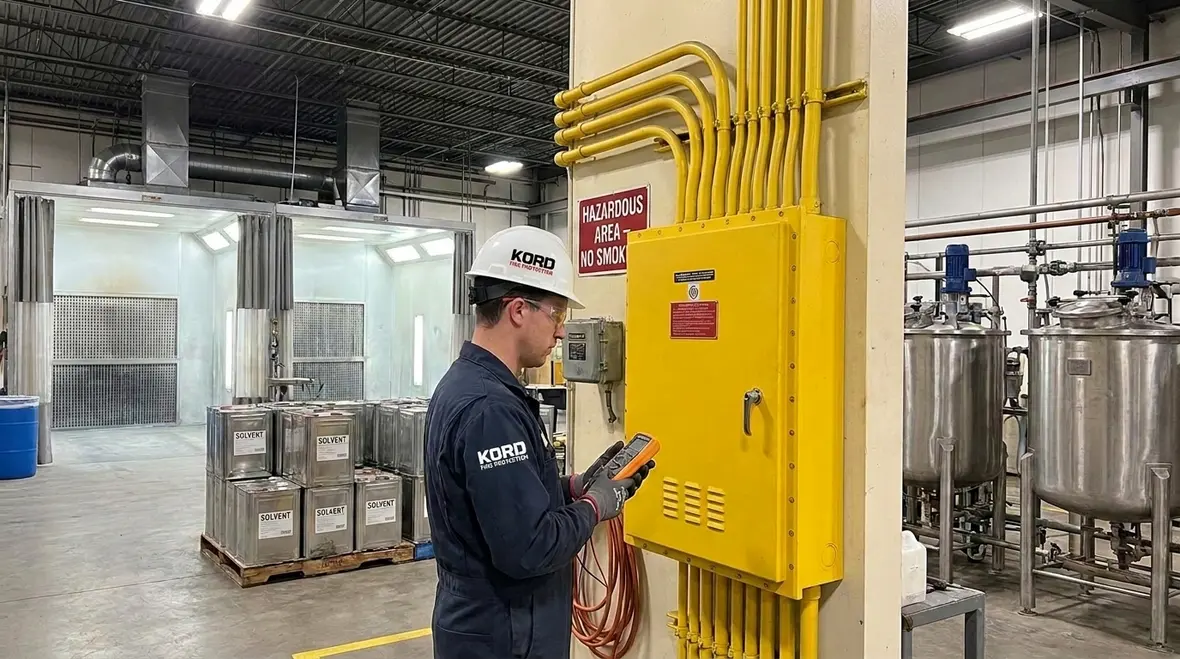
NFPA 35 Section 5.6: Electrical Equipment in Coatings Plant Buildings
Quick Answer
NFPA 35 Section 5.6 sets electrical equipment requirements for coatings plant buildings to prevent ignition in hazardous atmospheres. The rules focus on equipment selection, installation, labeling, wiring methods, grounding, and maintenance practices to sustain safe performance over time.
Coatings operations rely on fuels and solvents that can create flammable vapor hazards. NFPA 35 aims to control ignition sources by ensuring that electrical systems meet the right hazard classification, protection method, and installation integrity. This article explains how NFPA 35 electrical equipment requirements plant owners, safety managers, and facility electrical teams apply the standard in real operational conditions.
Facilities working through inspection planning or ongoing fire protection support can also review commercial fire suppression systems and services for broader context on inspection, testing, maintenance, and special hazard protection programs. ([kordfire.com](https://kordfire.com/fire-suppression/?utm_source=openai))
What NFPA 35 Section 5.6 Controls in Coatings Plant Buildings
NFPA 35 Section 5.6 addresses how electrical equipment is managed inside coatings plant buildings where flammable and combustible materials are present. The intent centers on preventing electrical ignition through proper equipment selection and safe installation details. Compliance typically ties into the broader hazardous locations approach used across industrial facilities, but NFPA 35 emphasizes that coatings processes can generate changing vapor conditions that increase the risk of unsafe performance if equipment degrades or is installed incorrectly.
Facility teams commonly run into compliance gaps when equipment was selected for an earlier production workflow, later changes increased solvent vapor generation, or maintenance practices did not preserve the intended protection method. These failures are operational, not theoretical, and they show up during inspections and incident investigations.
Which “Electrical Equipment Requirements” Matter Most for Plant Safety?
When teams apply NFPA 35 electrical equipment requirements plant, they usually focus on ignition source control. In practice, the key areas include:
- Equipment protection type: meeting the required approach for hazardous (classified) locations, rather than using standard “industrial” equipment by default.
- Installation integrity: ensuring wiring methods, enclosures, seals, fittings, and cable routing do not compromise the protection concept.
- Identification and documentation: ensuring equipment ratings and markings match the facility hazard conditions.
- Grounding and bonding: maintaining low resistance paths to prevent fault conditions and reduce ignition risk.
- Maintenance and deterioration control: addressing corrosion, gasket failure, damaged seals, and improper replacements.
From a compliance standpoint, the standard’s greatest practical value is its insistence that the protection method stays correct through the life of the asset. That includes periodic verification, not just a one time installation check.
How NFPA 35 Electrical Equipment Protection Works in Coatings Environments
In coatings plants, vapor hazards often vary with production schedules, ventilation performance, and the condition of spray areas, storage rooms, and transfer points. Electrical protection methods must be aligned with those risk drivers. Typical approaches used for hazardous location electrical equipment include sealed and vapor resistant design concepts, intrinsically safe design strategies, and explosionproof or flameproof enclosures. The exact requirements depend on the hazard classification determined for the facility.
Operational mechanisms that cause ignition when protection fails
Even when equipment is initially compliant, common failure mechanisms can defeat the protection concept:
- Damaged enclosures and gaskets: weathering, solvent exposure, or improper cleaning can cause leaks that allow ignition-capable components to interact with the surrounding atmosphere.
- Compromised cable entries: missing or incorrectly installed fittings, poor torque on covers, or incorrect sealing compounds can create pathways for flame or sparks.
- Improper rework after maintenance: replacing components with nonconforming parts, using the wrong cable type, or omitting seals during troubleshooting.
- Ventilation drift: changes to exhaust performance can increase vapor concentration, raising the ignition risk if electrical equipment selection is not robust to actual conditions.
Why “works today” is not the same as “compliant long term”
Commercial and industrial facilities often schedule electrical inspections annually, while electrical equipment may degrade slowly due to routine chemical exposure and vibration. NFPA 35 compliance programs should treat hazardous electrical equipment as a system that requires verification at a frequency consistent with operating risk and observed deterioration trends.
Inspection and Documentation: What Inspectors Commonly Verify
During plan reviews, internal audits, and authority having jurisdiction inspections, teams typically show evidence across several categories. Practical documentation accelerates approvals and reduces friction during corrective actions.
1) Hazard alignment and equipment selection
Facility records should demonstrate how electrical equipment selection aligns with the hazard conditions in coatings plant buildings. That usually includes:
- Hazard classification documentation and any updates due to process changes
- Manufacturer markings and ratings for each equipment item
- Verification that equipment is suitable for the area it serves
2) Installation details and wiring methods
Inspectors look for evidence that installation did not invalidate the protection concept. This includes:
- Correct cable types and conduit practices
- Properly installed seals and fittings where required
- Enclosure integrity, cover condition, and intact labels
- Grounding and bonding continuity
3) Maintenance records and condition-based evidence
Maintenance often becomes the deciding factor when equipment ages. Evidence that typically helps includes:
- Inspection logs for hazardous location components
- Work orders showing correct replacement parts and procedures
- Corrective action records for gasket and sealing failures
- Test results for grounding and bonding where applicable
If your program struggles to keep up with tracking, labeling, and repeat verification, a structured testing and maintenance partnership can reduce risk. Kord Fire Protection supports commercial facilities with inspection, documentation support, and ongoing compliance services aligned with the realities of coatings operations. For related guidance on electrical protection and system coordination, consider reviewing fire safety system electrical integration for advanced suppression. ([kordfire.com](https://kordfire.com/fire-safety-system-electrical-integration-for-advanced-suppression/?utm_source=openai))
Common Compliance Challenges in Coatings Plant Buildings
Even strong electrical engineering teams encounter recurring issues in real operations. Understanding these challenges helps safety managers focus corrective actions where they matter most.
Process changes that outpace electrical reviews
New formulations, changed spray techniques, added solvent storage, or modifications to ventilation can change hazardous conditions. When those changes occur without updating equipment selection, the facility can drift into noncompliance despite maintaining “standard” electrical practices.
Maintenance shortcuts that remove the protection concept
Maintenance staff sometimes replace components quickly to restore production. The risk appears when replacements do not match the required protection type, or when seals and fittings are skipped to save time. Over time, small installation deviations can become ignition pathways.
Housekeeping, coatings residue, and solvent exposure
Residue buildup inside or around electrical enclosures can hinder cooling, degrade gaskets, and affect cable entry seals. Coatings plants should treat housekeeping as a reliability control for electrical safety, not just a housekeeping task.
Retail and commercial adjacent structures
Coatings plants sometimes share buildings with offices, retail spaces, or adjacent commercial areas. Electrical systems must remain appropriate for each occupancy zone. That often requires clear separation of hazardous and non hazardous areas and careful routing of power and control circuits.
Implementation Checklist: Building a Practical NFPA 35 Compliance Program
Teams can reduce risk by turning Section 5.6 intent into repeatable procedures. The following checklist supports ongoing compliance and helps ensure inspections do not become purely reactive.
- Maintain an equipment inventory: tag hazardous location electrical equipment and keep manufacturer documentation accessible.
- Verify markings and ratings: confirm equipment classifications and temperature codes match facility hazard conditions.
- Control modifications: route changes through a review process so any process or layout change triggers an electrical safety review.
- Use standardized maintenance procedures: specify approved replacement parts, sealing steps, gasket requirements, and testing expectations.
- Perform periodic inspection and testing: include enclosure condition checks, sealing integrity checks, and grounding verification where applicable.
- Track corrective actions to closure: document issue cause, corrective work performed, and verification that the protection concept remains intact.
- Prepare for audits: keep records organized by building, area, and equipment type so reviewers can quickly verify compliance.
Partnering with a commercial fire protection and safety organization can streamline verification and maintenance scheduling. Kord Fire Protection helps facilities maintain operational continuity while supporting defensible compliance documentation and ongoing risk controls. If you need assistance mapping your electrical equipment program to coatings plant realities, consult Protecting Electrical Infrastructure Fire With Kord Fire Protection. ([kordfire.com](https://kordfire.com/protecting-electrical-infrastructure-fire-with-kord-fire-protection/?utm_source=openai))
Frequently Asked Questions
Conclusion and Call to Action
Electrical safety in coatings plant buildings depends on more than “rated equipment.” It requires correct selection, installation integrity, and maintenance that preserves the intended protection method over time. Review your hazardous location equipment inventory, confirm markings and installation details, and strengthen maintenance verification. If your program needs structured inspection and documentation support, contact Kord Fire Protection to help maintain defensible compliance with NFPA 35 and reduce ignition risk in active operations.

Join Our Newsletter!
Get the latest fire safety tips delivered straight to your inbox From our Newsletter.



