
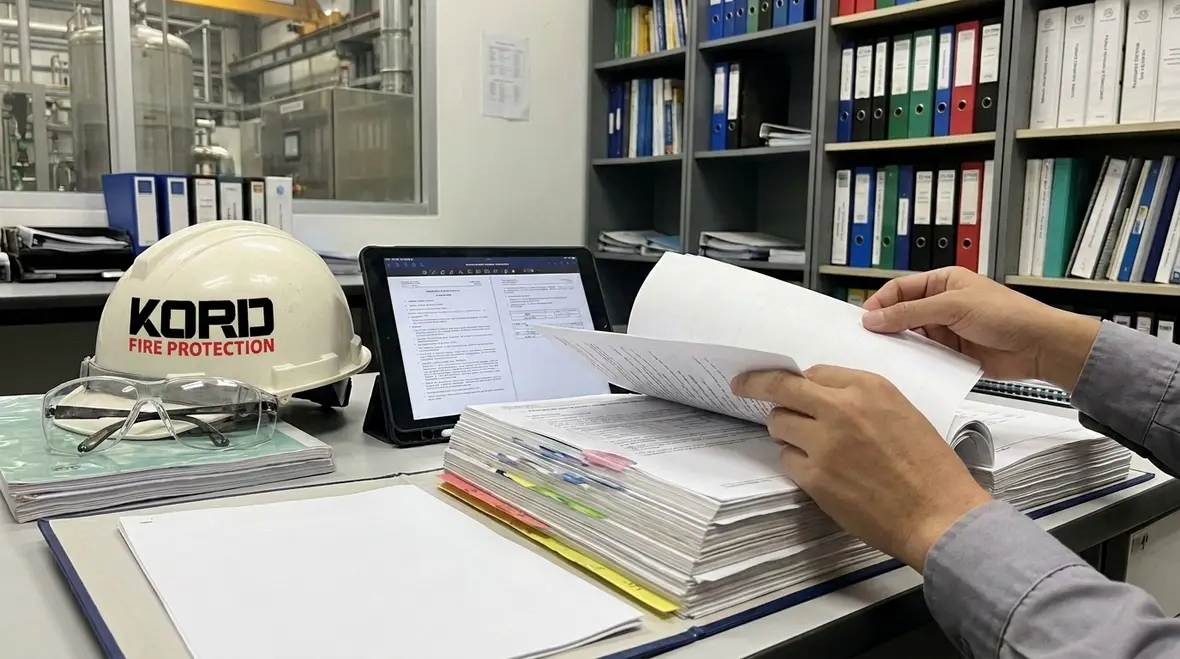
NFPA 35 Section 2.3: Non-NFPA Publications Referenced by the Code
Quick Answer
NFPA 35 Section 2.3 identifies non-NFPA standards and documents the code references for specific technical requirements. For facilities handling processes covered by NFPA 35, compliance depends on using the correct edition, applying it to the right system, and maintaining evidence during inspections and audits.
For a practical look at how documentation review and audit readiness support smoother compliance outcomes, see fire protection compliance auditing. Facilities that need broader lifecycle support can also explore full fire protection services from Kord Fire Protection.
What NFPA 35 Section 2.3 Does (and Why It Matters in the Real World)
NFPA 35 Section 2.3 establishes that the code sometimes relies on external, non-NFPA publications to define engineering criteria, test methods, installation practices, or performance expectations. These documents are not “optional background reading.” When NFPA 35 incorporates them, the referenced requirements become enforceable within the scope that NFPA 35 applies.
For commercial facilities and industrial operations, the practical risk is not simply missing a standard. The risk comes from:
- Using the wrong edition or revision level of a referenced document
- Applying referenced requirements to the wrong equipment or hazard scenario
- Failing to document how the facility met the external criteria
- Allowing “as-built” practices to drift after maintenance or process changes
In short, NFPA 35 non-NFPA referenced publications create an additional compliance layer that must be managed like any other controlled document in your fire safety management system.
Which Publications Get Referenced, and Where They Show Up
Referenced publications typically support NFPA 35 requirements where precise technical rules are needed. In practice, you will see external standards referenced around topics such as:
- Electrical installation and wiring practices where hazardous operations are present
- Mechanical components and protection measures that must meet specific construction or performance expectations
- Fire detection, alarm, and notification criteria aligned with broader recognized practices
- Testing, inspection, and documentation methods used to verify ongoing performance
For facilities, the key challenge is traceability. Fire protection professionals need to map each referenced publication back to the specific NFPA 35 requirement it supports, and then map that requirement to actual installed systems and maintenance records.
Edition Control: The Common Failure Point During Inspections
AHJs and auditors usually focus on whether your system meets the referenced criteria, not whether your team “generally follows good practice.” The inspection issue often arises when facilities cannot prove that the referenced publication edition in effect at the time of compliance is the same edition applied in the field.
Operationally, edition control breaks down in a few common ways:
- Contractor turnover: Different vendors install or service equipment without carrying forward the correct documentation set.
- Maintenance substitutions: Replacements are selected based on availability, not documentation requirements tied to the referenced standard.
- Document drift: The facility’s “compliance binder” uses older versions while the field has been updated to newer practices.
A robust approach aligns engineering documents, shop drawings, and commissioning or verification reports to the applicable referenced edition noted under NFPA 35 Section 2.3.
How Facilities Should Apply NFPA 35 Non-NFPA Referenced Publications
Facilities improve compliance outcomes when they treat referenced standards as active technical requirements, not reference material. The following process helps commercial, industrial, and retail operations execute consistently.
1) Build a Requirements Matrix for Traceability
Create a matrix that lists each referenced document, the NFPA 35 section that triggers it, the system or hazard it applies to, and the evidence used to demonstrate compliance. This becomes the core artifact during inspection preparation and post maintenance validation.
2) Confirm Scope Before You Assume Compliance
Referenced publications can include boundaries and scope limitations. Your compliance team must confirm that the facility’s process type, occupancy characteristics, and equipment classification place the facility within the referenced standard’s intended coverage.
3) Maintain Evidence That Matches Field Conditions
For ongoing compliance, documentation should include test and inspection results, calibration records where applicable, and maintenance logs that match the installed configuration. Where changes occur, the facility must revalidate affected systems so documentation stays consistent with as-operated conditions.
4) Verify After Changes, Not Only During Annual Events
A frequent operational gap involves change events such as component swaps, software updates, ductwork modifications, or process line changes. Even small changes can affect how a referenced standard applies to performance, detection coverage, system response, or installation details.
For practical execution, Kord Fire Protection supports commercial facilities with compliance-focused verification planning, inspection preparation, and documentation practices designed to reduce inspection friction and improve audit readiness.
Maintenance and Inspection Programs: What Inspectors Typically Look For
Most compliance failures surface in maintenance and verification. NFPA 35 related referenced expectations often require proof of continuing performance. Inspectors generally expect:
- Installed systems match the documented configuration described in commissioning or verification records
- Inspection and testing intervals align with the referenced criteria and the facility’s documented program
- Corrective actions are tracked to closure with documented retesting or verification
- Staff and service vendors follow controlled procedures for repairs, replacements, and temporary conditions
Failure modes usually involve either incomplete documentation or unresolved deficiencies that continue to exist during subsequent inspections. A strong program connects NFPA 35 duties to daily operations by assigning ownership for verifying equipment status and maintaining accurate records.
Need Direct Guidance? Use Kord Fire Protection as a Compliance Partner
Commercial facilities often run multiple compliance frameworks at once, which makes it easy for NFPA 35 non-NFPA referenced publications to get separated from day-to-day maintenance planning. Kord Fire Protection helps organizations keep those requirements connected to the systems in the field through inspection support, documentation review, and verification planning that supports ongoing compliance.
For additional context on how fire protection providers support documentation and verification practices, see Kord Fire Protection.
Frequently Asked Questions
Call to Action
If your facility handles processes covered by NFPA 35, treat Section 2.3 referenced documents as active compliance requirements, not reference material. Conduct a traceability review, confirm the correct document editions, and tighten your maintenance evidence to match field conditions. Contact Kord Fire Protection to strengthen inspection readiness and keep NFPA 35 non-NFPA referenced publications aligned with the systems your team operates every day.

Join Our Newsletter!
Get the latest fire safety tips delivered straight to your inbox From our Newsletter.



