
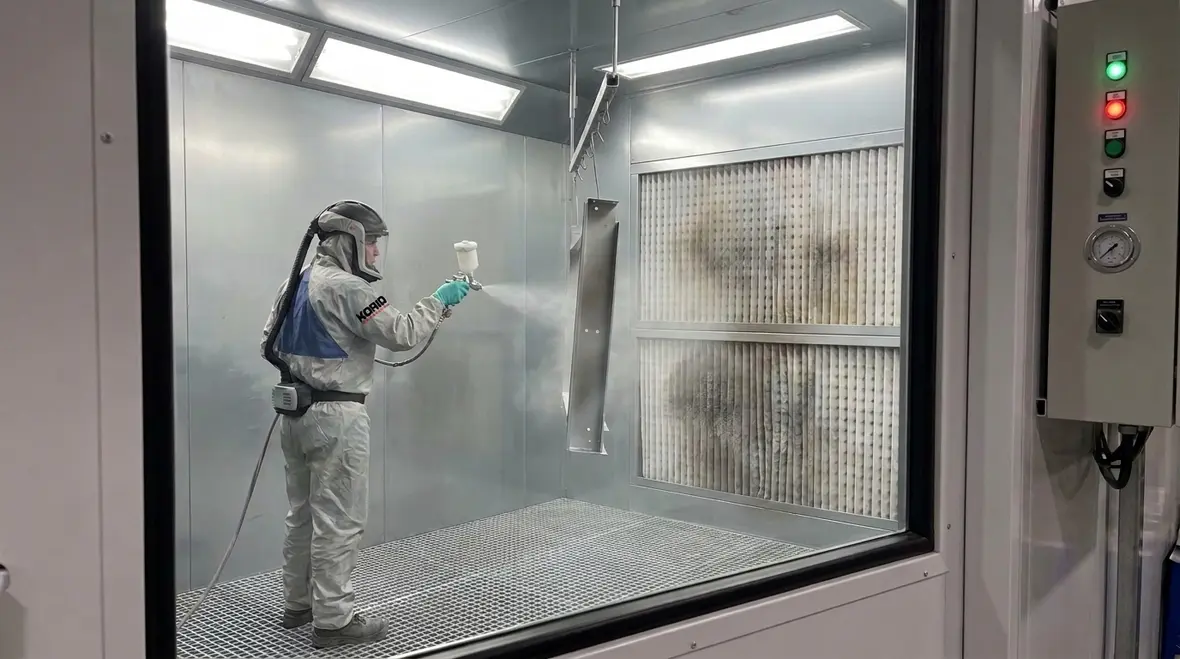
NFPA 33 Section 5.7: Ventilation for Spray Areas, Rooms, and Booths
Quick Answer: NFPA 33 Section 5.7 establishes ventilation expectations for spray areas, spray rooms, and spray booths to control hazardous vapor concentrations and ignition risks. It requires engineered ventilation design, correct airflow direction, and ongoing performance verification, supported by inspection and maintenance.
Facilities evaluating booth and room hazards often also benefit from reviewing what spray operations NFPA 33 actually covers, especially when ventilation, exhaust pathways, and residue handling extend beyond the booth itself.
Why NFPA 33 spray area ventilation requirements matter in real facilities
NFPA 33 spray area ventilation requirements focus on reducing the likelihood that flammable and combustible atmospheres will form during spray operations. For commercial and industrial users, the compliance risk rarely comes from a missing nameplate. It usually comes from airflow that drifts out of spec, ducting that accumulates contamination, controls that do not interlock with spray operations, or changes in layout that reduce capture and containment.
In practice, facilities must treat ventilation as a life safety and process control system, not a one time install. Auditors often verify that the system matches the approved design intent and continues to perform throughout production changes, maintenance cycles, and seasonal HVAC conditions.
What Section 5.7 covers: spray areas, rooms, and booths
NFPA 33 Section 5.7 addresses ventilation provisions for three common application environments:
- Spray areas where spraying occurs in open workspaces and the design relies on airflow capture and dilution.
- Spray rooms designed as enclosed or semi enclosed spaces where ventilation and containment maintain safe concentrations.
- Spray booths engineered enclosures with specific airflow patterns, exhaust management, and performance expectations.
The core compliance theme remains consistent across all three: ventilation must maintain adequate exhaust, proper air movement direction, and effective removal of overspray and hazardous vapors. The system must account for coating material properties, application method, and operating conditions.
How compliant ventilation typically works: capture, containment, and exhaust
Ventilation compliance in spray environments hinges on how well the system controls airflow at the point of generation. A typical compliant setup includes:
- Makeup air sized and arranged to support air balance without creating turbulence that pushes vapors beyond the enclosure boundaries.
- Exhaust air sized to remove vapors and overspray laden air from the spray zone and route it to appropriate treatment or safe discharge.
- Airflow direction managed so air moves toward the exhaust and away from ignition sources and egress pathways.
- Filtration and separation elements designed to capture overspray while preserving airflow performance.
Common capture and containment failure points
Many real world deficiencies involve airflow being technically “on” but not effectively controlling the spray plume. Typical failure modes include:
- Dirty filters and loading media that increase resistance and reduce effective exhaust rates.
- Duct leaks or loose connections that dilute exhaust and reduce booth or room negative pressure.
- Incorrect damper positions after maintenance or seasonal HVAC adjustments.
- Blocked intake paths from stored materials, reorganized work benches, or temporary barriers.
- Changes in spray patterns and work practices that alter where vapors accumulate, especially during training or staffing transitions.
Operational controls and interlocks: ventilation must run when spraying happens
Compliant spray operations rely on control logic that ties ventilation performance to spray activity. In many commercial facilities, NFPA 33 expectations are enforced through practical verification steps: proof that ventilation starts and operates as required, and that the system does not allow spraying under unsafe airflow conditions.
What inspectors commonly look for
- Interlocks and permissives that prevent coating application when exhaust airflow is not established.
- Alarm and shutdown logic that reacts to airflow failures, such as pressure drops across filters or exhaust fan malfunction.
- Documented setpoints matching the ventilation design basis and maintained calibration records for sensors.
- Recordkeeping that shows performance checks and corrective actions when deviations occur.
Even when controls exist, compliance can fail when sensors drift, bypass switches are installed, or alarm thresholds do not reflect current system resistance due to filter loading. These issues can appear months after commissioning, especially in high production environments.
Inspection, testing, and maintenance that sustain compliance
NFPA 33 ventilation compliance depends on sustained performance. A strong maintenance program includes preventive actions and periodic verification so that “as built” airflow remains “as operating.”
Maintenance elements that protect airflow performance
- Filter and media changeout based on differential pressure, loading trends, and manufacturer limits.
- Duct cleaning when contamination builds up and impacts flow resistance.
- Fan inspection for belt tension, motor health, and vibration that can reduce airflow efficiency.
- Seal checks for access doors, plenums, and joints that can leak overspray or vapors.
- Sensor calibration for airflow proving devices, pressure switches, and controller readings.
To support ongoing verification and reduce downtime surprises, many facilities partner with Kord Fire Protection for commercial spray area compliance services. That partnership supports documented testing, inspection readiness, and maintenance support designed for real production schedules.
If the facility also needs broader fire protection alignment beyond ventilation, Kord Fire Protection helps coordinate a complete safety approach. For related guidance, see commercial fire suppression systems and services.
Commercial compliance challenges: what derails audits
Audits often surface gaps that do not show up in a quick visual inspection. The most frequent compliance challenges in commercial and industrial settings include:
- Facility modifications such as new racking, layout changes, or additional workstations that alter airflow paths and capture effectiveness.
- Coating material changes where VOC loading, viscosity, spray rate, or gun settings shift the vapor generation profile.
- Intermittent operation that bypasses controls during training, setup, or maintenance.
- Insufficient training on how to confirm ventilation status before spray starts and what to do when alarms occur.
- Inadequate corrective action after deviations, such as replacing filters without verifying restored airflow.
These issues create a gap between installed equipment and current operating conditions. NFPA 33 ventilation compliance depends on closing that gap through documented verification and maintenance discipline.
Frequently Asked Questions
Next step: keep ventilation performance audit ready
Spray operations depend on ventilation that performs day after day, not ventilation that exists only on paper. Kord Fire Protection can help commercial facilities verify ventilation performance, support inspection readiness, and maintain reliable spray area controls through disciplined testing and service. Contact Kord Fire Protection to assess your spray areas, rooms, or booths and build an ongoing compliance plan that reduces interruption risk and strengthens safety.

Join Our Newsletter!
Get the latest fire safety tips delivered straight to your inbox From our Newsletter.



