NFPA 34 Section 5.6: Overflow Pipe Requirements for Process Equipment
Quick Answer: NFPA 34 Section 5.6 requires properly designed overflow piping for process equipment to safely route excess liquids. It focuses on correct connection points, sizing, termination, routing, support, and maintenance so overflow does not create hazards or compromise fire protection design.
If your facility is reviewing related processing-facility compliance issues, it may also help to read NFPA 30 Section 17.4 general requirements for processing facilities for broader context on inspection readiness, operating controls, and maintenance discipline.
What NFPA 34 Section 5.6 is trying to prevent
NFPA 34 overflow pipe requirements process equipment are not a paperwork exercise. Section 5.6 addresses a practical failure mode common in commercial, industrial, and retail processing operations: when liquids rise above design levels, the overflow path must control where that excess goes, how it flows, and whether it stays within safe containment boundaries.
In real facilities, overflow events often occur during normal upset conditions, calibration errors, temporary equipment outages, pump cycling, or control valve malfunction. If the overflow system is undersized, obstructed, routed incorrectly, or terminated into an unsafe area, the result can include spilled fuel or flammable liquid accumulation, blockage of fire protection features, deterioration of containment surfaces, and delayed emergency response.
NFPA 34 overflow pipe requirements process equipment: where the pipe attaches and why it matters
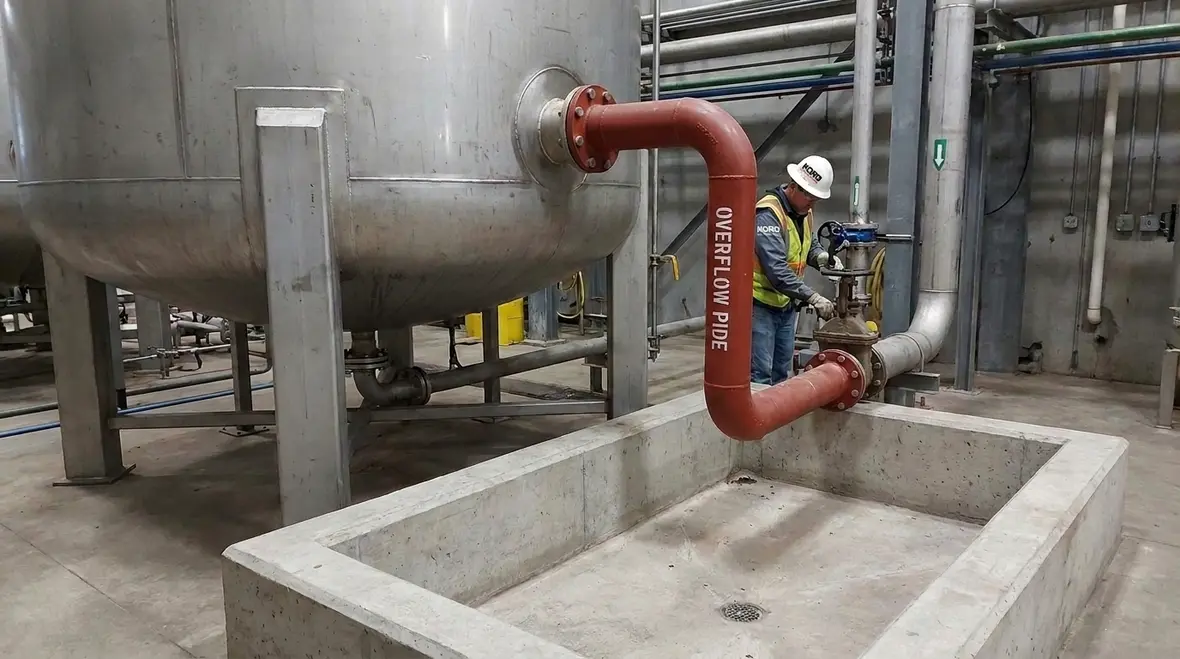
Section 5.6 centers on ensuring the overflow pipe begins at the correct location on the process equipment and provides a reliable discharge route during abnormal liquid level conditions. From a compliance standpoint, the key risk sits at the interface between process connections and the overflow discharge train.
Typical high risk installation issues include:
- Incorrect connection elevation. Overflow piping that connects too high may never activate when the equipment reaches a hazardous liquid level.
- Improper connection details. Poor fittings, missing reducers, or unsealed joints can leak and create local ignition sources or combustible liquid pooling.
- Wrong service assumptions. An overflow pipe installed for a different liquid system, with different viscosity, temperature, or vapor behavior, can underperform during actual overflow events.
Commercial facilities often face constraints that lead to improvised routing, such as limited overhead clearance, shared pipe racks, or late-stage equipment substitutions. These conditions can drive non compliant connection geometry and change hydraulic performance. Kord Fire Protection supports ongoing compliance efforts by verifying documentation, system configuration, and field readiness during inspections and maintenance cycles.
Design and sizing: how overflow systems behave during upset conditions
Overflow piping must function under the flow conditions expected when equipment level exceeds normal operating parameters. While the exact requirements vary by application and arrangement, the core compliance concept remains consistent: the overflow pipe must provide adequate capacity and the discharge must not create additional hazards.
Operational and hydraulic considerations that drive failure points include:
- Undersizing. Smaller diameter piping increases the chance of overflow backing up, wetting surrounding areas, or forcing overflow through unintended paths.
- Excess friction and poor routing. Long runs, unnecessary elbows, low grade, and sharp transitions can reduce effective flow capacity.
- Temperature and viscosity changes. Seasonal temperature swings can alter liquid behavior. If the overflow system does not accommodate worst case viscosity, it may flow slower than expected.
- Vapor or air entrainment. Poor termination or trapping can create air binding, reduced flow, or intermittent discharge patterns.
Facilities frequently discover these issues after process upgrades. A pump with higher capacity, a control strategy change, or modified inlet flow can alter the overflow dynamics. For compliance, the overflow path must match the current process configuration, not the original design assumptions.
Termination, routing, and protection of surrounding hazards
Overflow pipes must terminate in a manner that keeps excess liquid controlled and reduces the chance of creating flammable or combustible liquid hazards outside the intended containment or disposal system. Routing also matters because overflow systems often share space with equipment that can be damaged by spills or weakened by wetting.
Common commercial facility compliance challenges include:
- Discharge into walkways or near ignition sources. Terminations must account for visibility, accessibility, and safe evacuation routes.
- Discharge that interferes with fire protection systems. Overflow that wets sprinkler piping, blocks access doors, or contaminates fire extinguisher locations can undermine response.
- Routing near hot surfaces or electrical components. Overflow can carry residues. Improper routing increases the chance of ignition or equipment failure.
- Inadequate separation from drains and sumps. If the overflow discharges into a system not designed for flammable liquids, it can overwhelm containment capacity.
In practical terms, termination and routing require coordination with the rest of the life safety and fire protection strategy. Kord Fire Protection helps facilities align overflow piping arrangements with broader fire safety requirements, including inspection readiness and maintenance verification.
If your facility needs broader fire protection planning support alongside overflow compliance, review relevant guidance at Kord Fire Protection.
Inspection, maintenance, and common failure points you can catch early
Even a well-designed overflow pipe becomes non compliant when it degrades, obstructs, or changes service. NFPA 34 expectations in Section 5.6 are operational. Facilities must maintain the overflow pathway so it performs when needed.
High frequency maintenance and inspection issues include:
- Blocked overflow paths. Residue, polymer formation, rust, or particulate matter can restrict flow.
- Corrosion and leaking joints. In flammable liquid service, small leaks can become larger as gaskets age and pipe supports shift.
- Misaligned supports. Pipe movement can crack joints, change pitch, or create low points that collect liquid.
- Incorrect rework after repairs. Contractors sometimes replace sections with components that match physical size but not hydraulic or material requirements.
- Unapproved isolation valves or caps. Any feature that prevents the overflow from discharging during an upset condition can create serious compliance and safety risk.
To support commercial inspection readiness, facilities should implement a structured program that includes periodic verification of pipe diameter, pitch and routing, discharge clearances, and evidence of unobstructed flow paths. Kord Fire Protection can integrate these checks into broader compliance programs, helping ensure documentation matches the installed condition and that maintenance procedures support real world operation.
For a related read on maintenance strategy, see the full lifecycle of fire protection servicing, which fits naturally with inspection planning and documentation discipline.
Document control and compliance verification during process changes
NFPA 34 overflow pipe requirements process equipment must remain valid through changes. Commercial and industrial environments commonly update equipment, pumps, piping layouts, and control logic. Without document control, the overflow system often becomes the forgotten subsystem.
Strong compliance practice includes:
- Updating P&IDs and field drawings. Ensure the overflow connection point and discharge termination reflect the current configuration.
- Reviewing overflow capacity after upgrades. Higher inlet flow or changed operating temperatures require reevaluation of performance assumptions.
- Maintaining inspection records. Track inspections, observed defects, corrective actions, and dates of completion.
- Ensuring contractor work follows specs. Verify material compatibility, joint integrity, and routing requirements after repairs.
Where facilities need ongoing assurance, Kord Fire Protection functions as a technical partner for commercial compliance, helping align field conditions with applicable requirements and maintenance expectations.
Facilities dealing with adjacent liquid-system design questions may also want to review NFPA 30 Section 27.8 vent piping requirements for liquid systems for added context on routing, support, and safe discharge concepts.
Frequently Asked Questions
Conclusion and Call to Action
NFPA 34 Section 5.6 overflow systems must work exactly when equipment levels rise unexpectedly. To protect people, assets, and fire protection effectiveness, facilities should verify overflow connection details, routing and termination safety, and ongoing maintenance readiness. Contact Kord Fire Protection to support compliance verification, inspection support, and maintenance planning for overflow pipe systems and related fire safety documentation.

Join Our Newsletter!
Get the latest fire safety tips delivered straight to your inbox From our Newsletter.