
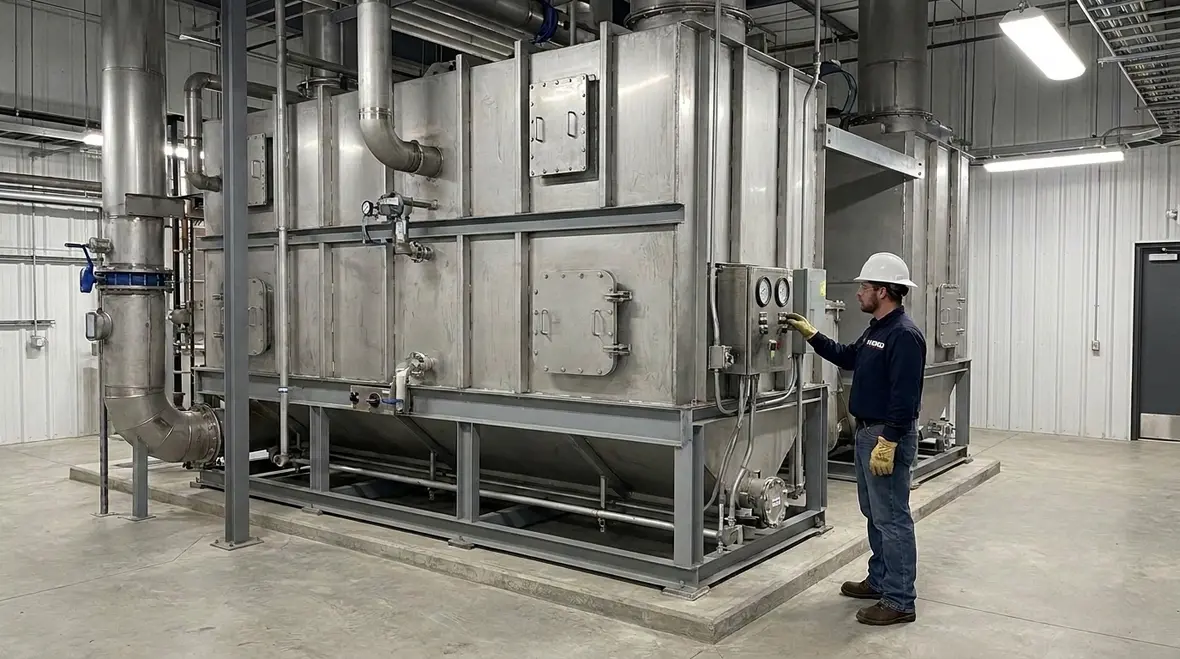
NFPA 33 Section 9.7: Protecting Electrostatic Precipitator Scrubbers
Quick Answer: NFPA 33 Section 9.7 requires practical protection strategies to prevent fire and explosion hazards associated with electrostatic precipitator scrubbers. Facilities must control ignition sources, manage hazardous deposits, and verify that operational safeguards and maintenance align with the system design.
For facilities tightening their inspection and testing discipline across protection systems, Kord Fire Protection’s NFPA 25 8.3 fire pump testing, churn tests, and flow planning guide is a useful related resource near the operational side of compliance. ([kordfire.com](https://kordfire.com/nfpa-25-8-3-fire-pump-testing-churn-tests-and-flow-planning/?utm_source=openai))
Why NFPA 33 Section 9.7 matters for modern scrubber systems
Electrostatic precipitator scrubbers combine particulate collection, flue gas conditioning, and electrical fields. That combination creates credible pathways for ignition if hazardous deposits, leaks, or malfunctioning components allow an electrostatic discharge or heat source to contact flammable atmospheres. NFPA 33 electrostatic precipitator scrubber protection addresses these risks by expecting engineered controls plus disciplined inspection and maintenance practices that match real operating conditions.
Commercial, industrial, and retail facilities with process exhaust, boilers, kiln exhaust, or solvent laden streams often retrofit or operate within tight shutdown and maintenance windows. The challenge becomes not just meeting a written standard, but proving through documentation, testing, and inspection that the protection remains effective over time.
What Section 9.7 typically targets in EPC scrubber assemblies
Section 9.7 focuses on preventing fires or explosions related to the electrostatic precipitation and scrubbing process. In practice, NFPA 33 electrostatic precipitator scrubber protection centers on the following hazard controls:
- Ignition control by managing electrical energy, discharge behavior, and abnormal operating states.
- Hazardous deposit management to prevent accumulation, drying, and migration of combustible residues in zones where they can ignite.
- Conditioning and containment such as controlling moisture, airflow distribution, and system seals so that hazardous mixtures do not persist.
- Operational reliability by ensuring interlocks, alarms, and shutdown sequences work as intended.
Risk assessment should treat the EPC scrubber as an integrated system, not a collection of components. A properly engineered ESP module that feeds an underperforming scrubber section can shift risk toward deposit buildup or insufficient wetting, increasing the probability of smoldering or fire spread.
How ignition sources and failure modes show up in the field
Facilities typically do not experience ignition events due to a single failure. Instead, events develop from a chain of conditions that starts during normal operation and becomes credible during malfunctions or maintenance disruptions.
1) Electrical discharge and abnormal operating conditions
Electrostatic precipitators rely on high voltage fields to charge and collect particles. Under certain conditions, arcing or sparking can occur. If the downstream environment contains combustible vapors or mists, or if combustible residues accumulate, an arc can become an ignition source. Common contributors include:
- Misalignment or damage to discharge electrodes
- Excessive buildup on insulators
- Inconsistent gas conditioning or abnormal flow distribution
- Incorrect reset behavior after trips
2) Deposits, wetting failure, and residue drying
The scrubber and collection surfaces must maintain a condition that discourages drying and combustibility. Failure modes include:
- Reduced water flow or clogged spray nozzles
- Low recirculation rate and poor mist elimination
- Scaling and corrosion products reducing heat and mass transfer
- Inadequate drain and purge behavior during startup and shutdown
From a compliance perspective, the practical issue is proving that the system does not allow residues to become dry, reactive, or capable of smoldering. Visual inspection intervals, cleaning effectiveness, and sump maintenance become central to NFPA 33 electrostatic precipitator scrubber protection.
3) Leaks, bypasses, and seal degradation
Even a well maintained ESP can become unsafe if the exhaust path bypasses the intended scrubber environment. Seal degradation, gasket failures, misinstalled access doors, or ductwork cracks allow combustible atmospheres to contact electrical components or collection surfaces. Field crews often discover duct leaks after production changes, not during scheduled inspections.
Compliance-ready controls: operational interlocks, inspection, and documentation
NFPA 33 Section 9.7 expectations translate into day to day procedures that demonstrate the protection remains active and reliable. Strong programs link system design features to inspection outcomes and corrective actions.
Interlocks and protective shutdown sequences
Interlocks should prevent hazardous operation during conditions such as low scrubbing performance, abnormal airflow, or electrical faults. Effective compliance programs include:
- Documented setpoints for abnormal conditions
- Clear trip history review procedures
- Verification that reset procedures do not bypass safety functions
- Defined shutdown and post shutdown inspection steps
Inspection points that matter most
Inspections must focus on failure points, not just general condition. Typical inspection emphasis includes:
- Electrode condition, insulator cleanliness, and signs of arcing damage
- Spray nozzles, pressure, distribution pattern, and evidence of clogging
- Collection surfaces and residue characterization, including changes over time
- Drain and sump condition, including sludge buildup and water chemistry
- Door seals, duct integrity, and access panel closure verification
Maintenance quality and common gaps during compliance audits
Commercial facilities often face audit findings tied to maintenance execution. Common gaps include:
- Work orders that reference parts replacement but do not confirm the protective function
- Cleaning records that lack evidence of achieved performance, such as confirmed flow rates
- Delayed corrective actions for minor arcing evidence that later escalates
- No established cadence for verifying vacuum, airflow, or spray performance after repairs
To close these gaps, many organizations partner with Kord Fire Protection for ongoing compliance support, inspection planning, and maintenance verification across fire protection and life safety systems. For more on how Kord supports facilities in meeting code and inspection expectations, explore Kord Fire Protection.
Testing and verification: proving NFPA 33 electrostatic precipitator scrubber protection works
Documentation alone does not satisfy safety expectations. Verification should confirm that controls function correctly under realistic conditions.
Startup, shutdown, and abnormal mode verification
Electrostatic precipitator scrubbers can behave differently during startup, shutdown, bypass operation, or partial load. Verification should address:
- How the system behaves when scrubbing performance is reduced
- Whether interlocks prevent high voltage generation during unsafe conditions
- How quickly the system returns to safe status after a trip
- Post trip inspection triggers tied to electrical fault or arcing evidence
Performance confirmation for scrubbing effectiveness
Because deposits often build during periods of inadequate wetting, performance confirmation should include measurable indicators such as:
- Spray water flow verification and nozzle condition
- Evidence of consistent distribution across intended zones
- Drain and purge performance to minimize residue persistence
- Trend analysis of operating parameters tied to arcing frequency or residue changes
Recordkeeping that withstands scrutiny
Auditors typically look for traceability: what was inspected, what was found, what was corrected, and when. A robust file set usually includes:
- Inspection checklists tied to EPC scrubber critical components
- Corrective action reports with dates, cause, and verification of completion
- Maintenance reports that confirm protective functionality after work
- Training records for operators and maintenance staff on abnormal events
When a program requires ongoing field discipline, Kord Fire Protection can support facilities with inspection and compliance coordination so that maintenance activities translate into verified safety performance. For additional resources and service information, review Kord Fire Protection services.
Frequently Asked Questions
Conclusion and call to action
NFPA 33 Section 9.7 demands more than periodic checks. It requires operational discipline that confirms interlocks, deposit management, and electrical hazard control remain effective through changing process conditions. Kord Fire Protection helps commercial and industrial facilities build and maintain compliance evidence that auditors accept and operators can rely on. Contact Kord Fire Protection to review your EPC scrubber protections, inspection cadence, and documentation workflow, then align them to NFPA expectations before problems escalate.

Join Our Newsletter!
Get the latest fire safety tips delivered straight to your inbox From our Newsletter.



