
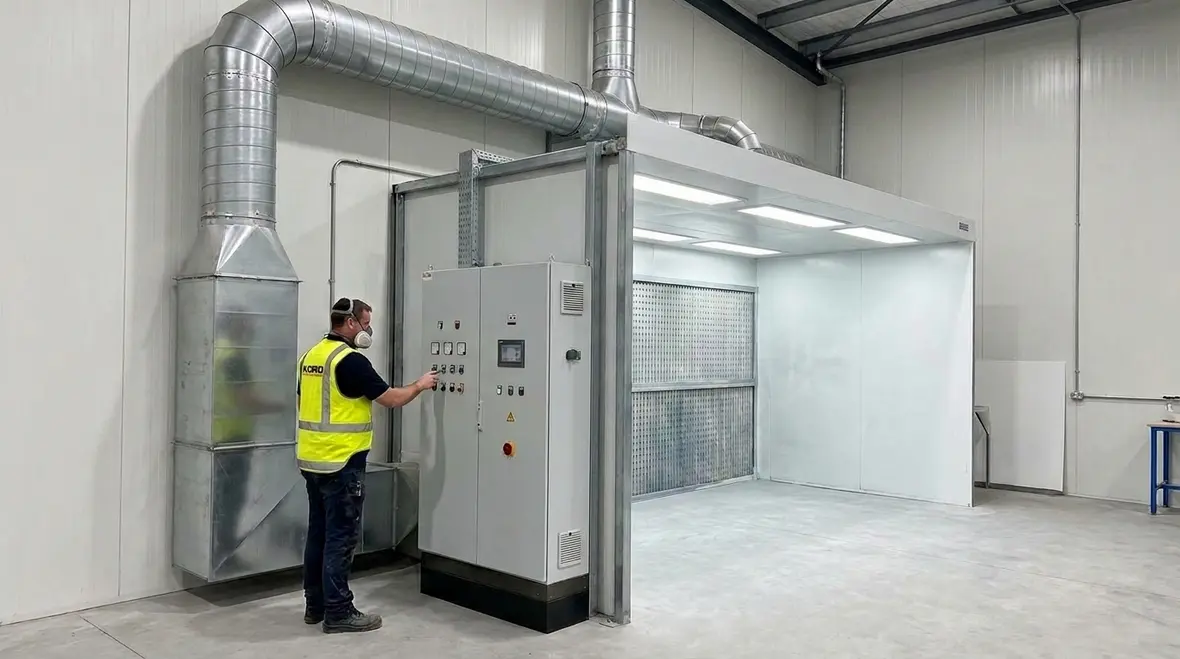
NFPA 33 Section 7.5: When Exhaust Recirculation Is Allowed
Quick Answer: NFPA 33 permits exhaust recirculation only when specific safety conditions control flammable vapor accumulation, fire detection and suppression reliability, and equipment integrity. Facilities must verify continued compliance through engineering controls, documented procedures, and routine inspection and maintenance.
Exhaust recirculation in spray operations can reduce energy costs and improve worker comfort, but it also increases fire and explosion risk when hazardous vapors and particulates accumulate where they should not. This is why NFPA 33 exhaust recirculation spray operation rules in Section 7.5 treat recirculation as a controlled exception rather than a default operating mode. Commercial and industrial users must plan for the entire lifecycle of the system, including startup checks, interlocks, inspections, and maintenance regimes that keep the recirculation path within acceptable performance limits.
Facilities evaluating broader booth protection and inspection strategy often also benefit from reviewing spray booth fire suppression for safer paint operations, especially when ventilation controls and fire protection performance need to work together without drama.
What NFPA 33 Section 7.5 Means in Real Spray Rooms
NFPA 33 Section 7.5 addresses when a facility may return exhaust air to the spray space or otherwise circulate it for reuse. The intent is straightforward: recirculated air must not become a continuous ignition or propagation pathway. In practice, compliance requires more than having ductwork and fans. It requires engineered control of hazardous conditions so that ignition sources, hot surfaces, or electrical faults do not find a fuel vapor rich enough to sustain a fire.
Facilities commonly discover that their original design assumptions drift over time. Filters load, baffle plates warp, dampers stick, pressure monitoring becomes inaccurate, and alarms or suppression components fall out of calibration. Section 7.5 compliance therefore depends on active verification that the system continues to behave as designed.
Core Eligibility Conditions: Where Recirculation Becomes Acceptable
NFPA 33 Section 7.5 generally allows exhaust recirculation only when the spray operation and ventilation arrangement include controls that prevent unsafe concentrations and ensure fire protection and emergency operation remain reliable. While exact language and requirements should be confirmed against the current edition adopted by your jurisdiction, common compliance themes include the following:
1) Hazard Control Through Ventilation and System Design
The recirculation system must control the vapor and particulate content of the air being returned. This typically includes the use of properly sized ducting, designed airflows, and the ability to maintain intended pressure relationships and capture effectiveness. Where the process produces flammable vapors, recirculation must not create stratification or stagnant zones that allow vapor buildup.
2) Reliable Interlocks and Fire Protection Integration
Recirculation must coordinate with detection and emergency response. Many facilities implement exhaust shutdown and isolation logic, but the compliance issue usually appears during testing. Dampers may fail to move fully under real-world differential pressure. Control panels may be miswired or bypassed during maintenance. Interlocks might not be proven for every operating mode, including startup, purge, normal operation, and shutdown.
3) Equipment Integrity and Air Cleaning Performance
Filters, separators, and any cleaning components must perform to protect against accumulation of combustible residues and maintain airflow. A frequent failure point is assuming filter changes or maintenance intervals from a generic schedule rather than from measured loading conditions. When efficiency drops, recirculation can carry more particulate and residue, increasing fire load and obstructing airflow paths.
Operational Procedure Requirements That Auditors Expect
Even when the ventilation design meets the intent of Section 7.5, auditors focus heavily on operating controls. Facilities should treat recirculation as a managed operating mode with documented procedures, training, and verification steps.
Startup and Shutdown Sequences
NFPA 33 compliant operations typically require controlled transitions. During startup, the ventilation system and any isolation devices must reach their required state before spraying begins. During shutdown, the facility must prevent recirculation from continuing in a way that retains hazardous vapors or allows ignition sources to interact with residual combustibles. A common nonconformance is the omission of purge verification, or reliance on fan power alone rather than airflow and damper position confirmation.
Interlock Testing as a Routine, Not an Exception
Facilities often test interlocks once during commissioning, then stop. However, Section 7.5 scenarios depend on continuous reliability. Kord Fire Protection recommends incorporating recirculation interlock checks into regular scheduled inspection and functional testing, including verifying the correct response for fire alarm conditions, system faults, power loss logic, and manual override controls.
Maintenance Documentation and Filter Management
For commercial and industrial spray operations, inspection logs should tie maintenance actions to measurable system performance. Records should show filter change dates, filter types, differential pressure readings, inspection results for duct sections, and verification of cleaning effectiveness. Retail operations with smaller booths often see the same issues, just on a compressed timeline. The risk does not scale down automatically with facility size.
Common Compliance Challenges and Failure Points
NFPA 33 exhaust recirculation spray operation rules often fail in predictable ways. Understanding these issues helps facilities prevent repeat findings and reduce downtime.
1) Inaccurate Airflow and Pressure Monitoring
Recirculation systems rely on stable pressure and airflow. A miscalibrated pressure sensor or a clogged sampling line can cause the system to believe it is within limits while actual performance drifts. This becomes especially problematic after filter loading or seasonal duct pressure changes.
2) Damper and Isolation Valve Stiction
Recirculation and isolation depend on dampers moving freely when commanded. Spray environments deposit residue that can cause mechanical sticking. Facilities may observe normal movement during manual operation but not during alarm conditions when airflow, temperature, or control signals differ.
3) Residue and Particulate Accumulation in Recirculation Ducts
Dust and overspray can settle in recirculation ducting. Over time, residue can become a secondary fuel source and can obstruct airflow. The safest designs still require periodic inspection and cleaning based on usage, material properties, and measured deposition.
4) Uncontrolled Bypass and Temporary Repairs
Most facilities will eventually face duct repairs, component replacements, or temporary bypasses for production continuity. The compliance challenge is ensuring bypasses do not eliminate required isolation, detection coordination, or airflow verification. Controls should be locked out appropriately and documented with a defined return to service procedure.
Inspection, Testing, and Ongoing Maintenance: Staying Within Section 7.5
Compliance for exhaust recirculation hinges on proving that the system continues to protect occupants, the facility, and emergency responders. Kord Fire Protection supports facilities by aligning fire protection performance with real operating conditions through inspection, testing, and documentation.
What to Include in Your Recirculation System Program
- Functional testing of alarms and interlocks for each operating mode, including startup and shutdown.
- Airflow and pressure verification using calibrated instruments rather than assumption based on fan operation.
- Inspection of ductwork, dampers, and isolation components for residue buildup, binding, and component wear.
- Filter and separator performance checks, with maintenance intervals driven by condition and measurements.
- Documentation control that ties maintenance and testing records to the current configuration of the system.
If your team needs a partner for inspection and testing planning across multiple ventilation and fire protection systems, review Kord Fire Protection’s fire protection services in Southern California or visit Kord Fire Protection.
Frequently Asked Questions
Next Step: Get Your System Verified
If your facility uses exhaust recirculation or plans to add it, confirm Section 7.5 eligibility, then validate performance through documented interlock testing, airflow verification, and maintenance controls. Kord Fire Protection can help you build a practical inspection and testing program that matches how your spray room operates, reduces repeat findings, and supports ongoing compliance. Contact Kord Fire Protection today to schedule a recirculation risk and compliance review.

Join Our Newsletter!
Get the latest fire safety tips delivered straight to your inbox From our Newsletter.



