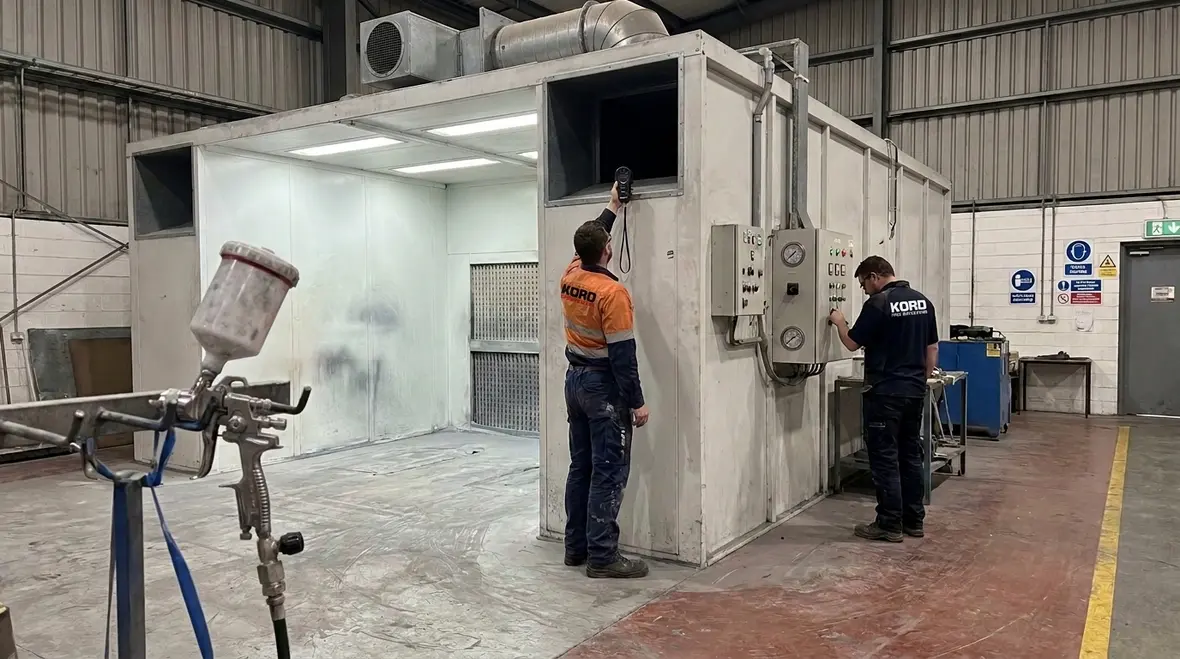
NFPA 33 Section 7.2: Ventilation Performance Requirements for Spray Operations
Quick Answer
NFPA 33 Section 7.2 sets ventilation performance requirements for spray operations to control hazardous vapor concentrations and maintain safe working conditions. Compliance centers on achieving and maintaining designed airflow, verifying control effectiveness, and sustaining performance through inspection and maintenance.
Spray application processes generate flammable and combustible vapors, overspray particulates, and reactive atmospheres that can escalate rapidly if ventilation performance slips. NFPA 33 ventilation performance requirements spray operations are designed to ensure that exhaust and make up air systems do what the design intends, during normal operation and under realistic conditions.
For a broader compliance foundation, review what NFPA 33 covers for spray operations so ventilation performance is evaluated in the right code context.
Facilities building inspection-ready programs can also benefit from Kord Fire Protection’s inspection, testing, and maintenance approach, especially when ventilation verification needs to stay tied to repeatable documentation and corrective action.
What NFPA 33 Section 7.2 Requires for Ventilation Performance
Section 7.2 focuses on performance, not just equipment presence. In practical terms, the standard expects facilities to establish ventilation parameters that control hazardous vapors and manage overspray, and then verify that the system continues to perform as required. This includes
- Establishing airflow and capture effectiveness that match the spray activity and containment approach.
- Maintaining ventilation in a way that prevents unsafe vapor accumulation in the spray area and surrounding spaces.
- Documenting performance checks, including inspection results, adjustments, and corrective actions.
- Ensuring ventilation control systems respond appropriately during spray operations, including interlocks and monitoring where required.
Commercial facilities often assume that “the exhaust fan runs” equals compliance. Inspectors and insurance partners typically look deeper: airflow balance, operational status during spray mode, control logic, and evidence that the system remains effective after filter changes, duct modifications, or changes in booth loading.
Core Concepts: Capture, Airflow Rate, and System Balance
Ventilation performance requirements for spray operations revolve around three performance pillars: capture effectiveness, airflow adequacy, and system balance.
1) Capture effectiveness inside the spray zone
Capture effectiveness determines whether hazardous vapors and overspray are pulled into the exhaust stream rather than migrating into the breathing zone or adjacent areas. Common deficiencies include
- Incorrect booth airflow settings after maintenance, conversion, or production schedule changes.
- Blocked or misaligned duct inlets that reduce capture at the point of spray.
- Improper spray pattern placement relative to the intake or baffles.
2) Airflow adequacy to dilute and exhaust vapors
Airflow adequacy ensures the ventilation system can handle vapor generation rates from the application equipment and coatings being used. In the field, airflow can fall short because of
- Restricted filters and clogged prefilters increasing system resistance.
- Fan curve changes due to belt replacement, motor swaps, or damper adjustments.
- Exhaust duct damage, disconnected flexible sections, or collapsed ductwork.
3) System balance with make up air
Many spray facilities depend on coordinated exhaust and make up air to maintain safe pressure relationships. If make up air is inadequate or incorrectly routed, the booth area can experience turbulence and vapor migration. If make up air is excessive, it can disrupt containment and reduce capture at the source.
Facilities that operate across seasons also face drift. Outdoor air conditions change density and system resistance, affecting effective airflow. That is why performance checks tied to actual operating conditions matter.
How Ventilation Controls Are Evaluated During Compliance Inspections
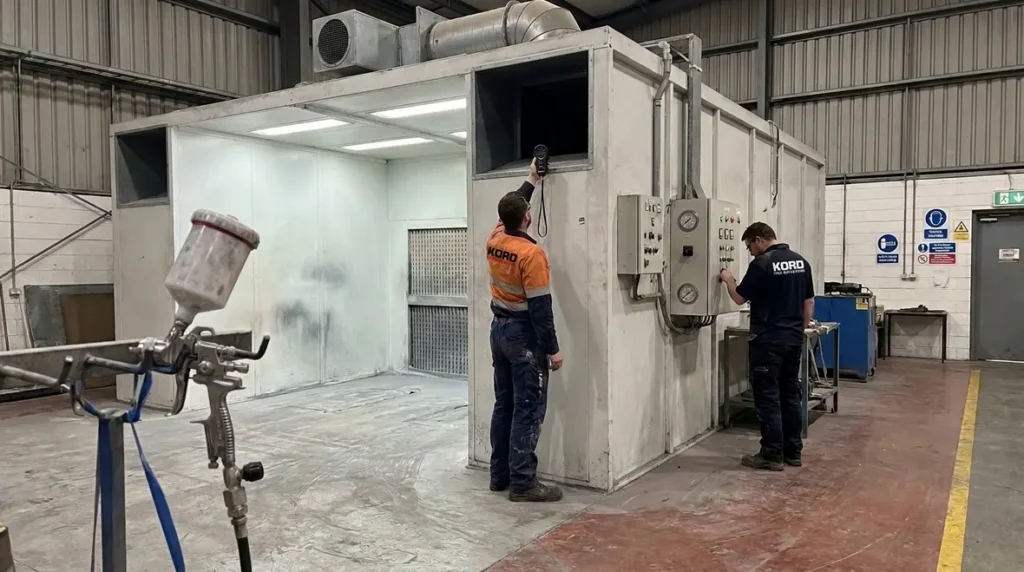
Section 7.2 emphasizes that ventilation must function as intended. Inspectors typically evaluate whether controls, interlocks, and monitoring systems enforce ventilation operation during spray activity. Common evaluation points include:
- Interlock logic: spray equipment should not operate when required exhaust is not running at the intended performance level.
- Airflow status indicators: gauges, magnehelic switches, or equivalent devices that reflect real system operating conditions.
- Control response: damper actuation and fan speed control, including alarms and safe shutdown behaviors when performance degrades.
- Operational mode verification: ventilation should meet requirements during actual spray cycles, not only during warm up or non spraying conditions.
From a failure standpoint, the most frequent issues tend to be mismatches between design intent and installed reality. Examples include “temporary” bypasses, incorrect set points after a control panel update, or sensor drift that allows spray operation with marginal airflow.
Common Commercial and Industrial Failure Points That Undermine Performance
Even well designed spray ventilation systems lose performance over time. NFPA 33 ventilation performance requirements spray operations address those realities by demanding sustained effectiveness, not one time installation compliance.
Filters, loading, and restricted airflow
Filter media loading is a top cause of reduced airflow. As pressure drop increases, the fan may not deliver the design flow rate, even though it still “runs.” If airflow measurement is not performed and filter change intervals are not aligned with actual loading, performance can quietly degrade.
Ductwork modifications and airflow path disruptions
Commercial facilities frequently modify ductwork for layout changes, equipment moves, or vendor upgrades. Small changes in duct routing, fittings, or takeoff locations can significantly affect capture and exhaust effectiveness. A retrofit that does not include a ventilation performance verification can place the facility out of compliance.
Automation drift and set point changes
Control systems sometimes experience drift after software updates, sensor replacements, or calibration adjustments. If the facility updates a fan control profile without confirming airflow outcomes, spray operations can proceed under conditions that no longer match the safety design.
Maintenance practices that do not include performance verification
Many maintenance programs focus on mechanical condition rather than ventilation performance outcomes. NFPA 33 ventilation performance requirements spray operations expect a performance mindset. That typically means verifying airflow and control effectiveness during commissioning, after major modifications, and at appropriate inspection intervals.
Operational Compliance Program: What Facilities Should Document
A strong compliance program connects day to day operations with documented verification. At minimum, facilities should maintain evidence that ventilation continues to meet required performance for spray operations. Key items typically include
- As built ventilation schematics and design basis, including airflow targets and booth configuration assumptions.
- Inspection, testing, and maintenance records for fans, dampers, controls, and sensors.
- Filter maintenance logs tied to loading, pressure drop, and system performance outcomes.
- Results of ventilation performance checks and calibration verification for airflow and control indicators.
- Corrective action documentation when performance falls outside acceptable ranges.
This documentation becomes especially critical during insurance reviews, corporate audits, or regulatory inspections. It also helps retail and industrial operators reduce downtime by identifying performance drift trends early.
Why Kord Fire Protection Supports Ongoing NFPA 33 Ventilation Compliance
Ventilation performance is not a one time checkbox. Commercial facilities need repeatable verification, calibrated instrumentation, and a disciplined approach to maintenance and corrections. Kord Fire Protection helps organizations maintain code aligned spray ventilation programs through practical testing, inspection support, and maintenance planning that focuses on performance outcomes.
If you want guidance on how inspection and testing programs align with code expectations, review Kord Fire Protection’s full fire protection services for commercial fire protection services that can support NFPA 33 ventilation performance requirements spray operations and broader life safety compliance goals.
Frequently Asked Questions
Next Step: Get Ventilation Performance Verified
For spray areas in commercial, industrial, and retail facilities, NFPA 33 ventilation performance requirements spray operations must be proven through performance based verification and disciplined maintenance. Kord Fire Protection can support your inspection, testing, and maintenance planning so ventilation stays effective as production and equipment conditions change. Contact Kord Fire Protection today to schedule a ventilation compliance review and performance verification plan.

Join Our Newsletter!
Get the latest fire safety tips delivered straight to your inbox From our Newsletter.