
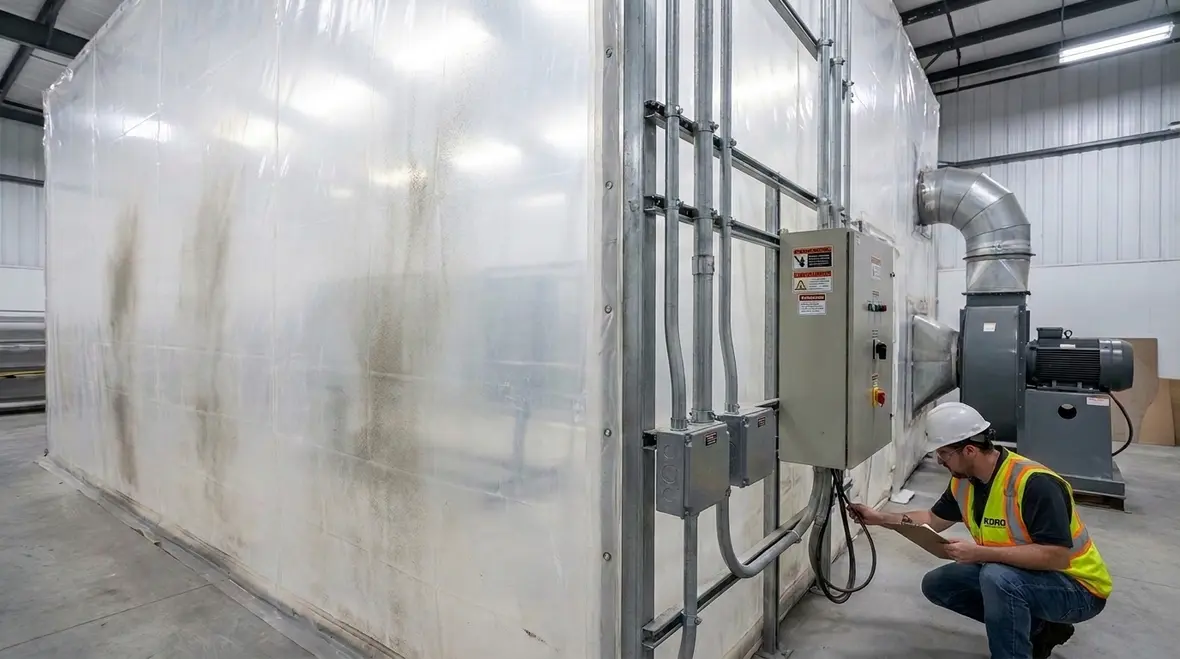
NFPA 33 Section 18.6: Electrical and Ignition Sources in Membrane Enclosures
Quick Answer: NFPA 33 Section 18.6 focuses on controlling electrical and ignition sources inside membrane enclosures to prevent fire and explosion hazards during spraying and related operations. Compliance requires deliberate equipment selection, wiring practices, inspection routines, and documented maintenance, especially in commercial industrial, and retail facilities.
NFPA 33 membrane enclosure electrical ignition sources become a critical compliance topic whenever a facility uses membranes as part of spray finishing, coating, or related enclosure strategies. Section 18.6 addresses how electrical systems, devices, and operational conditions can create ignition sources through arcing, sparks, hot surfaces, static discharge, and improper installation. For facility owners and operators, the practical challenge lies not only in passing an initial inspection, but in maintaining safe operating conditions over time as equipment ages, production changes, and housekeeping varies.
Facilities dealing with spray finishing risks often benefit from broader system support as well. If you are reviewing enclosure hazards as part of a larger spray operation, spray booth fire suppression for safer paint operations is a useful companion topic, especially when inspection readiness and system coordination need to stay in step.
For teams looking at the electrical side of risk control more closely, a commercial electrical safety audit for risk control can help identify overheating, damaged terminations, and other sneaky problems before they turn into the kind of surprise nobody wants.
What NFPA 33 Section 18.6 Actually Targets
NFPA 33 Section 18.6 zeroes in on the potential for electrical and ignition sources to ignite flammable atmospheres or residues inside membrane enclosures. In real facilities, the ignition pathways usually fall into a few operational categories:
- Electrical energy release: arcing at connections, damaged conductors, loose terminations, and worn switches.
- Hot surface ignition: overheated motors, bearings, heaters, or components that operate outside of their intended duty conditions.
- Static related ignition: charge accumulation on nonconductive surfaces, transport components, or during material handling that leads to discharge.
- External ignition intrusion: migration of ignition sources from outside the enclosure through penetrations, cable pathways, or improperly sealed openings.
Section 18.6 matters because membrane enclosures often involve airflow control, vacuum systems, ducting, and power distribution in close proximity to combustible vapors and overspray residue. That combination increases the consequences of a small electrical defect or a maintenance deviation.
Where Ignition Sources Commonly Enter Membrane Enclosures
Commercial facilities typically experience recurring issues at predictable interfaces. Facility teams can improve readiness by focusing on these high risk areas during walkdowns, maintenance planning, and pre startup checks.
1) Power distribution, cord management, and penetrations
Loose strain reliefs, degraded insulation, and cable routing that rubs against membrane edges can create intermittent faults. Even if a device fails rarely, the enclosure environment makes ignition consequences more severe. Facilities should confirm that:
- All electrical penetrations use proper sealing methods that preserve enclosure integrity.
- Cables receive mechanical protection where they pass through framing or near moving airflow components.
- Cord and plug connections follow an established inspection cadence, including visual checks for heat discoloration and physical damage.
2) Fan systems, motors, and rotating equipment
Fans and exhaust blowers support enclosure containment and ventilation. Electrical faults often show up as abnormal vibration, bearing noise, or reduced airflow, which can drive higher vapor concentrations. Ignition relevant conditions include:
- Overheating from clogged impellers, failed bearings, or misalignment.
- Arcing at motor starters or worn contact components.
- Improperly maintained grounding and bonding paths, which can also contribute to static control failures.
3) Control devices and switching equipment
Control panels, relays, and switches may be located near the enclosure for practical reasons, but that proximity increases exposure. Common failure points include condensation ingress, dust accumulation, and improper enclosure ratings. Electrical inspection should include:
- Verification of panel integrity and gasket condition.
- Inspection of terminal blocks for looseness and heat marks.
- Confirming interlocks and purge sequences remain correctly configured after production changes.
How to Achieve Compliance: Equipment Selection, Installation, and Verification
Compliance for NFPA 33 membrane enclosure electrical ignition sources requires more than a generic “no sparks” policy. It requires a defensible approach that connects equipment selection to expected operating conditions and that verifies performance through inspection and testing.
Choose components that match the environment
Electrical devices installed in or near membrane enclosures must align with the hazard environment created by spraying materials and the operating behavior of the ventilation and exhaust systems. Facility teams should coordinate with qualified electrical contractors to ensure:
- Equipment ratings align with the location classification strategy applied by the facility design.
- Motors, starters, and controls remain within their temperature and duty cycle limits.
- Any ancillary heaters or drying aids have documented safe installation and operating procedures.
Install and bond for both electrical safety and ignition prevention
Improper grounding and bonding can increase the probability of arcing events and can undermine static control strategies. Installation verification should include:
- Continuity checks for bonding conductors and grounding paths.
- Confirmation that metal framing, conductive duct components, and equipment housings remain electrically connected where required.
- Verification that cable glands and fittings remain intact after maintenance access.
Document verification and maintain traceability
Many facilities fail audits because they cannot demonstrate consistent verification practices. A practical compliance package includes:
- Equipment lists identifying what is installed near the enclosure and where.
- Inspection and maintenance records for electrical devices, motor controls, and ventilation systems.
- Change management documentation for equipment swaps, membrane replacements, and production process changes.
Inspection and Maintenance: The Operational Compliance Gap
NFPA 33 membrane enclosure electrical ignition sources create risk during normal operations and also during maintenance activities. The most common breakdown occurs when electrical components receive attention only after visible failure. Instead, facilities should use condition based and preventive approaches tied to documented intervals.
High value inspection items
- Visual heat indicators: discoloration, soot patterns, or blistering around terminals and electrical housings.
- Mechanical integrity: damaged cords, loose fittings, cracked housings, and membrane abrasion near cable routes.
- Ventilation performance: airflow indicators and exhaust rates that support a stable containment strategy.
- Control function: verification that purge or ventilation interlocks perform as designed.
Common failure points to train maintenance teams on
Maintenance crews often troubleshoot by bypassing controls or repositioning components for short term convenience. Those actions can directly increase ignition likelihood. Training should cover:
- Never modifying electrical components or enclosures without documented approval and inspection follow up.
- Risks of temporary wiring, damaged insulation, or misrouted cables near moving parts and airflow paths.
- Proper re sealing after access, including how membrane interfaces affect overall enclosure performance.
For facilities that need reliable compliance support across inspections, testing, and ongoing maintenance verification, Kord Fire Protection provides ongoing technical services that help commercial sites keep NFPA 33 expectations current and auditable. To support broader electrical and ignition hazard awareness, see Kord Fire Protection for guidance on fire safety program development, inspection readiness, and maintenance support.
Commercial Facility Implementation: Standard Operating Procedures That Hold Up
Membrane enclosures operate in fast paced environments. To keep NFPA 33 membrane enclosure electrical ignition sources under control, facilities should implement practical, repeatable procedures that align with day to day operations in industrial, commercial, and retail settings that conduct spraying, coating, or finishing.
Pre shift and pre job checks
- Confirm ventilation and exhaust systems start and stabilize before spraying begins.
- Verify electrical access points and control panels show no evidence of heat damage or moisture intrusion.
- Inspect cable routing for abrasion, tension, and contact with moving parts.
During operation controls
- Maintain housekeeping that prevents residue buildup near electrical components and control devices.
- Monitor equipment behavior such as fan noise, motor heat, and abnormal vibration.
- Document any deviations and require corrective actions before resuming normal production.
Post job shutdown and maintenance triggers
- Perform a structured shutdown sequence to avoid leaving systems in hazardous operational states.
- Trigger maintenance when inspection indicators show deterioration, even if the equipment still runs.
- Ensure membrane repairs and electrical access closures receive documented sign off.
Common Compliance Pitfalls and How to Prevent Them
Even well intentioned programs struggle when the facility lacks engineering visibility or when production changes happen faster than updates to safety documentation.
| Pitfall | Why It Fails NFPA 33 Section 18.6 Focus Areas | Prevention Strategy |
|---|---|---|
| Uncontrolled electrical modifications after line changes | Creates new ignition pathways through penetrations, cable routing, or equipment rating mismatches | Apply change management with inspection sign off and documented equipment verification |
| Infrequent inspection of connections and controls | Loose terminals and intermittent arcing remain hidden until advanced failure | Use a defined inspection cadence with heat damage and mechanical integrity checks |
| Dust and residue accumulation near panels and motor starters | Accelerates overheating, inhibits cooling, and can contribute to ignition severity | Align housekeeping schedules to enclosure operation and maintenance intervals |
| Ventilation performance drifting out of specification | Increases flammable vapor concentration, raising ignition consequence of electrical faults | Use airflow verification procedures and require corrective actions on deviations |
Frequently Asked Questions
Next Step: Build an Auditable NFPA 33 Compliance Program
If your facility uses membrane enclosures, strengthen control of NFPA 33 membrane enclosure electrical ignition sources with an inspection focused plan that covers equipment suitability, cable and penetration integrity, ventilation performance, and disciplined maintenance documentation. Contact Kord Fire Protection to support ongoing compliance readiness, testing, and maintenance verification tailored to commercial industrial and retail operations.

Join Our Newsletter!
Get the latest fire safety tips delivered straight to your inbox From our Newsletter.



