
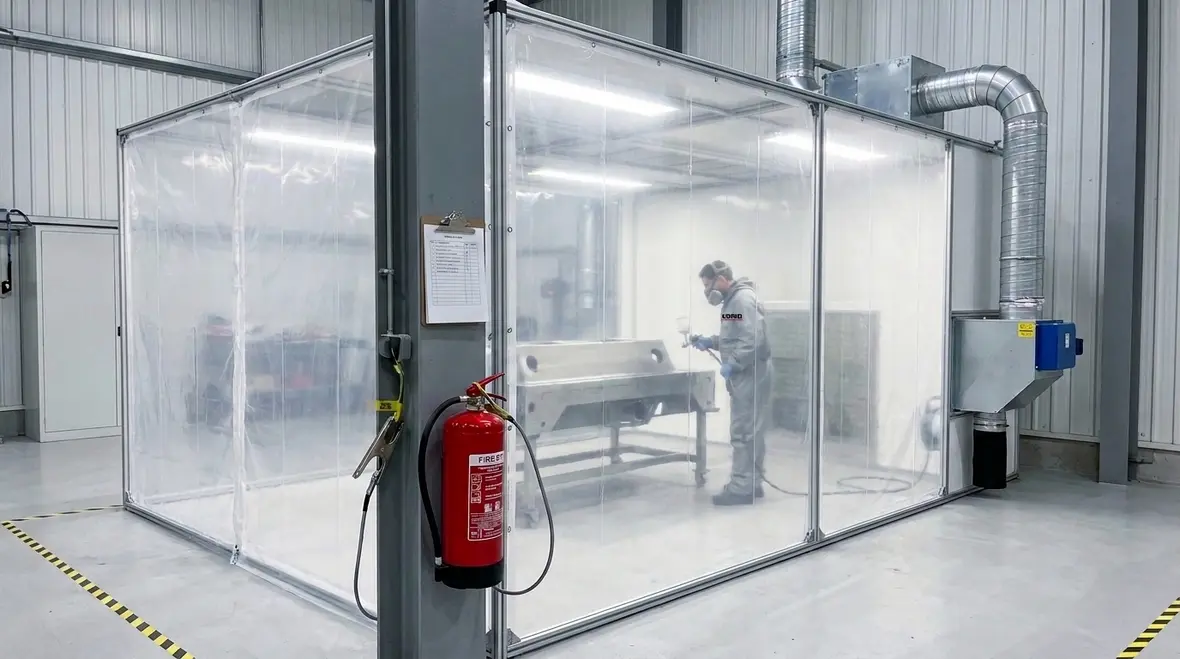
NFPA 33 Section 18.10: Compliance Permitting for Membrane Spray Facilities
Quick Answer: NFPA 33 Section 18.10 requires membrane spray operations to be permitted and evaluated for safe design, installation, maintenance, and operation. Facilities must document controls for fire, explosion, and ignition sources, then maintain compliance through inspections and ongoing upkeep.
What does NFPA 33 Section 18.10 require for membrane spray permitting?
For commercial operators working with coatings or finishing processes, NFPA 33 sets the framework for hazard control. Under NFPA 33 membrane enclosure compliance permitting, Section 18.10 focuses on ensuring the membrane spray area is treated as a designed fire and exposure control system, not a temporary curtain solution. Permitting typically requires the facility to demonstrate that the enclosure, ventilation or exhaust arrangements, housekeeping practices, and ignition source controls are correctly installed and maintained.
This section matters for retail, industrial, and manufacturing sites because membrane spray facilities introduce common compliance friction points: limited access for inspection, variable coating overspray behavior, nonconforming airflow patterns, and equipment deterioration that operators often miss until an audit or incident.
Facilities dealing with spray hazards often benefit from a broader look at spray operation compliance before permitting details are reviewed. For related context, see NFPA 33 Section 1.3 application for spray operations covered and excluded.
Step 1. Determine the permitting scope and jurisdictional expectations
Section 18.10 sets minimum safety expectations, but permitting outcomes depend on local authority having jurisdiction (AHJ) procedures. A strong starting point is to define what the AHJ will treat as the membrane spray facility boundary, including any adjacent process equipment, storage areas, and ventilation components that influence ignition control.
Key scope items that commonly get questioned
-
Enclosure boundaries: membrane extent, tie in points, and how the membrane isolates hazardous areas during spray and cleanup.
-
Exhaust and ventilation: whether the exhaust design supports safe airflow and proper removal of overspray and flammable residues.
-
Air cleaning and filtration: filter types, maintenance schedules, and verification methods.
-
Electrical and ignition control: bonding and grounding, rated equipment in the spray area, and control of hot surfaces.
-
Waste and residue management: how overspray and cleaning waste are collected, removed, and handled between shifts.
Commercial facilities should also confirm whether the permitting package should include drawings, equipment cut sheets, hazard control narratives, and inspection checklists. Operators that treat the membrane enclosure as a single piece of equipment often underprepare. Permitting success improves when the submission describes the entire safety chain, from airflow to residue handling.
Step 2. Document design and installation controls for membrane enclosures
Membrane systems operate as engineered controls. NFPA 33 compliance permitting should reflect that engineered nature by documenting how the membrane enclosure supports safe operation.
Operational design elements to capture in your permit package
-
Membrane integrity strategy: material selection, seam performance, installation tensioning, and documented inspection points for tears or degradation.
-
Ventilation performance method: how airflow is measured or verified, and how you confirm performance after maintenance or component replacement.
-
Overspray containment and cleanup workflow: the step sequence for spraying, dwell time, cleanup, and waste removal so residues do not accumulate.
-
Bonding and grounding controls: procedures ensuring continuity and safe discharge during start up, operation, and shutdown.
-
Ignition source management: equipment selection, maintenance of non sparking tools, and housekeeping controls to prevent combustible accumulation.
A common failure point in membrane spray facilities involves airflow drift. Filter loading, fan belt wear, damper changes, and membrane misalignment can all reduce effective capture, yet routine operations may not include a verification step. Section 18.10 permitting strengthens when the facility explains how it will catch and correct those conditions early.
To support ongoing compliance, commercial operators often benefit from partnering with experienced fire protection professionals. Kord Fire Protection helps organizations align their spray enclosure practices with broader fire and life safety program requirements, including practical inspection support and maintenance planning. For related guidance, refer to Kord Fire Protection services.
Step 3. Build inspection, testing, and maintenance processes that survive real operations
Permitting under NFPA 33 membrane enclosure compliance permitting is not a one time event. The inspection and maintenance program must reflect the realities of spray usage cycles, overspray contamination, and membrane aging.
Maintenance elements that typically require tighter control
-
Membrane inspections: tear detection, seam checks, corner and bottom seal condition, and replacement triggers based on observed wear.
-
Exhaust and filtration upkeep: filter change thresholds, verification of fan operation, and confirmation that cleaning methods restore airflow performance.
-
Electrical bonding continuity: routine verification after membrane service, cable repairs, or enclosure rework.
-
Residue and waste handling: documented container management, liner changes, and removal frequency to prevent combustible buildup.
-
Housekeeping controls: inspection of floor areas, ledges, and hidden accumulation zones around the enclosure.
Where facilities struggle is not intention, but workflow. If membrane inspections occur only during scheduled production shutdowns, an unnoticed tear can degrade capture performance for weeks. Effective compliance programs define responsibility, inspection frequency, and required corrective actions.
Kord Fire Protection supports commercial customers by bringing structure to inspection and maintenance planning so the membrane spray facility remains consistent with permitting expectations. This includes helping standardize documentation for audits and aligning fire safety tasks with the operational cadence of production sites.
Step 4. Prepare for AHJ review: what inspectors look for during NFPA 33 membrane enclosure compliance permitting
During review, AHJs typically evaluate whether the spray enclosure and supporting systems prevent unacceptable ignition exposure and manage combustible residues. The inspector’s focus usually moves from paper compliance to on site operability.
Common on site proof points
-
Membrane condition and placement: evidence of appropriate installation and absence of compromised openings.
-
Ventilation operation: fans running as required, access to air movement controls, and proof that performance is maintained after maintenance.
-
Housekeeping practices: no visible buildup in expected control zones and no blocked exhaust components.
-
Electrical safety details: proper grounding and equipment condition suitable for the spray environment.
-
Operational controls: signage, training verification, and the existence of step based procedures for shutdown and cleanup.
To streamline the process, facilities should run an internal pre inspection before submitting or during preoperational walkthroughs. That internal check should include functional observation of enclosure operation, not just component verification. If your facility is frequently reconfigured, include a documented change control process so permitting does not become outdated after layout changes.
Step 5. Manage change and maintain compliance through the life of the facility
Membrane spray environments change. Operators add equipment, adjust spray patterns, replace filters more frequently, or rework enclosure geometry. NFPA 33 permitting should remain accurate through those changes.
Practical change triggers that demand compliance review
-
Process changes: new coating chemistry, higher volatility materials, or different spray rates.
-
Mechanical changes: fan or duct replacement, damper updates, or membrane hardware modifications.
-
Maintenance outcomes: repeated filter overloading, unusual residue accumulation, or frequent membrane failures.
-
Facility layout changes: new traffic patterns, storage changes near the enclosure, or revised access methods.
Well run programs treat compliance as a managed system. Kord Fire Protection can help facilities connect membrane enclosure activities to broader commercial fire protection program expectations, reducing the chance of fragmented documentation during renewals and inspections. For more information, review Kord Fire Protection.
Frequently Asked Questions
Conclusion and call to action
NFPA 33 Section 18.10 pushes membrane spray facilities toward verifiable safety through permitting, installation documentation, and disciplined maintenance. If your organization needs a stronger compliance package, pre inspection support, or a sustainable inspection and testing plan, engage Kord Fire Protection. Start with a gap assessment of your current membrane enclosure compliance permitting approach, then build an auditable program your AHJ can approve with confidence.

Join Our Newsletter!
Get the latest fire safety tips delivered straight to your inbox From our Newsletter.



