
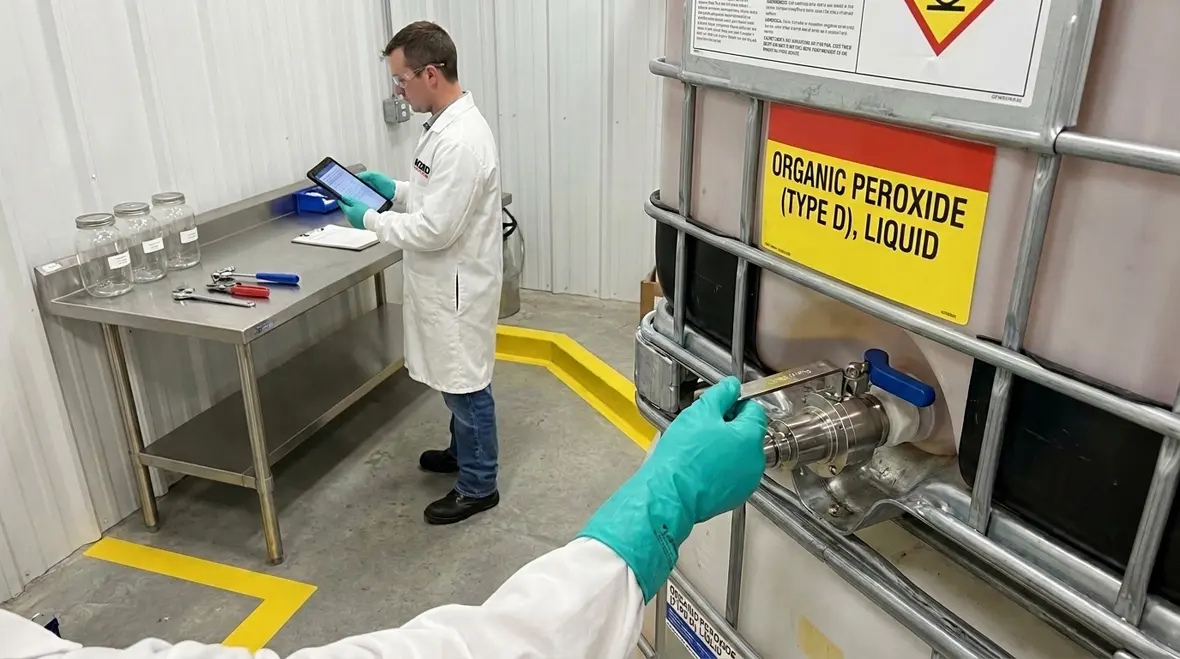
NFPA 33 Section 16.3: Preventing Contamination of Organic Peroxides
Quick Answer
NFPA 33 Section 16.3 focuses on preventing organic peroxide contamination, since even small amounts of incompatible material can trigger decomposition. Effective compliance relies on contamination controls, verified segregation, clean handling systems, and inspection based maintenance in manufacturing, storage, and retail environments.
What NFPA 33 Section 16.3 requires, in practical terms
NFPA 33 Section 16.3 sets clear expectations for NFPA 33 organic peroxide contamination prevention: facilities must ensure organic peroxides do not contact contaminants or incompatible materials that could accelerate decomposition. In real operations, contamination rarely comes from a single dramatic event. It more often results from routine handling practices, shared equipment, degraded storage hardware, worn gaskets, poor housekeeping, or cross contamination during staging and dispensing.
Commercial compliance teams typically fail the section not because they lack written procedures, but because implementation drifts. Examples include containers stored “temporarily” outside the designated area, cleaning chemicals or residue left on hoses, or maintenance activities that unintentionally introduce residues into peroxide handling systems.
For related inspection and maintenance documentation practices, see Kord Fire Protection’s fire pump testing requirements guide, which explains how verification records and repeatable testing routines support compliance readiness.
Where contamination actually comes from (common failure points)
To build an effective contamination control program, facilities must identify the highest probability contamination pathways. In practice, inspectors and internal audits look for evidence that contamination risks are understood, controlled, and continuously verified.
1) Cross contact during transfers and dispensing
Contamination frequently occurs at the point where peroxides move from storage to process. Shared pumps, hoses, funnels, dispensing carts, and temporary transfer containers create a cross contact pathway. Even if equipment looks clean, dried residues, incompatible lubricants, or residue from prior products can persist.
Operational risk increases when personnel switch between multiple chemicals or when shift-to-shift handoffs do not include equipment condition verification.
2) Residue from cleaning and maintenance
Cleaning procedures matter as much as storage procedures. Residues can include detergent films, solvent traces, dust, or incompatible materials left behind after maintenance. This is especially problematic where equipment surfaces contact peroxide vapors or liquid, or where seals trap residue.
Maintenance tasks such as replacing fittings, reworking tubing, or servicing valves can introduce foreign material. Without a documented cleaning verification step and post maintenance commissioning, the system may appear functional while still posing a contamination risk.
3) Compromised storage integrity
Storage controls must prevent contact with contaminants. Failure points include damaged secondary containment, contaminated shelving, degraded spill trays, missing covers, noncompliant segregation, or improperly labeled containers. If storage areas support general production activity, airborne dust and accidental splashes also become realistic contamination routes.
4) Human factors and procedure drift
Most contamination events correlate with process shortcuts. Examples include using improvised funnels, topping off containers, relocating drums without protection, or returning unused product to storage without confirmation procedures. These are not “training gaps” in isolation. They often signal weak supervision, unclear ownership, and inconsistent audit frequency.
How to implement NFPA 33 organic peroxide contamination prevention controls
Compliance success depends on documented controls linked directly to inspection and maintenance. The goal is not only to prevent contact, but also to demonstrate prevention through verification.
Segregation and zoning: control where peroxide can go
Facilities should treat peroxide zones as controlled areas with clear boundaries. Segregation must extend beyond the storage cabinet to include staging areas, secondary containment, and transfer locations. Personnel should have dedicated peroxide handling tools or strict changeover rules that prevent cross contact.
Commercial environments often struggle here when production workflows move chemicals frequently. The contamination control plan should integrate with material handling routes, receiving procedures, and scheduling practices so peroxide activities do not share traffic paths with incompatible chemicals.
Dedicated equipment and controlled changeover
Where feasible, assign dedicated pumps, hoses, fittings, and dispensing devices to organic peroxide service. When shared equipment cannot be avoided, use a controlled changeover process that includes approved cleaning methods, verified dry and residue free status, and documented release to service.
Include checks for gasket condition, valve seats, hose inner condition, and any trapped volumes where residues can remain. A common failure point is assuming that visible cleanliness equals chemical cleanliness.
Cleaning verification and commissioning after maintenance
After cleaning or maintenance, the facility should implement a verification step. This can include documented visual confirmation, inspection of internal surfaces where practicable, residue checks aligned with site procedures, and a controlled functional commissioning process that confirms safe operation under peroxide service conditions.
For seal and valve assemblies, inspection should include signs of swelling, cracking, embrittlement, or leakage. Even minor leaks can transport contaminants and create localized mixing that increases decomposition risk.
Container and labeling controls that prevent the wrong material pathway
Contamination prevention also includes preventing incorrect material contact. Enforce container integrity, verified labeling, and controlled container handling to prevent incompatible materials from entering the peroxide system. Use receiving inspection practices that confirm packaging condition, correct identification, and proper storage placement.
Inspection and maintenance: what auditors expect to see
NFPA 33 contamination controls must be maintainable. Inspectors typically look for evidence that the facility verifies risk controls rather than relying on assumptions.
Inspection frequency and evidence quality
Build inspection frequency around the facility’s operational intensity. High handling frequency and multi product operations require more frequent checks. Maintain records that show:
- Equipment condition inspections for seals, valves, hoses, and fittings.
- Evidence of cleaning and release procedures after maintenance and product changeover.
- Storage integrity checks for secondary containment, covers, shelving condition, and labeling.
- Verification of segregation and traffic flow controls around peroxide activities.
Commissioning changes after process updates
Facilities often modify piping runs, storage arrangements, or dispensing setups. A compliant program treats these updates as triggers for review and requalification of contamination controls. Even small rerouting changes can create dead legs, trapped volumes, or contact points that were not present previously.
Commercial technical documentation should tie these modifications to updated risk review, updated training, and updated inspection checklists.
If your team is reviewing how process changes affect broader fire protection readiness, Kord Fire Protection’s NFPA 20 overview is a useful companion resource for connecting design changes, documentation, and compliance follow-through.
Training and operational discipline for day to day compliance
Most contamination failures are procedural and behavioral, not equipment-only. Effective training should focus on the contamination pathways relevant to that facility’s workflow.
Training should include:
- Approved transfer methods and prohibitions on improvisation.
- Tool and equipment segregation rules or changeover requirements.
- What constitutes acceptable post cleaning verification.
- How to respond to spills, suspected contamination, or packaging damage.
- How to document findings and halt operations when controls cannot be verified.
To support ongoing operational discipline, facilities often benefit from third party compliance services that provide periodic assessment, documentation review, and maintenance verification.
Frequently Asked Questions
Call to action
Review your organic peroxide handling workflow against NFPA 33 Section 16.3 requirements, then confirm your equipment segregation, cleaning verification, and post maintenance commissioning practices. Kord Fire Protection can help validate compliance documentation and support ongoing inspection and maintenance routines so NFPA 33 organic peroxide contamination prevention stays effective. Contact Kord Fire Protection today to schedule a focused compliance review.

Join Our Newsletter!
Get the latest fire safety tips delivered straight to your inbox From our Newsletter.



