
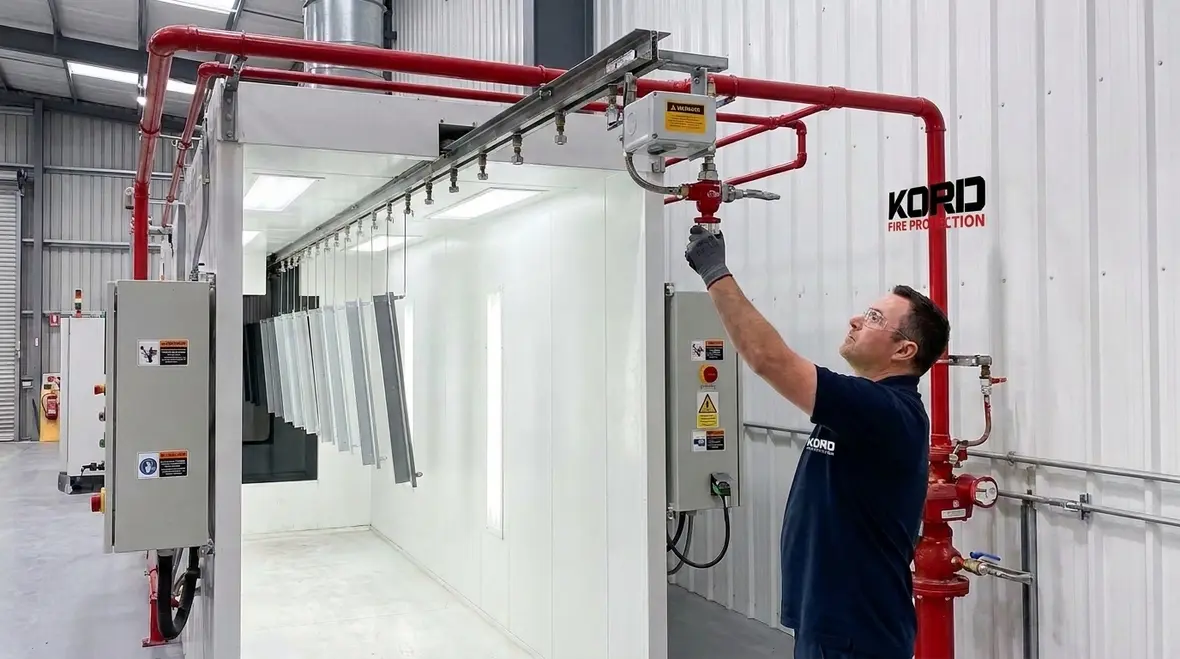
NFPA 33 Section 15.9: Fire Protection for Powder Coating Operations
Quick Answer: NFPA 33 Section 15.9 establishes fire protection expectations for powder coating facilities, focusing on hazard control, protected equipment, detection and suppression where required, and ongoing maintenance. The goal is to prevent ignition, limit fire spread, and keep systems reliable through routine inspection and testing.
For facilities building a stronger inspection routine around these requirements, it helps to review ITM fire protection inspection testing maintenance as a practical baseline for how ongoing verification supports system readiness.
Why NFPA 33 powder coating fire protection requirements matter in real operations
Powder coating lines combine combustible coatings, moving air, heated surfaces, electrical equipment, and frequent changeovers. NFPA 33 powder coating fire protection requirements address how facilities reduce ignition sources, protect high risk areas, and maintain fire safety systems so they work when needed. Compliance becomes practical at the operating level: housekeeping, airflow management, interlocks, and inspection routines that catch degradation before it becomes a failure.
In commercial and industrial facilities, the most common breakdown points are not “missing fire protection,” but “fire protection that is drifting out of compliance” due to poor maintenance, unverified system capacity, obstructed detection, or modifications to equipment without updating the hazard controls.
What Section 15.9 targets in powder coating fire protection
NFPA 33 Section 15.9 centers on providing fire protection for powder coating operations, with emphasis on managing ignition potential and ensuring protective systems remain functional. While facilities often focus on spray booths and ventilation, the real risk profile includes transfer mechanisms, blowoff or cleaning cycles, powder collection and recovery equipment, and areas where powder accumulates or becomes airborne.
From a compliance perspective, Section 15.9 is typically implemented through a combination of engineering controls and active protection, supported by documented inspection and maintenance. A robust program connects fire protection design intent to everyday production conditions, including start up, shutdown, cleaning, and changeover procedures.
Fire protection system expectations you should verify
1) Detection and automatic response readiness
Many powder coating facilities rely on detection and automatic suppression or interruption of operations when conditions indicate ignition risk. Compliance hinges on more than installation. Detection coverage must match the actual process layout, airflow patterns, and likely ignition scenarios. Obstructions, dust loading, and repositioning of equipment can reduce response effectiveness.
- Confirm detectors and initiating devices remain aligned with their design targets.
- Verify inspection criteria for sensitivity, contamination, and functional testing schedules.
- Ensure notification and operational shutdown sequences operate as documented during commissioning and after any equipment changes.
2) Protected equipment and hazard enclosure integrity
Fire protection does not stop at the booth. NFPA 33 risk often extends to powder recovery systems, ducting, filter housings, and equipment rooms. Section 15.9 expectations generally require protected configurations that prevent fire from propagating into areas where it can grow rapidly.
- Inspect ductwork integrity, seals, and supports for deterioration or air leakage.
- Check powder collector and filtration components for safe containment and correct installation.
- Confirm access doors, panels, and enclosures close and latch properly during operation.
3) Suppression design that matches the powder hazard
Powder coating suppression systems must be selected and maintained to address combustible dust and fire growth potential. A common failure point is “system exists but is not properly verified.” This includes pressure and agent availability checks, valve supervisory status, and ensuring no changes to the process have altered the protected geometry.
- Verify agent supply, pressure readings, and remaining capacity against service records.
- Confirm proper actuation path integrity, including device supervision and electrical continuity checks.
- Document commissioning results and ensure revalidation after modifications.
How facilities create compliance through inspection and maintenance
NFPA 33 requirements are not “install and forget.” The compliance lifecycle depends on a disciplined inspection and maintenance program that connects safety system performance to day to day production.
Routine operational controls that prevent ignition
Many ignition scenarios begin with routine maintenance gaps or operational deviations, such as restricted airflow, failed grounding, or ignition sources introduced during cleaning. The most effective programs standardize start up and shutdown checks that verify key risk controls.
- Confirm electrostatic grounding and bonding remain intact during maintenance cycles.
- Use cleaning procedures that control dust accumulation while preserving the integrity of safety components.
- Track airflow parameters so changes trigger investigation before they create unsafe conditions.
Inspection standards that catch common failure points
Commercial and industrial facilities often face schedule pressure, yet missed maintenance tasks are a leading driver of noncompliance findings. The inspection approach should emphasize both visible condition and functional verification.
- Look for dust buildup on detection devices and within enclosures that should remain clear.
- Verify wiring terminations, device housings, and tamper protections remain secure.
- Validate that suppression components have current service documentation and no deferred repairs.
Why revalidation after changes is essential
Powder coating areas evolve. New product lines, modified duct runs, upgraded collectors, and changed airflow setpoints can all shift the protected risk profile. Fire protection acceptance must follow these changes to maintain alignment with NFPA 33 powder coating fire protection requirements.
Facilities benefit from a formal change management workflow that triggers fire safety review and documentation updates whenever process or layout modifications occur.
Practical compliance support from Kord Fire Protection
NFPA 33 compliance requires ongoing verification that fire protection systems, inspections, and maintenance actions remain aligned with installed design intent and actual operations. Kord Fire Protection supports commercial facilities with testing, inspection documentation, and maintenance coordination designed to keep powder coating systems audit ready.
If you want a structured view of what effective inspection and service programs include, review Kord Fire Protection services and use the process as a baseline for your maintenance planning.
For many organizations, the highest value comes from reducing “surprise noncompliance” during authority having jurisdiction evaluations by maintaining consistent service records and ensuring functional readiness of protection equipment.
Frequently Asked Questions
Conclusion and call to action
NFPA 33 powder coating fire protection requirements are achievable when facilities treat Section 15.9 as a living compliance program, not a one time installation. Confirm detection coverage, protected equipment integrity, suppression readiness, and the inspection routines that prevent drift out of compliance. Schedule a service review with Kord Fire Protection to validate system performance, correct gaps, and maintain complete documentation for audits and ongoing operational safety.

Join Our Newsletter!
Get the latest fire safety tips delivered straight to your inbox From our Newsletter.



