
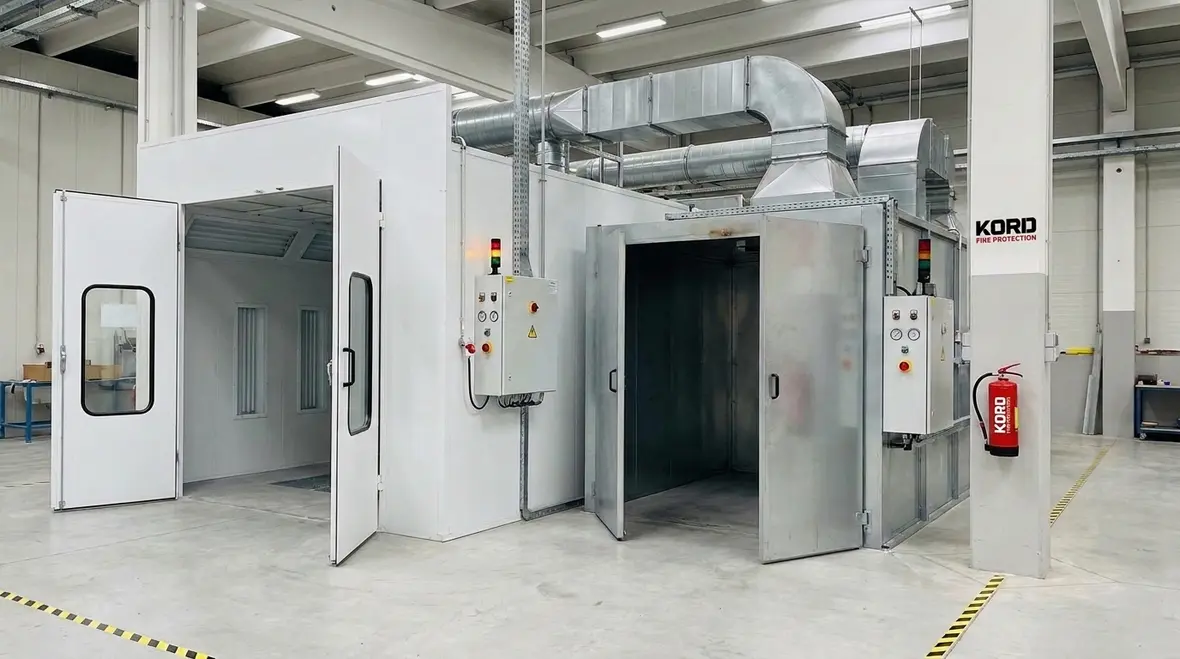
NFPA 33 Section 13.7: Spray Booths Adjacent to Drying, Curing, or Fusion Equipment
Quick Answer
NFPA 33 Section 13.7 addresses the fire and explosion hazards created when spray booths operate near drying, curing, or fusion equipment. Compliance focuses on ignition control, safe separation, ventilation and exhaust integrity, and reliable interlocks, so vapors do not reach an ignition source.
For facilities reviewing adjacent booth and heated-process risks, Kord Fire’s spray booth fire suppression guidance offers a useful companion resource before you get deep into Section 13.7 details.
What Section 13.7 is trying to prevent (and why it matters in real facilities)
NFPA 33 spray booth adjacent drying curing equipment configurations create a predictable risk pathway: flammable or combustible vapors produced during spraying can migrate outside the booth, accumulate in adjacent spaces, or enter air handling systems. If heated surfaces, open flames, hot air streams, ductwork components, or other ignition sources are located too close, the result can be flashback, sustained fire, or an explosion.
In practical commercial operations, this hazard is compounded by production realities. Operators may add flexible duct runs, adjust airflow to manage overspray, or perform routine maintenance that temporarily changes airflow patterns. These normal operational variations can undermine the assumptions behind booth ventilation design and the protective intent of interlocks and safe separation measures.
NFPA 33 spray booth adjacent drying curing equipment: key compliance challenges
When drying, curing, or fusion equipment is adjacent to a spray booth, facilities must manage both “how vapors travel” and “how ignition is controlled.” The compliance challenges often show up during inspections, commissioning, and maintenance cycles:
1) Vapor migration and pressure imbalances
Booth exhaust and makeup air systems create pressure differentials. If the drying or curing area operates with different pressure regimes, vapors can drift from the booth into the adjacent equipment area through gaps, shared walls, or duct penetrations. Even small leaks in ductwork joints, improper damper positions, or a failed fan can shift airflow enough to move vapor-laden air into an ignition-prone zone.
2) Ducting that defeats designed airflow
Airflows used for drying or curing may require ducts or recirculation systems. Improper duct routing, missing isolation dampers, or modifications that bypass safety devices can allow vapors to enter exhaust pathways that also serve heated equipment. The facility then loses the separation between “contaminated” and “ignition-ready” air streams.
3) Interlocks that fail during production changes
Many installations rely on interlocked operation, such as enabling heat only when exhaust airflow reaches a safe threshold. If interlocks are bypassed for troubleshooting, if airflow proving switches drift out of calibration, or if control logic does not match actual commissioning settings, the heating system can operate without proper vapor removal.
4) Ignition sources in adjacent equipment rooms
Dryers, cure ovens, infrared banks, gas fired units, and other fusion processes generate ignition potential via hot surfaces, burner components, electrical contacts, and reflected radiant heat. Section 13.7 requires facilities to ensure the adjacent arrangement does not allow vapors to encounter those ignition sources.
How facilities typically meet the intent of Section 13.7 (systems, not just distances)
Compliance is best achieved through a combined approach: engineered airflow control, ignition source management, and robust interlock and inspection practices. The goal is simple: keep vapor concentrations away from ignition energy and ensure that heating cannot occur when exhaust protection is not functioning.
Ventilation strategy and exhaust integrity
Facilities generally need:
Reliable booth exhaust performance that matches the spray operation and maintains safe vapor removal.
Controlled makeup air that supports correct airflow patterns without pushing vapors toward heated equipment.
Exhaust and duct maintenance to prevent leaks, buildup, or damage that changes airflow effectiveness.
Inspection personnel look for evidence that the systems were commissioned to the current equipment configuration and maintained after any modifications.
Interlocks and control sequencing
Interlocks should prevent ignition source operation unless the booth exhaust and any required airflow proving devices operate correctly. Strong practice includes:
Airflow proving devices that confirm real exhaust performance, not just fan power.
Fail-safe logic that stops heat generation on airflow faults, power interruptions, or abnormal conditions.
Sequence verification so operators cannot start heating before exhaust is proven.
Commercial facilities often discover that control logic has drifted from the original design after vendors or electricians make changes. Section 13.7 scenarios highlight why control panel documentation and periodic functional testing matter.
Location, separation, and construction details
Even when distances seem adequate, shared wall construction, penetrations, and ventilation cross connections can negate separation. A defensible compliance position includes:
Sealed penetrations for conduits, duct sleeves, and cable trays between the booth and drying or curing spaces.
Isolation of heating exhaust so that air paths do not become a transfer route for vapors.
Verification after renovations since tenant improvements and rack layout changes can create new leakage paths.
Common failure points discovered during inspections and maintenance
Section 13.7 compliance often breaks down not at installation, but during ongoing operations. Typical failure points include:
Dirty or obstructed airflow proving sensors leading to inaccurate airflow thresholds.
Damper mispositioning due to actuator replacement or maintenance oversight.
Flexible duct changes that alter airflow resistance and defeat design assumptions.
Control panel bypasses left in place after troubleshooting.
Damaged booth filters or exhaust media that change static pressure and airflow velocity.
These issues create an environment where heating can energize vapors. That is why Kord Fire Protection focuses on operational verification, documentation review, and repeatable test methods tied to commercial production realities.
Maintenance, documentation, and inspection readiness for commercial facilities
Commercial and industrial sites need a maintenance and inspection system that supports continuous compliance. A strong program includes:
Documented commissioning baselines for exhaust airflow setpoints, interlock thresholds, and control sequence behavior.
Periodic functional testing of interlocks tied to actual airflow performance, not assumptions.
Preventive maintenance on fans, dampers, sensors, actuators, and heating equipment controls.
Change control for modifications that can affect separation or airflow, including third-party repairs and vendor upgrades.
For facilities looking for broader guidance on fire protection planning and documentation workflows, Kord Fire Protection supports organizations with practical compliance services and ongoing verification. You can also explore Kord Fire’s fire sprinkler services and commercial fire alarm services for related compliance support.
Frequently Asked Questions
Plan the compliance test before you need it
NFPA 33 spray booth adjacent drying curing equipment arrangements fail most often due to drift in airflow performance, control sequencing, and duct or penetration integrity. Kord Fire Protection helps commercial sites verify interlocks, evaluate ventilation and separation realities, and document ongoing maintenance so your operation stays inspection-ready. Request a site-focused review to map the hazards, confirm system behavior, and close gaps before they become enforcement findings.

Join Our Newsletter!
Get the latest fire safety tips delivered straight to your inbox From our Newsletter.



