
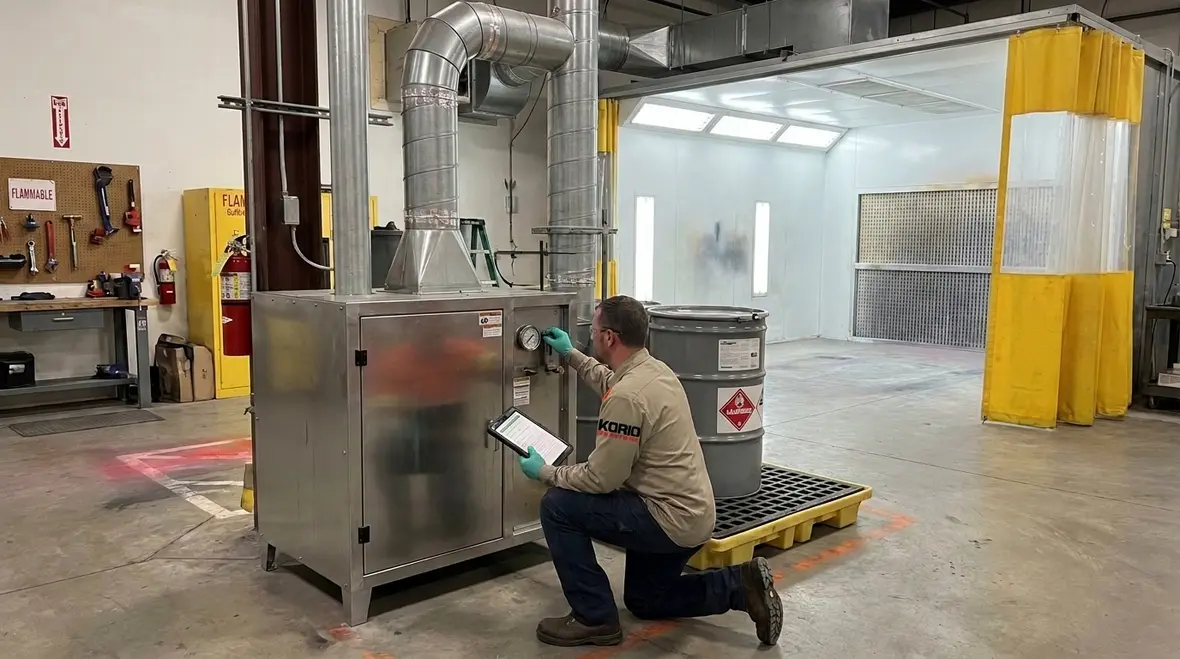
NFPA 33 Section 10.9: Solvent Distillation Units (Recyclers) in Spray Facilities
Quick Answer: NFPA 33 Section 10.9 establishes fire and explosion protection expectations for solvent distillation units used to recycle flammable solvents in spray operations. Compliance centers on ignition source control, safe ventilation practices, proper pressure and temperature management, and rigorous maintenance, testing, and operator procedures.
What NFPA 33 Section 10.9 requires for solvent distillation recycler use
Nobody wants to be surprised during an inspection, especially when solvent distillation recyclers support continuous spray production. NFPA 33 solvent distillation recycler requirements focus on preventing ignition of flammable vapors released during heating, transfer, venting, and recovery cycles. Section 10.9 also drives facilities to manage equipment condition, operating practices, and inspection frequency so the recycler remains safe throughout its service life.
This article focuses on practical, field-tested compliance themes: how recyclers interact with spray areas, what failure modes commonly occur, and how commercial facilities should document maintenance to demonstrate ongoing conformance.
Facilities reviewing this topic often also benefit from a broader look at spray booth fire suppression for safer paint operations, especially where ventilation, shutdown logic, and protection strategy need to work together.
When Section 10.9 applies in spray facility operations
Section 10.9 governs solvent distillation units (recyclers) used to recover solvents from spray processes. In a typical commercial or industrial setting, these units may process waste solvent from rinse tanks, filter systems, or spray equipment cleaning steps. The key operational point is that distillation creates hot surfaces, vapor generation, and potentially combustible atmospheres.
Common facility scenarios that trigger heightened scrutiny
Recyclers located near spray booths or dip tanks where vapor migration can reach ignition sources.
Maintenance activities such as filter changes, sludge removal, or line disconnection that can release vapors.
Variable solvent blends that change boiling behavior, vapor pressure, and condensation effectiveness.
Seasonal operation changes that affect ventilation performance and temperature control setpoints.
Core hazard controls: heat, vapors, and ignition source management
Solvent distillation recyclers separate usable solvent from contaminants using heat. That means the facility must treat the recycler as an ignition risk system, not a simple utility. Inspectors typically look for evidence that the design and operation reduce both ignition probability and vapor accumulation.
Vapor control and containment during distillation
Section 10.9 expectations align with the practical reality that solvent vapors can escape from vents, sample ports, pump seals, and connections during startups and shutdowns. Facilities should confirm that:
Closed transfer paths exist for loading and unloading recovered solvent.
Vent routing directs solvent laden air to approved handling methods instead of uncontrolled discharge near personnel or equipment.
Reactor vessel and connections maintain integrity under thermal cycling and pressure changes.
Temperature and pressure controls that prevent runaway conditions
Overheating increases vapor generation and can push the system outside safe operating envelopes. NFPA 33 solvent distillation recycler requirements typically expect reliable controls that manage temperature and limit pressure. In the field, compliance often hinges on proving that:
High temperature limits and interlocks function as intended.
Pressure relief and related components remain unobstructed and installed correctly.
Any alarm and shutdown logic receives periodic testing and documented verification.
Electrical classification and component condition
Because recyclers use heating elements, pumps, fans, and controls, the facility must address ignition sources from electrical and mechanical equipment. Inspectors commonly evaluate whether equipment matches the intended hazardous location classification and whether components remain properly maintained. Typical high risk findings include worn pump seals, deteriorated wiring insulation, damaged conduit seals, and nonconforming field modifications.
Ventilation and room integration: how spray facilities should think about airflow
Even when recyclers are designed with internal vapor management, the room and surrounding spray area matter. Solvent vapors can escape during abnormal conditions, during loading operations, or when condensers lose efficiency. For commercial, retail, and industrial spray facilities, ventilation performance becomes an extension of the fire safety system.
Key ventilation compliance themes inspectors look for
Interlocks between ventilation and recycler operation, when required by the facility hazard assessment and equipment design.
Airflow verification through routine checks that correlate with design intent.
Condensation effectiveness supported by maintenance records, filter changes, and verified coolant performance.
When airflow is inconsistent, combustible atmospheres can form near doors, floor drains, or service platforms. A practical compliance approach treats ventilation checks as a recurring program, not a one time install confirmation.
Inspection, maintenance, and documentation: the “proof of compliance” package
In real inspections, NFPA 33 compliance depends on what the facility can prove over time. Section 10.9 operational safety requires that recyclers remain in safe condition and that the facility performs preventive maintenance aligned with the manufacturer and the hazard profile of the spray operation.
Maintenance items that frequently fail during audits
Pump seals and gaskets leaking solvent into the enclosure or building space.
Condenser fouling that reduces vapor capture and increases vapor release.
Blocked or partially restricted vent paths that change the system’s pressure and release behavior.
Damaged thermal insulation that increases surface temperature exposure.
Improper filter change practices that introduce ignition risk from open solvent exposure.
Document control and operator readiness
Facilities should maintain a compliance file that includes the recycler manufacturer documentation, safety device inspection records, test results, and maintenance logs. Operators should also have clear procedures for safe startup, normal operating cycles, emergency shutdown, and maintenance isolation steps.
For ongoing commercial protection, Kord Fire Protection supports clients with risk based programs that align testing and documentation to real operating conditions. That includes helping facilities close common gaps found during plan reviews and inspections, such as incomplete maintenance evidence, missing interlock verification, and lack of documented ventilation performance.
Internal linking suggestion: To strengthen your compliance program, align recycler documentation with your broader spray area safety strategy. See Kord Fire Protection for commercial fire safety services that support inspection readiness and ongoing maintenance verification.
Compliance walkthrough: what to check before the inspector arrives
Use this practical checklist to reduce last minute scrambles. It works for industrial plants, commercial auto refinishing operations, and retail or light industrial spray spaces that rely on solvent recovery to manage cost and waste.
Operational readiness checks
Confirm operating limits match the recycler’s design documentation and align with the solvents used.
Verify interlocks and alarms function and records exist for recent testing.
Inspect seals and connections visually for leakage evidence, odor indicators, staining, or residue.
Engineering controls checks
Review vent routing to ensure it does not discharge into spray areas or escape points.
Check electrical equipment condition and confirm the components remain appropriately protected.
Inspect condenser cooling and filters for performance degradation.
Documentation checks
Preventive maintenance logs for filters, seals, relief components, and temperature or pressure controls.
Training records for operators and maintenance staff.
Ventilation verification records demonstrating adequate airflow during recycler operation.
When facilities invest in disciplined documentation, they reduce uncertainty and demonstrate that NFPA 33 solvent distillation recycler requirements remain addressed as conditions change.
Frequently Asked Questions
Call to Action: If your facility uses solvent distillation recyclers, Kord Fire Protection can help you strengthen NFPA 33 compliance readiness through inspection support, testing coordination, and maintenance documentation review. Contact Kord Fire Protection today to align recycler safety controls, ventilation integration, and your ongoing records program with your operating realities.

Join Our Newsletter!
Get the latest fire safety tips delivered straight to your inbox From our Newsletter.



