
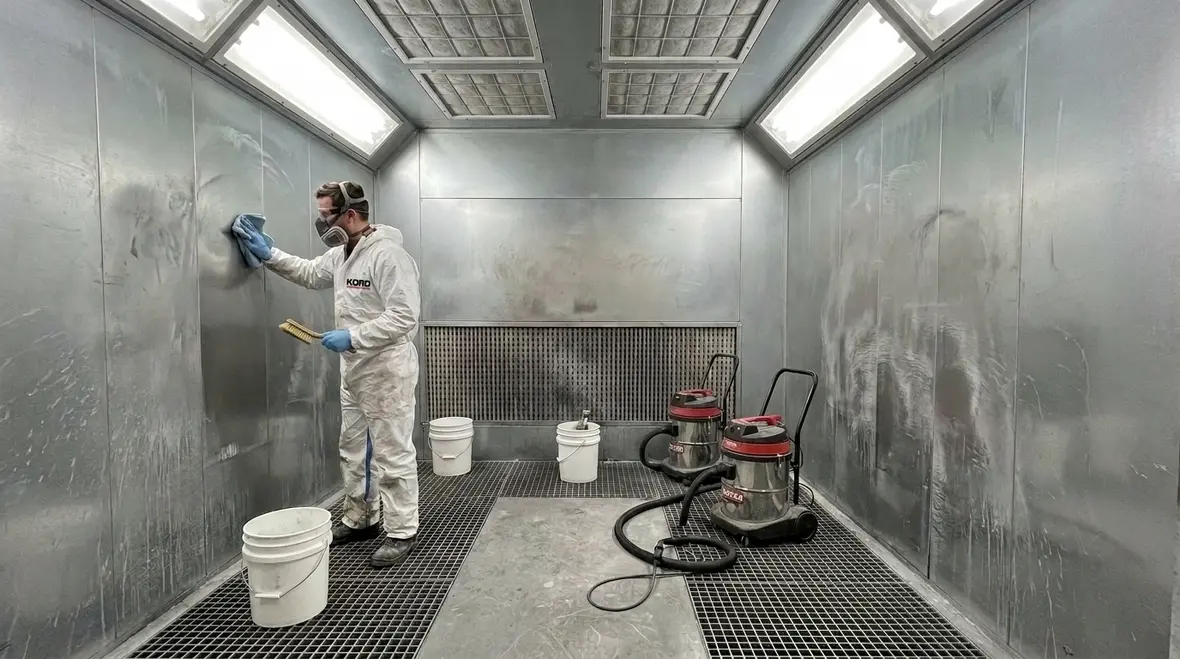
NFPA 33 Section 10.8: Cleaning Operations in and Around Spray Areas
Quick Answer: NFPA 33 Section 10.8 requires facilities to control ignition sources, prevent accumulation of flammable residues, and manage how cleaning is performed near spray areas. Effective compliance depends on written procedures, compatible cleaning agents, safe equipment use, and documented maintenance and inspections.
For facilities that need broader support tying these procedures into inspections, maintenance, and corrective work, fire protection services in Southern California can help connect day-to-day cleaning controls with a practical compliance program.
Why NFPA 33 cleaning operations spray area requirements matter in real facilities
In commercial and industrial environments, “cleaning” rarely happens in isolation. It follows spray operations, maintenance tasks, filter changes, and part handling. NFPA 33 treats cleaning as a potential ignition and process hazard because residues from flammable or combustible materials can remain on equipment, floors, ducts, walls, and ventilation systems. The practical risk is twofold: (1) ignition of airborne vapors or mists during cleaning and (2) re suspension or spreading of residues into locations where they can ignite later.
For safety managers, fire marshals, and compliance teams, NFPA 33 cleaning operations spray area requirements provide a framework to keep cleaning tasks controlled, repeatable, and verifiable.
What Section 10.8 expects from cleaning operations near spray areas
NFPA 33 Section 10.8 focuses on how cleaning actions are conducted in and around spray areas where flammable vapors, spray mist, and residues may be present. Compliance centers on four operational controls: cleaning agent selection, ignition source management, residue removal effectiveness, and protection of ventilation and electrical systems.
1) Control ignition sources during cleaning
Cleaning often introduces ignition hazards through tools, heating devices, static generating steps, and improper use of electrical equipment. Common operational failure points include portable vacuums without appropriate dust or vapor handling suitability, battery chargers used in the wrong zone, and “quick wipe” procedures that do not remove residue fully.
Organizations should require that cleaning methods avoid open flames, minimize hot work, and use equipment designed and maintained for the hazard environment. Where power tools or electrical devices are used, the facility should ensure they are appropriate for the classified environment and maintained to prevent sparking, arcing, or overheating.
2) Use compatible cleaning agents and application methods
Cleaning agents themselves can introduce risk if they are flammable or if they react with residues, causing higher volatility or increased flammability. Section 10.8 expectations align with practical chemical control: the cleaning product must be selected for compatibility with sprayed materials and it must be used as directed by the facility’s hazard communication and safety procedures.
Facility teams should also define how cleaning agents are applied, dwell times, and removal steps so that residue does not linger. A common gap is allowing “spot cleaning” to replace complete removal of overspray and film residue where it can later volatilize.
3) Remove residue effectively, not superficially
Residues accumulate on surfaces, in crevices, and around ventilation paths. Ineffective cleaning leaves fuel loads that can be released during later production cycles. Effective compliance requires cleaning that reaches both visible and hidden deposits, including equipment exteriors, transfer points, and areas adjacent to spray enclosures.
This includes clear standards for when the residue is considered “removed” and how personnel verify completion. Visual checks alone may not be enough for film residues that do not wipe off easily. A documented approach to cleaning verification supports audit readiness.
4) Maintain ventilation performance during and after cleaning
Spray areas rely on ventilation to control airborne concentration and direct vapors and mist away from ignition sources and personnel. Cleaning can disrupt airflow if dampers, filters, capture hoods, or ductwork are altered or left degraded. NFPA 33 Section 10.8 compliance depends on ensuring cleaning tasks do not defeat the protective ventilation strategy.
Maintenance and inspection schedules should confirm that filters are properly seated, duct penetrations remain sealed, and exhaust systems resume normal operation after cleaning. Where cleaning involves opening equipment, the procedure should specify restoration verification.
Operational procedures that reduce inspection findings
Facilities typically struggle with consistency. A written procedure that is too generic can lead to ad hoc practices and recurring findings. Effective NFPA 33 cleaning operations spray area requirements are implemented through controlled workflows that include roles, sequencing, and verification.
Written cleaning procedure elements
- Scope: Define what is included in and around spray areas, including floors, drains, booth interior surfaces, duct interfaces, and adjacent walls.
- Method: State approved methods such as wiping, vacuuming, and wet cleaning, and identify disallowed methods that increase vapor or ignition risk.
- Agent control: Identify approved cleaning agents and prohibit substitution without safety review.
- Frequency and triggers: Set routine schedules and additional cleaning requirements after changes in coating formulations, spill events, or production shut down.
- Verification: Include acceptance criteria for residue removal and ventilation restoration after cleaning.
- Waste handling: Specify how waste is collected, labeled, stored, and disposed of to avoid secondary hazards.
Common failure points auditors look for
- Cleaning that is performed “between batches” without stopping or controlling ventilation conditions.
- Improper use of shop tools, such as non approved vacuums, damaged extension cords, or electrical devices not suitable for the area.
- Absence of documented verification that residue is removed from hidden areas near spray equipment.
- Incomplete restoration of exhaust components after cleaning access work.
- Inconsistent training where new staff follow prior habits rather than facility procedures.
Inspection and documentation: how compliance stays defensible
Even when teams “follow the rules,” NFPA 33 compliance needs proof. Inspections should cover cleaning practices, equipment condition, and the functional state of protective systems.
Cleaning-related inspection checklist targets
- Housekeeping condition: Evidence of residue buildup in corners, ledges, under equipment, and along ventilation pathways.
- Ventilation status: Proper operation of exhaust fans, capture devices, and filter housing condition after cleaning.
- Electrical and equipment condition: Cord condition, grounding where applicable, and suitability of tools used for cleaning.
- Waste containers: Correct closure, proper labeling, and safe placement away from ignition sources.
- Chemical storage and use: Approved containers, spill control supplies, and controlled access to cleaning agents.
Why documented maintenance matters
Cleaning operations often intersect with maintenance workflows such as filter replacement, duct inspections, and booth component servicing. If maintenance schedules do not align with cleaning needs, residues can accumulate, and ventilation performance can drift. A disciplined maintenance program helps ensure that cleaning and protection systems work together.
Kord Fire Protection supports commercial facilities with ongoing compliance services that connect operational practices to inspection outcomes, helping teams maintain defensibility during internal audits and authority having jurisdiction reviews.
Equipment and training considerations for cleaning tasks
Cleaning operations are only as safe as the equipment and the workforce controls behind them. Facilities should treat cleaning tools and methods as safety critical items within the spray area control strategy.
Equipment selection and suitability
When cleaning methods rely on vacuuming, compressed air, or power tools, selection becomes a compliance issue. Tools must be maintained to prevent damaged housings, motor failures, or worn components that can generate ignition sources. Where applicable, cleaning equipment should be selected to manage residue types and to avoid aerosolizing flammable material.
For wet cleaning, the procedure should define how to prevent pooled residues and how to manage runoff in a way that does not transport flammable material to uncontrolled areas.
Training that reflects day-to-day reality
Training should cover the “why” behind each control, not just the “how.” Personnel need to understand what hazards drive the procedure: flammable vapors, residue film volatility, and ignition source pathways. Training should also include how to recognize incomplete cleaning and how to respond when ventilation or equipment is impaired during a task.
Integration with broader fire safety systems
Section 10.8 cleaning requirements work alongside spray area fire protection controls such as explosion prevention concepts, detection and suppression strategies, and ventilation management. For facilities, the most effective approach is integration: ensure the cleaning procedure does not undermine other protection systems.
For additional context on keeping spray operations controlled, facilities can also review NFPA 33 Section 1.2 fire and explosion prevention in spray operations. If the facility needs cross reference support for broader spray area controls, Kord Fire Protection can help align operational procedures with the full compliance picture.
Frequently Asked Questions
Conclusion and call to action
NFPA 33 Section 10.8 requires cleaning in and around spray areas to be controlled, consistent, and verifiable. Facilities that standardize cleaning agents, ignition source controls, residue removal verification, and ventilation restoration typically reduce repeat findings. Kord Fire Protection can help commercial teams assess cleaning workflows, align inspection documentation, and maintain protective systems so compliance remains defensible. Contact Kord Fire Protection to schedule a compliance and maintenance review tailored to your spray operations.

Join Our Newsletter!
Get the latest fire safety tips delivered straight to your inbox From our Newsletter.



