
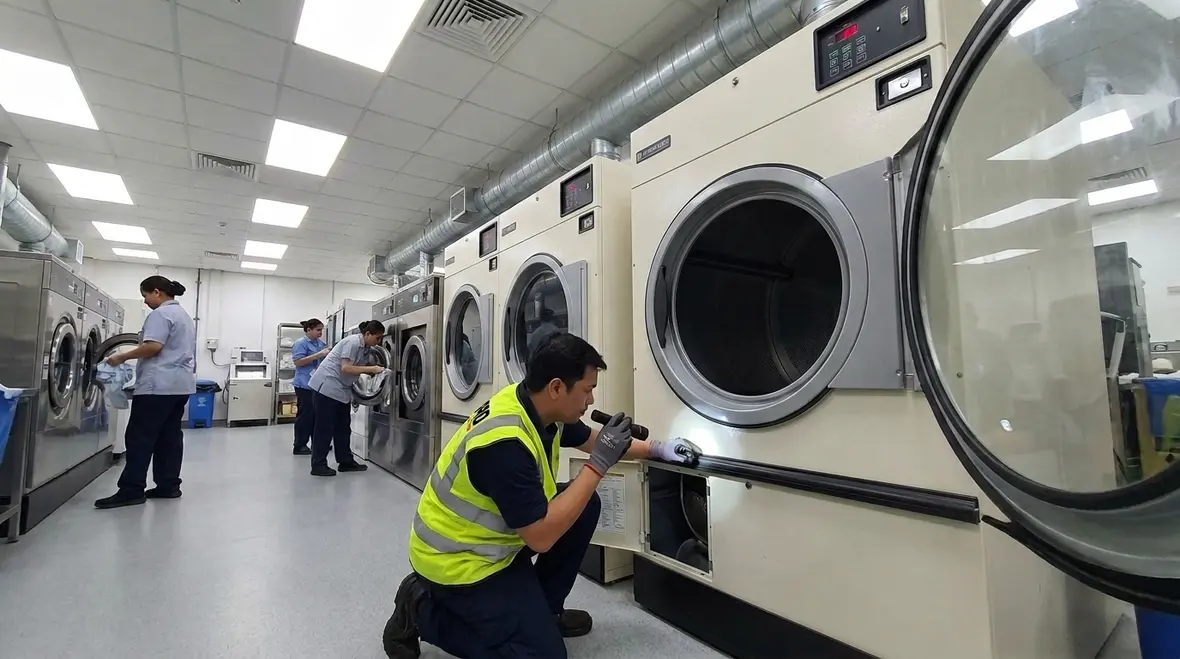
NFPA 32 Section 10.2: Prohibited Activities for Laundry and Wetcleaning Equipment
Quick Answer
NFPA 32 Section 10.2 identifies specific actions and operating practices that laundry and wetcleaning facilities must not perform because they increase fire risk. Compliance requires controlling ignition sources, maintaining safe operating conditions, and ensuring equipment and connections meet the standard at all times.
For facilities that also need broader inspection and maintenance support, fire protection services in Southern California can help tie code requirements to practical field service and compliance workflows.
What does NFPA 32 Section 10.2 require for laundry and wetcleaning?
NFPA 32 supports fire-safe operation of commercial laundry, cleaning, and related equipment by limiting behaviors that commonly lead to ignition, rapid fire spread, or unsafe exposure of equipment components. Within NFPA 32 laundry wetcleaning prohibited activities, Section 10.2 focuses on preventing unsafe operating modes, improper use of equipment, and conditions that compromise protective features.
For commercial, industrial, and retail facilities, the practical challenge is not only understanding what is prohibited, but also verifying that field conditions, operator practices, and maintenance activities remain aligned with the intent of Section 10.2 between inspections. Kord Fire Protection helps facilities sustain compliance through inspections, deficiency tracking, and recurring service support.
Why NFPA 32 Section 10.2 exists: the ignition and propagation problem
Many prohibited activities in laundry and wetcleaning operations connect to predictable failure points:
- Ignition control failures caused by improper handling of heated surfaces, electrical components, ventilation equipment, or hot work in operational areas.
- Chemical and residue hazards from detergents, solvents, and oils that can accumulate in pockets, drains, lint traps, and ducting.
- Ventilation breakdown when equipment runs without the intended airflow pattern, when ductwork is obstructed, or when exhaust control functions degrade.
- Interlocks bypassed through incorrect service procedures or unauthorized modifications that remove protective safeguards.
- Unsafe operating transitions where equipment starts, stops, or changes temperature ranges without required sequencing, increasing the chance of ignition during transient conditions.
Section 10.2 acts as a guardrail. It does not simply address hardware. It also targets behaviors that allow unsafe conditions to persist or reappear after servicing, during shift changes, or after operational shortcuts.
NFPA 32 laundry wetcleaning prohibited activities you must control operationally
Facilities typically run into Section 10.2 issues in five categories. These are the areas where operators, maintenance teams, and supervisors most often need training and tighter management controls.
1) Prohibited operation outside required safe conditions
NFPA 32 laundry wetcleaning prohibited activities generally require that equipment operate within the manufacturer and code defined safe envelope. Prohibited operation commonly includes running with known impairments such as ineffective ventilation, abnormal airflow, damaged ducting, or malfunctioning control components that affect temperature, drying cycles, or vapor management.
- Operators must not continue operation when exhaust airflow or control responses do not match normal conditions.
- Supervisors must not allow “temporary” operation with inoperative protective functions to become a routine practice.
2) Prohibited bypassing, disabling, or overriding safeguards
Service practices that disable interlocks, safety shutoffs, temperature limits, or control logic can create conditions NFPA 32 intends to eliminate. Even when equipment appears to run, the protective chain may be broken during the exact mode when ignition risk peaks.
- Maintenance must restore protective functions as part of any repair, not after a later inspection.
- Facilities must implement a work order process that documents restoration and verification.
3) Prohibited ignition source exposure in laundry and wetcleaning work areas
Where heat, sparks, or open flames can reach areas containing lint, vapors, or residual chemicals, prohibited activity controls become critical. Examples include hot work without the required safeguards and operating equipment in ways that create uncontrolled hot surface exposure.
Commercial facilities often overlook how quickly lint and residue accumulate in less visible regions, such as under equipment bases, behind access panels, and at hose or drain connections.
4) Prohibited use of equipment with contaminated or degraded components
Accumulated residues and deterioration in critical components create ignition pathways and block airflow. Section 10.2 centered prohibited activities frequently tie to continued operation with:
- Obstructed drains, screens, and lint traps
- Residue laden duct interiors
- Worn seals or connections that leak vapors into the room environment
Once residues build, they change thermal response and airflow effectiveness. The risk increases during high heat or drying transitions.
5) Prohibited maintenance shortcuts and undocumented field modifications
Facilities can fall out of compliance when contractors perform repairs or upgrades without proper review of code intent. NFPA 32 laundry wetcleaning prohibited activities are difficult to manage when:
- Controls are replaced with non equivalent components
- Ductwork alterations reduce effective exhaust performance
- Temporary fixtures remain installed beyond the repair window
A disciplined change management process helps prevent prohibited outcomes. Kord Fire Protection supports commercial compliance programs by helping facilities verify conditions after service and by identifying recurring risk patterns during inspections.
How to verify compliance in the real world: inspection and maintenance checks
Even with strong training, facilities must verify that protective systems remain functional and that prohibited activities do not return after maintenance or turnover. A practical compliance approach includes documented checks tied to operational risk.
Operator controls and shift handoff
- Use a pre run checklist that confirms ventilation status, exhaust pathway condition, and normal equipment response.
- Require a “stop work” trigger when protective functions do not behave as expected.
- Train staff on what qualifies as unsafe operation, not just how to start or stop equipment.
Maintenance verification and residue management
Maintenance should include inspections of airflow path components and residue prone areas. Priority items typically include lint trap assemblies, drain lines, duct entrances, access panel seals, and control sensing points.
- Confirm cleaning schedules match the facility’s actual soil load and detergents used.
- After service, verify that all safety controls and interlocks resume normal function.
- Track recurring deficiencies by equipment room, unit model, and contractor work type.
Documentation and audit readiness
Auditors and authority having jurisdiction assessments often focus on consistency. Facilities strengthen defensibility by keeping records of maintenance, repairs, abnormal condition reports, and corrective actions tied to prohibited activity prevention.
If you also manage broader code compliance and life safety systems, you can align your documentation to a single internal standard. For additional guidance on building and fire protection compliance support, see Kord Fire Protection.
Common failure points that trigger NFPA 32 Section 10.2 issues
Most violations are not intentional. They occur when facilities accept drift between planned safe operation and day to day reality. The most common patterns include:
- Ventilation degradation due to duct obstructions, failed exhaust controls, or disconnected flexible connections.
- Operator override behavior where staff continue cycles despite alarms because restarting “usually works.”
- Delayed corrective maintenance where safety impairments are deferred beyond the repair window.
- Incomplete post service verification where contractors replace components but do not verify interlock function, temperature limits, or airflow response.
- Residue buildup after procedural changes such as switching detergents, adjusting load levels, or changing batch scheduling.
Kord Fire Protection helps facilities reduce these failure points by supporting recurring inspection cadence and maintaining an actionable corrective action pipeline that keeps high risk conditions from repeating.
How to build an NFPA 32 laundry wetcleaning prohibited activities program that works
A functional program translates Section 10.2 intent into daily behaviors and verifiable maintenance practices. Facilities can implement a structure that includes:
- Define prohibited activity scenarios in facility language so operators and supervisors recognize unsafe conditions quickly.
- Standardize pre run checks for ventilation status, exhaust pathways, and control response indicators.
- Control modifications through a work order and approval process that prevents unsafe bypassing of protections.
- Use documented cleaning and inspection criteria focused on residue accumulation and airflow path effectiveness.
- Verify after every repair that safeguards function as intended, not just that the unit powers up.
For facilities that need ongoing support, Kord Fire Protection works as a compliance partner that bridges the gap between code requirements and operational consistency.
Frequently Asked Questions
Next step: confirm your laundry and wetcleaning operations prevent prohibited activities
Facilities should not rely on “routine operation” to stay compliant with NFPA 32 Section 10.2. Review your operating procedures, verify ventilation and protective controls after every service event, and tighten work order documentation to prevent bypasses or unsafe shortcuts. Contact Kord Fire Protection to strengthen your inspection cadence, correct recurring risk patterns, and maintain defensible compliance readiness.

Join Our Newsletter!
Get the latest fire safety tips delivered straight to your inbox From our Newsletter.



