
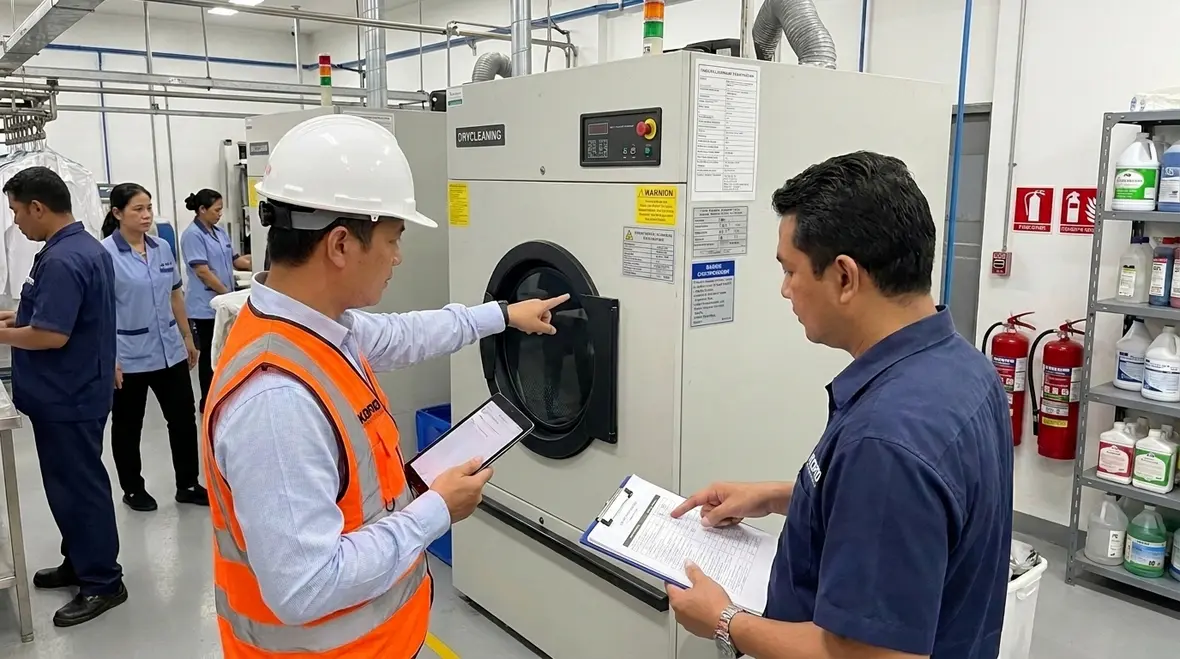
NFPA 32 Section 3.2: Official NFPA Definitions Used in the Drycleaning Code
Quick Answer: NFPA 32 Section 3.2 consolidates the official definitions that govern how drycleaning equipment, processes, and safety concepts are interpreted. This article explains the definitions most often involved in plan review, inspection readiness, and day to day compliance, and offers an NFPA 32 official definitions cross-reference approach.
For teams tightening documentation before an inspection, it helps to pair this definitions cross-reference approach with broader fire protection services built around your building so records, testing, and corrective work do not end up living in separate worlds and pretending they have never met.
Why Section 3.2 matters for compliance, inspections, and design
NFPA 32 Section 3.2 sets the vocabulary the entire Drycleaning Code relies on. When a facility’s operations or documentation use terms incorrectly, the misinterpretation can cascade into noncompliant assumptions about equipment classification, solvent handling, ventilation performance expectations, fire protection system intent, and inspection scope.
Commercial, industrial, and retail occupancies that use drycleaning processes frequently face the same issue during inspections: definitions in Section 3.2 are applied literally. This creates practical compliance challenges for operators, maintenance teams, and contractors who must verify that installed components, operating procedures, and recordkeeping align with the code definitions. In this context, an NFPA 32 official definitions cross-reference supports faster review cycles and reduces avoidable corrective actions.
How to build an NFPA 32 official definitions cross-reference system
An effective cross reference system ties code language to how the facility actually operates. The goal is not to copy definitions into every binder, but to map definitions to the controlling documents that inspectors request: equipment listings, maintenance records, operating procedures, training logs, impairment reports, and inspection checklists.
Step 1: Create a “definition to document” matrix
For each term defined in Section 3.2, identify where evidence will live. For example:
- Operational evidence: standard operating procedures, emergency instructions, and daily/weekly shift checks.
- Maintenance evidence: preventive maintenance plans, service tickets, calibration records, and filter change history.
- Installed evidence: equipment nameplates, rated specifications, interlock descriptions, and component replacement documentation.
- Training evidence: documented staff competency and refresher training that references the code intent behind the defined terms.
Step 2: Use the matrix during pre inspection readiness reviews
Before an Authority Having Jurisdiction (AHJ) visit, maintenance and operations teams should conduct a definition based walkthrough. They should validate that the exact system configuration matches the defined term used in the code and in the facility’s own written procedures. This prevents common failure points such as missing signage, bypassed safeguards, incorrect solvent container handling methods, or ventilation practices that do not align with how the code defines process boundaries.
Section 3.2 definitions in practice: Where misinterpretation causes failures
Most compliance problems do not stem from a complete lack of safety equipment. Instead, they stem from applying the wrong definition to a system condition or component. The result can be a mismatch between what inspectors believe is installed or operating and what the facility reports.
Common operational gaps linked to defined terms
- Ventilation and airflow assumptions: Facilities often treat “general” airflow changes as equivalent to defined ventilation requirements. Inspectors typically evaluate whether the installed configuration and operating method reflect the definition exactly.
- Solvent handling boundaries: Mislabeling or describing solvent storage, transfer, or recovery activities in a way that does not match Section 3.2 definitions can lead to an incorrect hazard classification during review.
- Equipment status and safeguards: If safeguards are called “out of service” without consistent definition use, it complicates impairment controls, signage, and inspection scope.
- Maintenance language drift: Records sometimes describe work using informal terms. If those terms do not map to the code definitions, record quality declines during follow up inspections.
Common equipment and mechanism failure points
In drycleaning systems, defined terms usually connect to measurable performance and physical configuration. Typical failure points include:
- Dryness and containment issues: Leaks and residual vapor hazards may occur when solvent related components are not maintained per the intent behind the defined equipment conditions.
- Interlocks and control logic: Controls that fail to enforce shutdown sequences can conflict with what the code expects for the defined operational mode.
- Filters, ducting, and dampers: Degraded airflow capability can produce conditions that do not match the defined ventilation basis assumed during design.
- Fire protection readiness: Fire protection components require proper inspection, testing, and readiness. When defined terms are used inconsistently, commissioning and periodic verification documentation often remains incomplete.
Inspection readiness: Turning Section 3.2 language into audit proof
Inspectors typically evaluate whether a facility can demonstrate consistent understanding and implementation of defined terms. This is especially important for commercial and multi tenant spaces where responsibilities shift between building management, tenants, and contractors.
What inspectors expect to see
- Clear labeling and operating boundaries: Signs and diagrams that reflect how defined processes and equipment operate in normal and abnormal conditions.
- Documented impairment controls: Procedures that define how systems are taken out of service and how safety risks are managed during maintenance.
- Maintenance alignment with definitions: Service checklists and technician notes that use consistent terminology and reference the correct system component or mode.
- Verification records: Evidence that recurring checks and tests were performed and that corrective actions were tracked to closure.
How Kord Fire Protection supports definition based compliance
Kord Fire Protection helps commercial facilities maintain code aligned documentation and readiness practices. The service approach focuses on consistent verification, practical testing coordination, and maintenance support that reduces definition driven gaps during inspections. For facilities that want a defensible cross reference between code terms, installed equipment, and maintenance records, this ongoing partnership can streamline audits and shorten corrective action timelines.
For related guidance on fire protection service planning and inspection support, see Fire Safety System Documentation for Compliance for a practical look at how records end up speaking louder than the alarms themselves.
Implementation checklist: Using the cross reference during day to day operations
Use this checklist to operationalize the NFPA 32 official definitions cross-reference approach. The goal is to make correct terminology and safe operation repeatable across shifts and contractors.
- Assign ownership: Designate a responsible person for definition mapping, record control, and periodic verification.
- Train to terminology: Train operators and technicians on how defined terms apply to the facility’s specific equipment and workflow.
- Audit the SOP set: Confirm that written procedures use the defined terms consistently and match the installed configuration.
- Update after changes: When equipment or controls are replaced, update the cross reference matrix and supporting documents immediately.
- Run impairment reviews: Before taking related equipment out of service, follow defined impairment language and document it for traceability.
- Validate fire protection readiness: Ensure inspection, testing, and maintenance records remain complete and current for all applicable fire protection components.
Frequently Asked Questions
Call to action
Facilities that operate drycleaning processes should treat NFPA 32 Section 3.2 definitions as operational controls, not reference text. Build or refresh an NFPA 32 official definitions cross-reference matrix, align SOP language with installed systems, and validate fire protection readiness with documented verification. Contact Kord Fire Protection to support ongoing inspection readiness, testing coordination, and maintenance practices that stand up to AHJ scrutiny and reduce downtime.

Join Our Newsletter!
Get the latest fire safety tips delivered straight to your inbox From our Newsletter.



