
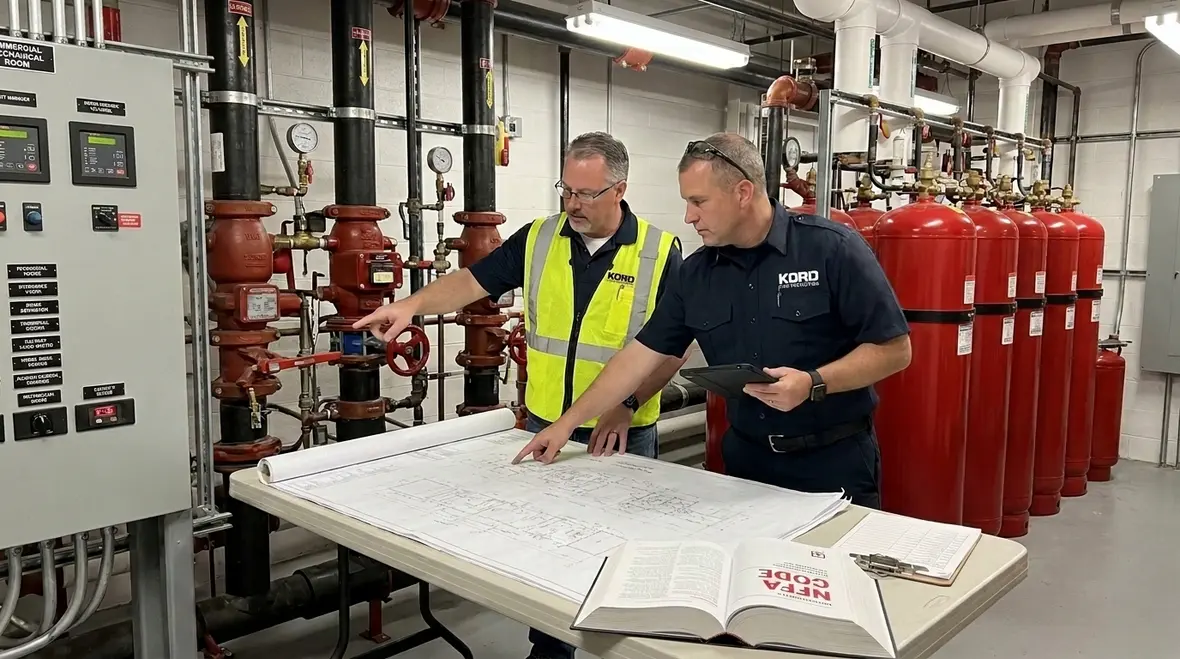
NFPA 32 Section 3.1: Rules for Interpreting Code Definitions
Quick Answer: NFPA 32 Section 3.1 explains how to interpret defined terms consistently across the code. It helps facilities apply requirements correctly by clarifying scope, meaning, and usage of key definitions during design, installation, inspection, and maintenance. Correct interpretation prevents costly compliance errors.
If your facility also needs a stronger inspection framework around water-based protection systems, it helps to review NFPA 25 fire pump testing requirements early in the compliance process so terminology, testing, and documentation stay aligned from the start.
Why NFPA 32 definitions interpretation rules matter in real facilities
Commercial, industrial, and retail fire and life safety teams often treat “definitions” as administrative language. NFPA 32 definitions interpretation rules should be treated differently because they control how every downstream requirement is applied. When a facility misreads a defined term, it can install the wrong system configuration, fail to inspect the correct components, or document compliance improperly during audits.
Section 3.1 functions as a technical interpretive bridge. It tells authorities having jurisdiction and inspectors how to treat the code’s defined words in context, reducing ambiguity when procedures, testing, and installation details are evaluated.
What Section 3.1 is trying to prevent
In practice, most code disputes do not come from the engineering concepts. They come from misapplied terminology. Section 3.1 aims to prevent:
- Scope drift, where a requirement intended for one category of system gets applied to a different one.
- Inspection mismatch, where field teams test the wrong components because the defined term was interpreted narrowly or broadly.
- Documentation gaps, where the maintenance log references an undefined or incorrectly interpreted classification.
- Design condition errors, where the system is built to satisfy a definition that does not actually match the installed configuration.
Facility teams reduce these risks when they train contractors and maintenance providers to interpret definitions the same way the code expects, especially at turnover, retrofit, and after major repair events.
How NFPA 32 definitions interpretation rules typically get applied on site
Although Section 3.1 is concise, its practical value shows up in daily compliance work. The interpretive approach influences how the facility “labels” equipment and processes, which then drives the applicable installation, protection, and inspection steps.
1) Treat defined terms as technical categories, not everyday wording
Defined terms act like classification keys. Field staff should not substitute similar everyday phrases. For example, if a system is described in documents with casual terminology, the compliance team should verify that the term matches the definition used in NFPA 32 before concluding which sections apply.
2) Verify definition boundaries during design review and change control
Commercial facilities rarely install once and forget. Kitchen upgrades, lab reconfigurations, storage changes, and tenant improvements modify piping layouts, equipment placement, and operating modes. Before work begins, teams should confirm that the modified system still fits the original defined classification or that it needs recategorization under the definitions interpretation rules.
3) Align operating conditions to the code’s defined intent
Definitions can carry implicit intent about how equipment is used, not just what it physically is. Maintenance staff should cross check operating conditions and control settings to ensure they remain within the defined scope used for compliance.
4) Keep inspection criteria tied to what the definition includes and excludes
One of the most common failure points is partial inspection. A technician may check accessible components but miss elements that the defined term explicitly includes, or they may perform extra work on components that the definition excludes. Consistent interpretation prevents both under testing and unnecessary disturbance of equipment.
Common compliance challenges tied to definition interpretation
Even well-managed sites experience definition related errors during audits because the cause often originates earlier than the findings. These issues tend to repeat across multi site portfolios.
When facility teams rely on outdated installation documentation
Older drawings, vendor sheets, or contractor handoffs sometimes use terminology that does not match the code definitions. If the site has never validated the terms during subsequent maintenance, inspectors may treat it as a mismatch in classification. The corrective action typically requires field verification and updated documentation, which disrupts operations.
When retrofit work changes system classification
Tenant improvements and equipment swaps can quietly change how the system functions. If the defined categories in NFPA 32 are sensitive to arrangement, interface, or operating mode, a retrofit can move the installation into a different interpretation path. Section 3.1 matters here because it governs how defined words get interpreted consistently after changes.
When maintenance crews use “shortcut” terminology
Maintenance contractors sometimes use internal labels to speed up reporting. Those labels can differ from NFPA 32 definitions, which complicates audit traceability. A compliance program should standardize term mapping between site asset management and the code defined language.
Practical procedures for staying compliant with definitions
A reliable compliance workflow treats code definitions as part of the asset management system. The goal is to ensure that every inspection, testing step, and maintenance record is tied to the correct defined category.
Step 1: Create a definition to asset mapping for field use
Maintain a controlled table that maps each NFPA 32 defined term used in your design basis to the corresponding asset identifiers in your facility management system. Ensure field teams can reference it during inspections and service visits without guesswork.
Step 2: Add interpretation checks to change management
When work orders involve piping, gas sources, control components, ventilation interfaces, or system modifications, require a pre job verification that the defined classification has not changed. This prevents the most expensive type of correction: rework after failed inspection.
Step 3: Standardize inspection documentation language
Maintenance logs and inspection forms should reference the defined terminology consistently. If multiple vendors serve different tenants, standardization avoids interpretation drift between crews.
Step 4: Use a verification partner for periodic audits
Some sites benefit from periodic third party reviews to validate that field practices still match the defined interpretations. Kord Fire Protection supports commercial facilities with ongoing compliance services, testing, and maintenance planning, helping teams reduce ambiguity during inspections and audits.
For additional background on inspection planning and readiness, see commercial fire pump service, testing, and repair support for facilities managing ongoing fire protection responsibilities.
Frequently Asked Questions
Get definitions interpretation right before it becomes a finding
NFPA 32 Section 3.1 rules for interpreting code definitions reduce ambiguity, but only if your facility operationalizes them through change control, standardized documentation, and inspection readiness. Kord Fire Protection can support commercial facilities with compliance focused testing, maintenance planning, and verification that equipment classification stays aligned with the code definitions across tenants and retrofit cycles. Contact Kord Fire Protection to schedule a definitions and compliance readiness review for your facility assets.

Join Our Newsletter!
Get the latest fire safety tips delivered straight to your inbox From our Newsletter.



