
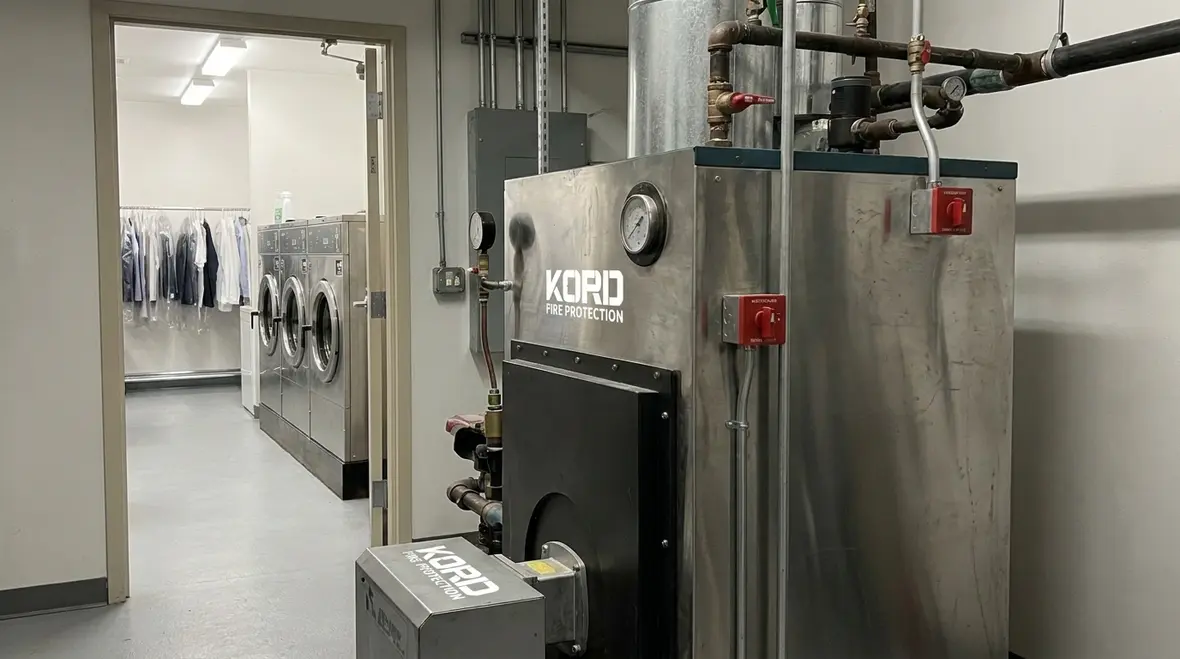
NFPA 32 Section 4.5 Boilers: Requirements for Boilers in Drycleaning Facilities
Quick Answer
NFPA 32 Section 4.5 establishes fire and safety expectations for boilers serving drycleaning operations, focusing on safe installation, protection of ignition sources, and reliable operation. Compliance depends on correct fuel handling, ventilation, proximity controls, inspection practices, and maintaining boiler integrity over time.
Why NFPA 32 boiler requirements matter in drycleaning
Drycleaning facilities use flammable and combustible materials that can significantly elevate fire risk compared with typical commercial occupancies. Boilers introduce high temperature surfaces, potential ignition sources, and ancillary systems such as draft fans, burners, controls, and piping. For this reason, NFPA 32 boiler requirements drycleaning facilities must be treated as a systems compliance program, not a one time equipment install.
In practice, compliance problems often appear during changeovers and maintenance cycles. Facilities may replace burners, adjust controls, or route piping differently, unintentionally moving ignition sources closer to hazardous areas or degrading protective features. Kord Fire Protection commonly supports commercial owners and facility managers with inspection readiness, impairment tracking, and documentation workflows so NFPA 32 expectations remain met between service visits.
For a related look at how documentation and readiness support safer ongoing operations, review Fire Suppression Impairment: Owner Guide and Readiness.
What Section 4.5 typically covers for boilers serving drycleaning
NFPA 32 Section 4.5 addresses boiler related safeguards needed where the boiler forms part of a facility that may contain flammable vapors, residues, and drying related hazards. While exact language and applicability depend on the facility and boiler configuration, the section’s intent consistently aligns with four operational outcomes:
Boilers operate with controlled ignition sources and reliable combustion safety features.
Boiler installations limit exposure of hazardous areas to hot surfaces, smoke, sparks, or flame impingement.
Mechanical and electrical components remain maintained and continuously capable of performing their safety functions.
Owners and contractors demonstrate compliance through inspection, testing, and documentation practices.
Because drycleaning facilities frequently involve ventilation systems, solvent handling zones, and ducting that can interact with combustion air and exhaust, Section 4.5 enforcement often extends beyond the boiler room door. The compliance focus includes how air movement, exhaust routing, and building openings relate to boiler operation and any potential leakage of hazardous vapors.
Installation controls that reduce ignition risk
1) Location, clearances, and exposure management
Boilers must be arranged so normal operation does not create ignition conditions in areas where flammable vapors could accumulate. Inspectors typically look for correct placement relative to hazardous storage, solvent vapors, and drying exhaust paths. Key failure modes include blocked or undersized ventilation openings, improvised barriers, and changes in room use that shift hazard locations over time.
2) Venting, draft, and exhaust performance
Combustion products must discharge safely without backflow or leakage into occupied or hazardous zones. Draft related issues can occur when vent paths are altered, insulation degrades, or condensate management fails. Backpuffing, flame instability, or smoke seepage often indicate an exhaust or draft problem that can create a direct ignition pathway. Maintained vent integrity and correct combustion air delivery support stable burner operation.
3) Hot surfaces, flame safeguards, and stack related hazards
Boiler surfaces and any related components such as stacks, breeching, and refractory areas require controls appropriate for the presence of flammable vapors. If the facility has experienced a burner adjustment or nozzle replacement, hot surface temperatures can change. Compliance typically expects that safety devices remain functioning and that any impairment controls are documented during servicing.
Operational requirements: keeping the boiler safe between inspections
Combustion safety controls and interlocks
Boiler burners depend on safety controls that prevent unsafe ignition and combustion conditions. In drycleaning facilities, safety interlocks matter because a control failure can trigger an unsafe state during periods when solvent vapors and drying aerosols are present. Common operational breakdowns include:
Bypassed or improperly adjusted limit controls during troubleshooting.
Failed flame detection that can lead to repeated ignition attempts.
Damaged wiring, connectors, or control modules that degrade reliability.
Combustion air and ventilation management
Boiler room ventilation affects draft stability and safe combustion. Drycleaning facilities may also run exhaust systems for drying and solvent handling. If pressure relationships are not controlled, the boiler can experience adverse draft, pulling contaminants or causing discharge anomalies. Inspectors may evaluate whether the boiler room provides adequate combustion air and whether building pressure management remains intact after tenant improvements.
Maintenance frequency and impairment tracking
Operational compliance cannot rely on reactive repairs. Boilers require scheduled inspection and maintenance to avoid accumulation of soot, burner drift, scale buildup, and sensor degradation. Kord Fire Protection helps commercial owners implement practical maintenance support strategies such as deficiency tracking, impairment documentation, and follow up verification after service to keep NFPA 32 boiler requirements drycleaning facilities in continuous alignment with safe operation expectations.
A broader compliance approach can also be supported by Fire Protection Compliance Audits Reduce Operational Risk, which fits naturally with facilities managing repeat verification and corrective actions.
Inspection and testing: what inspectors typically verify
Even when a boiler appears to function properly, enforcement often focuses on whether the installation and safety functions perform as intended. In drycleaning facilities, inspectors frequently review:
Evidence of safe venting and absence of abnormal draft or exhaust conditions.
Proof that boiler safety controls and safeguards have not been disabled or left out of service.
Maintenance condition and housekeeping around ignition and heat transfer surfaces.
Documentation consistency, including recent service records and corrective actions.
For facilities managing multiple systems, the most common inspection gap is missing context. A burner service record may exist, but it may not explicitly confirm verification steps tied to safety control performance. A compliance focused service partner can align the evidence with inspection criteria so the facility does not scramble at the last moment.
Common compliance pitfalls in drycleaning boiler rooms
NFPA 32 boiler requirements drycleaning facilities usually fail in predictable ways. The most frequent pitfalls include:
Vent modifications without reassessment: Changes to duct runs, roof penetrations, or exhaust routing can create backdraft or pressure reversal conditions.
Control adjustments that alter safe operating ranges: Attempts to correct nuisance lockouts can inadvertently reduce safety margins.
Neglected refractory, seals, and gaskets: Degradation increases leakage of hot gases and reduces combustion containment.
Improper clearances or stored combustibles: Items placed too close to boiler components can create ignition fuel proximity.
Maintenance gaps after repairs: Repairs may restore operation but fail to include verification and documentation needed for compliance continuity.
Kord Fire Protection often supports facilities by coordinating fire life safety compliance efforts with operational realities, so the boiler room remains safe during peak usage, seasonal changes, and typical maintenance windows.
Frequently Asked Questions
Conclusion and call to action
Boilers in drycleaning facilities require disciplined compliance, especially around ignition control, venting reliability, and ongoing verification of safety controls. Facilities that treat NFPA 32 boiler requirements drycleaning facilities as continuous operational management avoid common inspection gaps caused by drift, repairs, and undocumented adjustments. Schedule a compliance review and inspection readiness assessment with Kord Fire Protection to align boiler room practices, maintenance evidence, and fire safety safeguards with current expectations.

Join Our Newsletter!
Get the latest fire safety tips delivered straight to your inbox From our Newsletter.



