
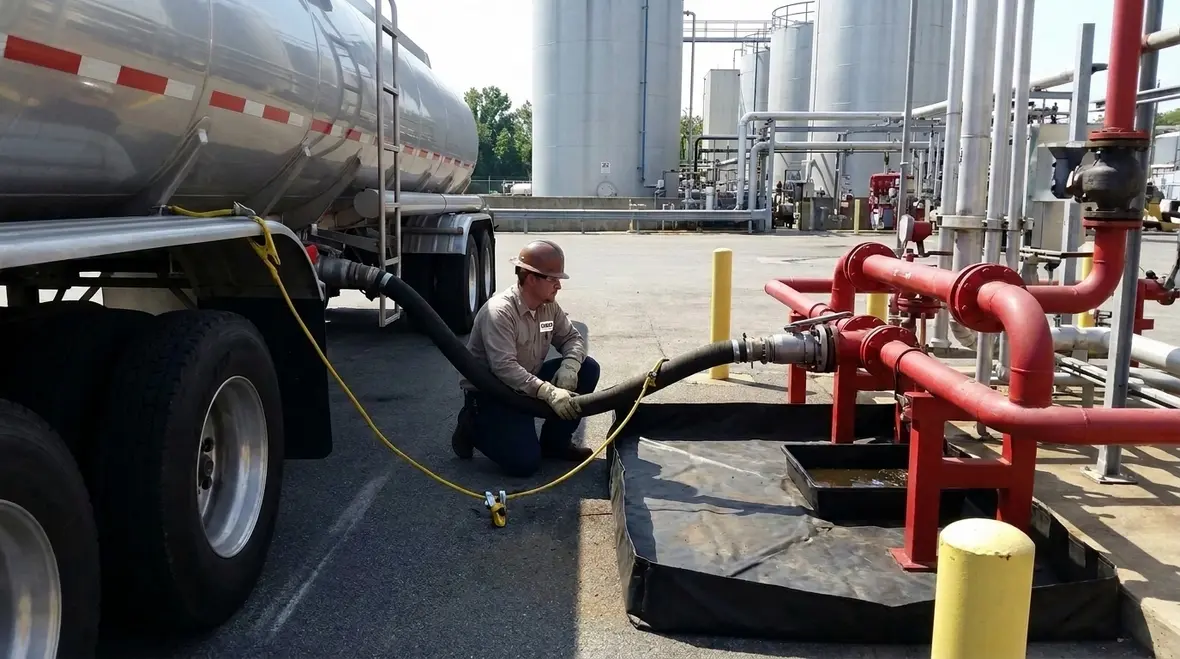
NFPA 30 Section 28.3: General Requirements for Bulk Transfer
Quick Answer: NFPA 30 Section 28.3 general bulk transfer requirements focus on controlling ignition sources, managing transfer equipment safely, and maintaining systems to prevent leaks, spills, and unauthorized release. Compliance depends on correct hose and connection practices, bonding and grounding, supervision, and documented inspection and maintenance.
What NFPA 30 Section 28.3 expects during bulk transfer
Bulk transfer operations move flammable and combustible liquids between containers, tanks, tank trucks, pipelines, and other receiving systems. NFPA 30 Section 28.3 general bulk transfer requirements set baseline expectations to reduce fire and explosion risk during these activities. Commercial facilities typically encounter compliance gaps where routine operations happen quickly, staff turnover is high, or transfer equipment is not treated as a life safety system.
For a broader view of how the standard regulates flammable liquids across the facility lifecycle, see this practical resource: How NFPA 30 regulates flammable liquids.
If you’re tightening protection around transfer related hazards, it’s also worth reviewing ignition source control for liquid storage sites, since transfer safety falls apart pretty quickly when ignition hazards are allowed to hang around like they pay rent.
1) Pre transfer controls and operational supervision
NFPA 30’s intent in Section 28.3 is that bulk transfer should not rely on improvisation. Facilities should establish and enforce a repeatable operating pattern before the first connection is made.
Transfer area readiness
- Control access: Prevent unauthorized personnel from entering the transfer area. Use signage, barriers, and clearly defined exclusion zones where feasible.
- Verify equipment condition: Confirm hoses, couplings, valves, gaskets, and connectors are compatible with the product and are in usable condition.
- Remove ignition hazards: Confirm hot work controls and housekeeping practices minimize ignition sources, including static accumulating materials and unnecessary electrical equipment.
- Plan for abnormal events: Ensure spill containment and response tools are available and accessible before transfer begins.
Supervision and communication
Effective transfer requires supervision and clear communication between the loading or unloading party and the facility operator. Many incidents occur when stop commands are not acknowledged, pressure changes are not monitored, or personnel assume another party is watching critical indicators.
2) Safe connection practices for hoses, couplings, and valves
Bulk transfer failure points often involve mechanical connection issues. Section 28.3 general bulk transfer requirements emphasize integrity of the transfer train so that the liquid does not leak at the interface points.
Correct hose handling and coupling engagement
- Use the correct hose rating and construction: The hose must be suitable for the liquid type, pressure, temperature, and transfer duty.
- Ensure proper coupling engagement: Couplings should seat correctly without forcing misaligned connections.
- Prevent damage during routing: Avoid kinks, abrasion against edges, and strain on connections that can loosen fittings over time.
Valve positioning and controlled flow
- Minimize uncontrolled release: Start flow with valve positions that reduce surge and the likelihood of a transient spill.
- Monitor pressure and flow: Abnormal pressure spikes can indicate blockage, incorrect line sizing, or deteriorating fittings.
- Use correct discharge and receiving setup: Confirm the receiving system is configured to accept product at the expected rate.
In commercial and retail facilities, this section commonly fails when staff use improvised adapters, reuse damaged couplings, or rely on outdated hoses sourced outside of the approved inventory. That pattern increases leak likelihood and makes inspections inconsistent.
3) Bonding and grounding to control static electricity
Static discharge is a known ignition risk during flammable liquid transfers, especially when flow rates are high or when liquids generate charge. NFPA 30 Section 28.3 general bulk transfer requirements align with the broader electrical bonding and grounding practices needed to prevent hazardous static conditions.
What facilities must verify in practice
- Bonding is applied to conductive components: Tank, trailer, and piping systems should be bonded when required for safe electrical continuity.
- Grounding is functional: Grounding points must be intact and free of corrosion or physical damage that breaks continuity.
- Connection order is managed: Bonding and grounding should be established before product flow begins and maintained through the transfer period.
Common commercial failure points include missing bonding leads, damaged clips, oxidized connection points, and bonding that is only performed “when someone remembers.” A defensible compliance program includes procedure, training, and periodic checks of grounding and bonding hardware condition.
4) Containment, spill control, and abnormal release readiness
When a bulk transfer connection fails, the consequences depend on how quickly liquid is contained and how effectively the facility responds. NFPA 30 Section 28.3 general bulk transfer requirements support spill control readiness as part of preventing escalation from a leak to a fire.
Containment and equipment availability
- Manage drainage paths: Confirm spill runoff cannot migrate to ignition sources, drains that feed other areas, or electrical enclosures.
- Use appropriate spill control materials: Confirm absorbents, booms, and cleanup supplies match the liquid hazard class and are stocked.
- Confirm emergency controls: Ensure shutoff capability is accessible and that personnel know how to initiate it.
Response readiness and lessons learned
Commercial facilities benefit from a documented response process that covers what to do first, who stops flow, who isolates equipment, and who calls for additional support. After any minor release, a corrective action review should confirm the root cause, whether it was hose wear, coupling mismatch, valve failure, or procedural drift.
5) Inspection, testing, and maintenance that keep compliance current
Section 28.3 general bulk transfer requirements are only as effective as the facility’s ongoing inspection and maintenance program. Static control hardware, transfer hoses, and couplings deteriorate with use, exposure, and incorrect storage.
Inspection focus areas
- Hoses and couplings: Look for cracking, blistering, abrasion damage, and worn sealing surfaces.
- Gaskets and fittings: Check for deformation, chemical compatibility issues, and signs of seepage.
- Valves and shutoff devices: Verify smooth operation and correct function without sticking.
- Bonding and grounding leads: Inspect for frayed conductors, broken continuity paths, and corrosion at contact points.
Maintenance that prevents recurring defects
A mature program includes replacement criteria and controlled storage so that transfer equipment does not degrade due to environmental exposure or contamination. Facilities often discover compliance gaps when hoses are repaired with non approved methods, or when bonding leads are kept in a location that is not used during normal operations.
Kord Fire Protection supports commercial, industrial, and retail clients by providing practical compliance oversight, inspection coordination, and maintenance planning for transfer systems. That service approach helps facilities keep procedures aligned with real operations and reduce the recurring failure patterns that show up during audits.
For broader system support, Kord Fire Protection Australia also provides fire suppression system services that fit naturally into ongoing inspection, testing, maintenance, and upgrade planning for higher risk facilities.
6) Training and documentation for audit readiness
Bulk transfer compliance depends on people as much as equipment. If procedures exist but staff cannot execute them consistently, the facility remains exposed.
Training topics that matter
- Connection and disconnection sequencing: Who connects first, who verifies continuity, and when flow is permitted.
- Static control behaviors: Confirming bonding and grounding is completed and visually verified.
- Leak and spill recognition: What constitutes an abnormal condition and how quickly staff must act.
- Equipment limitations: What hoses and couplings are approved for each product type and duty cycle.
Documentation for defensible compliance
Facilities should retain records that demonstrate ongoing conformance, including inspection logs, corrective actions, and evidence that bonding and grounding practices are implemented during transfer. Well organized documentation reduces disruption during regulatory review and insurance assessments.
Frequently Asked Questions
Call to action
To strengthen compliance with NFPA 30 Section 28.3 general bulk transfer requirements, facilities should verify transfer equipment integrity, confirm bonding and grounding effectiveness, and tighten inspection and training documentation. Kord Fire Protection can support ongoing testing, inspections, and maintenance planning so bulk transfer operations stay audit ready and operationally reliable. Contact Kord Fire Protection to review your transfer process and identify high risk gaps before they become incidents.

Join Our Newsletter!
Get the latest fire safety tips delivered straight to your inbox From our Newsletter.



