
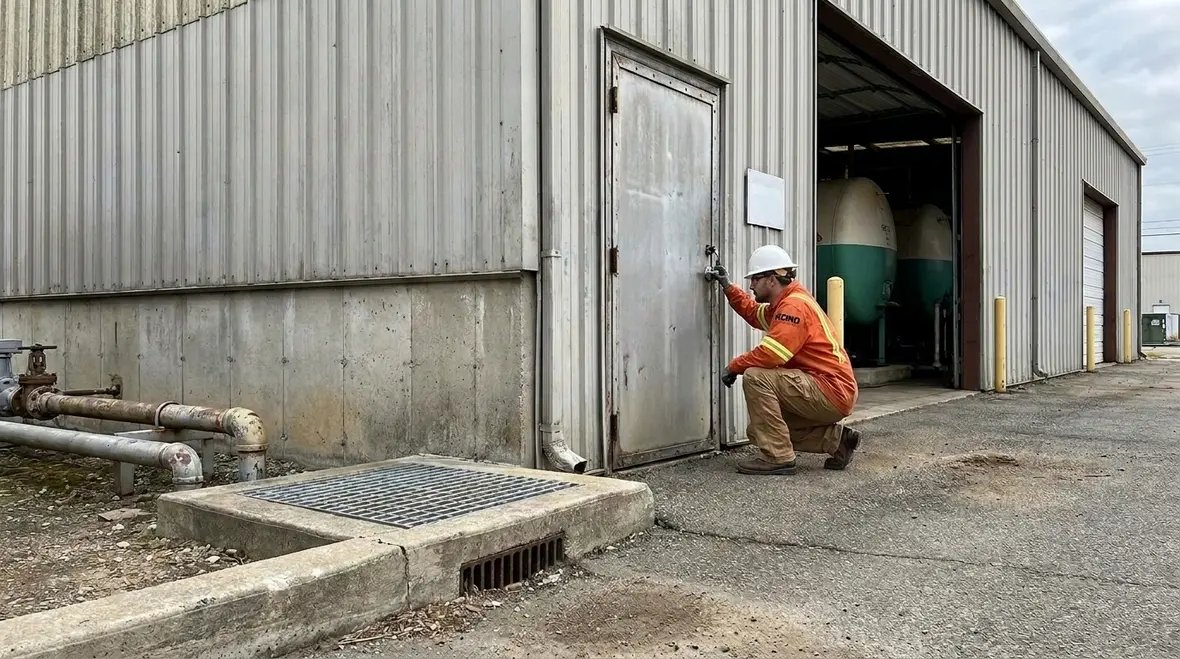
NFPA 30 Section 24.16: Inspecting and Maintaining Tank Buildings
Quick Answer
NFPA 30 Section 24.16 sets inspection and maintenance expectations for tank buildings used with flammable liquid storage. It focuses on preserving fire protection and containment performance, identifying deterioration, verifying closures and protective systems, and documenting ongoing corrective actions to sustain safe operating conditions.
Why tank building inspections matter in real facilities
In commercial, industrial, and retail environments that store flammable liquids, the tank building functions as a primary barrier between a potential release and ignition sources. NFPA 30 Section 24.16 tank building inspection maintenance targets the practical conditions that degrade that barrier over time, including corrosion, seal failures, compromised fire-resistive assemblies, ventilation drift, damaged spill controls, and nonfunctional fire protection components.
Compliance failures often come from “normal wear” that silently reduces fire performance. Examples include deteriorated door gaskets, blocked drains, roof membrane degradation, corroded supports, missing fasteners on fire door hardware, and ventilation dampers that do not return to their intended positions. Facilities also struggle with scheduling, access constraints, and keeping records that demonstrate inspection frequency and corrective follow up.
Facilities dealing with broader building risk controls may also benefit from a related planning resource on commercial electrical safety audits for risk control, especially where electrical ignition exposure and facility documentation practices overlap.
For a broader view of how NFPA 30 drives flammable liquid controls, see how NFPA 30 regulates flammable liquids.
What NFPA 30 Section 24.16 expects for tank building performance
NFPA 30 Section 24.16 tank building inspection maintenance is designed to confirm that tank buildings continue to perform their intended functions throughout the life of the structure and its associated systems. Inspectors evaluate conditions that could increase fire spread, reduce containment effectiveness, or impair emergency response.
Key focus areas typically covered during inspections
Fire-resistive integrity: walls, floors, and penetrations that must maintain required fire resistance.
Closures: tank building doors, fire doors (if applicable), latches, and any required self-closing or supervisory features.
Penetration seals: cable and piping penetrations that can crack, shrink, or pull away due to vibration and thermal cycling.
Venting and drainage pathways: ensuring designed flow routes remain unobstructed and operate as intended.
Foundations and structural stability: monitoring settlement, corrosion of supports, and damage from impacts or water intrusion.
Spill and containment provisions: drains, sumps, curbs, and barriers that prevent spread beyond design limits.
How to plan NFPA 30 tank building inspection maintenance in the field
Operationally, tank building inspection maintenance needs a repeatable process that accounts for access limitations and the facility’s risk profile. A strong program combines inspection checklists, documented test evidence, and clear corrective action timelines based on hazard severity.
Step-by-step inspection workflow
Pre inspection readiness: confirm the tank building configuration, recent repairs, ongoing work permits, and any abnormal conditions reported by operations. Align inspection timing with planned downtime where doors, vents, and protective devices must be verified.
Walkdown of building envelope: verify roof condition, wall coatings, protected steel where applicable, and areas known for water pooling. Inspect around penetrations for evidence of seal failure, rust bleeding, or movement.
Closure and hardware verification: test door operation, confirm full closure, and validate gasket condition, latch engagement, and self closing performance where required. Document any adjustments and whether replacement is necessary.
Containment and drainage review: check drains, strainers, sumps, and the condition of curbs or barriers. Confirm there are no obstructions, corrosion perforations, or missing plugs that undermine containment.
Record and close out: capture photos, measurements where relevant, and defect codes tied to corrective actions. Close out items with evidence that matches what the inspector verified.
Documentation that withstands audits
Regulators and insurers frequently look for clarity in inspection maintenance records: what was inspected, where it was inspected, what standards or criteria applied, what defects were found, and how corrective actions were verified. Kord Fire Protection supports commercial compliance by providing inspection documentation structures that align with how facilities manage corrective action systems, including tracking, follow-up verification, and risk grading.
Common failure points that drive noncompliance and fire risk
Many recurring issues trace back to predictable degradation mechanisms. Identifying these failure points early helps facilities target maintenance resources effectively and reduce downtime during emergency repairs.
1) Penetration and seal deterioration
Thermal cycling, vibration, and settling can crack fire stopping materials or dislodge sealants. Inspectors should look for gaps, discoloration, and signs of water intrusion that undermine sealant performance. If seals require rework, facilities should use systems compatible with the original rated assembly and confirm reinstatement before closing access points.
2) Doors and closure performance drift
Tank building doors may be held open for convenience, adjusted by maintenance, or affected by warped frames from moisture. Even if a door “looks closed,” gasket compression and latch engagement determine the integrity of the barrier. Verification during NFPA 30 tank building inspection maintenance should include operational checks, not just visual confirmation.
3) Blocked or degraded drainage and containment paths
Drains can clog with debris, corrosion products, or residue from maintenance activities. Containment features can also become compromised if plugs are removed and not replaced. A disciplined inspection includes verifying that drainage routes are clear and that containment components show no perforation, deformation, or missing elements.
4) Roof and envelope water intrusion
Roof membrane failures and water intrusion lead to corrosion of embedded components and degradation of fire-resistive materials. Facilities should prioritize areas around curbs, equipment penetrations, and seams where leakage is most likely. Water intrusion also affects slip and fall safety for maintenance personnel.
Maintenance, corrective action, and verification standards
NFPA 30 tank building inspection maintenance does not end at identification. Effective programs include corrective action planning, completion tracking, and verification that the repaired condition restores the intended barrier and protective functions.
Corrective action approach by severity
Immediate hazard reduction: address issues that could directly compromise containment, closure integrity, or rapid fire spread, such as doors that fail to close or penetrations with active gaps.
Scheduled repair: handle defects that degrade performance over time, such as coating failure, minor seal cracking, or early corrosion indicators.
Engineering evaluation: when structural movement, severe corrosion, or repeated failures occur, require qualified assessment to determine root cause and long-term remediation.
Verification that the repair “worked”
After repairs, inspectors or qualified technicians should re check the specific features that failed. Examples include re testing door closure and latching, confirming restored fire stopping at penetrations, verifying drainage function after cleaning, and validating that any replacement components meet the required functional criteria. Kord Fire Protection helps facilities close the loop with documentation that supports ongoing compliance and reduces repeat findings.
How Kord Fire Protection supports ongoing tank building compliance
Tank building inspection maintenance requires coordination between operations, maintenance, and fire protection professionals. Commercial facilities often face scheduling conflicts, limited safe access, and recurring operational changes that alter building conditions. Kord Fire Protection provides practical inspection and maintenance support to help facilities manage compliance efficiently, including structured inspection reporting, corrective action tracking support, and field verification planning.
By partnering with a specialist team, facility owners can reduce the risk of missed degradation points, improve audit readiness, and sustain the barrier performance expected under NFPA 30 requirements. For related guidance on the regulatory context, reference NFPA 30 flammable liquid regulation.
Frequently Asked Questions
Next step: schedule a compliance-ready inspection program
Ensure your NFPA 30 Section 24.16 tank building inspection maintenance stays current and defensible with clear checklists, documented corrective actions, and verification after repairs. Contact Kord Fire Protection to plan an inspection workflow suited to your facility access constraints and operational schedule, and build audit-ready records that support ongoing flammable liquid safety.

Join Our Newsletter!
Get the latest fire safety tips delivered straight to your inbox From our Newsletter.



