
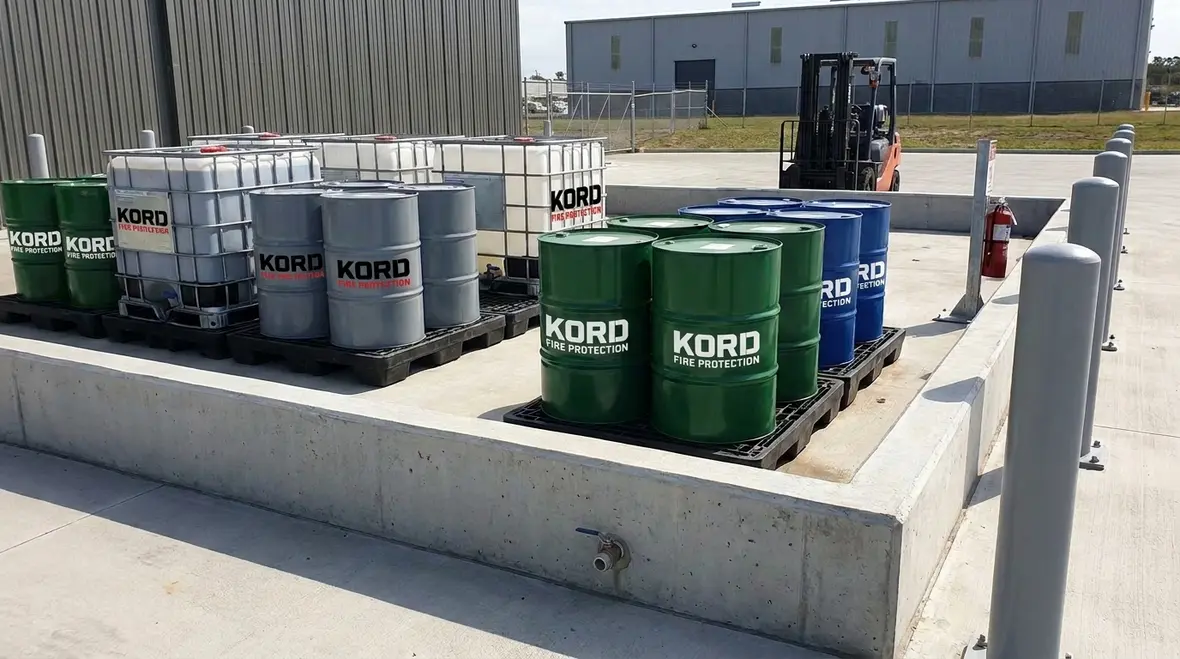
NFPA 30 Section 15.4: General Requirements for Outdoor Liquid Storage
Quick Answer: NFPA 30 Section 15.4 sets practical baseline rules for storing flammable and combustible liquids outdoors, focusing on siting, container integrity, spill control, separation from ignition sources, and maintaining operability. Facilities must verify conditions continuously through documented inspections and maintenance aligned to the storage setup.
What NFPA 30 Section 15.4 general outdoor storage requirements actually control
NFPA 30 Section 15.4 general outdoor storage requirements establish how a facility should manage outdoor liquid storage to reduce ignition risk, limit spill spread, and maintain safe performance of storage systems. For commercial, industrial, and retail properties, compliance often fails not due to a missing “big” requirement, but because operational details drift over time: damaged containers, obstructed egress routes, ineffective spill control, or ignition sources introduced during routine maintenance.
For a broader regulatory context, facilities typically benefit from reviewing this NFPA 30 flammable and combustible liquids overview. For a more direct code reference, see how NFPA 30 regulates flammable liquids.
Facilities also often tie outdoor liquid storage controls to broader suppression readiness, especially where higher hazard storage areas are involved. A related service that fits naturally here is fire suppression system inspection and maintenance.
How outdoor storage layout supports fire safety
Outdoor liquid storage safety starts with layout and separation. Section 15.4 general outdoor storage requirements drive expectations for keeping storage areas controlled and predictable so fire incidents do not escalate through radiant heat, flame impingement, or rapid involvement of adjacent hazards.
Separation from ignition sources and site hazards
Facilities must ensure that storage is not compromised by nearby heat sources such as hot work areas, idling vehicles, temporary generators, space heaters, and improperly managed electrical equipment. The common failure point is “temporary” ignition exposure becoming routine, especially during construction, landscaping, or seasonal facility operations.
- Control ignition sources using permit to work procedures for hot work and clear boundaries for vehicle operations.
- Maintain electrical classification and equipment condition where liquids are stored.
- Ensure access covers, bollards, and barriers remain in place and unobstructed.
Site access, egress, and operational traffic management
Outdoor storage areas require safe access for deliveries and emergency response. When layout permits, operators should design for vehicle turning radius, hose handling clearance, and firefighter approach paths. If racks, pallets, or secondary containment equipment are moved during day to day operations, the storage area can become noncompliant in practice even when the original design met the intent.
Container integrity and condition management
Section 15.4 focuses on keeping storage containers and their associated fittings in reliable condition. Outdoor exposure accelerates corrosion, gasket degradation, and valve damage due to UV, thermal cycling, wind driven debris, and occasional mechanical impact from forklifts or yard equipment.
What inspections should look for in real operations
Routine inspection programs must catch early deterioration before it becomes a leak source. For facilities that rely on “visual checks only,” the risk increases because small weeps at fittings can go unnoticed until product accumulation, odour complaints, or slip hazards force detection.
- Inspect valves, caps, bungs, and seals for tightness and physical damage.
- Check for bulging, dents, and corrosion on container shells and bottom seams.
- Confirm that labels, placards, and transfer connection points remain readable and intact.
- Verify that container supports prevent tipping, rocking, and uneven loading.
Common failure points that create compliance gaps
Across commercial and industrial sites, the most frequent problems include missing containment after container replacement, mismatched couplings during transfers, and re used damaged components. When operators substitute parts to speed up operations, the storage system may no longer match the original safety configuration.
Spill control, secondary containment, and drainage control
Outdoor storage must manage spills so liquids do not spread to ignition sources or migrate into stormwater and other protected areas. In practice, compliance success depends on how spill control systems handle both liquid volume and rainfall events.
Secondary containment performance under operational conditions
Secondary containment and containment impoundments must remain capable of capturing foreseeable releases. Facilities should verify that containment capacity accounts for normal operational maximums and realistic leak scenarios, including small drips that accumulate over time.
- Keep containment free of standing water, snow melt, and debris that can reduce effective capacity.
- Confirm that drain paths and valves are set correctly for storage mode and return to safe positions after maintenance.
- Prevent contamination and product loss that can degrade absorbents or containment surfaces.
Drainage, stormwater, and weather related hazards
Outdoor yards often connect to stormwater infrastructure. If drainage control relies on manual steps, procedures must be followed consistently. After rain, operators may reopen drains for site convenience without confirming that containment boundaries still isolate the release path.
Maintaining protective measures and documenting compliance
NFPA 30 Section 15.4 general outdoor storage requirements are not a one time checklist. Facilities must preserve the protective measures after installation. That includes maintaining hardware, verifying operational readiness, and documenting inspection outcomes to demonstrate control.
Inspection frequency and what “enough” looks like
Inspection cadence depends on site exposure, container quantity, and operational tempo. The practical approach for many commercial facilities is to combine scheduled inspections with event driven checks after transfers, maintenance, weather events, and container swaps.
- Schedule baseline inspections for containers, fittings, and containment integrity.
- Add checks after deliveries and product transfers where couplings and connections change.
- Escalate inspection intensity after storms, freeze thaw cycles, or periods of heavy vehicle traffic.
How to prevent recurring noncompliance
Recurring failures often indicate training gaps, weak handoffs, or lack of responsibility clarity. Facilities should connect inspection findings to a corrective action system with ownership, timelines, and verification of closure. Where possible, operators should standardize transfer kits, coupling types, and spare parts so substitution does not become a normal workaround.
Why partnering with Kord Fire Protection helps keep outdoor storage compliant
Outdoor storage safety depends on equipment condition, procedural discipline, and consistent verification. Kord Fire Protection supports commercial operators with ongoing fire safety compliance, testing, and maintenance planning that aligns to NFPA expectations and real facility risk. That partnership reduces the odds that minor deterioration or procedural drift creates a major compliance issue during audits, incident investigations, or insurer reviews.
For facilities seeking practical guidance on regulatory controls, Kord Fire Protection also provides resources through kordfire.com.au for local commercial fire safety support and service continuity.
Frequently Asked Questions
Next step: tighten your outdoor storage compliance program
NFPA 30 Section 15.4 general outdoor storage requirements work only when day to day operations keep pace with inspections, repairs, and transfer controls. Kord Fire Protection can help commercial sites structure inspection plans, verify protective measures, and close corrective actions quickly. Contact Kord Fire Protection to review your outdoor liquid storage setup, identify high risk failure points, and build a maintenance and documentation routine that holds up under audit and real world conditions.

Join Our Newsletter!
Get the latest fire safety tips delivered straight to your inbox From our Newsletter.



