
NFPA 30 Section 19.1 Scope: Specific Liquid Operations
Quick Answer: NFPA 30 Section 19.1 scope specific operations covers how facilities must manage defined flammable and combustible liquid handling activities in areas where operations are conducted. The section focuses on operational controls, safe equipment practices, and consistent inspection and maintenance to reduce ignition and spill risk.
For facilities looking at broader inspection and maintenance discipline, fire sprinkler maintenance for commercial safety in Australia offers helpful context on how documented upkeep supports compliance and system reliability across active sites. ([kordfire.com.au](https://kordfire.com.au/fire-protection-blog/fire-sprinkler-maintenance-for-commercial-safety-in-australia/?utm_source=openai))
What NFPA 30 Section 19.1 scope specific operations actually governs
NFPA 30 Section 19.1 scope specific operations addresses the practical control of specific liquid handling activities, not generic fire safety theory. In commercial and industrial environments, these operations typically include storage-related transfers, day to day handling, and process functions where the liquid remains a credible fuel source. The intent is to ensure that operational realities, such as transfer frequency, equipment condition, operator behavior, and housekeeping, do not undermine the fire protection features designed into the facility.
For facilities implementing NFPA 30 Section 19.1 scope specific operations requirements, compliance becomes an operational discipline. That means procedures, equipment integrity, and inspection evidence must work together continuously, not just during commissioning or a once per year audit.
To understand the broader regulatory framework around flammable liquid hazards, facilities should also review how NFPA 30 regulates flammable liquids for context on where operational rules connect to storage and protection requirements.
Scope boundaries: defining the “specific operations” in everyday facility work
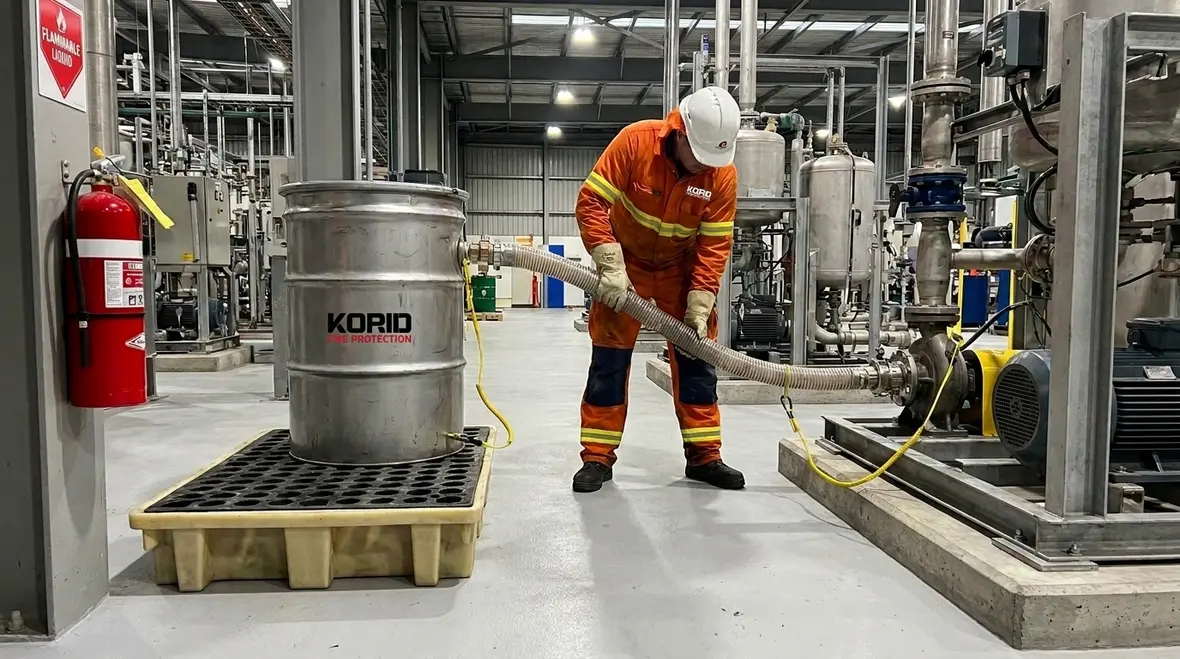
Facilities often struggle with scope boundaries because real operations blend multiple activities. Section 19.1 scope specific operations typically applies when the liquid is actively involved in defined handling tasks, such as transfer operations, container filling, dispensing, and other functional activities that expose the liquid to release, ignition, and vapor generation.
Common scoping pressure points
-
Multi step transfers: A pump transfer that starts in one room and finishes in another may require consistent controls at every transition point, including valves, hoses, and connection points.
-
Small container handling: Dispensing and decanting into smaller containers can be overlooked because the quantities appear modest. However, ignition risk often comes from frequency and release potential, not only from total inventory.
-
Temporary piping and hoses: Operations may use temporary setups during maintenance or changeovers. The compliance challenge is that temporary equipment can quietly drift out of specification through wear, incorrect fittings, or damaged couplings.
-
Housekeeping as an operational control: Spilled residue, degraded absorbents, and contaminated floors become ignition sources and fuel loads. Section 19.1 scope specific operations demands operational control measures that remain effective day after day.
Operational controls: how compliance shows up in procedures and equipment
NFPA 30 focuses heavily on performance and practical risk reduction. In facilities, compliance with Section 19.1 scope specific operations usually shows up in three places: documented procedures, correctly selected and maintained equipment, and verified safe work practices for personnel.
Transfer and dispensing controls that auditors look for
-
Approved connection methods: Correct couplings, compatible hoses, and secure connection practices reduce leak and spray risk. Incorrect adapters and worn gaskets often become the root cause of releases.
-
Grounding and bonding where required: Static discharge prevention must be managed for both equipment and the transfer path, especially in flexible hose and portable transfer scenarios.
-
Ignition source control: Hot work permits, equipment rated for hazardous environments, and controlled lighting or portable devices reduce ignition likelihood during liquid handling.
-
Containment and spill response readiness: Spill control kits and procedures must match the actual operational profile. If the facility uses absorbents, the selection, placement, and replenishment plan must support the real spill size and chemistry.
Procedure quality: what makes a written program “audit ready”
Procedures become defensible when they specify operational steps, acceptance criteria, and corrective actions. Strong documentation typically includes:
-
pre start checks for hoses, fittings, valves, pumps, and seals
-
clear start stop steps for transfer sequences
-
leak detection and immediate shutdown triggers
-
requirements for reporting defects and taking equipment out of service
-
training records tied to the specific operations
When procedures fail, the failure often appears as “operator variability.” A robust compliance program reduces reliance on memory and focuses on checklists, physical interlocks where appropriate, and a controlled defect pathway.
Inspection, testing, and maintenance: the compliance mechanism behind Section 19.1
Section 19.1 scope specific operations should not be treated as a static interpretation exercise. Effective compliance relies on inspection and maintenance that catches deterioration early, before leaks, vapor release, or ignition events occur.
What to inspect during operational walkthroughs
-
Hoses and couplings: Look for cracks, abrasion, blistering, loose clamps, damaged end fittings, and signs of chemical incompatibility.
-
Valves and seals: Identify seepage, stuck closures, degraded packing, and corrosion that impacts shutoff performance.
-
Containment features: Verify drains, sumps, and secondary containment systems remain functional and clear of contamination that can inhibit flow.
-
Electrical and ignition controlled equipment: Confirm equipment used during operations matches the hazardous classification assumptions and remains in good repair.
-
Spill response readiness: Ensure spill kits are present, staged at the point of use, and replenished after any use. Confirm absorbents remain suitable for the liquid type.
Common failure points in commercial and retail settings
In retail and light industrial occupancies, the biggest gaps often come from higher operational frequency and less specialized maintenance oversight. Common issues include reused transfer hoses without confirmed compatibility, damaged bonding cables, and poor segregation between clean and contaminated areas. Kord Fire Protection supports these environments by bringing consistent inspection discipline, documented findings, and practical corrective action pathways that align with NFPA expectations.
Because NFPA 30 is performance driven, the evidence matters. Maintenance records, inspection logs, and defect resolution documentation should clearly tie back to the specific operations covered by Section 19.1 scope specific operations.
Facility compliance challenges: where operations go wrong despite “installed” protection
Commercial facilities frequently assume that installed fire protection equipment is sufficient. In practice, Section 19.1 scope specific operations is where operational behavior determines outcomes. The following challenges repeatedly appear across industrial, commercial, and retail sites:
1) Staffing and turnover in shift based operations
Shift staffing changes can create knowledge gaps. Even well written procedures can drift if training is not refreshed for the specific handling tasks. Facilities should validate training effectiveness by supervising a real transfer or dispensing operation periodically.
2) “Temporary” equipment that becomes permanent
Temporary hoses, extension lines, or improvised fittings often remain in service after the maintenance window ends. This weakens mechanical integrity and can invalidate grounding and bonding assumptions.
3) Housekeeping inconsistencies that escalate risk
Small spills that are not cleaned promptly can produce vapor accumulation and residue that can ignite. Housekeeping measures should be treated as part of the operational hazard control, not as an afterthought.
Kord Fire Protection helps facilities translate regulatory scope into practical compliance systems, including inspection planning, maintenance coordination, and documentation that supports audits and insurer requirements. This reduces the operational drift that leads to nonconformities over time.
How to build an audit-ready compliance package for NFPA 30 Section 19.1 scope specific operations
An audit-ready package is not just a copy of the standard. It includes operational proof that the facility controls the hazard day to day. The strongest packages typically include:
-
Scope mapping: identify which areas and tasks fall under Section 19.1 scope specific operations, including transfer points, dispensing areas, and any temporary handling setups
-
Written procedures: step by step controls for transfer, dispensing, connection and disconnection, leak response, and safe shutdown
-
Equipment register: list hoses, pumps, valves, couplings, grounding and bonding components, and spill response assets by location
-
Inspection and maintenance records: evidence of periodic checks and defect remediation with dates and responsible parties
-
Training records: training tied to the specific operations, including refresher intervals and competency checks
Facilities that document operational readiness typically reduce downtime risk too, because defects are found and corrected before they lead to emergency shutdowns or product loss.
Frequently Asked Questions
Conclusion and Call to Action
NFPA 30 Section 19.1 scope specific operations is where compliance becomes real: it depends on safe procedures, equipment integrity, and verified maintenance. Kord Fire Protection helps commercial facilities build defensible audit documentation, strengthen operational inspection routines, and close recurring failure points before they become incidents. Contact Kord Fire Protection to assess your handling operations, review your inspection and maintenance evidence, and develop an ongoing compliance plan tailored to your site.

Join Our Newsletter!
Get the latest fire safety tips delivered straight to your inbox From our Newsletter.



