
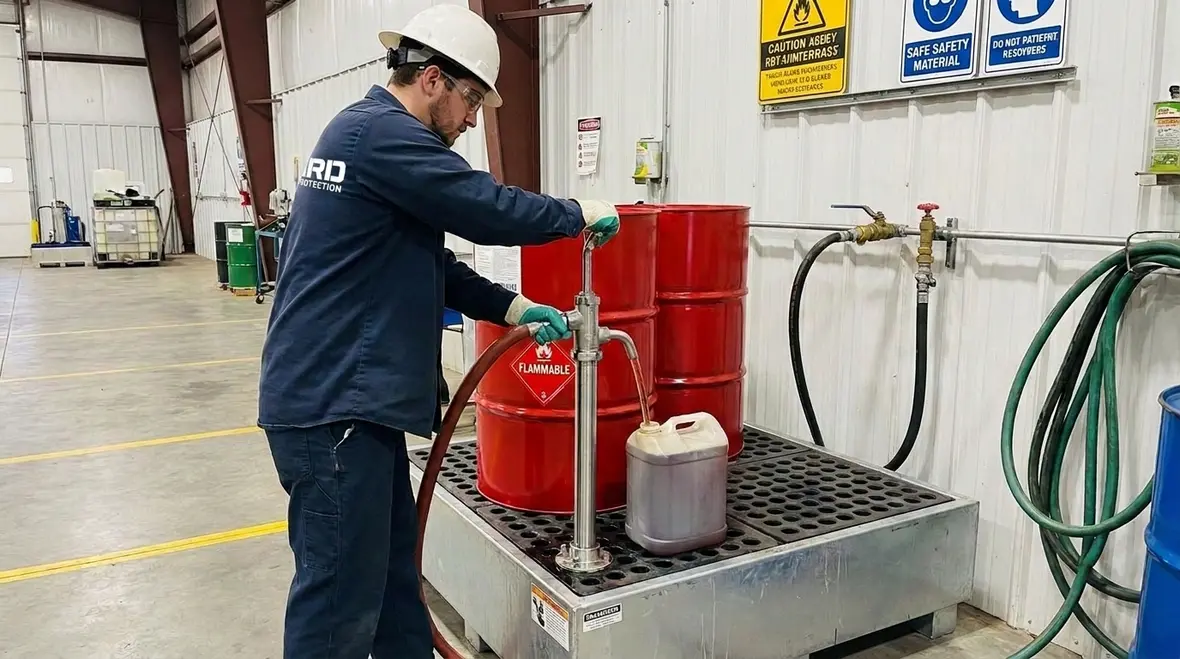
NFPA 30 Section 19.2: Definitions for Specific Operations
Quick Answer
NFPA 30 Section 19.2 definitions for specific operations clarify how facilities classify and control particular handling, storage, and processing tasks involving flammable and combustible liquids. Correct definitions drive design requirements, operating controls, inspection points, and maintenance obligations across commercial, industrial, and retail sites.
Why NFPA 30 Section 19.2 definitions matter in real operations
Many compliance gaps start with a simple problem: the facility team applies the wrong operational definition to a real world process. NFPA 30 Section 19.2 definitions specific operations set the language that safety, engineering, and operations teams must use to correctly interpret what is being done, where it is done, and what hazards follow from that activity.
In practice, definitions influence whether a task is treated as a particular type of operation, whether controls must be applied before and during the task, and how ongoing checks should be performed. For commercial, industrial, and retail facilities, the cost of getting it wrong can show up as delayed approvals, failed inspections, inadequate spill response readiness, or recurring maintenance findings.
For broader context on how the standard regulates flammable liquids, refer to how NFPA 30 regulates flammable liquids.
For facilities planning inspections and ongoing system upkeep, Kord Fire Protection also supports fire sprinkler inspection for Australian commercial sites, which fits naturally when teams want compliance documentation and maintenance programs to reflect how operations actually run.
What “specific operations” typically cover under Section 19.2
NFPA 30 Section 19.2 definitions for specific operations focus on describing operational categories precisely enough that facilities can apply consistent controls. These definitions often relate to actions that change fuel behavior, exposure potential, and ignition risk, such as moving liquids, loading and unloading containers, transferring liquids, heating or processing, and similar controlled activities.
From an implementation standpoint, operational categories generally need to be mapped to site realities:
Which liquids are involved, including flammable and combustible classification.
Where the operation occurs, including ventilation, spill control, and segregation from ignition sources.
How the operation is performed, including transfer method, equipment type, and operating sequence.
Who performs it and how the competency and supervision are documented.
This mapping becomes the foundation for operating procedures, training materials, checklists, and inspection routines.
How these definitions drive compliance controls and inspection readiness
Once operations are correctly defined, facilities can apply the right controls. The most common operational compliance challenges appear when definitions are not linked to procedures or inspection criteria.
1) Procedure accuracy and “definition drift”
Operational definitions must remain consistent as workflows change. A facility that updates a process step, swaps equipment, or changes the transfer method can unintentionally drift into a different defined operation category. That drift often happens during temporary work, contract labor use, or equipment replacement.
Commercial sites benefit from a controlled change process that confirms whether the defined operation changes. Kord Fire Protection typically supports this by reviewing operational flows, verifying that inspection schedules match the defined tasks, and confirming that documentation remains audit ready.
2) Equipment suitability and functional failure points
Operational definitions determine what equipment must be used and how it must perform. Common failure points include:
Transfer equipment that is not compatible with the liquid, resulting in material degradation or leakage.
Inadequate bonding and grounding practices leading to uncontrolled static discharge risk.
Ventilation arrangements that do not match the operational hazard level during the task.
Overlooked container condition issues such as corrosion, damaged couplings, or deteriorated gaskets.
The key compliance step is to ensure that inspections check the equipment behaviors that support the defined operation, not just whether the equipment exists.
3) Spill control and secondary containment expectations
For many specific operations, the standard’s definitions correlate to how spill control needs to be planned and maintained. Operational definitions help safety teams decide what containment strategy is appropriate and what monitoring practices must be in place. In practice, facilities often miss routine conditions that reduce containment effectiveness, such as:
Drain valves incorrectly positioned or left unsecured.
Debris and residues limiting the capacity of containment surfaces.
Absorbent materials not staged, expiring, or stored where access is delayed.
Kord Fire Protection can help ensure that inspection checklists and maintenance schedules align with the operational definitions used at the facility, supporting faster corrective actions and fewer repeated findings.
Practical compliance workflow: how facilities should apply Section 19.2 definitions
Facilities that consistently perform well typically follow a repeatable workflow. The goal is to connect NFPA 30 Section 19.2 definitions specific operations to controlled documentation and real inspection outcomes.
Step 1: Build an “operation by operation” inventory
Create a site inventory that lists each defined operation category and the process steps that fall under it. Each entry should include location, liquid type, equipment used, and the normal sequence of tasks.
Step 2: Write or update procedures using the same operational language
Procedures must reflect the same definition wording used in compliance documentation. This reduces ambiguity during audits, incident reviews, and contractor onboarding.
Step 3: Attach inspection points to the definitions
Define inspection points for each specific operation. For example, if the defined operation includes transfer activities, inspection items typically include equipment condition, connector integrity, and readiness of spill control elements. Inspections should also verify that controls are functional during the operation, not only during idle conditions.
Step 4: Maintain records that show effectiveness, not only presence
Audits usually expect evidence of completion and effectiveness: dated checks, corrective action documentation, and verification that recurring issues are addressed at the root cause. When procedures, training, and checklists align to Section 19.2 definitions for specific operations, recordkeeping becomes clearer and easier to defend.
Where commercial, industrial, and retail sites commonly stumble
Operational definitions may sound academic, but failures tend to be concrete. The following are common risk patterns across commercial, industrial, and retail environments:
“Mixing” processes across work zones without formal operational classification updates after equipment or layout changes.
Inspections that focus on static storage elements while neglecting dynamic operation phases where vapor or ignition exposure changes.
Training that covers general hazard awareness but does not train personnel on the specific defined operation steps at their facility.
Delayed maintenance for key control components, such as valves, containment hardware, and transfer couplings, leading to repeated deficiencies.
To reduce these gaps, many facilities engage a specialist service partner that can evaluate operational reality against the compliance framework. Kord Fire Protection provides ongoing support for inspection planning, maintenance alignment, and documentation readiness, helping facilities maintain credible compliance year after year across kordfire.com.au markets.
NFPA 30 and ongoing maintenance: staying compliant beyond the first inspection
Compliance is not a one time event. NFPA 30 Section 19.2 definitions specific operations create the operational baseline, but the facility must maintain that baseline. Maintenance and inspection should verify that controls remain appropriate as conditions change, including:
Seasonal workload changes that alter the frequency of specific operations.
Replacement of hoses, pumps, fittings, or containers with materials that behave differently.
Upgrades to ventilation systems or building modifications affecting vapor control assumptions.
Changes in staffing, contractor arrangements, or shift scheduling that affect procedural adherence.
Specialist review helps facilities keep operational definitions current and ensures that inspection and maintenance programs remain aligned to the way work actually occurs.
Frequently Asked Questions
Get expert help aligning operations to NFPA 30
For commercial facilities that handle flammable liquids, operational definitions must be accurate, documented, and maintained, not assumed. Kord Fire Protection can help align your procedures, inspection checklists, and maintenance schedules to the operations your teams actually perform. Request a compliance review today through Kord Fire Protection at kordfire.com.au to strengthen audit readiness and reduce recurring findings.

Join Our Newsletter!
Get the latest fire safety tips delivered straight to your inbox From our Newsletter.



