
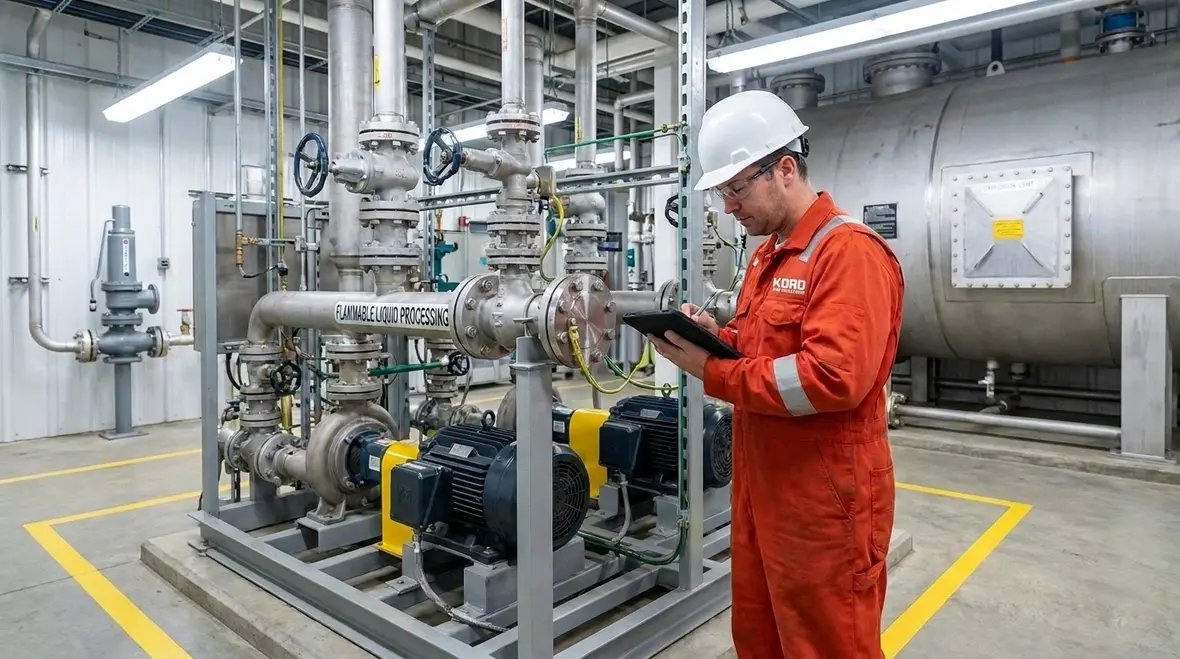
NFPA 30 Section 17.14: Explosion Control in Processing Facilities
Quick Answer: NFPA 30 Section 17.14 specifies how processing facilities control ignition and limit the consequences of explosions. It focuses on preventing hazardous conditions during handling of flammable and combustible liquids, including equipment selection, protection measures, system integrity, and maintenance practices that keep controls effective over time.
Why Section 17.14 matters in real processing operations
Processing facilities for flammable and combustible liquids operate under conditions that can change quickly: temperature swings, solvent loading, airflow variations, filter loading, transfer turbulence, and maintenance activity. NFPA 30 Section 17.14 explosion control processing is built around a practical objective: keep ignition sources from becoming effective and ensure that protective measures do not degrade until the next scheduled intervention.
In commercial settings such as retail chemical distribution rooms, industrial production areas, and maintenance depots, the biggest compliance risks usually do not come from missing equipment. They come from controls that were installed correctly once, then later undermined by operational changes, skipped inspections, damaged gaskets, misused portable fittings, incorrect grounding, or relief systems that never get verified. Section 17.14 is designed to close those gaps through ongoing risk control and equipment reliability.
For facilities looking at the bigger compliance picture, it also helps to review NFPA 30 Section 17.4 general requirements for processing facilities alongside how NFPA 30 regulates flammable liquids.
What NFPA 30 Section 17.14 explosion control processing typically requires
While facilities apply Section 17.14 to different process configurations, the common thread is controlling ignition potential and limiting explosion impacts where processing occurs. Compliance usually addresses these core elements:
Ignition source control in processing zones through appropriate electrical classification, safe work practices, and management of hot surfaces and mechanical sparking hazards.
Process equipment selection and integrity, including fittings, seals, hoses, pumps, and connections that prevent vapor release and reduce leak and spray risks.
Explosion mitigation strategies where appropriate, such as pressure and venting concepts, explosion venting or suppression approaches, and ensuring the system can perform as designed.
Maintenance and inspection so that engineered controls remain functional, including verification of devices, relief paths, protective system health, and housekeeping that prevents accumulation of flammable residues.
Facilities that treat Section 17.14 as a one time compliance exercise often fail audits when the process changes. Examples include switching product grades, increasing throughput, relocating hoses or manifolds, changing filtration intervals, or bypassing interlocks. Explosion control processing requires that protective intent stays aligned with actual operating conditions.
Operational control measures that prevent ignition during processing
Electrical and mechanical ignition management
Processing areas typically contain potential ignition sources from electrical equipment, static discharge, rotating machinery, and instrumentation faults. For compliance, facilities must ensure:
Electrical equipment matches the hazard in the processing area. This includes ensuring installed devices remain within their certified rating after repairs or replacements.
Static control is maintained through correct bonding and grounding. Worn straps, loose clamps, corroded bond points, and improvised jumpers frequently create latent ignition risk that only appears under certain transfer conditions.
Mechanical sparking hazards are controlled, including bearing condition, alignment of rotating equipment, and protection against friction where debris could accumulate.
Leak prevention and vapor control
Explosion control processing fails most often when vapor generation becomes uncontrolled. Common failure points include compromised pump seals, deteriorated hose liners, improperly tightened flanges, and valves that weep during cycling. Effective compliance programs treat leak prevention as part of explosion control, not separate housekeeping.
Housekeeping and process discipline
In commercial and industrial environments, housekeeping is not merely cosmetic. Spills, residue on floors, and degraded absorbents can create recurring vapor sources. A strong Section 17.14 compliance program includes clear spill response expectations, residue removal schedules, and procedures that prevent ignition sources from encountering flammable vapors.
Engineered explosion protection systems: how they are meant to perform
Where explosion mitigation is required by facility assessment, protective systems must be maintained so they perform as designed. Depending on the process configuration, systems may include venting or suppression approaches, with hardware designed for specific pressures, flow paths, and vent discharge characteristics.
Inspection focus areas during routine checks
Commercial facilities often concentrate on testing that looks visible, but engineers and auditors typically also expect verification of:
System readiness, including that protective devices are unobstructed and remain installed in the correct orientation and location.
Discharge path integrity, ensuring vent routes are not blocked by storage, temporary barriers, or relocated equipment.
Verification of detection and actuation components, where suppression or controlled isolation relies on correct response timing and functional status.
Correct reset and post operation procedures so the system returns to a safe state without bypassing safety functions.
Common failure points that lead to non compliance
Experience across industrial, commercial, and retail sites shows repeat patterns:
Temporary modifications that become permanent, such as rerouting vent hoses, capping vents for convenience, or substituting components without approved ratings.
Maintenance drift, where inspection intervals lapse and devices are discovered late, after minor faults become full system failures.
Documentation gaps, including missing calibration records, incomplete acceptance tests, or no evidence that inspections match current operating configurations.
Inspection, testing, and documentation: what auditors look for
NFPA 30 Section 17.14 explosion control processing expects a compliance program that can demonstrate both technical correctness and sustained readiness. That typically means more than a checklist. Auditors look for consistent alignment between drawings, current equipment, and field reality.
What to build into the maintenance regime
Defined inspection intervals for protective devices, electrical enclosures, grounding points, and process equipment integrity.
Functional verification steps that confirm devices operate correctly, not only that they exist.
Leak monitoring and corrective actions that close the loop quickly. Minor weeping today can become vapor conditions tomorrow.
Training and work permit controls that reduce the chance of ignition sources introduced during maintenance, hot work, or temporary changes.
Why many facilities miss the mark
The typical issue is incomplete “as built to as operated” control. When pumps change models, hoses are swapped, or new products with different volatility are introduced, the hazard profile evolves. Without periodic review and updated risk controls, explosion control processing can be undermined even when previous inspections were passed.
How Kord Fire Protection supports ongoing Section 17.14 compliance
Kord Fire Protection helps commercial operators maintain inspection and maintenance programs that support NFPA 30 compliance outcomes. Their approach supports the practical reality that engineered controls require ongoing verification, not one time installation.
For processing facilities, this includes helping coordinate compliance assessments, testing, and maintenance schedules that account for both equipment condition and operational change. The goal is simple: protect people, assets, and continuity of operations by keeping explosion control measures reliable between inspections. Facilities that want a stronger maintenance backbone can also explore proactive maintenance for fire pump system reliability as a practical example of how disciplined inspection planning prevents small issues from turning into very expensive surprises.
Frequently Asked Questions
Next steps to stay compliant
Review your current processing setup against NFPA 30 Section 17.14 explosion control processing requirements, focusing on ignition control, equipment integrity, and the readiness of any engineered protection systems. Then confirm that your inspection and maintenance records reflect as built and as operated conditions. Engage Kord Fire Protection to support compliance assessments, testing coordination, and maintenance planning so explosion controls remain effective well beyond the initial installation.

Join Our Newsletter!
Get the latest fire safety tips delivered straight to your inbox From our Newsletter.



