
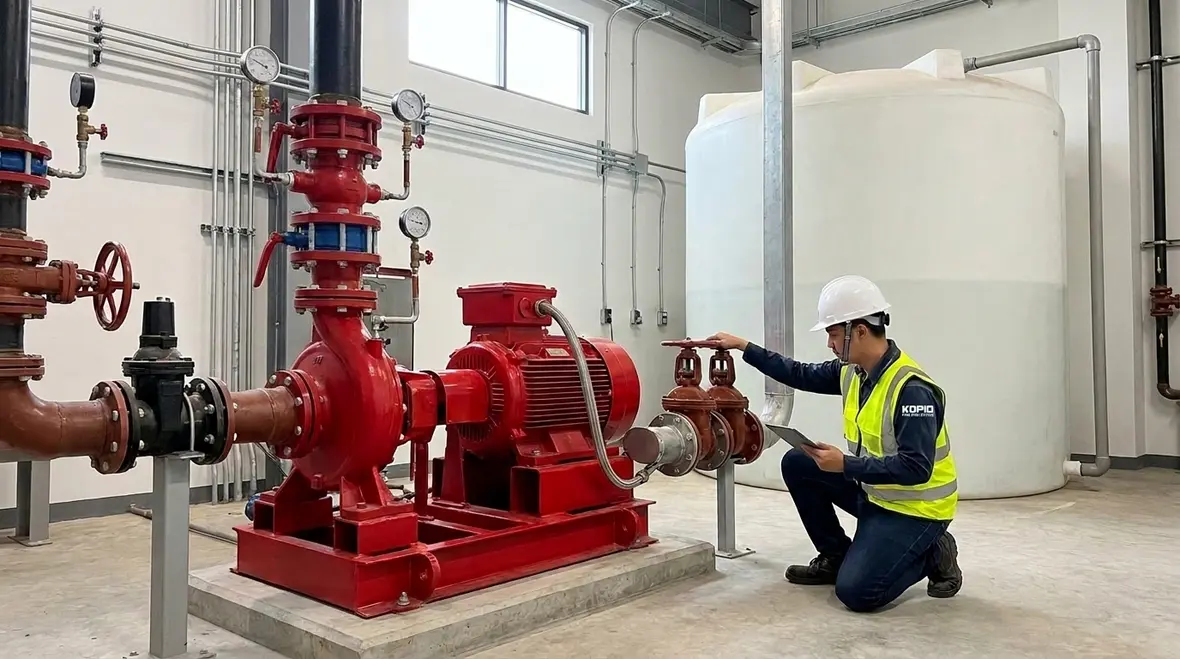
NFPA 30 Section 16.7: Water Supply for Storage Protection Systems
Quick Answer
NFPA 30 Section 16.7 sets performance expectations for the water supply that supports storage protection systems. It focuses on ensuring adequate, reliable, and maintainable water delivery to the hazard area, with practical requirements for inspection, reliability, and continuity of service.
For facilities reviewing related pump readiness near the start of this conversation, it also helps to compare these water supply expectations with fire pump testing procedures and acceptance criteria, especially where pump performance and water delivery have to work together under real demand conditions. ([kordfire.com](https://kordfire.com/nfpa-25c-section-8-3-fire-pump-testing-procedures-and-acceptance-criteria/?utm_source=openai))
What NFPA 30 Section 16.7 water supply protection systems actually controls
NFPA 30 Section 16.7 water supply protection systems require more than “having water on site.” The intent is to keep a storage protection system dependable when it must operate under fire conditions. For commercial, industrial, and retail facilities storing flammable and combustible liquids, compliance typically turns on three operational questions: Is the water supply capable at the required demand and duration? Does the system remain available and functional during normal operations and foreseeable interruptions? Are the components inspected, tested, and maintained to prevent hidden failures?
In practice, facilities often confuse “municipal water connected” with “fire water supply proven.” Section 16.7 requires that the water supply arrangement used to protect storage hazards delivers water in a manner that supports the storage protection system’s design, including how that supply performs during alarms, pump starts, valve operations, and sustained operation.
Core compliance principles: capacity, reliability, and service continuity
Section 16.7 centers on ensuring the water supply supports the protection concept used for storage. The most common compliance drivers in day to day operations include the following.
1) Water capacity that matches system demand
Storage protection systems may rely on fixed discharge systems, monitor nozzles, foam or water deluge arrangements, or other storage protection methods. Section 16.7 expects the water supply to meet the design flow and pressure needed to operate the protection system effectively. The “design match” problem shows up when facilities change conditions over time, such as rerouting pipework, adding obstructions, increasing storage quantities, or modifying discharge layouts. When the installed supply no longer matches the original demand profile, performance gaps occur.
Commercial sites can also face seasonal and operational variations in supply pressure. A system that passes once at commissioning can fail later when upstream conditions change. Facilities should treat the water supply as a living system that must be verified against the real demand, not just the paper design.
2) Reliability mechanisms that prevent single point failures
Water delivery reliability depends on how the system handles control, starting, and transfer of water sources. Practical failure points include:
- Valves left in the wrong position after maintenance, inspections, or tenant activities.
- Strainers clogged due to sediment, scale, or construction debris.
- Undersized suction piping or air entrainment issues that degrade pump performance.
- Power or control circuit issues that prevent pumps from starting within required timeframes.
- Backflow preventers or other devices that introduce pressure loss beyond what the design assumed.
NFPA 30 Section 16.7 water supply protection systems addresses reliability by requiring that the supply arrangement used to protect storage remains dependable and that the system does not degrade into an “unknown” condition between inspections.
3) Continuity of service during alarms and sustained operation
When a fire event occurs, water supply performance depends on real time system response. The most common operational risk is that components function “in isolation” but fail under integrated conditions. For example, a pump might be healthy when tested at low flow, but fail to achieve required discharge pressure when the storage protection system draws peak demand. Another recurring risk occurs after partial drain downs or winterization, when valves, hangers, or air release arrangements are returned to service incorrectly.
Common water supply configurations and where they fail
Facilities typically use one or more water supply paths for storage protection systems. The exact arrangement depends on hazard class, available water sources, and design basis. The most relevant categories include municipal supply, dedicated fire pumps, storage tanks, and water storage with pumping and distribution controls.
Municipal water and back pressure concerns
Municipal supply connections offer convenience, but they can introduce variability. Pressure may drop under simultaneous demand scenarios, and pressure loss can increase as connected devices age. Backflow protection devices and check valves also affect performance. A frequent failure pattern is a supply that meets requirements at the test point but does not account for total system pressure losses at flow. Kord Fire Protection typically verifies performance in the context of actual pipe runs, valve positions, and discharge demands during compliance testing and functional verification.
Fire pumps: priming, suction conditions, and control integrity
Fire pumps support many commercial and industrial storage protection systems. Operational failure points include:
- Air leaks or poor priming leading to cavitation or reduced discharge pressure.
- Incorrect relay settings or control switches that delay pump start.
- Miswired or stuck auxiliary contacts that prevent the intended pump mode.
- Corroded impellers or impeller wear that lowers performance over time.
NFPA 30 Section 16.7 water supply protection systems expects the water supply to be ready and dependable when called upon. Pump readiness is therefore not only a mechanical question. It is also a control reliability question.
Water storage tanks and transfer problems
Where on site water storage tanks are used, the compliance challenge shifts to maintaining usable water volume, correct tank levels, effective delivery to pumps, and safe water transfer. Common issues include tank level sensors drifting out of calibration, sediment accumulation that restricts suction, and valve misalignment after maintenance. Tanks can also experience thermal stratification and freeze risk in some climates if heating arrangements are inadequate.
For these systems, inspections must confirm both water availability and the path from tank to hazard. A tank can be full but still provide inadequate flow if the suction piping or strainers are compromised.
Inspection, testing, and maintenance requirements that keep systems dependable
Section 16.7’s intent drives practical maintenance discipline. The most important operational approach is establishing a documented program that covers both the water supply components and the integrated storage protection performance.
Routine inspection: what should get verified
Facilities typically benefit from a structured checklist that includes:
- Valve position verification at normal and alarm configurations.
- Visual checks for leaks, corrosion, and physical damage in supply lines, pumps, and enclosures.
- Verification of pump room conditions such as ventilation, temperature control, and security.
- Strainer condition checks and confirmation that isolation arrangements are correct.
Functional testing: verifying integrated performance
Functional testing should confirm system operation under conditions that reflect real demand. When tests only confirm that equipment can start, the facility may miss pressure shortfalls, sustained flow limitations, or control coordination failures. Integrated testing supports compliance by demonstrating that the water supply performs when actuated through the storage protection system logic.
Maintenance and defect management: preventing repeat failures
Defect management matters because storage protection systems can sit idle most of the year. When issues occur, facilities must repair to the original performance standard and re test after corrective actions. Recurring failures often come from:
- Replacing parts without confirming duty ratings and pressure loss characteristics.
- Partial maintenance that restores operability but does not restore design flow performance.
- Unauthorized valve adjustments or temporary bypasses that are not removed after work completion.
Kord Fire Protection supports ongoing compliance for facilities that need documented assurance, repeatable maintenance routines, and clear evidence for audit and insurer requirements.
Practical compliance challenges in commercial facilities (and how to address them)
Even well designed systems can drift out of compliance when operational changes occur. The most common drivers include tenant fit outs, rack and pallet changes, changes in storage density, and piping modifications during unrelated projects.
Change management after renovations
Many storage facilities perform renovations that affect pipe routes, valves, cable pathways, or electrical supply to pump controls. NFPA 30 Section 16.7 water supply protection systems should remain matched to the actual installed demand. Facilities should require fire protection review for any work that touches fire water supply piping, pump controls, backflow devices, or discharge routes.
Water supply system “invisibility” for operations teams
Operations staff may not view the water supply system as part of daily hazard management. That gap creates risk when valves are moved, strainers are serviced, or temporary repairs are applied. A practical solution is to ensure operations teams know which components are critical and what cannot be altered without fire protection coordination.
Documentation and audit readiness
Commercial compliance increasingly depends on strong documentation. The facility should maintain service records that show inspections, tests, repairs, and corrective actions. Kord Fire Protection helps commercial and industrial operators keep inspection outcomes traceable and current, including integrated reporting that aligns with real system performance needs.
For additional context on how NFPA 30 applies to flammable liquids systems and regulatory intent, see how NFPA 30 regulates flammable liquids using the same compliance mindset focused on hazard specific protection.
Frequently Asked Questions
Call to action
If your facility uses NFPA 30 Section 16.7 water supply protection systems, confirm that the installed water delivery path still matches current hazard demand and operational realities. Kord Fire Protection supports commercial, industrial, and retail owners with inspection, testing, and maintenance programs designed for reliability, documentation, and audit readiness. Contact Kord Fire Protection to review your water supply configuration and build a compliance plan that reduces hidden failure risk.

Join Our Newsletter!
Get the latest fire safety tips delivered straight to your inbox From our Newsletter.



